Trusted by 237K+ Business Worldwide. Find a Location
Trusted by 237,000+businesses worldwide across 250 locations delivering uniforms, linens and more. Find a Location Near You


Delivering Excellence Since 1910
Contact Us
First Aid Requirements
Every NZ Employer
Must Know in 2026
The Health and Safety at Work Act 2015 makes first aid a legal obligation, not a suggestion. Here is exactly what you need to provide, how many trained people you need on site, and what happens when you fall short.
(Category 3 breach)
in low-risk workplaces
validity period
frequency
What the Law Actually Says
Most NZ employers know they need a first aid kit. Far fewer understand exactly what the law requires — and the gap between those two things is where compliance failures happen.
Health and Safety at Work Act 2015 (HSWA)
Section 36: every Person Conducting a Business or Undertaking (PCBU) must ensure, so far as is reasonably practicable, the health and safety of workers. First aid is a direct obligation under this duty.
General Risk and Workplace Management Regulations 2016
Regulation 6 requires adequate trained first aiders, adequate equipment, and facilities for administering first aid. All three must be present — equipment alone is not enough.
Important: “Adequate” is not defined as a fixed kit list. It means appropriate to your specific workplace — which requires a formal risk assessment. If a WorkSafe inspector asks what process you used to determine your provision, “we bought a kit from the chemist” is not a sufficient answer.
First Aider Ratios by Risk Level
A first aider must hold a current certificate from a recognised provider covering CPR, management of unconscious casualties, bleeding control, burns, fractures, and AED use. Certificates are valid for two years. Lapsed certificates mean you are out of compliance even if your kits are fully stocked.
Shift coverage: A trained first aider must be available during all operating hours — including early mornings, nights, and weekends. If your only trained first aider works Monday to Friday and you operate 24/7, you are non-compliant on evenings and weekends.
What Goes in a Compliant First Aid Kit
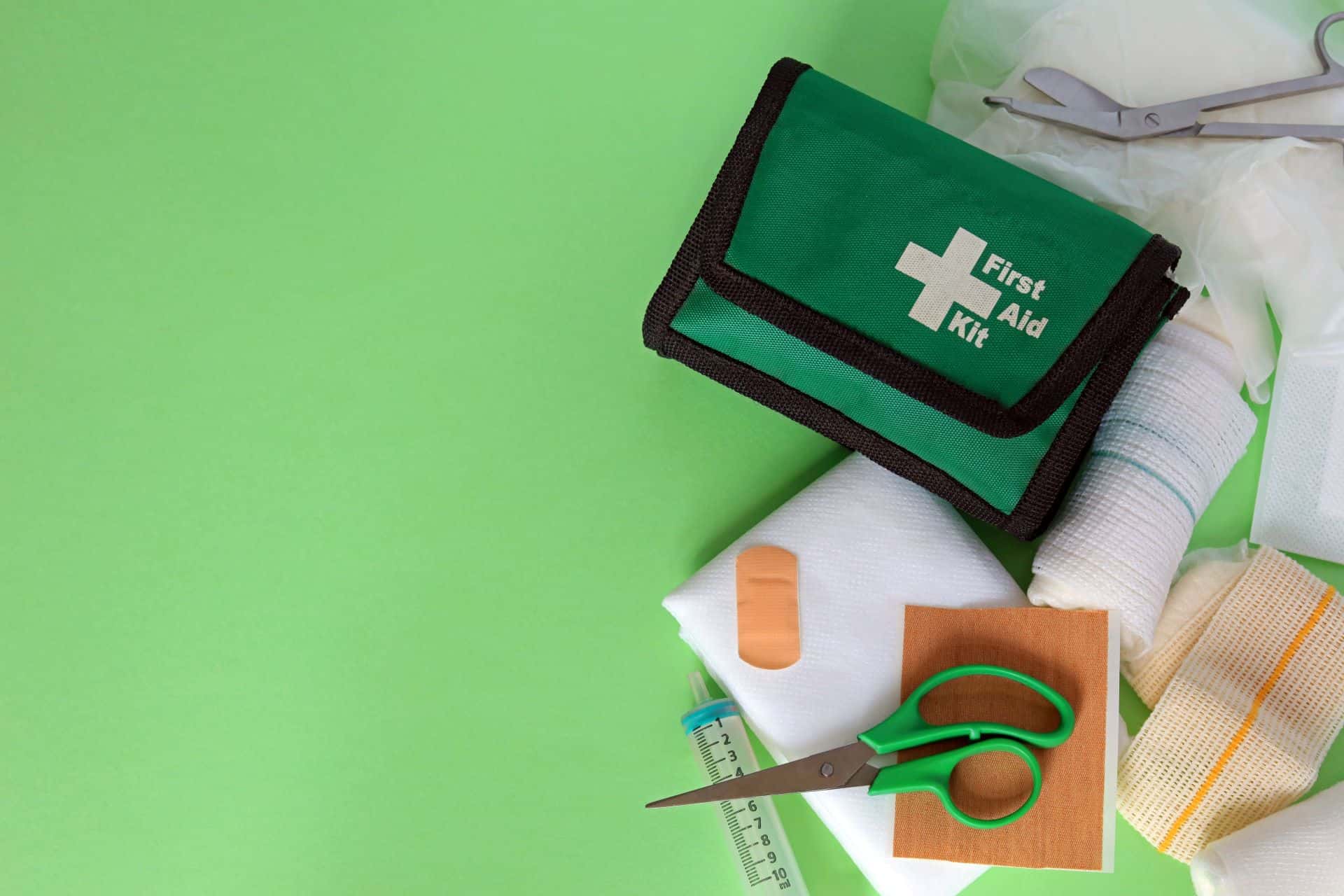
WorkSafe NZ does not mandate a single kit list. Contents must reflect the hazards in your workplace. The AS/NZS 2675 standard provides a widely referenced baseline. The split below reflects what those hazards generally require.
- Adhesive dressings (assorted)
- Sterile eye pads (minimum 2)
- Sterile wound dressings
- Triangular and conforming bandages
- Disposable gloves
- CPR face shield
- Resuscitation guide
- Scissors and tweezers
- Inspection and use log
- Everything in Standard, plus:
- Burns kit (burn gel, non-adherent dressings)
- Eyewash station (ANSI/ISEA Z358.1)
- Tourniquet device
- Haemostatic gauze
- Thermal blanket
- AED (defibrillator) where warranted
- Chemical exposure rinse station
- Sharps disposal container
Restocking and Maintenance — the Part Most Businesses Miss
Having a kit on the wall is the easy part. Keeping it stocked and compliant is where most businesses fall short. WorkSafe’s guidance requires kits to be inspected regularly and restocked after every use.
The most common failures WorkSafe inspectors find:
- Expired consumables — dressings and gloves past their use-by date
- Items removed after an incident and not replaced
- Kits that no longer match the current headcount or hazard profile
- No maintenance log — no evidence anyone has ever checked the kit
- Kits stored in inaccessible or unmarked locations
The maintenance log is what catches businesses out most often. If WorkSafe investigates a workplace incident and you cannot produce inspection records, it significantly strengthens their case for a compliance notice or prosecution.
What Non-Compliance Actually Costs
The HSWA introduced a three-tier penalty structure. Fines are assessed based on the severity of the failure and whether it contributed to harm.
AEDs: When Are They Required?
Under the HSWA, an AED is not universally mandatory. WorkSafe recommends considering one where 100 or more people regularly work or gather, the site is more than 5 minutes from emergency services, or a specific health risk assessment identifies cardiac risk as significant.
| Situation | AED Recommended? | Rationale |
|---|---|---|
| 100+ employees on site | Yes | Statistical likelihood of cardiac event increases with headcount |
| More than 5 min from EMS | Yes | Survival rate drops 10% per minute without defibrillation |
| Physically demanding work | Consider | Elevated cardiac risk in heavy manual labour environments |
| Small office, near hospital | Not required | Risk assessment unlikely to indicate need, but still recommended best practice |
How a Managed First Aid Service Removes the Risk
What Alsco’s managed first aid service covers
Instead of tracking expiry dates, sourcing replacements, and hoping your kit still matches the requirements, Alsco handles the entire compliance cycle on your behalf.
Initial workplace assessment
We review your headcount, hazard profile, number of sites, and shift patterns to determine exactly what provision you need under WorkSafe NZ guidance.
Kit installation and placement
Correctly specified kits are installed at every required location. Burns kits and eyewash stations are included where the hazard assessment calls for them.
Regular restocking visits
Alsco technicians visit on a scheduled cycle to inspect, restock, and log every kit. Consumables are replaced before they expire, never after.
Audit-ready compliance records
Every inspection is logged. If WorkSafe arrives, you can produce a complete maintenance record on the spot — the detail that most businesses cannot provide.
No upfront costs
All equipment is supplied and maintained under a managed rental model. No capital outlay, no surprise replacement costs — a predictable fixed service fee.
Frequently Asked Questions
Does WorkSafe NZ publish a standard kit list I can follow?
Can the same person be the only first aider for multiple shifts?
What happens if a WorkSafe inspector finds our kit is out of date?
Do we need a first aid room?
Is a managed first aid service tax deductible?
How often should we review our first aid provision?
Does each site need its own kit?
Take first aid compliance off your plate.
Alsco’s managed first aid service covers supply, scheduled restocking, burns kits, eyewash stations, and audit-ready records. Nationwide. No upfront costs.
Read More

6 Innovative Approaches to Workplace Washroom Makeovers

Treat Your Heart with These 5 Fab Foods


