Trusted by 237K+ Business Worldwide. Find a Location
Trusted by 237,000+businesses worldwide across 250 locations delivering uniforms, linens and more. Find a Location Near You


Delivering Excellence Since 1910
Contact Us
14 Tips to Avoid Restaurant Fires
Fourteen fire trucks were trying to put down a fire that happened in the Garden Shed bistro in New Zealand in 2018. That is just one of the cases when a fire ruined a good business. It’s a well-known fact that one of the most devastating hazards among restaurant kitchens is the outbreak of a fire.
Not only do restaurant fires cause damage to equipment and the building itself, but these fires can also cause injuries to the restaurant and kitchen workers.
This results in a huge financial hit for the business due to the reparations, business downtime, and sometimes may result in the restaurant closing permanently.
The National Fire Protection Association (NFPA) has estimated that there are roughly 7,640 reported restaurant fires on an annual basis which have resulted in nearly $250 million in property damage. While this is a high number, it does not account for revenue losses and the money lost due to the restaurant being closed either temporarily or permanently.
In a restaurant kitchen, there are lots of fire threats. Open flames, heating equipment, cooking oils, cleaning chemicals, all of them are flammable and contribute to the fire hazards within a kitchen. With the number of flammable substances in a kitchen, it’s no surprise there are as many fires as there are.
Is your restaurant prepared for emergencies? Contact Alsco for a fully-managed Emergency Response Systems and First Aid Supplies.
How You Can Prevent a Restaurant Fire
Given the very nature of cooking, there is no way to completely eliminate the risk of a fire. However, you are able to take a variety of precautions to prevent for fire from breaking out, keep your workers safe, and even ensure first aid supplies in case it happens. With that in mind, here are some steps that can be taken to avoid a restaurant fire as much as possible.
The Necessary Fire Suppression Equipment for a Restaurant Kitchen
Equipment such as situation dependant fire extinguishers and sprinklers in restaurant kitchens are a health and safety requirement in New Zealand nowadays, although their placement and accessibility play an important part in case of a fire. So, what how can you ensure that your fire suppression equipment is up to its best standard?
Tip #1 – Install an Automated Fire Control System.
This first tip is by far the most important. Having an automated fire control system allows for action to be taken the second fire breaks out. This is done by not only cutting off the power to the kitchen but both the gas line and fuel supply, preventing the fire from growing.
Tip #2 – Always Have Backup Equipment.
Fire extinguishers aren’t used regularly, which unfortunately gives the possibility of them not working at the time of use. This is why it’s important to have several backups available in different locations within not only the kitchen but other parts of your restaurant too. To prevent a fire extinguisher not working in the time of need, make sure that you keep them up to date as well as having them serviced on a regular basis.
Tip #3 – Have the Right Equipment Available.
While fire extinguishers and sprinkler installation is important, making sure that you have other things such as fire blankets are equally as important. Make sure that your whole staff team is informed on where all of your fire equipment is located as well as informed on how to react in a fire situation.
Preparing Your Electrical Equipment
While all fires are difficult to deal with, unless they are dealt with at a very early stage, an electric fire is extremely difficult to deal with due to how it spreads fast. One of the most common causes of electrical fires is short-circuiting.
Tip #4 – Regularly Maintain your Electrical Equipment.
This tip accounts for all electrical equipment in your restaurant, not only the kitchen. Your electrical system as a whole should be surveyed regularly, although between surveys you must train your staff on watching out for old or frayed wires which may be a danger, as well as watching for multiple high-voltage appliances plugged into one outlet, which can cause a short circuit fire.
Tip #5 – Rearrange your Kitchen.
The best way to ensure that an electrical fire is prevented is to move potentially dangerous appliances away from one another. For example, if you have your deep fat fryers located next to wall sockets, move the fryer to a different part of your kitchen.
Fire Outbreak: First Response
If your previous preparation failed you and a fire does outbreak, it’s important that you and your staff team know how to react.
Tip #6 – Shut Off the Power.
To stop the fire from spreading and further damaging your restaurant, make sure that there are multiple people trained to deal with shutting off both the electrical power and the fuel supplies, for your kitchen. This will prevent the fire from spreading as well as prevent a potential gas explosion.
Tip #7 – Evacuate your Restaurant.
There must always be an evacuation plan in place. While the fire is most likely in the kitchen, fires can spread quickly so it is important that you get everyone who is in the restaurant, outside of the restaurant. In order to have this done efficiently, there are a few steps that must be considered:
- There must always be an evacuation plan in place, and if changes are made to the restaurant these changes must be accounted for in the plan. This plan should account for the capacity and access points of the restaurant.
- Have staff members who are responsible for the evacuation and are trained to get everyone out of the building efficiently and safely.
- Practice evacuation and fire drills on a regular basis. This will ensure that all of your staff members are fit to deal with the unfortunate situation if it were ever to break out.
TIP#8 – Get Fire Safety Training.
It’s important that your staff are trained in Fire and Warden Training. This will ensure that your staff know how to deal with fire as well as remain calm while doing so.
Tip #9 – Check Out your First Aid Kits Regularly.
It’s important that the first aid kit in the workplace is up to date and the first aid kit supplies are adequate to deal with a variety of situations, one of them being a fire. Make sure that you have multiple first aid kits around your restaurant and make sure that they are properly organised so that an injury is dealt with as soon as possible.
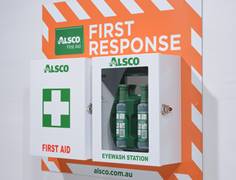
Emergency Response Systems
Ensure your employees are as prepared as possible in an emergency situation.
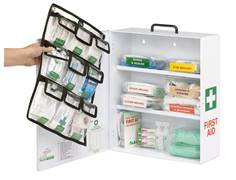
First Aid Kits
Managed first aid kit service keeps your business safe and compliant – year-round.
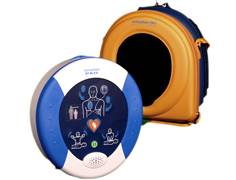
Portable Defibrillators
Ensure your people are capable and prepared as possible when a cardiac emergency strikes.
Find out more about it…
Dealing with Kitchen Grease Properly
Kitchen grease is one of the biggest pains of working in a kitchen. Not only is it dangerous to work with, but if one drip hits the floor, it must be cleaned up immediately and cleaned up properly to ensure that the floor does not become a danger to your workers.
Tip #10 – Clean the Hoods and Vents Regularly.
It’s important to put together a regular cleaning schedule for your deep fat fryers, however, every restaurant schedule will differ depending on many factors. It’s important to ensure that both the fryer and the vents are cleaned regularly in order to ensure that a build-up of grease does not become a fire hazard.
Tip #11 – Ensure that All Parts of the Fryer is in their Correct Places after Cleaning.
If parts are not put back properly, it can result in the fryer not working as efficiently as before and can cause even more of a grease build up in the vents and hood.
Tip #12 – Consult a Professional.
Having a professional inspect your exhaust system will ensure that the deep and harder to reach parts of the fryer system are cleaned efficiently. As well as this, you will be told with confidence if there are certain parts of the system which are not being cleaned as well as they are supposed to be.
Tip #13 – Clean Grease from Around the Whole Kitchen.
Given that in a kitchen you are working with grease regularly, it’s important to clean the whole kitchen every day (or at the very least every other day). Not only is this general health and safety, but it prevents grease from building up in other parts of the kitchen and become a safety hazard.
Tip #14 – Have your Cleaning Rags Cleaned, too.
Remember, grease isn’t the most pleasant thing to work with, and that’s not just the case for in the kitchen. When it comes to cleaning grease out of your cleaning rags it can be a real pain. Have your greasy rags professionally cleaned, too.
It’s The Little Things That Count
While the bigger pointers such as “Make sure at the end of the day, everything is turned off” are important, smaller pointers such as ensuring that your first aid kits are prepared properly are the things that really count when running a business.
Having properly marked exits, efficiently marked first aid kits, and cleaning up spillages. These are the little things that can make or break your business, take care of your business and it will take care of you.
Before the worst strikes your workplace, Send Alsco NZ an enquiry to learn more about our fully-managed Alsco New Zealand Emergency Response Systems and First Aid kits.
5 Workplace Hazards To Watch Out For
Hazards are inconvenient and costly. The average company gets more than two fines on average per inspection.
With the WorkSafe fines reaching $3,000,000 for reckless business practices that expose employees to harm. With planning and some forethought, you can avoid hazard-related losses.
Workplace hazards affect employees. Over 600 New Zealanders die each year from world related injures and disease. A loss of income to thousands of households and physiological impact on a community.
For the workplace, it’s a loss of skilled staff plus health and medical costs, not to mention extremely upsetting for the staff and management.
To avoid losses, stay aware of potential workplace hazards. Look around your workplace to identify which hazards apply to you. Then take the required measures to keep your staff and business safe.
1. Physical Workplace Hazards
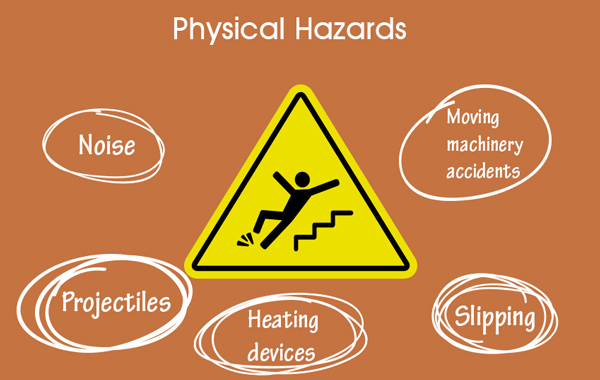
The workplace environment presents different levels of threats to workers. Physical hazards are obstacles, objects or elements that present potential threats. Solve these with proper workplace design and adherence to safety processes.
a) Housekeeping Mistakes
Slips and falls happen because of liquids or elements, such as boxes or cables, lying around. Clutter blocks drainage or prevents effective movement around the workplace. It includes things like disorganized wiring and misused storage facilities.
To prevent accidents, start a culture where your staff clean as they go. Waiting on cleaning staff to store tools creates a lack of personal responsibility. It leads to avoidable exposure to hazards.
When cleaning up needs specialized skills, alert the relevant manager or department. This way, you solve problems soon before they occur.
Consider using safety signage in high-risk areas. These include floors where spills are common or stacked loads that can topple over. Safety posters identify hazards and keep staff from becoming complacent. Have a first aid poster with emergency numbers handy in case any incidents occur.
b) Sharp Objects and Machinery
In the retail sector, cuts from sharp objects like knives and box cutters are common. It’s a result of lack of training or taking shortcuts. It is important to establish safety procedures that instruct employees on how to safely carry out their duties.
Workplaces with machinery or mechanical moving parts create a potential hazard. The common injuries include broken bones, strained muscles or even death. Operate machines with care and full attention.
To prevent casualties, ensure staff have protective wear. They include hard hats for machine workers and gloves for handling sharp objects. With training, scheduled breaks and safety processes, incidents should decline.
First aid is crucial in keeping an injury under control. Distribute adequate first aid kits to ensure first aid is accessible immediately after an incident occurs. Keep them stocked with essentials and emergency numbers for paramedics.
c) Extreme Temperature and Fire
Different seasons come with a shift in temperature. Design your workplace to regulate these variations. Exposure to extreme temperature leads to heat stress, hypothermia, sunburn or heat stroke. Protect your employees with good ventilation and air conditioning.
Fire is an ever-present hazard in many workplaces. Especially if you work with machines that can overheat or chemicals that combust. Another risk factor is publicly accessible buildings. They are vulnerable to arson.
To keep staff safe, the first line of defence is installing a fire alarm and sprinkler system. Practice safety drills until reactions to a real emergency are immediate and orderly.
Place fire extinguishers, fire blankets and first aid kits around the workplace. Most first aid kits contain masks that can help people breathe in smoky rooms. Fire blankets will protect your face from flames as you evacuate from a burning building. The first aid kit helps to treat burns and scratches before medical care arrives.
2. Chemical Workplace Hazards
An unfortunate habit by companies that deal with chemicals is stockpiling them. Since chemicals tend to be expensive, they stay for far too long in anticipation of future use. This exposes your staff to danger since some chemicals become hazardous with time. For example, ether becomes unstable over time and turns into poisonous peroxide. Establish a control system that ensures all chemicals that come in first go out first.
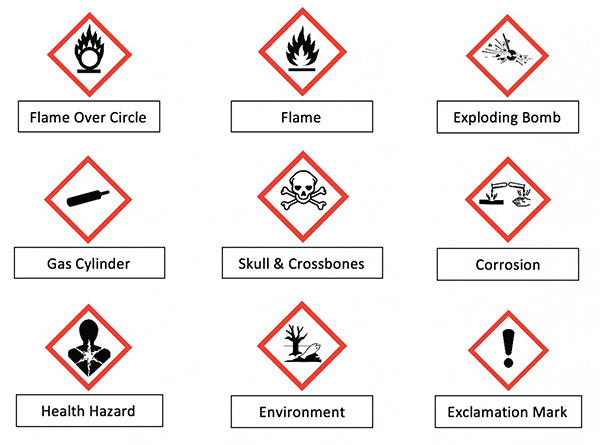
Source: Scholarblogs
a) Chemical Handling
Create an inventory of your products. Note expiry dates to ensure you use the chemical before it expires. Avoid transferring chemicals from one container to another. This creates allows for harmful reactions to occur.
Ensure all staff are trained on how to handle chemicals. They need protective gear that allows them to work and move comfortably. Practice proper labelling to ensure your team is aware of what harmful chemicals they are handling.
For swift action, place eyewash stations and first aid kits around your workplace. Acting fast prevents a minor injury from escalating. Eyewash stations are essential in removing contamination before it infects or damages the eyes.
b) Asbestos Poisoning
This is a particularly harmful substance that deserves specific mention. It causes breathing complications and mesothelioma after exposure. There’s no known way of removing the fibres once they get to the lungs and the disease they cause has no cure. It’s found in building projects built before 2000.
Workers maintaining buildings built with asbestos are at risk. The only way to prevent damage is to limit or completely prevent exposure to the fibres. If you have asbestos in your building, get specialized asbestos contractors to advise you on its removal.
3. Social Workplace Hazards
Workplaces are dynamic. You could have the best safety processes but still, experience many workplace accidents. Protect the mental health of your staff by keeping workplace stressors in mind.
25% of employees admit to their jobs being the top source of stress in their lives. Stress is sometimes psychological and caused by harassment or heavy workload. Work can stress people if they feel underprepared or overburdened. This can spiral into low self-esteem and self-harm.
Create an open-door policy where your staff can come to you with any problems they face. This way, you create a culture of openness that helps you know when the team is overwhelmed or need new training. Stress is a harmful response that happens when job requirements don’t match resources. Staying aware of this helps reduce the stress levels for your staff.
b) Workplace Violence
This refers to disruptive behaviour or threats of physical abuse at the workplace. It can come from fellow colleagues or clients and suppliers. Whether verbal or physical, abuse has adverse effects on the performance of your staff.
Due to an increasingly diverse workforce, violence is a rising concern for employers. Do your part with sensitisation campaigns that encourage tolerance and professionalism at work. Reinforce good behaviour and have penalties for people who threaten violence. You cannot afford to be on the fence while your staff suffer fear or intimidation.
c) Poor Hazard Communication
Communication breakdown at the workplace leads to avoidable accidents. Make sure your staff are aware of all the safety precautions. When handling dangerous substances, communicate the potential risks. Emphasise why it’s important to follow procedures. This increases compliance and promotes a sense of workplace cohesion.
d) Workplace Bullying
Bullying is persistent actions towards a co-worker aimed at degrading them. It creates a huge risk to the mental health of your employees. It leaves an employee feeling helpless and defenceless. It undermines the right to dignity at work.
4. Ergonomic Workplace Hazards
Non-impact injuries from overexertion are the leading cause of joint inflammation and pain. Excessive physical effort can lead to discomfort or blinding pain in others. Prevention is the best cure against overexertion. Other causes of ergonomic hazards are poor lighting and poor posture.
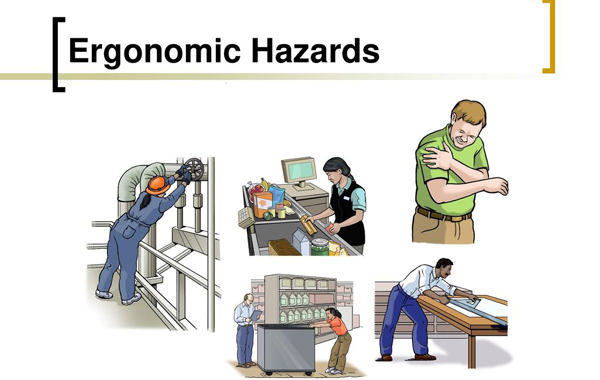
Source: ehsdb.com
a) Repetitive Tasks
Use ergonomic principles to reduce the risk of fatigue, short term pain or illness. Awkward movements can affect posture, the back and other strained areas of your body. Instead of repeating a task, practice task variety to reduce repetitive movements.
Space out your tasks to give the body time to recover. Teach your staff to value breaks and lead by example. The health of your staff leads to long-term productivity and success.
b) Lifting and Handling Materials
Improper technique while lifting, lowering or twisting will cause strains and serious injuries. Training empowers your workers with skills they need to maintain ergonomic practices. Supplement this training with safety signage as a reminder of workplace safety measures.
Position safety tools within reach this includes a first aid kit. If someone sprains a leg, wrapping the affected joint with a bandage can help your staff recover in good time.
5. Biological Workplace Hazards
When working with animals, people or plants, you can encounter biological hazards. They include viruses, bacteria, injuries sustained from animal care and exposure to toxic plants or blood. These biological agents can cause injuries, disease or illness in humans.
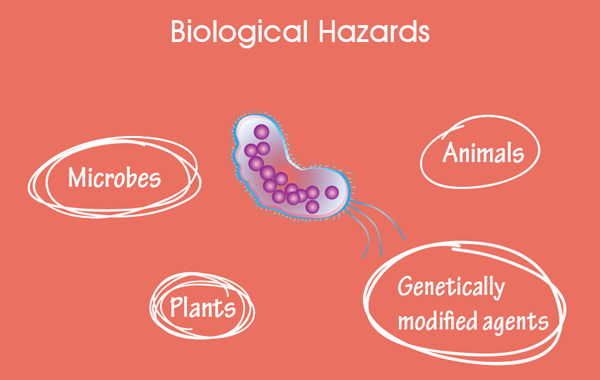 Source: InterFocus
Emphasise the importance of personal hygiene in prevention. Most illness-causing agents are transmitted directly through physical contact or indirectly through ingestion. Practice good hand hygiene and wear protective gear where necessary.
Clean and disinfect all the time and keep up your immunisations. This prevents diseases like rabies. Keep your immunity high and have a first aid box that can help ease symptoms of diseases. Painkillers and anti-inflammatory medications keep staff comfortable before medical help arrives.
Focus on Prevention and Preparation with Alsco NZ
Prevention is the best way to handle workplace hazards. After identifying which ones apply to your business, take immediate action. Foolproof prevention measures include:
- Training – Train employees on safety protocols as soon as they join your organisation. Conduct periodic refreshers for everyone to re-emphasise the importance of safety.
- Protection Resources – Wear protective gear to protect yourself from injury or illness. Provide ample first aid kits to help out in case an incident occurs. Fast action can sometimes be the difference between life and death.
- Culture – An open culture ensures open communication. Your employees will be able to communicate their needs and frustrations to you. This will increase job satisfaction and decrease workplace stress.
Alsco Nz provides your workplace with top of the line safety equipment to keep your workplace running smoothly.
Speak to a customer care agent today and equip your workplace with managed first aid kits. For an annual fee, Alsco NZ will keep your workplace first aid kit stocked and replenished every three months; meaning you can focus on your business.
7 Harmful Bacteria in Your Restaurant Kitchen Right Now
Bacteria, fungi, and viruses are in your restaurant kitchen right now. They are unavoidable.
And you know what?
They are multiplying much faster than you might think.
In fact, bacteria can multiply over 16 million times in just eight hours. And as Rutvik Oza puts it:
“Happiness and bacteria have one thing in common; they multiply by dividing!”
You probably have at one time or another become sick after eating some food. This is what is known as food poisoning or foodborne illnesses.
Bacteria are the primary sources of foodborne illnesses, and its symptoms include:
- Feeling weak
- Nausea
- Fever
- Stomach pain
- Headache
- Diarrhoea
- Vomiting
Any of these symptoms can prevent your patrons from coming back to your restaurant. This is why, at Alsco, we recommend you always maintain a clean restaurant kitchen.

The health of your staff and customers should always be your priority. Here are the seven harmful bacteria lurking in your kitchen.
Salmonella
Salmonella is a type of bacteria that mostly causes food-related illnesses, such as typhoid fever and gastroenteritis.
Most of the deaths related to salmonella infection affect the young, the very old, and people with weak immune systems.
These bacteria live in the intestines, faeces, and bowel of human beings and animals.
How Salmonella Spreads In the Kitchen
Some sources of salmonella in the kitchen include:
- Raw and undercooked eggs
- Inadequately cooked poultry or meats
- Unpasteurised dairy products, such as raw milk or cheese
- Unpasteurised fruit juice
- Salads
- Fruits and vegetables
The bacterium gets into other foods in the kitchen through cross-contamination. This can be through hands, utensils and kitchen equipment.
How to Stop the Spread of Salmonella in Your Restaurant’s Kitchen
- Keep raw meat and chicken separate from other raw kitchen ingredients.
- At all times, ensure you keep cooked and raw foods separate.
- Use a food thermometer to ensure meat poultry or any other foods are thoroughly cooked.
- Clean and sanitise food preparation areas regularly.
Campylobacter
Campylobacter is a spiral-shaped bacteria that is found in animals, like dogs, cattle, cats, poultry. It’s an infection of the gut (digestive tract).

About half of all reported bacteria-related gastrointestinal infections are due to campylobacter infection. Each year about 33 million people die from these bacteria throughout the world.
How Campylobacter Spreads In the Kitchen
Campylobacter bacteria spread through:
- Eating undercooked meat or chicken.
- Drinking unpasteurised milk.
- Eating any other food that has been cross-contaminated.
- Handling raw meat, young pets and other animals.
- Person-to-person spread.
Person-to-person spread occurs when people get in contact with microscopic amounts of an ill person’s faeces. These kinds of spread happen when people touch contaminated surfaces.
How to Stop the Spread of Campylobacter in Your Restaurant’s Kitchen
- Keep raw food away from ready-to-eat foods to prevent cross-contamination.
- Always store meat below cooked foods in the refrigerator.
- Use separate knives and chopping boards for ready-to-eat and raw foods.
- Cook poultry and meat to a temperature of 75°C (or till its meat juice is not pink).
- Keep hot foods above 60°C and cold foods below 5°C.
Staphylococcus Aureus
Staphylococcus aureus is a spherical, gram-positive bacteria that cause a wide range of infections. Approximately 25% of animals and people suffer from staphylococcus aureus.
These bacteria cause:
- Furuncles (boils), carbuncles, cellulitis folliculitis
- Minor skin infection
- Meningitis or brain infection
- Osteomyelitis or bone infection
- Endocarditis or heart infection
How Staphylococcus Aureus Spreads in the Kitchen
- People carrying the bacteria can spread it to food if they don’t wash their hands.
- Direct contact with infected persons.
- Inhaling infected dispersed sneeze or cough droplets.
How to Stop the Spread of Staphylococcus in Your Restaurant’s Kitchen
- Cooking foods thoroughly to over 75°C.
- Use a food thermometer for cooking.
- Wash your hands with soap and water before and after handling food.
- In case of any wounds, infections on your wrists or hands, wear gloves when preparing food.
Escherichia Coli (E. Coli)
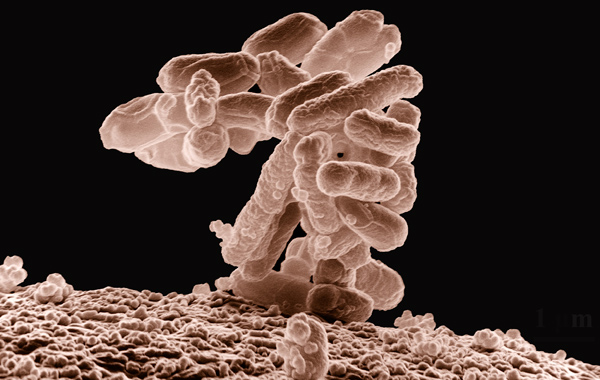
Escherichia Coli is a gram-negative bacteria. It’s rod-shaped and commonly found in the lower intestine of both humans and animals.
Although this bacteria is mostly harmless, some people are at a greater risk of having complications. These categories of people include:
- Pregnant mothers
- Young children
- Old people
- People with weakened immune systems
How E. Coli Spreads in the Kitchen
Since this bacterium lives in the intestine of animals like goats, cattle and sheep, it can be passed directly from meat or milk. Therefore, E. coli can be spread through:
- Improper handling and processing of meat
- Unpasteurised milk
- Contaminated fruits and vegetables
How to Stop the Spread of E. Coli in Your Restaurant’s Kitchen
- Wash your hands with soap and warm water for at least 20 seconds.
- Always separate raw meat and other foods.
- Cook food thoroughly.
- Wash raw fruits and vegetables with soapy water.
Listeria
Listeria infection is a serious foodborne bacterial illness that is commonly caused by the consumption of improperly processed deli meat or unpasteurised milk.
About 1,600 people suffer from listeria infections every year. Just like E.coli, the infection usually affects:
- Newborns
- Pregnant women
- People with weakened immune systems
- Older adults
How Listeria Spreads in the Kitchen
Sources of Listeria in the kitchen include:
- Unpasteurised dairy products like cheese
- Sliced deli meats
- Hot dogs
- Deli-prepared salads
Whenever people inject any of these contaminated foods, they spread the bacteria.
How to Stop Listeria Spreading in Your Restaurant’s Kitchen
- Use ready-to-eat and precooked foods as soon as you can.
- Avoid having raw milk in the kitchen.
- Wash vegetables and fruits thoroughly.
- Avoid refrigerated smoked seafood.
Clostridium Botulinum
Clostridium botulinum is a bacterium that produces botulinum toxins in low oxygen conditions. These toxins cause muscular paralysis and respiratory problems because they block nerve functions. Botulinum toxins are some of the most life-threatening substances.
How Clostridium Botulinum Spreads in the Kitchen
In the kitchen, this bacteria can be spread through poor handling of:
- Canned foods
- Meat products, such as sausage and ham
- Canned tuna fish
- Preserved vegetables and fruits of low acid content
How to Stop the Spread of Clostridium Botulinum in Your Restaurant’s Kitchen
- Practice hygiene standards when handling canned foods.
- Never taste canned food products to determine if they are still good. Instead, throw away all cans that appear damaged, leaked or bulging.
- Ensure oils are infused with herbs or garlic in the kitchen refrigerator.
Clostridium Perfringens
C. perfringens is a spore-forming anaerobic bacteria that commonly resides in newborns and adults. The ingestion of contaminated food causes C. perfringens.

How Clostridium Perfringens Spreads in the Kitchen
Temperature abuse is the leading cause of transmission of these bacteria. This is the reason slow cooling of cooked foods before serving customers has been associated with its outbreaks.
How to Stop the Spread of Clostridium Perfringens in Your Restaurant’s Kitchen
- Cook food at the right temperature.
- Refrigerate leftovers below 5°C.
- Reheat leftover food to at least 75°C.
- Throw away any food if you are in doubt
What Is The Solution to These Harmful Bacteria?
Poor hygiene and cleaning practices can cause food contamination and the speed of infection in your restaurant.
But there are a few steps your staff can follow to ensure your restaurant kitchen is bacteria-free. Some of these steps include:
- Ensure their work area is clean.
- Keep themselves clean.
- Cook food properly.
- Store food in the right places before and after cooking.
However, most restaurant employees don’t follow some of these steps. This is why you need regular Alsco hygiene services to get rid of bacteria from your kitchen.
It’s worth noting that your restaurant hygiene has a direct impact on the morale and health of your employees.
Your restaurant kitchen should always remain spotlessly clean and sanitary. Contact Alsco New Zealand for expert deep cleaning services.
7 Hottest Germ Danger Zones in Your Kitchen
Did you know your restaurant kitchen may look clean but still have germs lurking in it?
A restaurant kitchen is an ideal breeding ground for various types of bacteria.
This is because food leftovers can spill from visible areas to germ hot spots. These germ danger zones usually go unnoticed during cleaning.
A dirty kitchen area also invites pests that spread contaminants to restaurant utensils. In turn, your business may face “dire consequences” due to complaining customers.
You don’t want your customers or staff to get sick due to a poorly maintained kitchen. That said, here are the seven hottest germ hot spots in your restaurant’s kitchen.
The Food Preparation Table And Countertop
Kitchen countertops are the workhorse of any restaurant. But they are also one of the dirtiest areas.
You may wonder how this is even possible when your staff always cleans them. It turns out; you need more than just wiping down these areas.
The reality is that many food preparation tables and countertop material are porous.
And germs can flourish on such porous surfaces because they find exactly what they need:
- Food
- Comfortable temperature
- moisture
According to a CBS News report, 18 per cent of kitchen countertops have mould while 32 per cent harbour coliform bacteria.
Some typical example of coliform bacteria include:
- E-coli
- Salmonella
How To Disinfect Your Food Preparation Tables And Countertops
Wiping down your restaurant kitchen surface isn’t enough to kill germs. Here is how you should disinfect these surfaces:
- Use a paper towel or microfiber cloth to wipe away visible debris and crumbs on the table.
- Mix hot water and Auto-Dish Washing Liquid in a basin.
- Saturate a paper towel with the soapy solution and carefully wipe the countertop.
- Once the table is clean, use Fresh & Clean Challenge to clean and disinfect the surface.
- Let the disinfectant air-dry for at least 10 minutes.
- After the surface has dried, rinse it with fresh water.
The Chopping Board

Did you know that chopping boards are 200 times dirtier than your toilet seat?
Although you may be washing these boards after every use, this doesn’t protect you from all types of germs.
This is because chopping boards easily transfer bacteria from raw meat, fruits and vegetables to other surfaces.
The types of germs that thrive on these boards include:
- Coliform bacteria
- Yeast
- Mould
How To Disinfect Your Chopping Boards
- Place the chopping board in a clean and empty sink.
- Run hot water over its surface to remove any food particles.
- Soak a clean cloth in hydrogen peroxide or vinegar.
- Wipe the chopping board with a cloth and leave it for a few minutes.
- Rinse the board with hot, clean water.
Note that you can also use bicarbonate of soda to deodorize the board before using vinegar.
The Kitchen Sink
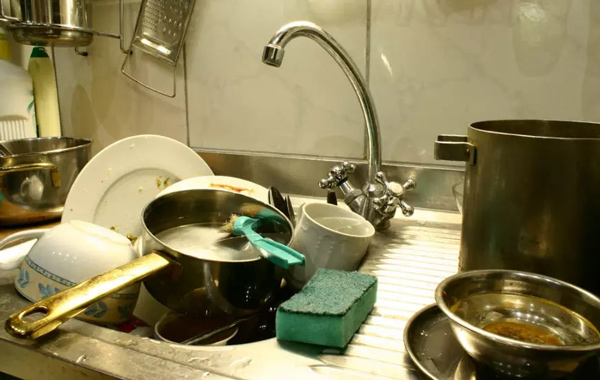
Your kitchen sink gets contaminated with germs when you wash raw foods in it. Additionally, sponges, mops and cloths rinsed in the sink contribute to its contamination.
Some common germs you can find on your kitchen sink include:
- Coliform bacteria
- Mould
How To Disinfect Your Kitchen Sink
- Clear the sink of any items like dishes and food scraps.
- Run water to remove any visible crumbs.
- Mix some warm water and dishwashing soap.
- Dip a sponge in the solution and scrub the entire sink basin.
- Use baking soda to remove sticky stains if the dishwashing solution isn’t effective.
- Rinse the sink with clean water and wipe it dry using a microfiber cloth.
The Garbage Disposal
The garbage disposal unit collects germs from various types of raw food. This includes spinach, chicken or eggs that are filled with bacteria.
While you may manage to keep your garbage disposal always smelling fresh, it’s quite hard to keep it absolutely bacteria-free. The most common type of bacteria that thrive in the disposal is salmonella bacteria.
How To Disinfect Your Garbage Disposal
- Turn off the disposal.
- Apply Auto-Dish Washing Liquid to an abrasive sponge.
- Use the sponge to scrub its baffle thoroughly (frequently rinse the sponge to remove any gunk).
- Use the sponge to wipe down the top of the grinding chamber (repeat until there is no gunk).
- Pour about half a cup of baking soda into the unit followed by vinegar.
- Cover the drain opening for some minutes. This traps the fizzing caused by the mixture of vinegar and baking soda.
- Remove the stopper and use hot water to flush the disposal.
Scrubbers And Sponges
Ironically, your kitchen scrubbers or sponges, that you use to keep other items clean, maybe the dirtiest. A study on microbiome shows that scrubbers and sponges that are regularly washed using soapy water harbour a lot of bacteria.
Understanding how to keep them germ-free and clean can increase their lifespan as well as reduce the spread of bacteria.
Germs that thrive in sponges
- Salmonella
- E.coli
- Staphylococcus
- Moraxella osloensis
How To Disinfect The Scrubbers And Sponges In Your Restaurant’s Kitchen
- Fill a basin or your kitchen sink with a gallon of water.
- Add ¾ cups of Fresh & Clean Triple-X bleach.
- Soak your scrubber or sponge in the sink and wait for a few minutes.
- Remove the sponge, and it’s now ready for use.
The Refrigerator
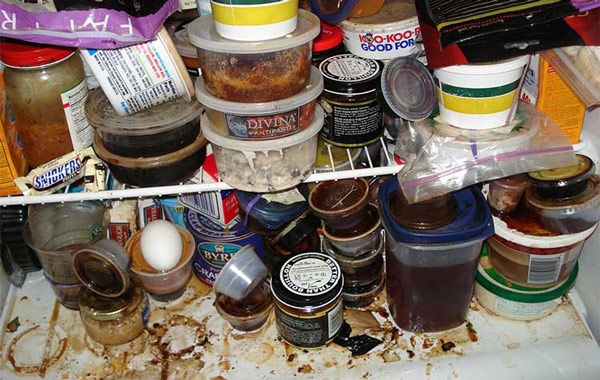
Why do some food products go bad even after being stored in a refrigerator?
According to Which?, Seven in every ten refrigerators harbour harmful bacteria. Even though refrigerators slow down microbial growth, they can easily turn into a breeding ground for bacteria if it’s not kept clean.
Micro-organisms such psychrophilic bacteria can thrive in extremely low temperatures.
Usually, psychrophilic microbes are found in glaciers. This means that they can survive even in a freezer
How to Disinfect Your Fridge
- Remove all food items from your fridge.
- Take out the refrigerator drawers, shelves and other removable parts.
- Wash all the removable parts by hand using hot, soapy water and dry them with a clean towel.
- Wipe the interior of the fridge using hot, soapy water.
- Rinse the soap off using clean water.
- Dry the refrigerator using a clean towel.
- Mix one gallon of water and one tablespoon of liquid bleach to sanitize the fridge (optional).
- Return the drawers, shelves and food items in the refrigerator.
- After you have finished, wash your hands with soap and water.
- Don’t leave food out of the refrigerator for more than two hours.
Microwave Plate, Handle, And Control Panel
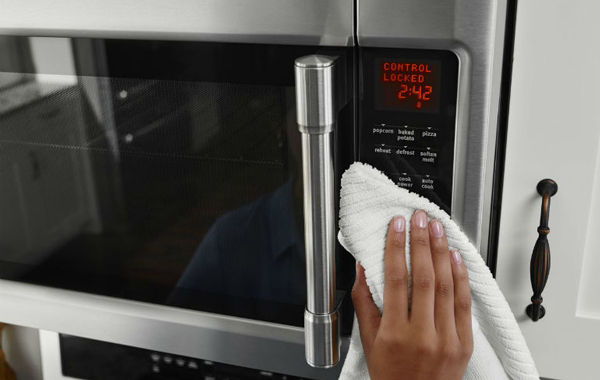
Like other appliances in your kitchen, your microwave needs regular cleaning. A study by Kimberly-Clark Professional shows just how the exterior of a microwave can be full of germs.
When you use a microwave for cooking, food leftovers are usually stuck to the bottom, top and sides of the oven.
Therefore, if you don’t clean your microwave in time, it will be swamped with germs.
Some of the germs you’re likely to find inside and outside your microwave include:
- Mildew
- Mould
- Coliform bacteria
How To Disinfect The Inside Of Your Microwave
- Mix lime or lemon with one cup of water (you can also use vinegar) in a microwave-safe bowl.
- Place the bowl inside the microwave and turn it on.
- Leave the mixture to boil until the microwave window is steamy.
- Allow the microwave to cool for about 5 minutes.
- Remove the bowl and clean the inside using a microfiber cloth.
How To Disinfect The Outside Of Your Microwave
- Pour some rubbing alcohol on a microfiber cloth.
- When the cloth is damp, use it to clean the control panel, and the handle of the microwave till it’s shiny.
Choose Alsco For All Your Restaurant Kitchen Deep Cleaning Services
A study by NSF International reveals that your kitchen could be dirtier than your bathroom. The research found coliform bacteria in:
- 32% of countertops
- 18% of cutting boards
- 45% of kitchen sinks
- Over 75% on kitchen counters.
These statistics show how dirty your restaurant kitchen can be if you don’t take necessary measures. You can maintain a high level of hygiene by sanitizing kitchen germ hot spots.
You can order kitchen deep cleaning supplies from Alsco and sanitize your restaurant kitchen without much strain. Some of these supplies include:
- Sanitizing solutions
- Cleaning protective ear
- High-quality soaps and detergents
You can also contact Alsco in New Zealand if you are looking for a sparkling-clean kitchen. One that gets you returning customers.
Better Safe Than Sorry: 9 Preventative Measures to Protect You and Your Employees
Better safe than sorry.
You’ve probably heard this saying before. Yet, you may never have considered it in relation to workplace safety.
A safe work environment is a fundamental aspect of any business. Business owners should never overlook workplace safety, nor should it ever be ignored by human resource managers.
According to Stats NZ Tatauranga Aotearoa, in 2018, 238,800 work-related injury claims were made to ACC or ACC-accredited employers. This number indicates an increase of about 5,600 from 2017.
The number of work-related injury claims has been increasing each year. This is after a steady decrease between 2005 and 2012.
As employers, it is important to ensure that work-related injury reports are on the decrease. You don’t want to be slapped with unending court cases.
It is essential to examine the relationship between workplace safety and performance.
Working in a safe environment reduces accident cases and motivates employees. This, in turn, boosts the productivity of the business.
Note that safety isn’t just about a clean environment it’s also about taking preventative measures to protect employees. Creating a safe workplace is a worthwhile investment.
A safe workplace:
- Keeps the business solid and moving forward.
- Saves you time and money.
- Ensures that employees are comfortable and thus more productive.
Workplace Responsibilities as a Business Owner
As Kevin Jones explains, business owners should not allow employees to erode a safety culture that may have taken years to develop. Occupational health and safety regulations must be enforced as follows:
- Business owners must oversee the management of safety measures.
- They must carry out risk assessments.
- Ensure employees are trained on safety measures.
- Owners provide education and training on workplace safety.
Workplace Safety Responsibilities of HR Managers
HR professionals play a big role in balancing the best interests of employees and those of the organization. This applies even to safety regulations:
- HR Managers communicate occupation and safety regulations in an organization.
- They enforce the work-place safety measures of their organization.
- They ensure employees are trained in workplace safety.
Preventative Measures to Protect You and Your Employees
1. Enlighten Employees on Safety Rules
To keep your employees accountable, ensure that they understand the safety rules. Try printing safety procedures and strategically placing them throughout the establishment, as a constant reminder to staff of their responsibilities.
Additionally, present the safety rules during orientation. This way, every employee understands their responsibilities.
2. Ensure the Workplace Is Neat and Well-Organized
A clean and well-organized workplace will experience fewer cases of accidents.
Make sure everything is in the right spot. For example, boxes should not be lying on the floor. Take caution with washing detergents and cleaning water which could spill and cause slippery floors.
3. Encourage Safety Awareness
When we think of workplace safety, sometimes we think of high-risk industries like manufacturing. It is important to note that even seemingly safe environments can have accidents.
Business owners have one of the biggest roles to play in ensuring safety in the workplace. Yet, it is the responsibility of every employee to ensure that the environment is safe.
Business owners and HR managers should encourage employees to take up safety training. They should also encourage them to be aware of their surroundings and to report any potential risks.
Business owners should emphasize the importance of employees’ reports on hazards and unsafe working conditions. Safety at the workplace is a collective responsibility.
4. Provide and Wear Protective Gear
Different work environments pose different risks. Wearing appropriate protective gear is one of the best ways to protect you and your employees from accidents and injuries in the workplace.
Hard hats protect employees from falling objects, gloves protect hands against dangerous chemicals, safety glasses can protect the eyes and overalls protect your body and clothes from paint and dirt.
As a business owner or manager, you should lead by example. Wear protective gear at all times. You should also ensure that employees have appropriate workwear. You can easily check your workers’ workwear sizes.
5. Provide Training on Best Safety Practices
Organizations must provide comprehensive health and safety training programs to all its employees. This should include emergency action plans in case there are any incidences that pose a threat.
Emergency drills are a good way of ensuring that employees are efficiently prepared for emergencies. As such, business owners and HR managers should regularly schedule drills as part of safety preparedness.
6. Ensure Employees Understand Safety Rules and Procedures
As an employer or manager, it is your responsibility to understand and implement safety procedures.
Additionally, you are tasked with the role of educating employees on these procedures and ensuring they are correctly followed.
Establish a lock-out tag-out maintenance procedure and ensure it is well understood by all employees.
When carrying out such a procedure, employees should be notified in advance. Additionally, they should also receive prompts on when to resume normal operations.
7. Schedule and Perform Routine Inspections
Safety inspections and audits are a must! They help to identify potential hazards and unsafe workplace practices, as well as providing feedback on your existing safety procedure.
Inspections and audits perform the following functions:
- Identify existing and potential hazards.
- Listen to the concerns of the employees.Gain further understanding of jobs and tasks to be undertaken.
- Determine underlying causes of hazards.
- Recommend corrective action.
- Monitor the steps taken to correct the risk.
- Evaluate an organization’s established safety program and practices.
Note: Planning is essential in carrying out a successful inspection.
8. Improve on Visual Communications
Improved visual communications can highly improve an organization’s workplace safety.
Source: Pexels
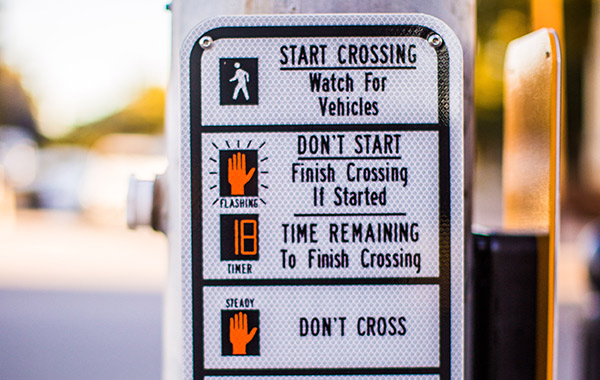
Safety posters should be appropriately placed to indicate hazards and avoid accidents. Improving signage can help keep employees at work even as you take appropriate safety measures to improve the space. To learn how to use safety posters to your advantage click here.
9. Be Ready for the Unexpected
No matter the number of measures you install to protect yourself at the workplace, there is bound to be that one incident that will catch you by surprise.
It is important to ensure that you and your employees are prepared for such eventualities. A power outage may be solved by a generator: However, fire outbreaks require more preparation.
The organization should be ready to deal with any emergencies that may occur; be it a fire or an attack.
In the case of an emergency, it is important that employees can locate and access all emergency exits.
Preventing risks at the workplace helps keep your employees longer and thus run your business smoothly. It will also save you time and money.
It’s Time to Implement Safer Workplace Practices
To keep your workplace safe, ensure everyone is well aware of the rules and regulations. Additionally, take all the appropriate measures to keep the environment safe. And lastly, do not forget to stock up the workplace with some first aid kits.
By practicing the above safety tips and learning more on workplace safety procedures, your company will thrive.
Photo: Nikitabuida
Increase Your Organisation’s Safety Training With These 8 Brilliant Ideas
Who wouldn’t want to work in a safe work environment?
A workplace culture that highlights safety is an important aspect of making sure the environment is secure for you, your employees and other visitors to your business.
In 2017, more than 200,000 work-related injury claims were made to the Accident Compensation Corporation.
Many organisations believe they are ticking all the safety boxes by providing safety training and reducing the number of hazards in the workplace.
Yet, it takes more than this to make your organisation’s safety culture a success.
Safety training shouldn’t only be about learning safety signs. This doesn’t translate into a top-notch safety culture which is what you want for your organisation.
What new unique strategies are you using and how committed to building a culture of safety are you?
Here’s how to get started.
Involve Managers and Supervisors
Source: Pexels
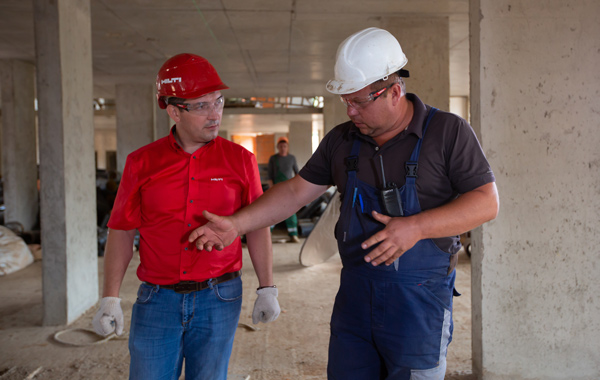
Employees love seeing managers and supervisors take the lead in complying with safety measures. Not only do they lead by example but they also motivate employees to play their part.
For a safety program to succeed, it has to have the backing of managers and supervisors.
Managers have to approve budgets for training. Supervisors have to adjust working schedules to allow for adequate training.
To demonstrate their commitment, managers and supervisors must:
- Make a point of attending safety training sessions. This improves their knowledge and inspires other employees.
- Understand safety training. They should direct the safety instructors to make it more relevant for their different departments.
- In carrying out performance evaluations, managers should include performance reviews of training. This will encourage employees to take part in safety training.
- Expand manager and supervisor safety roles. This will build a strong foundation in training.
- Supervisors should provide reports on safety training performance to safety trainers. This enables them to schedule further training when needed.
Tips to Help You Develop an Effective Safety Training Program
1. Seek to Create Partnerships With Employees
Ever thought about what impact it may have if your employees were to become trainers?
This simple move may be what your training needs to make it more effective.
Instead of having your employees sit through training, recruit some as trainers.
It may take a few coaching lessons, but once started, your training will experience a freshness you never thought existed.
What’s more, your workers will speak from a point of experience.
In most cases, trainers will use the same material for different organisations. With employee trainers on board, there is bound to be a change in the delivery of content.
Ask them to tweak the training material to ensure that it is relevant to their experiences at work. This will make it better for employees to know what to do in specific circumstances.
Do not forget to make after-training evaluations of your employees.
It takes time to assess the effectiveness of training. Such evaluations provide you with tips for further improvement.
2. Get Creative With Training
Training ought to be interesting and fun in order to attract proactivity and engagement.
Presenting information in a new and creative way will make your employees enthusiastic.
Think of tools that you can use to revolutionise your training. Your training tool kit may already have handbooks and posters.
Bring in DVDs that employees can watch as part of the training. To encourage active participation:
- Include games and rewards
- Bring physical safety signs
- Use PowerPoint presentations
- Use e-learning tools like videos
- Add some humor to your teaching
3. Engage Employees in Discussions on Safety
Wondering how to engage employees in lively discussion? It’s pretty simple.
From the onset of training, make employees understand that you are their facilitator. Add some humour into training to make the environment more conducive for learning.
There’s nothing wrong with asking employees how they’d want you to run the training.
If they agree to have you break them into groups, ensure that you visit each group during training. Also, encourage them to share their ideas as you go on.
To inject fresh perspectives, let your employees take part in discussions.
4. Customise Your Safety Training
Safety laws and regulations can be quite difficult to comprehend.
Customise your training to enhance understanding.
You may understand all the jargon, but others may not. Present information in the most straightforward way possible to ease understanding.
It is important to make training more relevant to the organisation. Start by making a checklist for specific departments. The list should be easy to understand and you can place it on small portable cards.
5. Practice New Skills Learned
You can only test effectiveness by allowing your employees to practice the skills they have learned.
Here’s how to involve them:
- Conduct demonstrations during the sessions. These allow your employees to understand certain procedures.
- Coach employees as they practice new skills. This allows them to learn from your cues, as you are able to correct them when they make mistakes.
- Organise an occasional drill to test performance on the job. This is important for people who must have safety training skills while on the job.
Learning is a continuous process.
Practising new skills allows employees to become better. Even if they make one or two mistakes, they will quickly learn new procedures.
What’s more, they will feel more confident knowing that they have a coach who has their back.
Scheduling exercises early enough allows employees to be prepared for any eventualities.
Emphasise the importance of wearing appropriate workwear for their protection. These industrial garments are easy to find and are available in different sizes.

Source: Pixabay
6. Embrace Technology In Learning
We are living in the digital era. You have no choice but to embrace technology in learning.
Computer-based training has an advantage over other training methods. It allows training to be fun and interactive. It has also made teaching large groups easy.
To add e-learning to your training program:
- Introduce safety topics through computer-based training before you start class sessions.
- Schedule webcasts on relevant topics to act as supplementary training.
- Use video conferencing as a way of exchanging knowledge from different locations.
- Use digitised cameras to film in house training sessions and take pictures. These serve as a future resource.
7. Train Everyone at the Workplace
There is no telling when an accident will happen and who it will befall.
As such, safety training is for everyone at the workplace and is essential in developing a good safety culture.
Training everyone is a good way to remind employees that everyone is responsible for safety in the workplace.
Get leadership involved in safety training as much as everyone else.
8. Offer Regular Safety Training
Training on safety will not instantly create a safety culture.
It takes time to build a safety culture that will last through the years.
Observe employees and ensure that they are following safety rules. Get all trained personnel to act as safety advocates and point out any hazards that may cause accidents.
Reward employees who excel in observing safety standards at the workplace. This motivates them to keep at it and encourages others to follow suit.
Emergency drills are a great way to test preparedness. Educate employees on what is expected of them in case of an accident.
The Way Forward for a Safer Workplace
This article has offered brilliant ideas on how to improve safety effectiveness. There is so much more you can do, but first, start with the basics.
Check to ensure that employees choose the right workwear. Encourage adherence to safety guidelines, and work towards building a strong safety culture.


