Trusted by 237K+ Business Worldwide. Find a Location
Trusted by 237,000+businesses worldwide across 250 locations delivering uniforms, linens and more. Find a Location Near You


Delivering Excellence Since 1910
Contact Us
Why Is First Aid Important in the Workplace?
Many business owners and managers often wonder if they need first aid officers at work.
After all, a few first aid kits should do the trick, right?
This isn’t the case.
First aid is so vital in any workspace, it requires dedicated effort, commitment, and adequate resource allocation.
Another significant concern among many managers and owners is the cost implications of first aid for their establishments.
However, any cost associated with first aid is an investment rather than an expense.
Here’s why:
1. First Aid Saves Lives
This may seem obvious, which explains why many overlook first aid and downplay its role in the workplace.
Business owners often wonder what the odds are of a life-threatening incident taking place at work.
They fail to take precautions.
And they become part of the statistics.
Workplace fatalities (injuries sustained at work that result in loss of life) went up between 2018 and 2019.
Consequently, nearly 100 people lost their lives last year.
The sad truth is that many of these deaths are preventable.
In the event of an emergency, the only way to prevent loss of life is to have an elaborate first aid system in place.
Doing this ensures that injured persons receive treatment quickly, and in the proper manner.
It’s been established that first aid improves a person’s survival chances. Moreover, it offers better outcomes for recovery.
2. It Reduces Workplace Accidents
When something goes awfully wrong, people begin to ask themselves if anything could have been done differently.
They question whether the event(s) could have been avoided. Naturally, regret is rife at such a time.
While we can’t turn back time, we are quite capable of preventing things from going awry.
First aid helps reduce the frequency and intensity of accidents at work.
How does this happen?
For first aid to be administered effectively, there’s a need for elaborate training.
During the training process, employees are made aware of the ways in which they can make the workplace less prone to accidents.
Training emphasises caution, personal responsibility and provides insight into common hazards at work.
This helps everyone at work understand how to avoid them. In addition, people learn what they can do to get removable hazards out of the way.
For instance, first aid and safety training address the proper way to handle dangerous chemicals.
These should be clearly labelled and stored in designated cabinets to prevent accidental contact with them.
Common workplace hazards are classified as follows:
Physical
These are the most common workplace hazards. They include slips, trips, falls, exposure to excessively loud noise, and injuries sustained while using machinery.
Biological
These include contact with infected blood or other bodily fluids, insect stings, animal bites, and exposure to pathogens.
Chemical
Toxic and flammable chemical substances pose a risk of poisoning or burns. Examples include cleaning products, vapours and fumes.
Ergonomic
Ergonomic hazards occur due to physical factors that can harm the musculoskeletal system. Such hazards are caused by lengthy periods of discomfort. Examples include repetitive motion, poor lighting, and poor posture.
Psychosocial
This category encompasses matters at work that affect your emotional and mental wellbeing. Psychosocial hazards include victimisation, harassment, stress and violence.
3. First Aid Training Is Useful Outside the Workplace
Skills acquired or harnessed at work can be highly useful in other settings.
First aid isn’t any different.
The vital information obtained from first aid training can be of great use outside of work.
One valuable principle that demonstrates this is DRSABCD.
The acronym outlines the correct course of action to take, step by step, during an emergency.
Danger
First, look around for anything in your immediate surroundings that could compromise your safety as well as that of others.
This includes:
- Distressed persons that could harm themselves or cause further injury to affected persons
- Oncoming vehicles and bystanders
- Flammable or toxic chemicals
- Naked wires
- Poisonous fumes
- Fire and smoke
- Sharp objects (e.g., shards of glass)
Response
This step entails checking whether or not the victim is responsive.
Send for Help
Once the victim’s status is established, send for help immediately by calling 111.
Airway
Ascertain whether there is anything obstructing the victim’s airway.
Breathing
This step calls for you to check that the victim is breathing normally.
Compressions
If the affected person is not breathing properly, perform CPR compressions. Here’s how.
Defibrillation
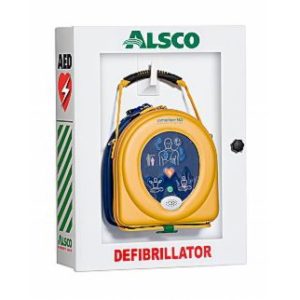 Alsco’s managed Defibrillator rental services
This refers to normalising the rhythm of the heart or restarting it. Defibrillation requires the use of an automated external defibrillator (AED).
Given the number of deaths caused by heart conditions in New Zealand, you should understand how to use an AED.
AEDs are common in many buildings across the country, from schools to residential complexes.
In the event that someone suffers from cardiac arrest, an AED triggers the heart to resume its normal rhythm.
4. First Aid Improves the Working Environment
When you provide employees with first aid training, you demonstrate concern for their well-being.
In turn, this can foster trust.
The training process boosts staff morale. When everyone is in good spirits, you can expect to see improvements in productivity.
Moreover, first aid training provides an ideal opportunity to enhance team spirit.
Employees get to bond, interact and create memories as it serves as a team-building exercise.
A good example of this would be safety games.
Check out the following links for ideas on fun safety games you could incorporate into your training:
- Careerstint
- Bizfluent
As a result of activities undertaken during training, the work environment gets better for everyone in it, from staff to clients.
The Hassle-Free Way to Improve First Aid at Your Workplace
Another concern shared by many who run businesses is the cost of acquiring a sufficient number of first aid kits.
Thankfully, there’s a cost-effective alternative to purchasing first aid kits: using a first aid kit rental service.
Alsco’s managed first aid kit service not only guarantees safety at your business. It also keeps you compliant with New Zealand legislation throughout the year.
Regardless of your type of business, Alsco provides first aid kits that can be adjusted to your needs – at no extra cost.
What Sets Alsco’s Rented First Aid Kit Service Apart?
Our first aid kits are:
- Regularly restocked with hospital-grade supplies every three months. We keep track of first aid kit contents so you don’t have to.
- Tailored to suit your business needs. Every industry has unique characteristics that call for different types of kits.
Whether you’re in a white or blue-collar workplace, Alsco New Zealand has you covered. - Affordable. Alsco’s managed first aid kit service is available at a single, all-inclusive annual fee with no extra charges!
- Logically organised with colour-coded modules. This makes for quick treatment of injuries with the right kit in the right order.
- Properly stored in sturdy, compact, highly-visible cabinets. We can install them anywhere in your workplace.
Plus, you don’t have to worry about environmental impact.
Alsco has a first aid redistribution program in place.
We sort reusable supplies instead of discarding them. They are then donated to voluntary and charitable organisations including:
- Animal shelters, zoos and SPCA branches
- MAA (Medical Aid Abroad)
- Rotary
Want to get limitless maintenance and restocking all year round at one fee? Get a quote tailored just for you.
What Are 10 Items in A First Aid Kit?
A well-stocked first-aid kit is a necessity in the workplace as it will enable you to handle an emergency.
There are first aid kits available for homes, businesses, vehicles as well as portable kits that you can take with you wherever you go.
According to the Health and Safety at Work Act 2015, companies must provide protective gear in the workplace and rescue equipment for all its employees.
The other important provision is first aid facilities with a trained First Aid officer to manage and use in case of an emergency.
You must have at least one kit and first aid officer for every 50 employees on board. This will ensure that staff members are well taken care of during an injury or accident.
You can purchase or rent First Aid kits which are sturdy, easy to carry, and easy to use. You can opt for Managed First Aid kits which are easy to use, easy to maintain and replace when necessary.
What Should a First-Aid Kit Include?
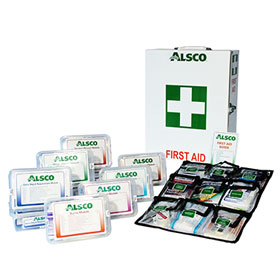
Alsco’s Managed Rental Program for First Aid Kit Supplies
These are some of the items you can have in a First Aid Kit:
- an up-to-date first-aid manual
- a list of emergency phone numbers
- antiseptic wipes
- antibiotic ointment
- saline solution (like hydrogen peroxide)
- extra prescription medicines (perfect for staff on the road while on duty)
- Eye pads and sterile gauze pads of different sizes
- adhesive tape and adhesive bandages (Band-Aids) in several sizes
- a splint
- Tweezers, sharp scissors and safety pins
- disposable instant cold packs
- plastic non-latex gloves (at least 2 pairs)
- mouthpiece for giving CPR (available from reputable health organizations)
- A Defibrillator (AED)
How to Get The Most From Your First Aid Kits
- Read the first-aid manual to better understand the First Aid kit contents. These manuals must be checked regularly to check if they are up to date.
- When installing First Aid kits in the workplace, they must be easily accessed and well labelled. You can get clear signage that will direct First Aid officers and other staff members in the event of an emergency.
- Regular kit checks are important. Replace missing items or anything that has expired. Items such as gauze, gloves, solutions and bandages will lose their sterility over time and these must be replaced.
- Have regular training for First Aid officers and the staff on First Aid kits, procedures and emergency protocols. Remind staff members that even when the first aid kits are used for an emergency, they MUST call emergency services in case of a serious injury.
[b3_row]
[b3_column lg=”3″ md=”12″ sm=”12″ xs=”12″ ]
[/b3_column]
[b3_column lg=”3″ md=”12″ sm=”12″ xs=”12″ ]
[/b3_column]
[b3_column lg=”3″ md=”12″ sm=”12″ xs=”12″ ]
[/b3_column]
[b3_column lg=”3″ md=”12″ sm=”12″ xs=”12″ ]
[/b3_column]
[/b3_row]
Why is First Aid Important in The Workplace?
- It is the first course of action in an emergency before calling emergency services. If a staff member is injured, say in the eye by corrosive substances, you must quickly wash out the eye. In the case of a cut, pressure must be applied to stop the bleeding. More serious cases like cardiac arrest must be controlled using an AED within the first 5 minutes of the emergency.
- It saves time and money. Having well-stocked First Aid kits in the workplace will prevent staff members from missing work or staying away for days from duty. It also helps to boost morale in the workplace because First Aid kits show that their wellbeing is being considered.
- It will prevent an injury from becoming worse. During any emergency, time is of the essence. Waiting for an ambulance or ignoring an injury can lead to an escalation of the situation. It can lead to a bigger health threat or can even prove fatal in some cases.
- When staff members are regularly trained and able to administer first aid, they have already learned an extra life skill. With the help of the resident first aid officer, a staff member can take care of an injury in no time and report back to work.
How Do You Choose the Best First Aid Kits?
- First Aid kits must be suitable for the environment it will be used in. When choosing workplace kits, you should keep in mind the following factors:
- The workplace size and layout
- Number of staff members
- Workplace hazards
- Is the workplace in a remote place
- How far the workplace is from an emergency room.
- Workplace First Aid Kits must be well-stocked and easily accessible. Aside from the regular bandages, saline solution, gauze and medicines, a workplace kit should have a defibrillator which are lifesaving in the event of a cardiac arrest. Some workplaces may have first aid rooms that contain more equipment and sufficient resting space for ailing staff.
Company vehicles must also have first aid kits for the drivers and their passengers. They will usually be smaller and easy to store or carry and come in more sturdy storage to prevent any damages. - First aid kits must be clearly labelled with the white cross against a green background. One of the main things that emergency drills teach in the workplace includes being able to find first aid kits and AEDs within the building in case of an emergency.
- When buying or renting the best First Aid kits, you must make sure that they are legally compliant. This means that is should follow workplace First Aid code by ensuring that all staff are aware of their location. A first aid officer should be present to assist in case of an emergency and it must be well-stocked as required.
Turn to Alsco New Zealand for Managed Rental First Aid Kits at a minimal fee. We offer both vehicle and workplace kits that are compliant and well equipped. Alsco NZ will install them, conduct regular checks and restock them without additional charge.
How to Use a First Aid Kit
Almost everyone will need to use a first aid kit at some point in life.
First aid kits make all the difference in the first five minutes of an accident, especially in the workplace. There are a number of injuries that can happen to employees while on duty, and these must be well taken care of before emergency services arrive.
According to Worksafe Data, there have been over 31,026 injuries from Jul 2018 to Jun 2019 that have resulted in staff being out of work for a week or more.
In addition, there have been 750-900 workplace-related deaths in New Zealand.
The most common workplace injuries between Jul 2018 and Jun 2019 that kept employees out of work included muscular stress while lifting and carrying or putting down objects.
These statistics show the importance of first aid kits in the workplace.
First aid kits vary in size and content, which depends on the presence of first aid officers in the workplace as well as how far it is from the nearest emergency room.
Ready-made first aid kits are available from managed first aid kit services like Alsco.
First Aid Kit Basics
While at work, first aid kits are usually used for treating common injuries like:
- Burns
- Cuts
- Eye Injuries
- Splinters
- Sprains and strains
- Abrasions (scrapes)
- Bumps from falling objects
First aid kits should also be installed in company vehicles to enable employees on the road to take care of any injuries while on duty. Travel kits should have not only medical items but also medicine that can take care of common conditions like:
- Fever
- Coughs and flu
- Cuts
- Body pain
- Stomach conditions
- Skin ailments and allergies
Stocking a First Aid Kit
When stocking first aid kits for the workplace, you should ensure they are well-stocked and easily accessible to all employees.
You should have at least one officer and first aid kit for every 50 employees.
There are a few factors to consider when choosing and stocking a first aid kit:
- If the kit is being used in wet workplaces or on the road, opt for water-resistant, strong and sturdy cases or containers.
- When choosing and stocking a first aid kit in the workplace, these are some of the things to consider:
- How big the workplace is and its layout
- How many staff members are present
- What the common injuries in the workplace are
- How far the workplace is from the emergency room if needed
- The kits must be well-stocked and accessible to all employees. Depending on the type of workplace, you may have first aid rooms which come with more equipment and adequate space for patients to rest or wait for emergency services.
- When buying or renting first aid kits, ensure they are legally compliant. This means it should follow the Health and Safety at Work Act 2015 that makes it mandatory for companies to offer first aid services in the workplace. The kits must be well-stocked with the necessary items, and there should be professionally-trained first aid officers in-house.
- Use latex gloves when handling the kits to protect yourself and others. Check for any unused items that lose their original state over time. You must also check all medicines and solutions to avoid using expired items.
- Always do a regular check of first aid kits and contents. You do not have to worry about this when using managed first aid kit services like Alsco because they will not only provide but stock your kits regularly for a minimal annual fee.
Must-Have First Aid Kit Essentials
Alsco’s Managed Rental Program for First Aid Kit Supplies
A workplace first aid kit should have these items:
- Adhesive tape
- Anesthetic spray or lotion – which is perfect for rashes, bites and burns
- Gauze pads, ace bandages and adhesive bandages in various sizes to cater for a number of injuries as well as holding splints together when needed
- Aloe vera topical gel or cream, perfect for burns
- Latex gloves that can be for protection from infection and also makes great ice packs when filled with water and placed in a freezer
- Antibiotic cream which can be applied to simple wounds
- Safety pins, tweezers and scissors. These are used for fastening bandages, removal of splinters or foreign objects in the skin and cutting what needs to be cut respectively
- saline solution for cleaning out wounds (like hydrogen peroxide)
- Extra prescription medicines for common ailments
- Eyewash Station to handle eye injuries that must be taken care of in seconds
- Defibrillator for cardiac arrest cases
- First aid manual
- Small flashlight
- Thermometer to check for fever
The Importance of First Aid Kits in the Workplace
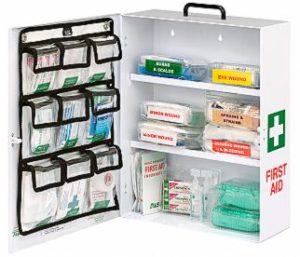
Alsco’s managed first aid kit rental services
The first aid kit is the first course of action in the event of an accident. Quick action is required for cuts, eye injuries by corrosive substances and so on, as you must wash out the eye and control bleeding.
There are also more serious cases like cardiac arrest which must be handled using a defibrillator within the first five minutes to ensure survival.
Having well-stocked first aid kits in the workplace is a time and money saver. This is because it will keep employees from missing work or spending days away from duty.
It also boosts morale in the workplace because first aid kits show their wellbeing is being considered.
First aid kits will prevent an injury from worsening. During any emergency, time is crucial. First aid helps to manage an accident as you wait for emergency services.
When staff members are regularly trained and able to administer first aid, it will empower them to handle a crisis in and out of the workplace. With the help of a designated first aid officer, employees can handle an injury as quickly as possible.
Why choose Alsco managed rental first aid kits?
- Regularly restocked with hospital-grade first aid supplies free of charge.
- Our kits are matched with your business needs and stocked with the supplies you’d most likely need.
- All these services are available for a single, all-inclusive annual fee.
First Aid Kit Basics
Accidents tend to occur when you least expect them. To meet health and safety regulations, every employer must ensure they provide first aid kits in their workplace.
Failure to do so could result in hefty fines and lengthy, expensive legal battles.
First aid is defined as the initial care provided to a person who has suddenly fallen ill or has been injured until further medical care is administered.
Immediate and effective first aid promotes recovery by reducing the severity of the injury.
The workplace can present different kinds of potential risks and hazards to employees.
Worksafe (the regulatory body for New Zealand’s workplace health and safety) has laid out the following factors to consider when providing first aid equipment and facilities at a workplace.
- The location and size of the place of work. Is the workplace in a remote location? What is the distance to the nearest medical facility? Is there easy and fast access to first aid equipment in designated areas within the workplace? Are the workers within one location of the workplace or scattered?
- The potential and type of work being done. What is the nature of the work? Assess the potential injuries and illnesses that are likely to occur.
- Low-risk work environment – This is a workplace where employees are not exposed to threats that may lead to serious injuries or illnesses.
- High-risk work environment – These are workplaces that expose employees to potential threats that may lead to serious injuries or illnesses.
- The number of employees – Consider the number of workers during specific work hours and shifts.
A report by WORKSAFE states there were a total of 79 fatalities that resulted from work-related injuries and 10,317 injuries that resulted in employees missing more than a week of work.
A well-stocked first aid kit can provide easy and accessible first aid care to an injured person before having them transferred to the nearest medical facility.
First aid kit contents may vary from one workplace to another as there are varying factors to be considered. However, a basic first aid kit may generally contain basic equipment for administering first aid.
Workplace First Aid Kit Essentials
- Sterile wound dressing
- Roller bandages
- Ice pack – For sprains and strains.
- Disposable latex gloves – To prevent direct contact with someone else’s blood and other bodily fluids, protecting the casualty and first aider from infections.
- Face shields
- CPR mask – Used on casualties that are not breathing.
- Antiseptic wipes – For wiping the wound.
- Antiseptic liquid – For cleaning the area around the wound.
- A pair of scissors – For cutting gauze, dressing and bandages.
- Hemostatic dressing – To stop excessive bleeding.
- Eyewash solution – For rinsing the eyes.
- Alcohol wipes – Used to clean the skin around the wound before putting the dressing on it.
- Hypoallergenic paper tape – Holds the dressing and bandages in place.
- Bandages
- Cotton swabs – Used with the liquid antiseptic to clean out the wounds.
- Arm sling – To hold the arm in place in case of a fracture.
- Biohazard bags – To dispose of the used items that have come into contact with bodily fluids such as blood.
- Burn gel – For relieving minor burns.
- Gauze bandage – Used to cover larger wounds and absorb any blood and bodily fluids that would come in contact with the wound.
- Band-aids – For small cuts and bruises.
- A list of all the items and their expiry dates – To easily identify what contents are in the kit.
- Instruction booklet – Advises on how to use the items in the kit and what to do in an emergency.
- Emergency phone number
Click here to learn more about New Zealand’s Labour Health and Safety laws.
Is a First Aid Course Important?
First aid knowledge can mean the difference between life and death. Only a frighteningly small amount of individuals know what to do during an emergency.
Taking a first aid course is the only way to ensure that a person can confidently use the items in a first aid kit during an emergency.
Ensure there is a comprehensive plan in place in case of an emergency.
First Aid Course Benefits:
- Helps to minimise workplace accidents. The training enables the employees to be more cautious and mindful of safety at their place of work. They can identify potential hazards and threats before they happen.
- First aid training offers valuable skills to your employees. These skills are not only useful in the place of work but their everyday lives. This will allow them to be confident enough to perform first aid in an emergency where their family is involved.
- Giving first-aid training to all your workers cultivates a positive work environment. It shows that you care about your employees’ safety and well-being.
Maintaining the First Aid Kit
First aid kits tend to be neglected because a majority of people assume they might never really need to use them. However, just like most products, the contents in a first aid kit wear out and expire.
The only way to guarantee the contents in a first aid kit is safe to use and are in working order is to check them regularly.
To ensure the items in the first aid kit are safe to use, you must:
- Conduct regular inspections on all first aid kits in the workplace (at least once every month).
- Replace the used items as soon as possible after using them.
- Make sure the items are not faulty and are in good working condition.
- Ensure all the contents are current.
- Keep a record of when the items in the first aid kit are expected to expire.
- All sterile products must be sealed.
- Get rid of any damaged or opened items and replace them with new ones.
Where Should You Store the First Aid Kit?
Emergencies are never pleasant and often come about unannounced. Therefore, immediate attention is normally required.
In an emergency, panic might cause people to forget how to react and deal with the situation. Therefore, it is advisable to make sure the first aid kit is stored in an easily accessible location.
You should also ensure that all the employees know where it is kept. Ideally, it should be positioned in a cool and dry location away from direct sunlight.
Should You Buy or Rent a First Aid Kit?
Alsco’s Managed Rental Program for First Aid Kit Supplies
Purchasing a first aid kit can be a time-consuming and costly affair in the long run. This is because the contents wear out and expire over time, meaning that you will be required to buy another.
An easy and cost-effective solution is to rent instead of buying one.
Alsco NZ offers a range of compliant first response services and products to suit your requirements. Their first aid rental services guarantee that your workplace first aid kits are restocked regularly using hospital-grade supplies with access to their full range of kits for any kind of workplace, whether high- or low-risk.
Why choose Alsco?
- They have a hassle-free, scheduled, first aid maintenance service saving you the time and trouble of having to constantly inspect the first aid kits.
- They are eco-friendly and have a programme for recycling unusable worn out or expired first aid supplies.
- Their kits meet Safework New Zealand standards.
- Alsco offers unlimited restocking and maintenance of the first aid supplies on a one-time-only fee payment.
Contact us today to get a quote!
Learn First Aid Vocabulary in English (It Could Save Your Life!)
New Zealand is a culturally diverse country. For many, English is a second language used in conjunction with other languages.
This poses a challenge, according to New Zealand’s Office of Ethnic Communities:
“Proficiency in English allows people to integrate into society. Essentially, if people cannot speak English they will have difficulty connecting with others living here and interacting with most businesses, services and government agencies.”
Now, picture this in the context of an emergency. Keep in mind that whether you or someone you know will need first aid is a matter of “when”, not “if”.
“The danger which is least expected soonest comes to us.” – Voltaire, French poet and dramatist
If you’re unable to properly convey information in such a situation, it’s likely that you or another affected person may not be assisted properly and quickly.
Too much time will be taken trying to create understanding between you and the medics.
Time is of the essence; it determines whether a victim’s life is saved or if they succumb.
If English isn’t your first language, something can be done to fix this.
This article contains important first aid vocabulary. Familiarising yourself with it will help you respond better when the need arises.
First Aid
Worksafe New Zealand defines first aid as the immediate, basic care given to an injured or sick person.
This is before a doctor, a health professional or an emergency service provider takes over their treatment.
First aid aims to preserve life and minimise serious injury by:
- maintaining breathing and circulation
- stopping excessive blood loss
- immobilising broken bones
When any of the above is done to a wounded or injured person, we say that first aid has been administered.
We can also say that a person has been attended to.
New Zealand’s Emergency Number
The line to use in the event of an emergency is 111.
EMS/First responders
Once the call is made, the team that receives your message and dispatches an ambulance to the scene is referred to as Emergency Medical Services (EMS).
These emergency medical technicians are also called first responders because they address the situation before anyone else.
Usually, they have medical training to provide basic care before and during a patient’s transfer to the hospital.
Paramedics
Paramedics differ from first responders as they have specialised training on how to provide a wide range of medical services before and on the way to the hospital.
For instance, a paramedic would correctly use a defibrillator to get the heart beating normally again.
DRSABCD
It is crucial to understand this acronym which describes the correct steps to take when handling an emergency.
DRSABCD stands for:
Danger
The first step is to check for anything in the vicinity that could compromise your safety or that of other people.
This includes:
- Distressed persons that could harm themselves or cause further injury to affected persons
- Electricity (e.g., naked wires)
- Traffic such as vehicles and bystanders/curious onlookers
- Chemicals, as they could be toxic or flammable
- Fumes which may cause respiratory problems if inhaled
- Fire and smoke
- Sharp objects such as shards of glass
- Unstable structures
Response
Next, you should check whether the victim is responsive or has lost consciousness.
Send
Send for help by calling 111.
Airway
Check if anything is obstructing the airway and look for signs of life.
Breathing
Check if the victim is breathing normally.
Compressions
If they’re not, perform CPR compressions.
Defibrillation
This refers to normalising the rhythm of the heart or restarting it.
If someone’s having a heart attack, defibrillation sends an electric current through the body, getting the heart to continue pumping blood as it should.
Assess
This refers to the first responders’ efforts to understand the emergency situation before deciding on the most appropriate set of actions to take.
Stabilise
In the event that a person is badly injured, the EMS technicians will attend to them immediately (e.g., to stop excessive bleeding). This is done to keep their condition stable.
Demobilise
To demobilise means keeping the patient from moving, in order to prevent making an injury worse.
CPR
CPR stands for Cardio-Pulmonary Resuscitation.
It refers to the process of resuscitating someone if they’ve stopped breathing.
Neck Brace
A neck brace keeps an injured neck stable, preventing damage to the spine, which could result in a patient being paralysed.
Stretcher
The Collins Dictionary defines a stretcher as a light frame made from two long poles with a cover of soft material stretched between them. It is used for carrying ill or injured people (e.g., into an ambulance).
First Aid Essentials
Though first aid contents vary based on where and how they are used, some can be found in almost every kind of kit.
- Bandages
- Stitches
- Gauze (also called dressing)
- Antiseptic pads
- Ointment
- Scissors or tweezers
- Splint: prevents further damage (e.g., to a broken limb by keeping it from moving around)
Injury
Harm or physical damage sustained through an accident. This term is mostly used to describe getting hurt internally.
Wound
A wound is an external injury.
Therefore, all wounds are injuries but not all injuries are wounds.
Fracture
A fracture refers to the breaking of a bone. This can be anything from a simple crack to severe breakage.
Normally, fractures are brought about by trauma from more pressure than what the bone can handle.
It may also be caused by disease in the bone.
Muscle Strain
Muscle strain is the stretching of a muscle beyond its limit. It can also be a contraction of the muscle that’s too strong and causes damage to the fibres.
According to Harvard Health, there are different kinds of muscle strains based on their level of severity.
Bruise
A bruise is a common type of injury. When someone is bruised, the impact causes their capillaries to break and red blood cells to leak.
Because of this, discolouration forms around the injured area. It takes some time before the affected area returns to its normal state and a scar may remain.
Sprain
This is an injury to a ligament because of damage from twisting called a sprain.
A sprain may be caused by repetitive movements or a single stressful incident. The affected area experiences pain and even swelling.
Swelling
Swelling is the enlarging of skin, an organ or part of the body.
It occurs when fluid builds up or there is inflammation in the affected area.
Whiplash
Also called neck-strain, whiplash occurs when the head is suddenly jerked backwards or forward.
As a result, the muscles or tendons in the neck are injured.
Tendons are tissues which connect a muscle to a bone.
Stroke
A stroke is sometimes also called a “brain attack“.
It occurs when blood flow to a part of the brain is cut off.
Because the brain cells in this area are deprived of oxygen and glucose, they die. In many cases, this is caused by a clot in one of the brain’s arteries.
Dismembered
This is a serious injury whereby a part of the body has come off.
Don’t Stop Learning!
Safety is a continuous process. You should keep refreshing your knowledge and picking up new information that can help you and others along the way.
Now that you have a better understanding of first aid vocabulary in English, have a look at these first aid resources.
Photo: Rawpixel
Workplace First-Aid Shortfalls Fixed in 5 Guaranteed Ways
Could there be a looming workplace first aid crisis at your company?
According to findings by Worksafe New Zealand, work-related fatalities increased by 32% between September 2018 and 2019.
To compound the situation, the number of deaths more than doubled in just the first three months of 2019 from a similar period the previous year.
The sad reality is that 59 percent of work-related deaths are preventable if victims receive first aid before emergency services arrive.
What does this imply?
There’s a need for every workplace in New Zealand to:
- assess its level of safety, and
- re-evaluate its capacity to effectively administer first aid.
Until this happens, safety in your workplace may be an assumption rather than an actuality.
What do you need to do?
1. Familiarise Yourself With These Injuries That May Necessitate First Aid
Certain safety hazards are particularly common in the workplace.
Below is a summary of common sources of injury and the injuries one could sustain.
| Strenuous manual tasks | Could cause overexertion. This can result in muscular strain. |
| Machinery or equipment | Heavy machinery and equipment can cause the following: Dislocation. An injury to the joint in which the end of a bone gets pushed out of position. Fracture. A break, usually in a bone. Laceration. A deep cut or tear going all the way through the skin |
| Surfaces that are high, slippery or uneven | Working on such surfaces could lead to trips, slips and falls resulting in:
|
| Very high temperature | Coming into contact with extremely hot materials or surfaces is likely to result in burns. Additionally, this comes with the risk of reduced concentration and increased fatigue. |
| Hazardous chemicals | Inhaling or having skin come into contact with toxic chemicals can lead to irritation and poisoning. |
2. Guarantee Safety With a First Aid Kit Service
It’s easy to purchase a first aid kit.
The hard part? Maintaining one.
Now imagine this in a busy work setting with multiple kits spread across different floors.
Every time a person receives first aid, someone has to take note of all the supplies used and which ones need replacing and when.
And when that time comes, the person responsible for the kits must be sure to restock all the required contents.
Despite our best efforts, we simply can’t negate the possibility of human error.
Don’t take a gamble with anyone’s life; first aid is a matter of “when” rather than “if”.
Therefore, all workplace first aid kits must be well-maintained so they are always ready for use when the need arises.
To be sure that everything is in order, why not leave it to the experts?
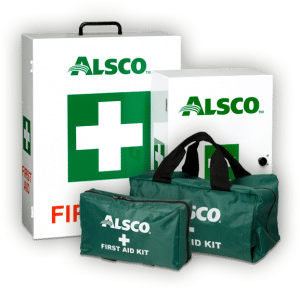
Take advantage of a first aid kit service, which will offer you benefits such as:
- Regular restocking of first aid kit supplies
- Keeping your workplace compliant with workplace safety regulations
- Hospital-grade supplies
- Service logs maintained to ensure they are up to date
- Being tailored to meet your unique business needs
A first aid service goes a long way in improving the efficiency of first aid officers in your workplace.
In turn, this can result in better care for all employees as well as clients who visit your premises.
3. Refresh Your Safety Training
How appetising is the idea of stale food? Not at all.
The same principle applies to health and safety training.
Are your training modules outdated? Could training materials be missing some vital information?
The only way to be sure is to evaluate your safety training, and, if need be, conduct it afresh.
In any case, if it isn’t part of the orientation process, chances are high that newer employees lack knowledge on how to correctly respond to safety issues.
It doesn’t hurt that training consists of activities which are great for team building.
Think of safety training as an investment rather than an expense. It could significantly reduce the amount of money owed in claims.
Ensure that every professional first aid officer has the necessary certification and that their credentials meet the most recent requirements laid out by the government.
One area you should particularly focus on is CPR training for all first aid officers.
What is CPR? The abbreviation stands for Cardio-Pulmonary Resuscitation.
It refers to a technique that helps maintain the circulation of oxygenated blood to prevent brain damage until a person can receive specialised medical help.
CPR is required if a person suffers from a cardiac or breathing emergency.
According to the New Zealand Resuscitation Council, several guidelines should be followed:
- Rescuers must start CPR if the person is unresponsive and not breathing normally.
- Bystander CPR should be encouraged.
- Compression-to-ventilation ratio should be 30:2 for all ages.
- Rescuers perform chest compressions for all who are not breathing normally.
- Those trained and willing to give rescue breaths are encouraged to do so.
- Chest compressions should be provided at a rate of approximately 100 – 120/min.
- Rescuers should aim to minimise interruptions to chest compressions.
You can find the full NZRC recommendations here.
Wondering how CPR should be performed? This video by the Red Cross demonstrates adult CPR.
Generally, it would be best to conduct a first aid training audit annually.
Each time you conduct your audit, you will come across valuable insights to be used in constantly improving your capacity to handle subsequent safety concerns.
4. Make Sure Everyone Understands DRSABCD
When we find ourselves in an emergency situation, it’s easy to feel overwhelmed and unsure of the right thing to do.
Thankfully, there’s a simple and effective way to ensure we handle the matter accordingly: Get everyone at work to master DRSABCD.
It’s an acronym that details the correct course of action in different scenarios as follows:
Danger
The first step is to check for anything in the vicinity that could compromise your safety or that of other people.
This includes:
- Distressed persons that could harm themselves or cause further injury to affected persons
- Electricity (e.g., naked wires)
- Traffic such as vehicles and bystanders/curious onlookers
- Chemicals, as they could be toxic or flammable
- Fumes which may cause respiratory problems if inhaled
- Fire and smoke
- Sharp objects, such as shards of glass
- Unstable structures
Response
Next, check to ascertain whether the victim is responsive or has lost consciousness.
Send
Send for help by calling 111.
Airway
Check if anything is obstructing the airway and look for signs of life.
Breathing
Check if the victim is breathing normally.
Compressions
If they’re not, perform CPR compressions.
Defibrillation
This refers to normalising the rhythm of the heart or restarting it. How to go about it is covered in detail below.
5. Check Whether All Workplace AEDs Are Functional
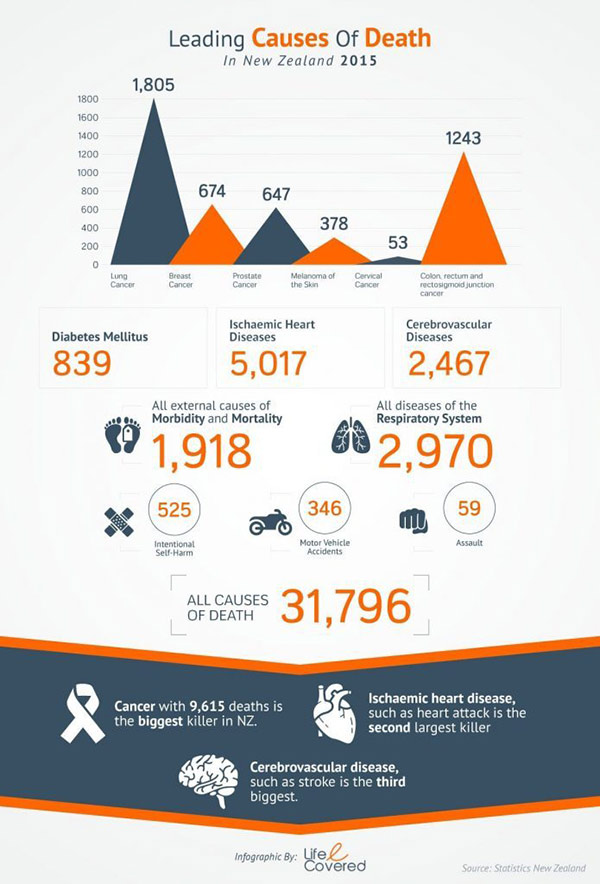
Screenshot from: Life Cover
Cardiac arrest is among the leading causes of death in New Zealand. Nearly 6,000 people die from cardiac-related diseases each year.
During cardiac arrest, the heart unexpectedly stops beating. In such instances, AEDs are used.
Automated External Defibrillators (AEDs) are portable electronic devices which analyse the heart’s rhythm.
They are designed to interpret electrocardiograms and, if necessary, deliver an electric shock to get the heart beating normally again.
AEDs vary and are categorised into two types:
(a) Public-access AEDs are the kind you would normally find in
- schools
- airports
- government buildings
- public halls
- hospitals
- other public locations
They are intended for use by laypeople whose training is minimal.
(b) Professional-use AEDs, on the other hand, are used by first responders who have undergone more comprehensive AED training.
They include emergency medical service (EMS) providers and paramedics.
This type of AEDs can either be semi-automated or fully automated.
What’s the difference?
If a semi-automated defibrillator detects abnormal heart rhythm that requires a shock, the device prompts the user to press a button to deliver it.
Conversely, a fully automated defibrillator delivers a defibrillation shock based on a command by the inbuilt software without user intervention.
AEDs must constantly be checked to ascertain they are in usable condition at all times.
Presently, AEDs are not mandatory in workplaces by law in New Zealand. And considering how expensive they are to purchase, many companies would much rather forego them.
However, given their importance, it would be in everyone’s best interest to have them.
Safeguard the Well-Being of Everyone at Your Workplace With Alsco
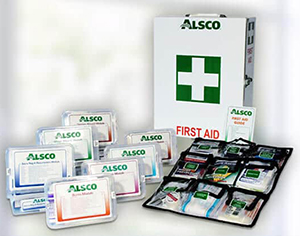
Managing safety at work doesn’t have to be an arduous process.
Not when you rely on Alsco New Zealand’s reputable, dependable services.
Whether you need a hassle-free way of managing first aid kits or an affordable alternative to buying AEDs, Alsco has you covered.
Plus, did you know there are numerous advantages to renting instead of buying?
If you’d like to guarantee safety at your workplace, simply get a quick quote here.
Why Is First Aid Kit Important?
Appropriately stocked workplace first aid kit is important for the health and safety of your employees. Its importance is in the fact that it offers the suitable supplies needed to treat the injury that has been sustained or to offer initial treatment that buys the time until the patient can reach the nearest medical facility.
For this to happen, the first aid kits need to be properly stocked, placed in locations that increase their visibility and clearly marked by signs and posters. Also, your employees need to be informed about the location and the contents of the first aid kits.
Maintaining the first aid kit requires regular checks to see if the cabinet is working properly and can easily be opened. All the perishable supplies need to be checked and replaced before their expiry date.
Alsco New Zealand rented first aid kits don’t need your attention in this way. Once you rent them, all the stocking and restocking is done by us. Rent your workplace first aid kits from Alsco NZ.
There are other reasons why an appropriate workplace first aid kit is important. These include:
- Enables self-help – In some situations, a person that sustains an injury is alone. There is nobody around and they have no contact with the first aiders. In that situation, the first course of action is the self-help, so the patient can be well enough to seek proper treatment.The well-stocked first aid kits are essential in those situations. Something like this usually occurs when the person is driving or works in a remote workplace with difficult access.
- Helps prevent excessive blood loss – Excessive bleeding is extremely dangerous. Significant blood loss can lead to unconsciousness, shock and eventually can be fatal. That is why it is important to dress the open wound as soon as possible.If the wound requires stitching, it should be done by professionals. However, the first aid kits have everything needed for the blood loss to be slowed down so that there is enough time for the professional medical personnel to administer advanced medical assistance.
- Facilitates everyday work – There will always be small injuries at work. Restaurant workers, for example, will often cut or burn themselves. If there is no first aid kit to quickly solve that minor setback, the employee will not be able to continue working with food.That is why your first aid kit needs to have adhesive dressings available in different sizes and shapes, so they can help sanitise those cuts and other minor workplace injuries.
- Prevents liability – According to the Health and Safety at Work Regulations it is employer’s duty to provide first aid facilities and the first aiders. The law says that there has to be first aid equipment in the workplace and that it has to be accessible for all employees.
- Demonstrates care for the employees – By boosting the first aid efforts and going well above the minimum legal requirements for the first aid, you are sending the message to the employees that you genuinely care about their workplace being. Saving on security and workplace safety doesn’t yield a healthy workplace environment and doesn’t send a positive message to the employees. Therefore, show that you care and ensure the best possible first aid kits.
- Boosts workplace morale – When employees know that their safety is the priority in the workplace, they feel more comfortable working in such an environment. That is the message that is being sent by positioning the first aid kits and AEDs in appropriate places. Additionally, first aid courses and training bring people closer to each other and boost the sense of team spirit and empathy. This can be introduced by offering your employees training about how to use the first aid kits.
- Saves time and money – Yes, you should not save money when it comes to safety. However, there are situations that can be solved equally well in one way or another. Minor cuts and injuries are such situations. Going to the ER for a minor cut or scrape, just because there is no proper wound dressing in the facilities means waiting healthcare money and time. Having a first aid kit available and treating such minor wound quickly.
- Buys the time in case of emergency – Ideally, at the moment the injury occurs, there is medical personnel to provide assistance. However, that is rarely the case, especially in the workplace. Unfortunately, the injuries and the emergencies don’t wait for anybody. The first aid kits supplies make it possible to provide a “good enough” treatment instantly which allows the patient to wait until the ambulance arrives.
- Prevents the escalation of the injury – Bleeding out means that the injury will only get worse. It can even have fatal results. Open wounds will get infected if not treated properly. The same goes for serious cuts and grazes. That is why first aid kits help you contain and minimise the negative effects of workplace injuries.
When First Aid Is Needed?
First aid is needed in a wide range of situations that go from minor cut and bruises to the serious instances of threatening open wounds and illnesses. Some of these situations include:
- Cuts, grazes and scrapes
- Joint dislocations, twists and injuries
- Hits and bumps
- Loss of consciousness and collapses
- Open wounds and blood loss
- Burns and cold injuries
There are other situations in which the first aid is appropriate. Whenever there is a situation that can be helped with an item from the first aid kit, it is the time to use it. However, this means that the first aid kits need to be restocked after every such situation.
Alsco New Zealand takes that weight off your shoulders, as our rental service includes regular stocking and restocking of the first aid supplies.
We install the first aid kits you rent from us, but that is not the end of our work. We will come to check if they are properly stocked and if the cabinets are operational. We will take care of the expired supplies and replace them with the fresh ones which makes your first aid kit usable.
Contact Alsco New Zealand and be prepared for all first aid emergencies.
Photo courtesy of Freepik
What Medicine Should Be in the First Aid Kit?
You can, if you want, include the over-the-counter medicine into your first aid kits, but this is not necessary. According to the Health and Safety at Work (General Risk and Workplace Management) Regulations 2016, medicine is not required.
However, it is not definitely concluded whether these types of pain relief pills should be kept in first aid kits.
Those who are pro pain relief medicine in the first aid kits argue that this is necessary for those workplaces that are very far away from the pharmacies and the medical institutions.
They also claim that people buy and use these types of medications freely, anyway, so having them within the reach doesn’t make any difference.
Those who are against the pain relief medicine in the first aid kits argue that every kind of medicine should be given, prescribed or administered by a medical professional. They say that people in the case of emergency should not use pain killers freely since a proper diagnosis needs to be given first.
The law says that this is up to the employer to decide. Therefore, if you want first aid kits that contain pain relief medications, you can have them, but it is advisable to practice caution.
Alsco New Zealand offers rental service for first aid kits. We offer fully stocked first aid kits, packed with supplies of your choice, so they match your company needs. Get your first aid kits today.
What Is Needed in a First Aid Kit?
So, if there are no medicines required in a first aid kit, what is? The contents of the first aid kit can be classified into three categories:
- Sterilisation and sanitisation supplies
- Wound dressing supplies
- Resuscitation supplies
- Other supporting tools and supplies
Sterilisation and sanitisation supplies are needed to reduce the chances of infections and cross contamination. Especially in the case of open wounds, it is essential to keep them sterile. For that purpose, you should stock saline solution, wet wipes and hand sanitisers.
Saline solution is used to keep the wound sterile and to wash out any outside dirt and dust that many have come in contact with the open wound. The wet wipes and hand sanitisers are used to sanitise the first aider’s hands so that the contamination is prevented.
Wound dressing supplies are among the first things that come to one’s mind when somebody mentions the first aid kits. They include adhesive dressings, wound dressings, bandages and eye pads.
- Adhesive dressings should be in assorted sizes and you need at least 20 of them. They are very handy and easy to use. However, you need to make sure they are individually packed, so you avoid de-sterilising them.
- Wound dressings should be in at least two sizes. One size can be the square dressing of 12 cm. Take 6 of those. The other size is 18 cm and two of such square dressings is quite enough.
- Bandages can be stretch and regular, triangle bandages. They need to be packed separately, and you need two of each kind. There are bandages tailored especially for the eye wounds. Bandages are used to position the wound dressing in place and protect it from the outside influences. Those are the eye patches.
Resuscitation supplies are actually the resuscitation mask. It can be used in combination with a portable AED, but it is used mainly as the addition to the CPR compressions. By placing it over the patient’s mouth and nose, you can help them maintain the breathing rhythm without contaminating them with your viruses and bacteria.
Other supporting tools and supplies can include scissors and tweezers. You can use them to cut the supplies like dressings and bandages into appropriate sizes and to open the packages. Avoid using your teeth because you can contaminate the supplies accidentally.
If there are foreign objects in somebody’s ear, eye or splinters in the skin, tweezers can help a lot. That is why it is useful to include them in the first aid kit. Gloves are obviously for the protection of your hands while the claps and safety pins are there to help keep the bandages attached and positioned well.
What Is First Aid Equipment?
Besides the first aid kit with its basic supplies, you may want to boost your first aid efforts and acquire additional first aid equipment. This can include the stretches and trolleys, for example, if you have the first aid room or if your industry is high risk and collapses and faints can happen.
This can include:
- Oxygen therapy units and the like.
- Eyewash stations
- Defibrillators
Oxygen therapy units are a precious addition to the CPR efforts. They ensure that the oxygen easily reaches the victim’s bloodstream which is essential for the survival and the total recovery.
The eyewash stations are conveniently positioned stations that are used in case of eye injury. They are very easy to use and they are very intuitive. You should use them if there is any need to wash your eyes, especially if they are contaminated with some sort of chemical or you need to sanitise the eye due to injury to dress it properly.
Defibrillators or AEDs are irreplaceable items in case of cardiac arrest. They are automatic, which means you don’t need special training to use it. The first aider simply needs to open the patient’s shirt, place the AED pads on their dry skin and start the AED.
You can rent all the eyewash stations, AEDs and first aid kits from Alsco New Zealand. In that way, you don’t have to pay upfront for all the first aid supplies you need to make your workplace safe.
You just pay a flat monthly rate and get your first aid all set up. Moreover, we come to install, check and restock all the first aid kits and regularly make sure that the first aid equipment is functional and operative.
Solve all your first aid issues by contacting Alsco New Zealand. That is the most reliable and the easiest way to make sure you are 100% prepared.
When Should You NOT Use Defibrillator?
In most cases, you should use an AED in case of a cardiac arrest. However, there are instances when the AED should not be used
- If the victim is in water or is wet for any reason.
- If the victim is surrounded by the combustible material.
- If the victim is less than 12 months old.
These are the situations when you should not use the defibrillator. In addition to these, there are situations when you should use your AED with caution:
- If the person has a pacemaker
- If the victim has a medication patch
- It the victim is a child under 8 years of age or weighs less than 25 kg
In all other situations in which you are dealing with a person who is unconscious and unresponsive, you should perform CPR and use the AED. Whether the AED will or will not administer the shock is not up to you. The device itself will analyse the pulse and make that call for you.
For this to happen, you need to have a functional AED ready and easily accessible in your workplace. Get it today from Alsco New Zealand for a monthly fee.
When Should AED Be Used?
AED should be used in case of a cardiac arrest. The symptoms of a cardiac arrest usually include a sudden collapse with irregular or no pulse or heartbeat. The victim is unresponsive, so they don’t react to your calls, shakes and touches.
However, cardiac arrest and heart attack are very similar in their symptoms. While AED can help with the cardiac arrest, it is not effective in the case of a heart attack.
If the person is suffering a heart attack, the only thing that can help them survive until the ambulance arrives is CPR. The AED shock will do no harm, but it will do no good either.
So, how do you know if the person is having a heart attack or a cardiac arrest? You don’t. There is no time for you to make these conclusions and diagnose the condition. If you determine that there is no pulse or the heartbeat is irregular, don’t hesitate and start with the CPR and AED immediately.
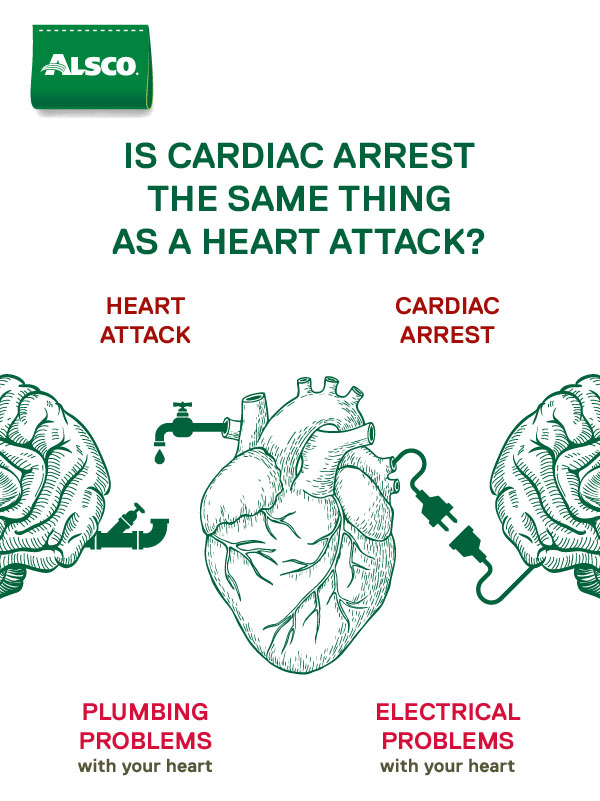
While AED won’t help with the heart attack, it will not do any harm either, so it is best to cover your bases, just in case. AED simply won’t administer a shock if the heart rate is not “shockable”.
Should AED Be Used Before or After CPR?
You need to start CPR the moment you see that a person has collapsed and doesn’t have a pulse. CPR is used to continue the blood flow that has stopped due to heart failure. If the blood stops, the brain doesn’t get its oxygen and can die. CPR should be done immediately while the AED is set up.

Image Source: stjohn.org.nz
Shout for help if there is anybody nearby who can hear you. Tell them to call 111 and ask for the ambulance. Grab the nearest AED and start performing the CPR while the other person sets up the AED so you can use it, preferably within a minute.
How Long Should You Perform CPR after a Successful Shock from the Defibrillator?
Generally, the AED should be performed as soon as possible, but some researches showed even a minute-long CPR before the AED shock helped the outcome of these first aid efforts. Setting up your AED will last at least a minute and there is no reason why that time should not be used for CPR.
In that way, you have prevented the complete halt of the blood flow, which is essential for the preservation of all important organs and tissues and you have administered the shock within the first two minutes from the moment of the accident, trying to restore the electrical function of the heart.
When Should You Stop CPR?
If you are in a safe situation when performing a CPR there are only a handful of reasons why you should stop CPR:
- There is an obvious sign that the person is better. They are breathing and/or are responsive.
- A trained medical professional has arrived to the scene and is taking over.
- You have done 40 pushes and you are quickly checking for the pulse.
In other words, unless the person is well, don’t stop with the CPR until the ambulance has arrived and somebody is taking over the CPR from you.
What Are the Chances of Survival When Using AED?
This depends on the time that has passed from the moment you the cardiac arrest happened and the moment you have started the defibrillation.
According to the USA researches and findings, if you shock somebody’s heart with an AED within a minute of their cardiac arrest, their chances of survival are 90%. With every minute passing, those chances drop from 7% to 10%. The Australian resources claim that the success rate within the first minute is 70%.
There have been initiatives around the world for the portable defibrillators to be placed in the public places. This also happens in New Zealand. Due to the importance of the quick response and the timely use of the AED, it is logical that people want to have it nearby at all times.
The majority of cardiac arrests that turn out fatal happen in home. This is because there are no AEDs in most households and while the ambulance arrives, it is usually too late to help.
Some of the cardiac arrests will happen in the workplace. Those who already have heart issues are in a greater risk of suffering a cardiac arrest than those who don’t. You can never be 100% sure that all your employees are aware of the state of their heart.
Therefore, you need to do whatever is in your power to make your workplace as safe as possible for everybody. This includes acquiring portable AEDs and installing them, so that they are always within a reach.
There is no need to buy so many AEDs. You can rent them from Alsco New Zealand for a reasonable monthly fee. Call Alsco NZ today and get your workplace AEDs.
ARHT on Saving Lives: Just in Time for Medical Emergencies
Morning time is when we’re summoning up all the strength we can muster so we can face whichever adversity the day throws at us.
Being accountable for a company’s future or performing any job role responsibly is not all plain sailing. But what if you were responsible for other people’s lives?
The crew of the Auckland Rescue Helicopter Trust lives with this responsibility 24/7, 365 days a year. And they’re doing a great job! ARHT rescue service is an Auckland based emergency aeromedical service.
With over 1000 missions a year, they’re keeping a watchful eye on Aucklanders needing urgent medical attention, a rescue mission or medical transport. And they’re always on the dot when there’s some lifesaving to be done.
The History of ARHT Rescue Services
It was back in 1970 when the Auckland Surf Life Saving Association started the ball rolling. They leased a Hiller 12E helicopter for surf rescues on Auckland’s west coast beaches. Making it the world’s first civilian rescue helicopter service.
These guys were good news to the community, even more so when they were brought on the air. Namely, the helicopter lifeguards started delivering surf reports straight from the chopper to the Radio Hauraki’s live broadcast.
The audience loved the glad tidings the flight crew brought them. So this resulted in successful fundraising which fixed the crew up with a new summer base and a landing pad.
Fast-forward to the present day, the service has thousands of rescue missions behind them.
The best way to taste a little bit of what ARHT does is via looking into the real-life stories of people they’ve helped.
Andy’s Long Ride Home
It was a July Friday afternoon when Andy Corles pulled out of the driveway to pick up his 4-year-old after her playdate. The family had just been packing for a holiday, but Andy never returned home that day.
It was raining heavily and Andy slid out of control while rounding a corner. The car hit a pothole, the bank and then flipped onto its roof.
The passersby dialled 111 and the local police and the ambulance crew showed up in no time. But Andy needed ARHT’s quick action. Otherwise, it would have been a three-hour drive by roadway to the nearest hospital.
ARHT flew him to the Auckland City Hospital in just 24 minutes. The Corles family believes Andy wouldn’t have made it without the rescue helicopter crew. The recovery was a long one, but Andy’s come out as tough as nails. His own words would suffice:
“A doctor asked me what I wanted to achieve at the spinal unit. I said I’m going home in a manual wheelchair. He told me it was great to have goals, but to be realistic. Well, I proved him wrong. It took a lot of work, but it was worth it in the end.”
Andy’s taken up hand cycling as he had promised. But not only that. He’s about to compete at Nicholas Browne Challenge and hopes to raise $4,500 for the ARHT while doing it.
14-Year-Old Finley Falls Down A Cliff Face
What appeared to be a cheerful walk with a mate on Grant Island, Mahurangi, turned out to be a disaster for a 14-year-old Finley Savage. A dreadful fall 15 metres down a cliff face left Finley with multiple head and arm injuries as well as a broken femur.
They had no phone on them so mate Robbie ran to fetch help. While he did so, these were exact Finley’s thoughts.
“I was falling in and out of consciousness when I heard the sound of those rotors. Best sound I’ve ever heard!”
Luckily, he’s fully recovered from the accident. Here’s what he says right off the top of his head to urge everyone to continue helping the chopper.
“After the accident, my mum said how lucky we were that the helicopter was there because we never thought we’d ever need them. If you can help them help others then please do so.”
If They Hadn’t Been Here, Finn Mightn’t Be Here Today
The two boys of the Macleans family share the common children’s restlessness. But sadly, what all four members of the family have in common is the same chronic condition – asthma.
The little three-year-old Finn has developed the condition at just six months of age. But what happened on 24th November 2015 was something they hadn’t seen coming. The boy got ill during the night and at one moment the parents noticed that the boy had gone a bit blue under his bottom lip.
The ambulance arrived within minutes. But it was the peak hour and they couldn’t have risked transporting Finn to the hospital by road. It took ARHT 13 minutes to get the toddler to the hospital.
After winning the battle with Finn’s severe asthma attack with the help of the helicopter, this is what the mum Jade’s reaction was.
“I think that getting Finn there quickly was the big difference between it going well and going south,” Jade says, trying to hold back tears. “It’s really sad to think had they not been here Finn might not be here today. We’re just really, really grateful.”
ARHT Has Alsco’s Wholehearted Support
The stories above testify to the ARHT’s immense value for the Auckland community. Alsco likes to be first in line when it comes to supporting such valuable community-driven organisations.
We’ve been providing financial contributions to ARHT for more than a decade. Moreover, everybody at Alsco can’t stop raving about this worthwhile cause.
Don’t Stay Behind – Give Your Support to Those Who Leave No One Behind
It’s vital to know anyone can help with the rescue mission. Being a part of it literally means helping more lives being saved. How can you contribute funds to the helicopter mission?
There are a few different ways. You can:
- Become a sponsor, choose your monthly donation and get a special mission certificate
- Become a fundraiser superstar, organise an event or a challenge to raise money on ARHT’s behalf
- Make a donation in memory of a loved one
- Contribute by purchasing ARHT’s high-quality products
- Help fund the purchase of two new rescue choppers
- Leave a charitable gift in your Will
Another thing you can do is jot down ARHT’s hotline number. It’s good to have it on you in case of an emergency. You could save it on your phone and share it with your friends and colleagues.
You never know whose luck this number can turn around when things go downhill.
FREEPHONE 0800 4 RESCUE (0800 4 737283)


