Trusted by 237K+ Business Worldwide. Find a Location
Trusted by 237,000+businesses worldwide across 250 locations delivering uniforms, linens and more. Find a Location Near You


Delivering Excellence Since 1910
Contact Us
How to Make Your Employees Happy in 7 Simple Ways
Most business owners want their employees to be happy, as happy employees will put more effort into everything they do.
They love their job, and they are filled with positive energy that inspires everybody around them to be just as productive and enthusiastic about the job as they are.
Those kinds of employees – energetic, productive, loyal, and passionate about their work – are also those who share the dream of their employers and want to see the company grow bigger and more successful by the day.
With all that in mind, it doesn’t come as a surprise that employee happiness is becoming more and more important, which is why many companies are trying to emphasise the value of balance between professional and personal life. If you would like to do the same for your employees, here are seven ways in which you can do just that.
1. Actions Speak Louder Than Words
The attitude you show around the office will be the same one you’ll get from your employees. They tend to look up to you since you are, after all, their boss. So, if you act all serious and professional, they will act the same way around you. This doesn’t mean you should goof around like a clown in order to cheer up your employees; just be yourself and don’t be afraid to laugh and joke from time to time. It will set a good example, lighten up the work atmosphere and make you seem more approachable.
2. Do Things Together
Laughing is healthy, and too formal work atmosphere where nobody is allowed to make a sound can be very stressful and actually prevent your employees from being productive. Therefore, it’s a good idea to occasionally introduce something new into the work routine; you can come up with some entertaining team-building activities that will help your employees bond and relax. For example, organising the Alsco’s first aid training for employees is one practical way to do that. It is unusual, interesting and most importantly, very useful in everyday life.
3. Evaluate Employee Happiness
When evaluating our employees, we usually take into consideration things such as the quality of their work, productivity, performance, etc. So why not include happiness as well?
Ask your employees what they like about their job and what they would change. Take their answers seriously and think about the solutions. Also, make sure they feel comfortable and safe talking to you about the problems.
4. Focus On The Positive
Things don’t always go according to the plan, but that doesn’t mean you should get mad and scold your employees. The bad news is always unpleasant, for both you and them. Instead, try to engage your employees in finding a solution to the problem – ask for their opinion on what could be done better and encourage them to learn from the mistakes.
5. Celebrate The Good Things
Whether it’s somebody’s Birthday or you’ve just made a great business deal, don’t hesitate to celebrate your successes. It doesn’t have to be anything big – buy some snacks and drinks if you’re celebrating a Birthday, or take your employees out for a dinner night if it’s something more important. Snow them that you care about them as much as you care about the company.
6. Keep The Negativity Away
Things like gossip, envy and politics can really ruin the positive atmosphere at work. Sure, they are natural and you can’t avoid them completely, but you should know how to recognise them and deal with them in the right way.
Communication is always the best way to go about it. Or, you can also improve the team spirit with Alsco uniform rentals, which can provide a beautiful, personalised look for your teams that will keep them united. This guide will help you learn how to size workwear for maximum comfort and a perfect fit.
7. Make Sure Everything Is Clean
Cleanliness and proper hygiene are extremely important when it comes to the happiness of your employees. Nobody wants to work in a dirty and dusty office, not to mention that bacteria in the workplace can even make your employees sick and unable to work.
That is why cleanliness in the office should never be taken for granted. With Alsco, you have many sanitation options that make sure your office is fresh and conducive to happy employees.
From standard services like:
- hand hygiene
- odour control
- washroom services
to more specialised services like:
- feminine hygiene
- clinical services
- first aid,
we’ve got it all.
Alsco has been one of the most reliable names when it comes to quality cost-effective commercial services. We provide highly-customisable services for businesses across here.
If you’re looking for ways to get things done better, call us today. Our friendly customer service representatives are more than happy to help you out!
Photo courtesy of Freepik Images by Freepik Exclusive
5 Unusual Ways of Looking at Employee Health
You know what they say: health is wealth. The term “bottom line“ can often be heard in many companies. It refers to the importance of profitability in any business-related job and field.In other words, it is the result of employees’ hard work, and being so, it shows how important employee health really should be to every company.
The good thing is that, nowadays, many companies truly are emphasising the importance of employee health, and it’s not just about physical health anymore but the mental one as well.
A recent Workforce and Virgin Pulse survey has shown that many people (48.4 percent) consider their physical, mental, and emotional health to be closely related to one another. With all that in mind, here are five aspects that influence your employees’ well-being, which you might find surprising.
1. Hygiene
Many companies offer their employees gym memberships, health plans, etc. However, as nice as those things are, they aren’t the ones you should be focusing on. Poor health comes from poor hygiene, so instead of trying to improve your employees’ health, focus on preventing illnesses in the first place.
For example, if you work in a school, you can use this School Washroom Guide to figure out the role of a properly sanitised washroom in improving employees and students’ health and safety.
Installing hygienic systems like those from Alsco’s washroom service line will go a long way when it comes to dealing with contaminants and bacteria that tend to float around the office.
Alsco’s Fresh & Clean offers a thorough assessment that will allow us to offer you products and services that are tailor-made with your company and your employees’ needs in mind.
2. The Financial Aspect
Having a steady paycheck is great, but it doesn’t do much for those employees who are struggling with their budget. Feeling financially secure and in control can greatly help reduce the stress levels of your employees, and everybody knows that stress can harm one’s health in many ways.
Although you can’t change the bad habits of your employees who spend more than they can afford, you can reduce the need for spending by offering affordable and healthy food in your office. Another thing you can do is invest in seminars and programs that can teach your employees some basics in terms of budgeting and help them become smarter with their money.
3. Useful Skills
Working in an office can sometimes become exhausting and boring, so if you really care about your employees’ well-being, provide them with options that can help them improve themselves and their lives. Organising and going to seminars and lectures can boost your employee morale, increase their happiness, and teach them something new.
For example, you can sign up for Alsco training programs that will provide your employees with a little extra in regards to their work routine.
Alsco’s First Aid course is also a great option, as it makes employees feel more confident in case of emergencies both at work and outside the office. Include the Emergency Response & Evacuations course and your employees will feel much safer at work.
4. The Importance Of Feelings
How a person acts often depends on how they feel. So, if there is something bothering your employees, they are more likely to become ill and unable to do their best at work. Of course, you, as their employer, should try to help them. This might sound a bit complicated as you can never know how bad it really is and you can never fully understand something you’ve never felt.
However, the point is to help them help themselves by encouraging them to visit your HR department or if it’s something serious, talk to a counsellor. Never underestimate the effect of psychological trauma on a person’s well-being.
5. Comfortable Environment
Working in a beautiful, well-lit office with plants and big windows is not the same as working in an old, smelly place that looks like it could fall apart at any moment. Workplace matters, and it’s not difficult to make it comfortable.
Consider something like Alsco’s Odour Control system. This automatic, wall-mounted air freshener dispenses a measured dose of fragrance at intervals that you can program and control.
We all know that smells can affect our mood. So, introduce pleasant scents into your workplace, since they will relax your employees and make them feel better while at the same time eliminating any unpleasant smells that would otherwise surely affect their mood.
For over 50 years, Alsco has been the only company to call on when you need a wide range of reliable, affordable, and highly personalised services for your business. Alsco covers a wide range of services from commercial linen to uniform rentals.
We also provide hygienic systems that tend to the needs of your employees when it comes to comfort, hygiene, and good health.
Contact Alsco now if you care about upgrading your employee care programs. Our friendly customer service staff will find the best and the most affordable solution for you!
Photo courtesy of Freepik Images by Freepik Exclusive
How To Manage Allergies In The Workplace
Despite being one of the top three reasons why people miss work, allergies are usually overlooked by business owners. Allergies are also not commonly associated with issues of health and safety at work.
But, since they can significantly affect productivity, it’s crucial for business owners to recognize simple steps in reducing exposure to allergens.
From a runny or blocked nose and watering eyes to severe reactions to foods or products, allergies are becoming increasingly common. Limiting exposure to allergens can improve working conditions, which in turn can result in increased productivity and employee satisfaction.
The Cause Of Allergic Reactions
The immune system is responsible for defending the body against bacteria and viruses, but in some cases, it may defend against usually harmless substances. These substances are knowns as allergens, and when the body reacts to them, it causes an allergic reaction. The most common triggers of allergic reactions are dust mites, pollen, moulds, certain foods, chemicals, animal skin and hair, and even animal urine and faeces.
The symptoms of allergic reactions range from mild to severe to life-threatening and usually affect:
- the skin (hives, rashes)
- the respiratory system (coughing, throat swelling, hay fever)
- the gastrointestinal system (nausea, stomach pains, diarrhoea)
- the cardiovascular system (feeling faint, weakness, floppiness, collapse)
Here’s what you can do to limit allergic reactions at three most common workplaces.
At The Office
Allergens associated with offices are usually air-borne. Piles of paper contribute to high levels of dust, dust mites and spores, while dirty air conditioners and ventilation systems might also be the cause.
Also, chemicals used to clean toilets, hand sanitisers, or even paper towel dispenser might be sources of skin irritation.
How to go about it:
- Make sure your desk is regularly cleared and cleaned, so it doesn’t harbour any dust or allergens
- Have the ventilation system cleaned, or replaced if needed.
- Don’t leave papers stacked up on desks.
- Consider installing an air purifier, or a more powerful air conditioner
- Think about using more hygienic hand drying systems in the toilet
- (such as a closed roller cloth towel dispenser), pH neutral hand soaps and sanitisers, and non-toxic cleaning products.
In The Warehouse
Most warehouses tend to be neglected when it comes to cleaning. Since this area is used for stocking boxes, crates, and pallets of different sizes, the amount of dust or dirt might not be immediately visible. Hidden areas behind shelves are rarely cleaned, and they can be a haven for all kinds of pests. Poor ventilation can only add to the overall problem of exposure to allergens.
How to go about it:
- Declutter and dispose of unused boxes or other products.
- Make sure your warehouse gets a regular and more importantly thorough cleanup.
- Ensure proper ventilation of the area keeping skylights, windows and doors open as often as possible.
- Replace an old ventilation system
- Ask your co-workers or staff to smoke in designated areas only.
- Consider making toilet changes
In The Garage
Garages are probably the most difficult places to keep clean as the staff constantly deals with dirt and grease because of the parts and engine cleaning that is done. But if cleaned regularly and thoroughly, garages can also achieve acceptable levels of cleanliness.
Chemicals, oils and other products used in garages can cause skin irritations while clutter and dirty corners are perfect for rodents. Exposure to a mixture of odours and vapours can irritate eyes, skin and the lungs.
How To Go About It:
- Ventilation is crucial so make sure it is adequate.
- Keep lids on cleaning products, oil drums etc and store them away from the working area.
- Consider getting a chemical-free parts washer, like the EcoSafe Washer from Alsco. Alkaline water-based cleaning substances are proven to be safer for employees as well as the environment.
- Make sure personal protection items, such as face masks, are worn when required.
- Set up a strict and environmentally friendly clean-up procedure to deal with spillage and waste.
No More Allergies
A clean, properly maintained and allergen-free workplace is an attainable ideal that both business owners and employees should strive for. Start with simple yet efficient steps of creating a safe workplace by installing our Work & Dust Control Mats, Anti-Fatigue & Wet Area Mats, Message & Safety Mats, Welcome Mats, Corporate & Logo Mats, or Entrance Mats, to help reduce dust levels. They are all made from recycled and eco-friendly materials.
Call Alsco now and we will be more than happy to help you achieve your goals.
Photo courtesy of Flickr Images by freeimage4life
22 Ways To Reduce Stress In The Workplace
Not every type of stress is harmful. One way of looking at it is to consider it a sort of a warning, a specific state of mind telling you that you’re in danger.
In other words, if you find yourself in an extreme situation that your body sees as dangerous, becoming stressed out is a way of protection.
If you truly are in danger, stress makes you focus better on the thing that is causing it.
However, if there is no actual danger, feeling stressed out over a longer period of time can become a problem and even lead to work-related injuries.
In those cases, it might be a good idea to have well-stocked first aid kits, but still, you need to take care of the stress-related problem as soon as possible.
It could be said that what stress does to you to drain your resources until you deal with the cause of the stress. Think of it this way – if you were driving a car and speeding constantly, eventually you would run out of fuel and the engine, which was straining to keep up, would have a chance to cool down. That is what happens to your body – you keep burning out until the problem is solved.
In work-related environments, most employees are constantly under stress. Whether it is due to a project, a family argument they had at home or the lack of money, chronic stress affects their performance, harms their health and makes them unable to work efficiently.
If you are an experienced leader and manager, you know how this can affect the business. You should also know how to reduce that stress and prevent it from taking over in the future. With that in mind, here are 22 ways of reducing stress in the workplace.
1. Identify The Cause
There are some people that might seem as cool as a cucumber all the time, and then they would suddenly lose it over something seemingly irrelevant, like the kitchen running out of coffee. In other words, everybody reacts to unpleasant situations differently and even minor issues can become stress triggers for some.
With that in mind, you should encourage your employees to learn what their stress triggers are and to find the most efficient way of dealing with them. If you’re a vegetarian, for example, avoid going to the butchers. However, if for one reason or another, you just have to face a stressful situation, try finding a less-stressful way of looking at it. For instance, if your children love meat and you have to go to the butchers, focus on the amazing meal you’ll make for your kids and how much they’ll enjoy it.
2. Introduce Your Employees To Breathing Techniques
When stress becomes overwhelming and you feel like your head is going to explode, try inhaling through your mouth and exhaling through the nose. This technique will help you cool down, give your brain some more oxygen and help you think more clearly.
You can also hire a meditation expert to teach your employees some amazing and helpful breathing techniques that will surely help them deal with stressful situations.
3. Snacks That Contain Omega 3
Omega 3 fatty acid can be very helpful in dealing with stressful situations. It can be found in fish such as mackerel and salmon, and it makes your body more stress-resilient. Try to have this on your lunch menu at all times.
4. Learn How To Properly Manage Interruptions
Constant interruptions can be a serious cause of stress, but unfortunately, they are hard to avoid at work. Since you can’t avoid them or ignore them, you have to find an appropriate way of dealing with them so they can’t affect you too much.
Assess the interruptions and see if they are actually worth your time. If not, disregard them; if yes, give them your time and attention. Just try not to stress over the interruption itself, they are a normal part of work life and even though they can make you feel as if you’re losing control over your time, don’t let that feeling stress you out – take control and you’ll feel much better.
5. Know When To Take A Break
The modern world makes us feel as if we always have to do more. We are constantly pushing our limits, and the truth is that nobody can handle that kind of tempo without burning out or, in some cases, even getting ill. Of course, sometimes you just have to work overtime, but not ten days in a row.
Knowing when to push yourself further and when to take a break and rest for a bit is essential for your health and general well-being. Work smarter, not harder.
6. Turn Your Washroom Into A Sanctuary
When it comes to office breaks, people sometimes use those breaks to have some privacy in a washroom. It gives them an opportunity to just relax for a moment and freshen up. Therefore, it’s important that your washroom is clean and properly equipped with everything the users might need. Turn your workplace washroom into a little piece of heaven, and you’ll have much happier (and healthier) employees.
7. Introduce Some Greenery
Adding some plants to your office can help reduce stress in more ways than one. They provide more oxygen and help reduce the noise, which helps your employees focus and think more clearly. Consider adding a couple of plants in the corners or the busiest parts of your workplace. The plants will not only help you reduce the stress but also make your office look more comfortable and familiar.
8. Think About The Light Fittings
Not enough light and too much light can lead to anxiety, depression, and stress. You should make sure there is enough natural light coming through, but during the less-sunny days, ensure that your employees have enough office light since it is essential for their focus and performance. If you’re not sure how to do that, you can hire a professional to install ergonomic lighting in your office.
9. Get Rid Of The Clutter
Clutter in the office leads to clutter in the mind, so make sure every room in your office is always clean, odour-free and clutter-free. If you manage to do that, your employees will surely feel more comfortable and motivated while working.
10. Add More Greens
Since we were children, we have all constantly been told how greens are good for us. Green smoothies can help your employees be healthier, since greens are rich in omega 3 fatty acids and they affect your hormone levels positively. In short, they help you reduce the stress and deal with it more easily. And since cooking is known to kill the beneficial enzymes in the greens, you can offer your employees the ingredients and they can enjoy their own hand-made smoothies.
11. Set The Example
It’s true that actions speak louder than words, so don’t be just their boss – be their leader and show them how it’s done. Change your own lifestyle and inspire your employees to follow your example. Introduce that kind of healthy trend into your office and people will gladly adopt it into their lives as well.

12. Take Breaks More Often
Research on the issue of office breaks has shown that people are taking lunch breaks less and less often under the excuse of simply not having enough time. Also, more and more people are taking sick leaves and holiday breaks.
This might sound as if they are simply working harder, but this kind of work actually makes them less productive. Burning out has consequences, so in order to improve your employees’ productivity, encourage them to take more breaks to rest and recharge. You can give them more days off, or simply more time during the day. It will definitely pay off in the long run as it will make your employees happier and your company more successful.
13. Make Sure Your Office Is Comfortable
Being forced to sit in an uncomfortable chair, straining your eyes in poor lighting conditions, being too cold or too hot for too long or being on your feet all day can all cause a great amount of stress. So, try to make your office as comfortable as you can. For example, you can get ergonomic chairs, AC system and anti-fatigue mats.
14. Move Around
Everybody knows that exercising can help reduce stress by allowing us to use up all the energy that builds up when our body gets in that “fight or flee” state. Therefore, encourage your employees to move around and exercise more. You could organise hiking trips, offer them discounts on gym memberships, and you can even introduce exercise breaks into the work routine.
For some employees, a more physically active role can be life-changing. Take Domenik, for example, whose job as a Service Delivery Person for Alsco in Auckland changed his life in less than 3 months.
https://www.facebook.com/AlscoNewZealand/videos/358413175057693/
15. Organise Team Building Activities
We all feel more comfortable and relaxed being around familiar people, which is why organising team building activities is a great way to reduce stress. The closer your team is, the more comfortable and productive your employees will be.
16. Learn How To Be A Good Listener
You’re not always supposed to offer solutions to problems; sometimes you are only needed to listen. Not all stress is work-related, sometimes your employees are simply struggling with their private issues and as much as they are trying to hide it, the issues still show by affecting their mood and productivity. Listening to them might help them get their problem off their chest, and they will feel better knowing that you understand them. Compassion can go a long way.
17. Offer Courses In Assertiveness And Meditation
Sometimes, people become stressed out because they cannot find an adequate way to express their needs and opinions. Assertiveness courses might be a great way to boost your shy employee’s confidence and teach them how to speak their mind and feel less stressed out. Of course, there are some issues that cannot be solved by assertiveness courses, and that’s where meditation classes come into play. Thinking about these matters and letting them go will save you from a lot of stress that will do you no good.
18. Introduce Flexible Work Schedules
People who work a lot are always struggling with balancing their work life and private life. You can help them achieve this balance by introducing flexible work schedules. Let them work from home on some days and your company is sure to strive since this sort of flexibility will make your employees more rested and productive.
19. Reward Them For Good Work
It goes without saying that things can always be improved and people can always work more, but talking too much about it will only put more pressure on your already stressed-out employees. Instead of doing that, you can offer them small rewards for their good work and praise them publicly so they know their effort is appreciated. It will boost your employees’ productivity and happiness because you will show them that you value them and the effort they put into their work.
20. Stay Positive
Staying positive helps you deal with stress better. Focusing on the good things means that your body won’t go into the “defence mode” and you won’t get stressed out easily.
21. Address The Self-Imposed Stress
You need to learn how to deal with the stress that you yourself create. By coming up with unrealistic, stressful scenarios that are actually very unlikely to happen, just because you don’t have all the details or are not quite sure what is going on, you are only putting additional, unnecessary pressure on yourself.
No, the fact that your boss is not giving you any feedback yet does not mean they are going to fire you; they are more likely just busy, or perhaps they even forgot. You need to recognise when you’re overreacting and being unrealistic and stop yourself from stressing out further. This is something your employees (and everybody else for that matter) should think about.
22. Make Sure Your Employees Are Safe
In every workplace, there are a million things that can go wrong, from equipment-related injuries to health hazards. Show your employees that you care about their safety by organising first aid training; this will help them learn how to protect themselves or help a colleague if something happens. You should also ensure that there are always first aid kits around and that they are always up to date.
This may sound like a big investment, and if you were to buy all those items, it probably would be. However, with Alsco, you can just call us and we’ll rent you everything you need.
Our first aid kit rental involves an affordable annual fee and we will make sure that it is 100% law compliant. Moreover, we will replenish it whenever necessary and make sure it is always up to date.
Call us now and we’ll work everything out with you so that your needs are met and your budget saved.
Photo courtesy of Freepik Images by yanalya
Photo courtesy of Freepik by @rawpixel.com
How To Easily Minimize Fatigue At Your Workplace
The area of work itself does not matter, fatigue is visible in every office building, in IT, logistics or management sectors. As long as there are employees and workers around, there will be fatigue.
Whatever the job description, the employees are bound to feel the effects. This will, in turn, reduce their productivity.
Understanding fatigue is the first step towards minimizing its negative impact.
It cannot be said that fatigue is the same as just “being tired”. This particular state is reached when a person becomes exhausted and weary at all levels.
This includes both physical and mental exhaustion, oftentimes feeling emotionally drained as well.
When employees start experiencing fatigue, minimized efficiency is not the only cause for concern. It is also the question of its long term consequences on productivity and contribution. This condition cannot be dealt with simply by relaxation and resting.
It’s Simple to Overcome Workplace Fatigue
One of the simplest ways to stop workplace fatigue might not be to everyone’s satisfaction. If employees are not in their work environment and contributing, employers cannot have the expected results. Therefore, something else must be the solution.
There are actually several ways to minimize fatigue at your workplace. The best part is that it doesn’t require a lot of effort on your part.
Our suggestions here fall under one phrase: “Easy ways to minimize workplace fatigue”. This means that you can take the edge off and still get some results.
These are only some of the ideas that you can try out:
1. Exercising While At Work?
This idea may sound ambiguous to most people. On the one hand, we’re talking about fighting fatigue and on the other we’re proposing exercising while at work.
Isn’t it logical that employees would only become more tired? Both assumptions are correct. However, research has shown that moderate exercising indeed helps in fighting fatigue.
Of course, employees should not be forced to walk or run around the office whenever they feel tired. This would be counterproductive. The whole idea is about getting them to appreciate regular and short exercise. A 15-minute exercise can go a long way.
Making a decision about exercising is strictly personal. The employer should configure a workplace in such a way that employees are encouraged to work out. Of course, there are a lot of creative ways to make an exercise area within the workplace.
In San Francisco, people at Autodesk’s Pier 9 facility, came up with one of the craziest ideas out there. They created a kind of hamster-wheel-work-and-work-out-area. There is a special desk which allows an employee to work while walking or even running! Who would have thought – it does the job. A worker can exercise while working.
If you don’t think that people in your workplace would be fighting over who gets to use a giant hamster wheel, there are other equally creative ideas that you can employ to make them burn some calories to fight fatigue, like moving the washroom to a different building or disabling the elevator. Just kidding!
2. No Dehydration Or Starvation Allowed
Taking a decent break has always been the top solution for tired employees. It is also important that a workplace is designed so that workers can easily relax. There should be a cafeteria for employees to eat and drink so they can get a rest during their breaks.
If employees work a night shift, there should be areas for them to take a nap if they are feeling too sleepy to work. The workplace shouldn’t be based on the model of some labour camp.
Try providing hardworking employees with a place to take regular and proper breaks. This can help minimise workplace fatigue and maximise efficiency.
3. A Posture To Be Proud Of
An improper posture for those employees who are required to sit all day long can lead to fatigue. It can also lead to back pains and other more serious health problems. However, bad posture can be prevented. All you need is a workplace set up in the correct way.
For example, ergonomically designed seats maintain proper posture. Also, employees should be taught how to perform exercises to promote and keep a good posture.
4. Standing Up for Yourself
Preventing employees from getting too tired to be efficient at their work doesn’t demand that much effort. The employer can make provisions for workers to perform their work while standing. For example by giving them standing desks to use at their workplace.
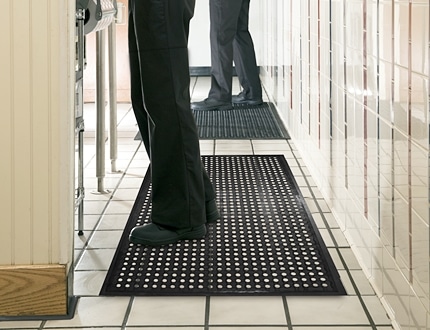
Workers maintain proper posture while standing. They should also keep on moving so they don’t start suffering from the effects of fatigue. One of the leading ways to ensure this is to use a range of products, such as anti-fatigue floor mats that can be rented.
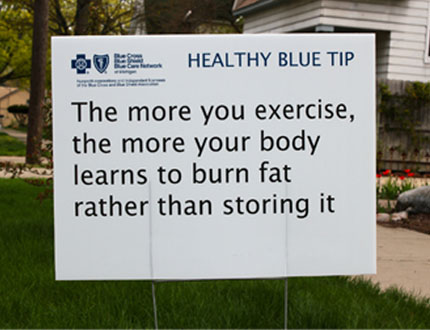
Also, here is an infographic from SnackNation.com on how to stay healthy at work.
Total prevention of fatigue is most definitely impossible. Still, at least some of the ideas mentioned in this article can help fight it. More employers need to realize that their employees are humans and not robots. Fewer people would suffer from the downsides of workplace fatigue. Most of the ideas listed here should be able to help out employees stay productive in the workplace. In the end, employers can look into the products offered by Alsco. They serve the above-mentioned purpose in a work-friendly way.
Photo courtesy from Freepik Images by freepik
Photo courtesy of Flickr Images by A Healthier Michigan
8 Ways Working Night Shifts is Putting Your Health at Risk
Did you know that lack of enough sleep, as well as lack of exposure to natural light, can seriously affect your productivity and even health?
Those are the reasons why a lot of businesses advise their employees to have good sleeping habits. They also try to introduce as much natural light into their offices as possible.
Sleep is responsible for the repair and healing of a person’s heart and blood vessels. That is why a
That is why a severe and ongoing lack of sleep is linked to increased health risks including heart disease, stroke, diabetes, workplace injuries, and depression.
While these hazards are no longer a secret for people whose jobs require shift work, many still can’t completely give up working at night. Some jobs often require employees to work at night – these include:
- the staff at medical facilities
- police officers
- customer support representatives
- truck drivers
Because it is part of their jobs, these employees have to fight their bodies’ natural need for a rest at night and instead, stay awake, focused, and working.
This can be very difficult because working at night runs against the body’s natural circadian rhythm. This fight is not without its casualties, and unfortunately, the greatest casualty is one’s health.
What is The Circadian Clock?
The circadian clock is basically a timer that lets glands in your system know when it’s time to release certain hormones. It helps control your mood, your alertness level, your body temperature, and other aspects of your body’s daily cycle.
Every human’s vital signs are regulated by the circadian rhythm. This includes our sleeping and waking cycles.
These regular periods of change are important to ensure correct bodily functioning. This rhythm depends on external cues such as natural light and darkness to determine whether to start or end different functions.
Humans have evolved to be naturally active during the day when we perform all our daily activities, and inactive at night time when we head home and get a good night’s rest to recharge for the next day.
This circadian rhythm in our bodies matches the daily natural light/dark cycle of every day. This rhythm can be disrupted or thrown off when a person is continuously exposed to bright lights during nighttime and darkness during the daytime.
Aside from this disruption to your body clock, there are still a lot of health risks involved in working at night. So, how does working the night shift hurt your health?
1. It robs you of good quality sleep

Photo Courtesy of Freepik Images by @boryanam
Humans recharge through rest and sleep and the night time is the perfect time to do it because it’s dark and quiet.
For people working at night, their serotonin or “feel-good hormone” can drop to drastically low levels. These people may also suffer from the effects of circadian disruptions as they are trying to stay awake while working.
This leads to lower sleep quality of these employees even when they finally get the chance to rest. Anyone would struggle to function properly after just one poor night’s sleep, let alone days, weeks, months, or even years of continuous insufficient sleep.
This problem builds up to what we call ‘sleep debt’ – the snowballing effect of not getting the right amount and quality of sleep over a long period of time. And obviously, the only way to pay up all your sleep debt is to establish a proper sleeping habit and get sufficient amounts of sleep.
2. It Increases the Risk of Diabetes
The lack of sleep affects the hormone levels in a person’s body as well as his body’s ability to regulate and metabolise glucose. If a person is excessively sleepy all the time, it is more likely that they will gain weight and has a higher risk of having type 2 diabetes.
According to a study published in the journal Occupational & Environmental Medicine, it is men who work at irregular hours that are more likely to develop diabetes because of the impact of this nature of work to a person’s insulin activity.
This explains the reasons behind the relationship between insufficient sleep and the risk of diabetes.
3. It Ups Your Risk of Obesity
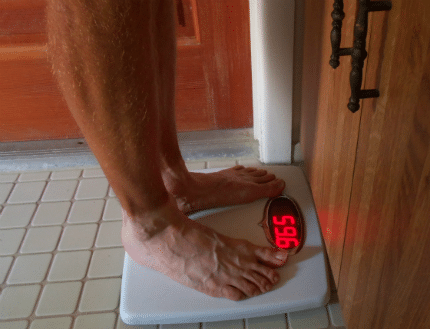
Photo Courtesy of Max Pixel Images
Not getting enough sleep or sleeping “against” the body’s biological clock could increase a person’s risk of becoming obese.
This is because the lack of sleep can slow the metabolism down drastically and change the way your cells respond to insulin. This makes the body use less energy in performing simple tasks like eating and breathing.
Not enough sleep encourages weight gain by slowing the rate at which calories are burned, as well as by boosting hunger. People who get insufficient sleep tend to eat more than they actually need.
4. It Puts Women at Risk of Breast Cancer
According to a study published in the International Journal of Cancer, severe lack of sleep caused by working the night shift raises the risk of breast cancer in women by 30%.
Women who have worked the night shift for least four years, including those who worked night shift three times (or fewer) per week, are at the highest risk because their daily rhythms are often disturbed.
Basically, anyone with a disrupted biological body clock due to shift work, also known as circadian rhythm disorder, is probably at risk.
Researchers suspect that the reason behind this link is the fact that the body’s internal clock controls so many important biological functions.
Cancers grow faster when a person’s wake/sleep cycle is manipulated and the production of melatonin by the pineal gland is suppressed due to light exposure during the night.
5. It Results in Negative Metabolic Changes

Photo Courtesy of Freepik Images by @katemangostar
Massive lack of proper sleep can throw a person’s metabolism into disarray. When a person works the night shift, the levels of leptin hormone in their body drop. Leptin plays an important role in weight regulation. It also affects blood sugar and insulin.
Night shift workers will have their bodies become resistant to insulin. This is a condition that usually kicks off serious health problems including ones we’ve mentioned above: weight gain, diabetes, and even cancer.
When a person who gets normal sleep and has a healthy body takes in sugar, insulin is released by the pancreas which then travels throughout the body. It signals cells to absorb some of that new glucose.
However, when a person’s body becomes resistant to insulin, the cells will become less responsive to those signals. This result in rising glucose levels in the bloodstream, leading to diabetes, damaging other organs like the eyes, nerves, and kidneys.
6. It Increases the Risk of a Heart Attack
Did you know that a healthy heart starts with a good night’s sleep? Now that we have linked lack of slep to a number of scary health problems, it should no longer be surprising to find out that it also has negative effects on the heart.
This raised risk seems to be independent of lack of exercise, a healthy diet, and other obvious causes. In fact, the World Health Organization (WHO) has already warned that sleep deprivation increases the risk of heart attack and that it is just as dangerous as smoking and prolonged sitting.
7. It Leads to Workplace Injury

Photo Courtesy of Flickr Images by Land Between the Lakes KY/TN
Employees working night or graveyard shifts that haven’t been getting sufficient amount of sleep are more prone to work-related injuries than those who work during the day.
This is due to the disruption of a person’s normal sleep patterns that can cause fatigue or drowsiness which will get.
8. It Can Lead to Depression
Night shift work also has an impact on mental health. A study in the International Journal of Occupational and Environmental Health discovered that, in comparison to the day shift workers, depression occurred at a much higher rate among those who worked at night.
In a study in the International Journal on Disability and Human Development in 2008, researchers discovered that shift work tends to increase a person’s risk of developing mood disorders.
In fact, there is a form of depression that is related to insufficient to a complete lack of natural light stimulus in the daytime. It is called Seasonal Affective Disorder and is common in places that have extremely short days during some seasons, like the winter.
This disorder is linked to circadian rhythms being interrupted by light periods that are too short and is treated using bright light therapy.

Photo Courtesy of Freepik Image by @pressfoto
In a study conducted at John Hopkins University, researchers tested how disruptive light/dark cycles affects mice. The study revealed that the mice showed depression-like symptoms after they were exposed to darkness and light in alternating, 3.5 hour duration cycles.
This result suggests that when shift workers sleep in dark rooms during the day and work under bright lights at night, their internal and external circadian rhythm factors are being pitted against each other. This results in a depressive state that can be compared to seasonal affective disorders.
While it may be unfortunate that night shifts cannot be completely avoided in some industries, it is important that companies provide quality care for the health and safety of their night shift workers.
Alsco offers health and safety solutions for the workplace with its first aid packages. We also offer managed rental services to give you complete peace-of-mind that your workers are going to be safe at work at all times. Call us today!
Photo Courtesy of Freepik Images by @pressfoto
4 Ways to Deal With Workplace Stressors
Stress has long been understood to result from pressure in the world around us coupled with the strain that happens within us.
Things that don’t stress us out in some situations can pretty much stress us out in others.
That said, it’s pretty obvious that a workplace is a place where stressors abound and stress is rife.
Pinpointing what these stressors are is critical to effectively manage them and turning your office into a healthy workplace with happy employees.
In this article, we look at the very real problem of stress, what causes it in the workplace and offer 4 effective ways to properly manage it when it’s there.
What’s the big deal with stress?
Stress can be observed as a person’s reaction to the situations they encounter. It’s certainly reflecting on a person’s behaviour, feelings, mental state, and can even have obvious physical symptoms.
Everybody deals with stress in their own way, but basically, you know a person is stressed when they’re more erratic, irritable, and even aggressive coupled with a lowered drive for work and impaired functionality.
Even those that mask these things well will find their stress reflected in the quality of their work output.
The stressors that abound
There are far too many stressors in the workplace to discuss in one article, but there are several that are worth focusing on:

Image from: Pexels by Startup Stock Photos
- The work itself. Having a heavy workload can’t be helped sometimes, it’s true. But it’s still critical to understand the exact pressure triggers that your employees have at work.
- The level of pressure. Again, this is something that can’t always be helped when the deadlines approach fast, but it does have a very significant effect on stress levels—always to the detriment of the person being pressured.
- The work environment. Employees place a lot of value in the work environment. This includes the people they work with and place they work at. If the workplace is messy and unsanitary and the coworkers unpleasant and gloomy, the stress levels rise rapidly. Pay extra attention to workplace washroom.
Take these all together and you have a recipe for disaster—especially if it all goes unnoticed and unaddressed. So how does one manage all of these? Here are the 4 best ways.
1. Identify the Specifics of These Stressors
When you’re caught up in the stress yourself, it’s very easy not to notice what’s causing it. Stress has a way of sneaking up on you.
While you are thinking that you are upset because your pen stopped working, you fail to realise that it is the inadequate workload and the approaching deadline what makes you break that pen in half.
If you’re in a position to do so, take the time to carefully observe what’s going on in the office.
Does the workload really mirror the stress felt by everyone? Is someone putting too much pressure on everyone else? Is the work area conducive to stress or productivity? The best way to answer these questions is to talk to the people working around you.
2. Acknowledge the Most Affected

Image from: Pixabay by Free-Photos
Once you’ve identified what stressors exist and how these affect people specifically, the next step is to acknowledge those most affected.
It’s actually very effective when your boss shows that they know you’re under a lot of stress.
Acknowledging that your employee is doing their best when the conditions are not perfect means a lot.
It shows a great deal of care and concern that many people long for when under the weight of stress.
Again, the way to do this is to sit down and talk to these people.
3. Take Proactive Steps Where Possible
Don’t wait until you notice that your employees are crashing down under the weight of stress. Do something before it even starts to happen. It’s always better to be safe than sorry.
You can do this simply by doing these things today:
- Make your workplace clean and comfortable for your workers.
- Think about their workload and deadlines and make sure they are reasonable.
- Spot the interpersonal issues and solve them in time.
- Take some steps that will help your employees get enough exercise and eat healthily.
All these things will help prevent stress before it even starts making problems around your workplace.
4. Set Up Breaks!

Image from: Pixabay by pmvchamara
Lastly, taking much-needed breaks can easily relieve workplace stress. If possible, make the pauses long and truly distant from the stressors.
A trip to the park or even the spa might just be what the doctor ordered. If such big breaks simply aren’t possible, then little things like a surprise box of pizza or doughnuts (or both!) can do wonders.
The keys, really, centre around being more conscientious about what’s going on around you and reacting appropriately.
Again, it’s important to ask questions and talk to your coworkers. That done, deal with it with a touch of care and compassion. It goes a long way.
At Alsco, our biggest priorities are employee happiness and safety. When you attend to these, you invest in the most important assets your company has.
With an extensive product line and packages geared towards safety and sanitation, Alsco has all you need to help mitigate employee stress.
Reach out to us and we’ll help you pick out the products and packages that meet your needs specifically. We’re all about meeting our customers’ needs exactly as they need them met.
Photo: Flickr
8 Reasons to Get Your Employees Pumped Up on Fitness
Between the stresses of the day to day grind, and—more often than not—the commute to work, it’s easy for employees to get tired and drained.
When that happens, it’s not surprising that productivity and drive get affected negatively. If you have a company full of unproductive workers, your business will be the first to suffer.
This is exactly why keeping employees healthy makes good business sense.
The key elements of health are exercise, proper diet, and good hygiene.
As an employer, you can do your best to have a clean and healthy workplace and even offer some healthy snacks and fitness programs.
Many companies today are quick to invest in the physical fitness and wellbeing of their employees.
Of course, offering a physical fitness plan and getting people to go for it are two different things entirely. Which is why we give you 8 reasons why you should really get them motivated.
1. Fit employees stay healthy
When an employee is tired and worn out, their immune system isn’t working at top efficiency. This leaves them very vulnerable to getting sick. This is especially true when there’s a flu bug jumping from employee to employee.
Getting your people fit means also boosting their immune systems. That will result in lowered absence rates and even less spend on health care payouts.
For some employees, taking on a more physically active role can be life-changing. Take Domenik, for example, whose job as a Service Delivery Person for Alsco in Auckland changed his life in less than 3 months.
https://www.facebook.com/AlscoNewZealand/videos/358413175057693/
2. Fit employees are more active at work

Image from: Pexels by Gratisography
Being fit contributes to better endurance in other fields, as well. This means that stress, commute and other physical stains less affect those that are in good physical shape.
After a long commute and a stressful day, you’re more likely to feel lacking in the energy department when you’re not fit.
Naturally, this affects the quality and calibre of work being delivered.
When you encourage fitness in your employees, you keep their energy levels on the up and up, meaning that they better handle their workloads with vim and vigour.
3. Fit employees have higher self-confidence
Let’s be honest, being in an unfit body isn’t the best way to feel confident. It makes us feel more conscious of our appearance and less likely to drive ourselves onward.
Being fit will help build your employee’s self-confidence. This is especially true when they start to notice the changes in their body. This, in turn, will drive them to go beyond what they can do and challenge them to excel.
4. Fit employees make others confident too

Get one or two employees on the fitness waggon and you’re bound to attract even more to follow. Fitness is contagious!
A lot of people think that fitness is something that other people do and that it’s not for them.
That is the precise thought that’s holding your employees back from taking up exercising.
When they see how it works on a real, live example in the office, they will be inspired to try fitness themselves.
That’s especially true when it comes to energy levels. Someone lively will inspire others to be lively too.
5. Fit employees are more goal-oriented
Fit employees often have a vision for what and where they want to be in terms of their shape and health. It can be a target weight or a target body form, but having these fitness goals actually extends into their work lives.
Fitness fans easily adopt a goal-oriented mind frame.
You’ll find that motivating your employees to keep fit also pushes them harder to reach their professional goals. This will pull up productivity even more.
6. Fit employees act much better
Exercise has long been found to release “feel good” chemicals in the body as well as release pent-up stress. This has a profound effect on a person’s perspective on life as well as their general behaviour.

Image from: Maxpixel by Nikon D700
While those same people might once have been dour and glum, physically fit employees are far more likely to become positive and bright. This is something that can literally lighten the mood around the office too.
7. Fit employees are far less stressed
Apart from the release of chemicals like endorphins that promote positive outlooks, exercise and physical fitness also give employees an outlet for everything that might be stressing them out.
Be it work or their personal lives, encouraging them to keep fit is also encouraging them to vent out all the stress that has been piling up inside them.
Less stressed employees are more relaxed and better prepared for all tests and trials of the office work.
8. Fit employees notice your efforts for them

Photo courtesy of Wikimedia Image by Virgo Group
Take all the benefits mentioned above and try to implement them into the everyday routines around your office.
Your employees will notice the effort you are putting out for their wellbeing and they’ll love you for it. Because who wouldn’t want to feel cared for by their bosses?
This will not only improve productivity, but it will also lower turnover and attrition rates in the long run. Nobody wants to leave an office where they feel taken care of.
At Alsco, we tend to your company’s very specific hygienic needs—all for the safety and wellbeing of your employees.
Let us take the issues of sanitation, hygiene, and general workplace safety off your hands and leave you to deal with other aspects of employee wellness.
We offer many great products in highly customisable packages. Give us a call today and we’ll come up with a plan that is specific and perfect for your needs. Reach out to us today.
Photo: tanjashaw
The 4 Employee Well-Being Aspects You Need to Consider
Investing in employees’ health is the best investment any company can make. After all, if your employees aren’t in the pink of health, they aren’t going to be performing at their utmost.
Now, when you speak of health, many people assume that has to do with physical well-being. While that is true, general well-being is much more than its physical aspect.
There are actually at least four factors to consider if you want to provide holistic care for your people. You need to think about their emotions, life-work balance and even go into every little detail when it comes to workplace hygiene.
So, let’s take a look at these aspects and figure out the things you can do to improve your employees’ well-being.
1. Feelings, Nothing More Than Feelings?
There are two ways to look at the emotional well-being: the first is personal, the second is professional.
Emotions and moods caused by relations and events in one’s personal life shape the personal emotional well-being of that person.
While those issues are best left at home, that is not always possible. Especially if the low emotional well-being is caused by clinical depression, anxiety, or some sort of tragic event.
In that case, looking the other way is not a solution. The employer should reach out to the employee in question and try to help by offering counselling, contact with the support groups or at least days off for treatment.

Image from: Pexels by Katii Bishop
Professional emotional well-being has a lot to do with how employees feel about where they work. This is a very important aspect to consider as our moods strongly affect our work focus and productivity.
When we’re happy, giddy even, we tend to perform better as we’re pumped up. When we’re hurt, sad, or down in the dumps, we tend to lean towards the lethargic behaviour.
These cases dip and dive in our work quality. The same can be said of the emotions directed towards the company.
If an employee doesn’t feel comfortable, respected, and taken care of in their workplace, they are less likely to give their best.
The answer: There’s much to be said about drawing the line when getting friendly with your employees. It doesn’t hurt, though, to be a friendly face willing to ask “What’s up?” with genuine concern.
This usually helps employees feel comfortable and acknowledged in their workplace. Also, give them a company they can be proud of and happy to be with. Keep things bright and clean, and host team-building activities.
2. Money, Money, Money
All things considered, your employees’ bottom line is to earn money. That’s why they applied for and accepted their jobs. So, even with all the perks and good vibes in the workplace, what matters most to them is what they earn.
When faced with mountains of expenses, bills, rent, and even emergencies, it’s not hard to see why employees can stress out over their finances.

Now, you’re likely thinking, “I pay them! What more is there to it?” Well, what a lot of employers don’t take into account is the shifting costs of living relative to economic shifts in the world you are all a part of.
Inflation, market dips, current events—all these can shrink the value of their paychecks year in and year out.
The answer: Show you care. Take the time to understand the financial situations of your employees. If you can, adapt to these with a small raise that help them get by better.
Failing that, offer perks, coupons and discounts for things like groceries and medical services. Not only do you build rapport, but you also actually make a real difference that will reflect in better productivity.
3. It’s All in The Mind, and That’s Not OK
Stress and burnout are common workplace afflictions and one that can really do a number on your employees.
After all, when your employees reach a breaking point, you can’t expect them to keep pushing forward. People don’t work that way.

Stress and burnout can happen for many reasons – sometimes it’s emotional, sometimes it’s financial, sometimes it’s even the commute to work and a bad work-life balance.
The thing to know is that—no matter how insignificant these reasons might seem to you, they are very serious to your employees. Ignoring it will only make it worse.
Being in a constant state of burnout, especially if it is not acknowledged, makes people down-spiral into depression and anxiety. These, further, cause much more serious physical illnesses and conditions.
The answer: Enforce break times! Make sure that your employees know that you’re all for them stopping to catch their breath.
If you can fill that time with relaxing activities, all the better! The whole point, however, is making sure that there are moments when your employees know they can ease up and not think too much about work.
4. Let’s Get Physical
The overall health of every individual is greatly influenced by their physical activity. Health rarely comes to those that wait for it in their chair or bed. Experts recommend at least half an hour of exercise a day.
When it comes to people that work in the offices, these 30 minutes can easily be broken into two or three intervals of light office exercising for better health.
Still, physical well-being does not only rely on what you do. Where you do it is also an issue. More precisely, the level of hygiene and cleanliness of your surroundings influences your health greatly.

The office that isn’t clean enough and has a horrible washroom will have a lot of sick days on their hands. For that to get fixed, every employer needs to take extra care about cleaning.
The answer: Alsco provides for hygienic needs of your company through its line of Fresh and Clean products. From Odour Control to Anti-slip Mats, we have all the products you need to ensure a clean and safe workplace.
This will help keep your employees in the best of health and ensure that their well-being is well taken care of. Contact us today and together we’ll work out a custom plan fit for your company’s needs.
Natural Light and The Workplace Comfort It Brings
No matter how bright they can get, no matter how innovative and evolved the technology behind it, artificial light will never hold an ironic candle to natural light.
Our bodies know this truth well. Which is why a long day under artificial lighting always leaves us somewhat drained and weary.
With that in mind and the fact that natural light is completely free, it behoves one to wonder why the workplace doesn’t seem to capitalize on this one inexhaustible source of illumination more.
Here we look at several awesome benefits of natural light—and why you should totally get on this trend to achieve a healthy, sustainable workplace.
It Lowers Your Energy Consumption Dramatically
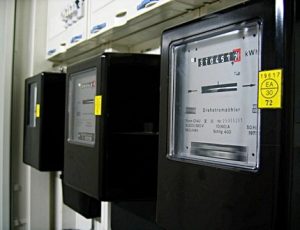
If it wasn’t entirely obvious, relying more on natural light means you rely on artificial lighting far, far less.
That means that you will see a dramatic decrease in your workplace’s energy consumption.
Apart from being a great boon to the environment at large, this saves you quite a lot on your monthly bills.
Admittedly, you can’t expect to totally do away with artificial lighting, especially if you’re the type of company that just has to have a nightshift.
During the day, however, it’s all a matter of efficient distribution. First among these are your windows—you’ll need big ones. Second, are a few well-placed reflective surfaces.
Naturally, the question you’d ask is: will the investment in all these things be worth it? The answer is a resounding “yes”. All these bits and pieces might cost you, but it will only cost you once and never again.
Making the most of natural light can save up to 75% of the energy consumed in lighting and even cooling buildings during the day.
It Makes Your People Healthier
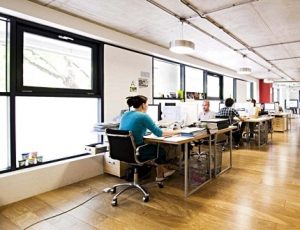
Image from: Flickr by David Wall
The reason we do so well in natural light is that we (and our ancestors) have acclimated to it through our evolutionary history.
Now, natural light has its own spectrum of, well, light that artificial sources can never truly, fully emulate.
This dissonance is one of the biggest causes of eyestrain. It has a lot to do with how our eyes need to constantly adjust to the amount of light it takes in and the specific wavelength this is in.
This can cause headaches, nausea and a whole lot of other associated illnesses and conditions.
That’s not to mention the damage it can cause your eyesight. An investment in natural light is an investment in health and, over the years, it has been found that natural light also promotes feelings of wellness, fewer headaches, attentiveness, and overall better quality of life.
All That Positivity Will Pay Off

Image from: Flickrby University of Exeter
Literally. With less eyestrain, fewer headaches, better attentiveness, you end up having happier employees. And that’s where it all comes together. All those things mean you have a stronger sense of teamwork, greater drive and motivation, and you’ll even make your employees simply love working where they work.
If it hasn’t hit you yet, that also means improved productivity and employee performance across the board. That, in turn, translates to great profitability for your company. All of that comes with just a switch to something that is already free and in abundance.
How You Get All That Sweet Natural Light
No one will ever expect you to up and remodel your entire building—especially if you don’t, in fact, own the entire building. But it’s really all about the little things.
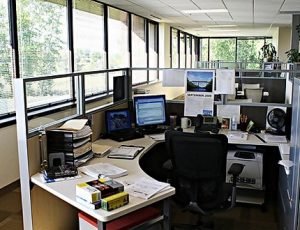
Image from: Flickr Image by Jerry Huddleston
First, focus on the windows. Getting full-pane windows lets the most light in the most direct way possible. If you invest double-paned energy-efficient windows, then they can do all that while helping to regulate temperatures as well.
Second, if you have access to your roof, skylights and light tubes are also a great way to go. Naturally, skylights bring the most natural light in, but there’s that risk of causing temperatures to rise indoors. Light tubes are a more compact but nonetheless effective option.
Third, heliostats can actively catch sunlight throughout the day and deflect this light into your building. These are especially effective on the sides of your building that face away from the sun. Think of them as artsy, outdoor installations that help the entire system.
Lastly, it would support these systems immensely to invest in open office layouts. This setup means less need for reflecting light around tight corners. Adding in a few glass walls and dividers means enhancing the effect all around!
Throw in a Spot of Clean

With all this light cast into your office, it wouldn’t do to have a dirty office. That’s why it makes sense to also invest in cleanliness. For that, you have Alsco Mats. These Evolution Mats are made from earth-friendly recycled materials. Durable and dependable, they will ensure that the workplace remains clean no matter the conditions outside!
Give Alsco a call today. We’ll help you pick out all that your office needs to stay clean and certifiably green.
Photo: K2 Space


