Trusted by 237K+ Business Worldwide. Find a Location
Trusted by 237,000+businesses worldwide across 250 locations delivering uniforms, linens and more. Find a Location Near You


Delivering Excellence Since 1910
Contact Us
6 Innovative Approaches to Workplace Washroom Makeovers
Little do employers know, washrooms are the face of the workplace. Some people reject job offers based on the workplace washroom.
One US survey showed that 9 out of 10 workers said the condition of a workplace bathroom is “a good indicator of how a company values its employees.”
The workplace washroom gives people a certain impression of the business. This could either be a positive impression or a negative one.
This is why platforms such as Google have a ‘Reviews’ tab. These reviews alone can cause the downfall of a business.
There are washrooms we walk into and get a 1980s feel. Dull lighting, poor tiling and even metal doors for toilet stalls are a thing of the past. These are some of the aspects that give workers negative impressions of the workplace.
This shows that it is time for a workplace washroom makeover.
This list of six signs to watch out for in your workplace washroom will prove why you need a makeover.
6 Signs You Need a Workplace Washroom Makeover
It can seem difficult for employees to complain about the workplace washroom setup. And few employers will see the need for a makeover in the first place.
So, how can you tell that you need a workplace washroom makeover?
These six signs can serve as a checklist for your workplace washroom, including innovative approaches to the makeover.
Washroom Crisis: Outdated Decor
Image from: Pxhere
When anyone walks into a washroom, the first thing to catch their eye is the decor. The decor in washrooms effectively sends out non-verbal communications.
In most cases, employers aim to provide a plain or minimalist kind of decor in the workplace area. This is because it projects seriousness and professionalism and can even encourage employees to stay focused and alert.
But this is the 21st century. There are new ideas for workplace washroom makeovers. There is simply no room for decor that takes washroom users back in time.
Firstly, use a good colour scheme. Use high energy colours such as yellow, blue or green. These high wave-length hues increase employee productivity. Warm colours, such as orange, are also helpful for evoking calm feelings.
A recent study shows that dull colours induce feelings of sadness. Colours such as grey. These are NOT the kind of colours to go for.
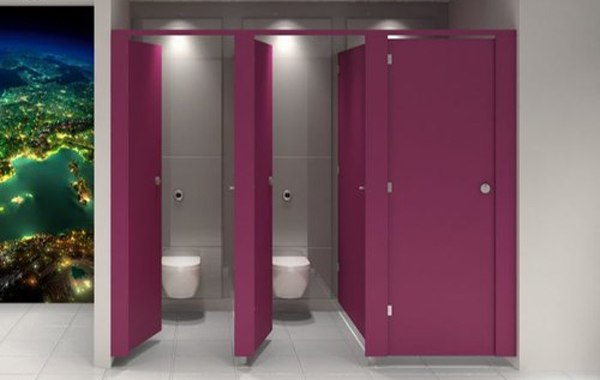
Image from: Indiamart
You can accessorise by adding office bathroom supplies that match – things like quality soap dispensers and sanitary disposal bins.
Washroom Crisis: Damaged Fixtures and Dirty Tiles
It’s time for a workplace washroom makeover if your washroom fixtures don’t work properly. By repairing or replacing damaged parts, you’ll save time and money on future maintenance and keep your workers happy.
Increase aesthetic value by adding creative tiles. There are many styles and colours of tiles to choose from. Choose tiles that are easy to clean, such as porcelain tiles. There is no need for scrubbing and wiping these tiles down is easier, especially with the right cleaning products.
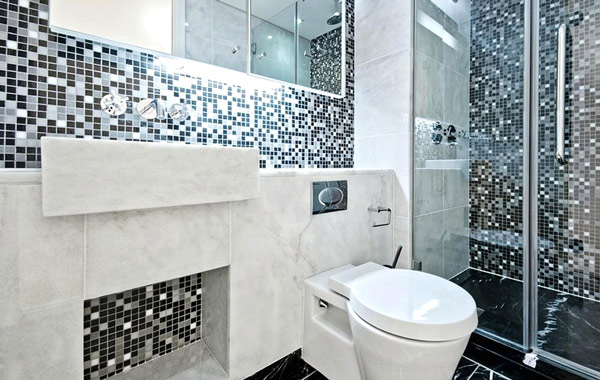
Image from: Lecrayon Modern House design
Washroom Crisis: Lack of Safety Features
A workplace washroom makeover is necessary if safety is compromised.
Many workers have suffered injuries in the workplace washroom. Slip and fall accidents are very common in washrooms, and overflows and liquid spills do cause accidents.
Make your washroom safe.
Incorporate some wet area mats into your workplace washroom to help keep it accident-free. They offer good grip to ensure there is no slipping and sliding.
In the event of an accident, there should be first aid kits close by to assist an injured person. Alsco’s managed first-aid kit rental service makes sure that your kit is well stocked and up to date at all times.
Adding grab bars makes your office washroom accessible to everyone, including the elderly and disabled.
Washroom Crisis: Non-Eco-Friendly
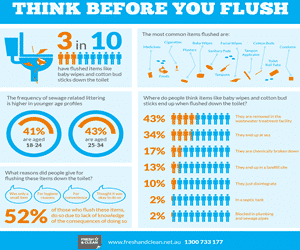
You know it’s time to go green if your washroom products are not eco-friendly. This includes materials that are unrecyclable.
The need to protect the environment we live in is more important than ever so it’s time to incorporate eco-friendly products in your office washroom.
Install air towels to replace paper towels for hand-drying. They provide an air drying system that is affordable and energy-saving. There is little need for servicing or replacing, unlike a paper towel machine.
Eco-friendly air fresheners are also important, releasing these scents into the environment in a less harmful form than ordinary air fresheners.
Remind washroom goers about proper waste disposal and energy conservation by using these free posters. Place them on washroom walls and toilet cubicle doors.
Eco-friendly supplies also have less impact on the well-being of workers and contrary to popular opinion, they are also cost-effective.
Washroom Crisis: No Room to Move
Your office washroom may be too cramped for people to move around freely, which makes washroom users feel uncomfortable. If so, it’s time to address the issue.
Is there any wasted space? If so, consider removing the obstacles that block its use – are there storage facilities that can be moved to another location?
Does the waste bin take up too much space? Is there a smaller, sleeker alternative?
Is the hand-dryer too bulky? Install a more modern version with a thinner profile.
Is there clutter – spare toilet tissue, etc – taking up space? Store it elsewhere.
Washroom Crisis: Lack of Proper Means of Disposal
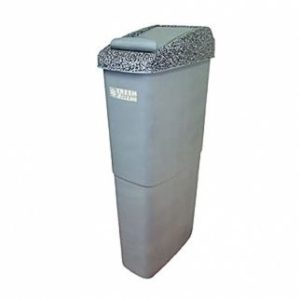
Sanitary disposal system for better toilet experience.
The means of disposal are the most important aspect of any washroom. One bin to dispose of everything in a washroom is not enough.
Efficient disposal units are a major aspect of office washroom makeovers. Noticing the bin is overflowing before half the workday is done is not a good sign.
Ensure that there are enough disposal units in the washroom. There should be general disposal units near the sink.
Each toilet cubicle in the female washroom should also have a feminine hygiene unit to allow for proper and discreet disposal of feminine hygiene products.
Make sure these disposal units are emptied and sanitised regularly.
“Alsco has impressed me with their constant strive towards customer satisfaction by keeping me in touch with new product lines and new services.”
Simon Jackson, Property Manager – Koru School
Make It Happen
Your washroom makeover doesn’t have to be a hassle.
Just get in touch with the experts and they will handle everything for you. Quality providers like Alsco will regularly replenish all the consumables from your washroom and, if you choose that option: even deep clean all your toilets and showers.
Contact Alsco for a best-price quote today and you’ll be impressing your clients, your employees and the environment in no time!
Photo: Victoria_Borodinova
5 Unconventional Office Toilet Etiquette Tips
Growing up, we’re encouraged to chew with our mouths closed and cover our mouths when we sneeze. We call it etiquette.
Seldom are we encouraged to pick up pieces of tissue paper. Neither are we educated on the benefits of courtesy flushes.
Yet etiquette isn’t limited to public behaviour. It’s especially imperative in office washrooms. This is where we also interact with colleagues and clients, albeit less directly.
Great office washroom etiquette is a clear reflection of the workplace itself. It’s embarrassing for anyone to clean up after others.
Good etiquette fosters respect for others. Incorporate it at your workplace using these five tips.
Clean up After Yourself
The general need for personal hygiene goes without saying. This also applies in the washroom.
Flush the toilet after every use or in-between the toilet sitting process. This is a courtesy flush. It controls and reduces bad odour.
Courtesy flushes also ensure the toilet remains clean after you exit.
Spraying some air freshener after washroom use is necessary for odour control. Spraying a small amount in the air and in the toilet eliminates the hanging smell.
Wash your hands before exiting. This way, you get rid of the germs that you may have come into contact with from the washroom.
This is a must, especially because we interact with others after using the washroom.
It’s the little things that matter.
Imagine how your kitchen would look if you never cleaned up after making a mess? If people don’t clean up after themselves, the washroom becomes inhabitable.
Toilet etiquette is respectful to all your fellow washroom users. It fosters a healthy habit of looking after yourself as well as your neighbour.
Put up Posters in the Washroom and Office
We have all seen posters in strategic places in the washroom.
‘But who would forget to flush the toilet?’ Indeed, it does happen, sometimes out of sheer absent-mindedness.
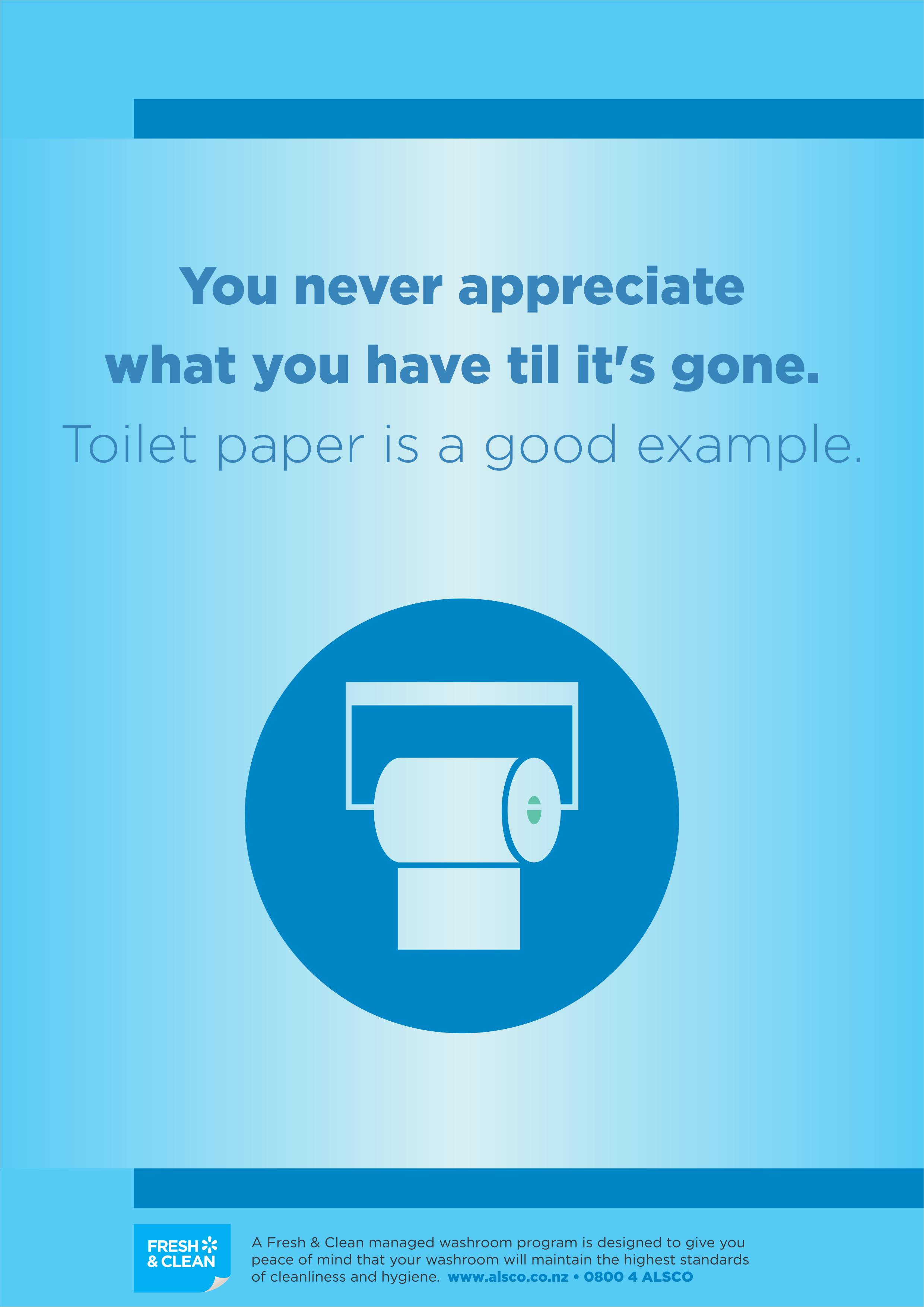
Posters are an effective way of reminding office washroom users of their duties to others.
These posters are available for free to download online. This saves money and time. You will not need to design your own posters and print them out.
They are available in different colours and designs. You can match them with your washroom paint and decor pieces, all while sending a message.
Place them right next to the sinks or even right on top of the toilet.
They are also placed behind the doors of toilet cubicles. This way, you are sure to catch somebody’s attention.
It is also possible to place posters in the office workspace. This emphasizes the importance of etiquette in the office in general.
Maintain Hygiene Units
Employers in the office have a major role to play in ensuring toilet etiquette. They should make a conscious effort to maintain office washrooms.
However, sometimes doing so can prove to be difficult. Sometimes flushing does not get rid of all the hanging smells and build-up of dirt in washrooms.
Deep cleaning services are important in washroom hygiene maintenance. This involves cleaning of the washroom area, especially those that are hard to reach.
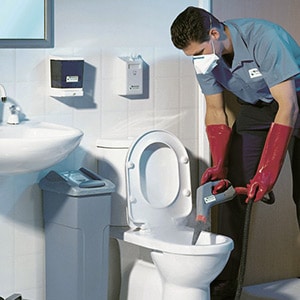
Companies such as Alsco provide deep-cleaning services of washrooms. Tailoring this service according to your washroom needs is more effective.
Finding germs in a dirty washroom is easy. It increases the chances of workers contracting an illness. It’s true that 67% of employees make complaints about unhygienic office toilets.
By deep cleaning your office washrooms, germs are easily exterminated.
It eliminates bad odour in specific areas, such as inside toilets or sinks.
Regular servicing of the washroom items and repairing damaged parts. Proper toilet etiquette is hard to achieve when the washroom itself is falling apart.
Keep your washroom equipment in good working condition.
Washroom equipment is expensive to buy. By maintaining your office washroom, you are saving time and money.
Good maintenance ensures that parts work well for five years and even longer. Regular washroom inspection will help in early identification of faulty parts.
Wait Until the Lunch Break
It is tempting to stop by the washroom and have a chat.
The conversation could be about a person in one of the cubicles. This causes some embarrassing situations.
These incidences have known to cause disagreements among workers.
There is no greater hell in this world than when a coworker recognizes your shoes under the bathroom stall & strikes up a conversation.
— DA King (@DanAaronKing) January 23, 2019
Wait until the lunch break to have that discussion with your mate. You can hold it in an open environment. This makes washroom goers more comfortable.
Keep your phone away when you are in the washroom. Picking up calls and taking pictures in washrooms creates a health risk. Our fingertips have bacteria which transfer to our phone screens.
Hand hygiene is important. Using phones in the washrooms spreads germs among workers and clients.
As an employer, it would be wise to give proper and adequate break times for your employees. An hour break should be long enough to chat and pick long phone calls elsewhere.
No ‘Ifs’ or ‘Buts’
Like taxes, toilet etiquette applies to everyone. You’ve got that right!
This includes employers and employees at both senior and junior levels. All workers should maintain good toilet etiquette.
This goes to say that toilet etiquette is a must. This makes everyone more comfortable in the office.
When nobody cleans up after themselves, the washrooms are dirty.
This leads to major reputation risks. In fact, 73% of people admitted that unpleasant washrooms affected their perception of a place.
Workers get a bad image of each other, leading to confrontations on how to use the toilet facilities.
These toilet etiquette tips should give you the confidence to upgrade your office washroom and educate workers.
These will foster great workplace culture and create a healthy and uplifting environment. Check out Alsco products with regards to hygiene systems for your washroom needs.
Just ask this satisfied customer!
“Making contact with Alsco was the best decision we could have made. From the initial phone call, right through to the supply and installation of our products, the transition was seamless, stress-free and they did everything on time and went above and beyond what I had expected”
Miranda Sage, Administration and Marketing Manager, Delta Stock Crates Ltd
Photo: publicdomainfiles
3 Brilliant Ways to Improve Your Workplace Hand Hygiene
Hand hygiene has always been vitally important, especially in the workplace. This is because the main activity in the workplace is the interaction with other people. Workers interact with each other and with clients.
Our hands are therefore the epicentre of our hygiene.
The problem is that some workers are not vigilant about their own hand hygiene and this poses health risks to others in the workplace.
If workers are taking more sick days than usual, this indicates that it is time for a change and some sort of workplace education program to stop the impact of cross-contamination between workers.
Implementing new workplace hand hygiene practices will change the face of your business.
3 Hand Hygiene Ideas That Will Improve Your Workplace
These amazing hand hygiene ideas are sure to make an impact, both in your workplace and in the personal lives of your workers.
1. Launch an Initiative in the Workplace
This is not a conventional hand hygiene idea. Few people would think to conduct research on their workplace hand hygiene practices.
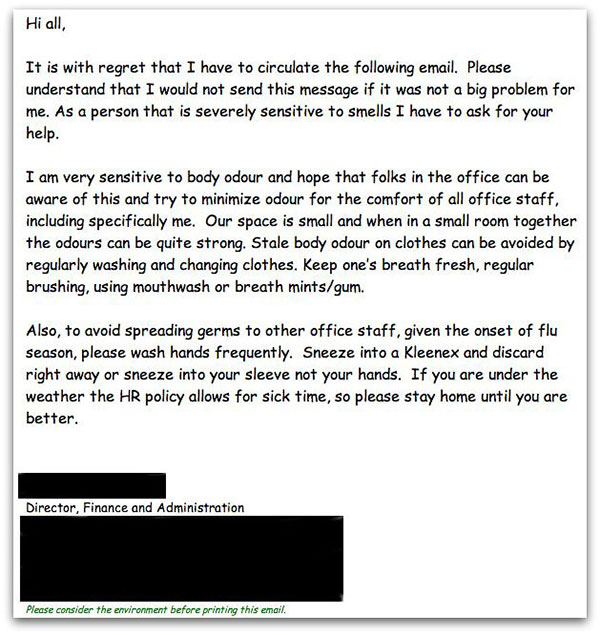
This involves taking surveys on hand hygiene practices in your workplace. From these surveys, you may ask for feedback on the current hand hygiene practices.
Distributing surveys to workers via the workplace newsletter is effective. It can also be through internal memos. The most appropriate means depends on the main communication system in your workplace.
Screenshot from: udomchamber
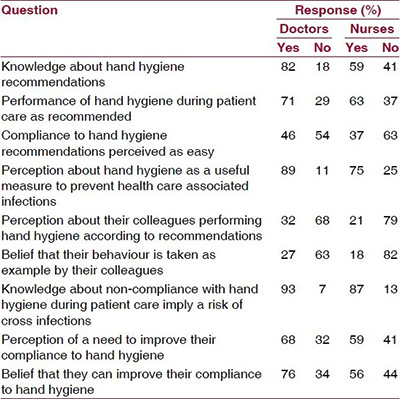
Borrowing examples from some surveys are useful. You may ask workers to rate their hand hygiene practices on a scale of 1 (bad) to 10 (good). You may also ask workers to rate their knowledge on the effects of poor hand hygiene practices.
Compiling the responses from the surveys and tracking them is necessary. This helps in assessing the hand hygiene of the workplace. From the responses, you can craft a hand hygiene training session. The training will be according to the needs of the workplace.
Screenshot from: Indian Journal
The aim of a hand hygiene initiative is to familiarise workers with good hand hygiene ideas. It is also important in establishing proper hygiene practices to observe.
Crafting training sessions according to the responses establishes the importance of hand hygiene. A volunteer or people of influence conduct these sessions. Human resource managers are also helpful with this. This involves speaking to workers on hand hygiene ideas.
The use of videos and playing of games has shown to bring good learning responses.
Incorporation of videos of proper hand hygiene ideas is effective. For example, this video from the World Health Organization is formal and informative. It gives proper handwashing steps.
This other video from Alfred Health staff is a humorous song on hand hygiene. This video is particularly great as it uses Bruno Mars’ song “Uptown Funk.”
Another video by Heritage Village provides reasons why hand hygiene is important. They also use a catchy song called Hey Mickey which also illustrates how to wash hands.
These videos are great examples to use during hand hygiene training initiatives. They make the hand hygiene routine memorable, fun and show the importance of hygiene.
Create incentives by giving prizes after training sessions. This can be money, vouchers or paid vacations. This encourages your workers to come up with catchy hand hygiene slogan ideas. The workers will use the slogan to be accountable to each other.
Communication of the hand hygiene slogan through emails and internal memos works well. Offering a prize makes workers more interested in active participation of hand hygiene.
An example of a good hand hygiene slogan is “Don’t forget to rub in”– as used in the video by Alfred Health staff on the use of hand sanitiser.
These give the workers an incentive to take part in hand hygiene in the workplace.
2. Desktop Hand Hygiene
Hand hygiene is not only important in the washroom. It is also important in the workspace.
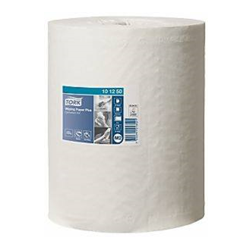
Provide wipes, napkins or paper towels to clean up desk services where there is dirt. Installing hand hygiene systems in the work area is as important.
The hands have germs that pose health risks to ourselves and others. On an ordinary day, we touch our face, phones and even greet other people. The germs found on these items may make us sick, especially if we don’t wash our hands.
By providing hand wash and hand sanitiser, this reduces the chances of illnesses. This includes reducing the spread of common hand-to-mouth diseases.
By making these products more available in the workplace, it encourages their use. This is because workers are most likely to use them after seeing them all over the workplace.
3. Hand Hygiene Reminders
Research shows that only 31% of men and 65% of women washed their hands after using the washroom.
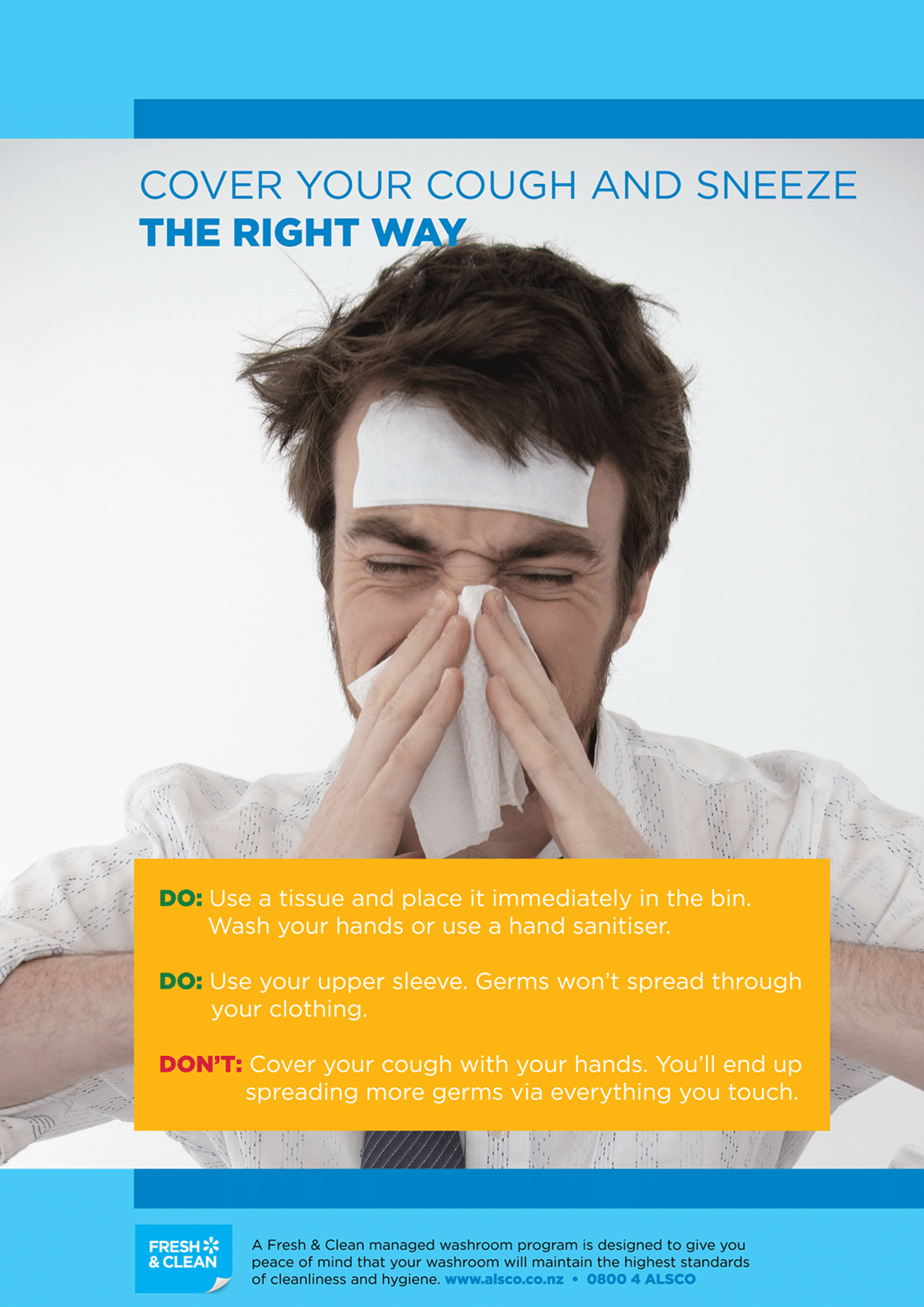
Use of all the above hand hygiene ideas may not be as fruitful without a couple of reminders in the form of posters. They remind workers about proper hand hygiene practices.
Without these reminders, hand hygiene ideas would be difficult to focus on. Using them keeps our hand hygiene in check.
Place these posters above a hand sanitiser dispenser in the workspace. You may also place them in workplace handwash stations next to the soap dispenser.
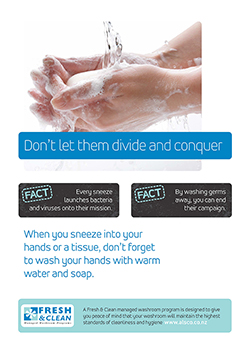
Today, due to the increase in hand hygiene awareness, posters are free for download. This saves your business time and money used in designing your own posters.
Incorporate your workplace hand hygiene slogans in customised posters. This will make hand hygiene ideas more memorable.
The spread of illnesses is easier without proper hand hygiene. Workers who are unwell are less productive at work. Studies show that a good hand hygiene system ensures fewer employees fall ill.
On top of this, they take less sick days. Sick days cost a business around $20,000 each year. A good hand hygiene system reduces the cost placed on businesses because of sick leave.
These hand hygiene ideas are sure to improve your workplace in no time.
“…they are always willing to go the extra mile to help us out when we get stuck.”
Lyndsey Morrison-Barnes, Resort Manager, Paihia Beach Resort & Spa
Try out Alsco products and services to change the face of hand hygiene in your workplace today.
Photo: wikimedia
Doing Business in Japan: Etiquette Rules You Should Know
Japan is a nation of culture, tradition and booming business. Japan is the 11th most populous nation in the world with a population of around 127 million people.
Japan has risen to be the third-largest economy in the world (as of 2017) with a national GDP of $4.73 trillion.
It is also an exporting giant that was huge on nuclear power and is now a large importer of oil.
Business in Japan is big, which means the nation interacts with businesspeople from all over the world.
It’s important for anyone who conducts business in Japan to be aware of a few etiquette rules.
Starting a Business in Japan
With a growing economy and favourable business conditions in Japan, it’s relatively easy to start a business. However, it must be unique and benefit the people of Japan. With a solid business plan, you should be able to start making profits in 12 to 18 months.
For almost three decades, there has been a sharp drop in office space rent. In addition, people no longer expect the wages growth common in the past. This could change with the upcoming 2020 Tokyo Summer Olympics. As it approaches, there will be a high demand for multilingual workers and business opportunities.
Business Etiquette in Japan
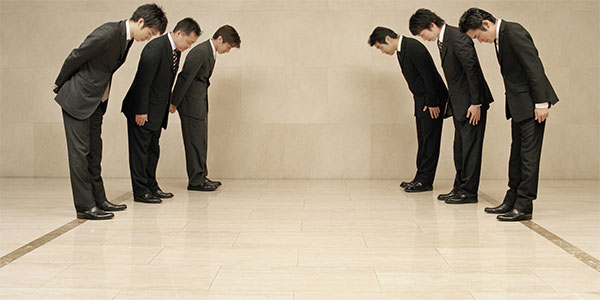
Businessmen expressing deep gratitude. Photo: kaigai-matome
First Impressions Count
Dress Code: The most important rule when dressing for business in Japan is dress to impress. In any business setting, first impressions count, and in a cultural nation like Japan, this is important. Dressing for business should be subtle, but as smart as possible.
Men should wear navy business suits while women should wear a formal work suit. It’s considered a sign of disrespect to dress casually in the business world. You should also remove your coat before you enter a business meeting and sling it over your arm.
You may be in a meeting location where you need to remove your shoes, so slip-on shoes are the best option.
Respect is revered in Japan, and it is considered offensive for a woman to wear trousers to a business meeting. Women often also wear as little jewellery as possible and low-heeled shoes to avoid towering over the men in the meeting.
Greetings: ‘O-genki desu ka’ is the formal way to ask someone ‘How are you?’ in Japanese. The customary greeting is usually a bow. It is seen as respectful: The lower the bow, the more respect you exude. When bowing, keep your eyes low and your open palms on your thighs.
When considering doing business in Japan, respect is important. You should learn formal greetings in a formal or business setting. This is because each type of greeting also has an informal version that could be considered disrespectful. Keep in mind that the seniority of the people in the room will determine the type of greeting to use.
Seating Arrangement: When it comes to seating arrangements, social status is very important. In many countries, seating during meetings is not treated as seriously as in Japan. Keeping this in mind will ensure that your business meeting goes ahead smoothly.
The most common way of sitting is in a round-table type of setting. The leader of the meeting will sit at the centre of the room and the most senior people in the room will sit next to the leader. The head of the meeting, usually the CEO or Chairman of the host company, will be seated at the head of the table while the person next in stature will sit next to the CEO, and so on.
Guests must wait for a go-ahead from the host or meeting leader to take their seats as a sign of respect. In the same vein, guests will stand only after the leader stands.
Refreshments: When the tea is offered, it’s considered a sign of respect if you wait to take a sip after the host has taken their first drink. This may seem like a minor detail, but it will demonstrate your respect for the occasion.
Meeting Conclusion: When the meeting is starting, place your business card on the table. This is a rather complex action which we will touch on later, but business cards show that you are a serious business person. Show pride in your business and resist bad-mouthing competitors to earn a seat at the business table.
When it’s time to leave, it’s a polite gesture if you respectfully bow until the guests get into the elevator and it closes behind them. Entering the elevator after the meeting also demands that the person with the highest stature enters first and so on.
If in a different setting like a restaurant, you can bow until the door closes.
Business Cards Are Important
A business card, or ‘meishi’, is an important part of any business meeting or deal. No business will be conducted before business cards are successfully exchanged. When doing business in Japan, you must remember the language factor.
Print out cards with one side in English and the other in Japanese. They must have the business person or ‘sarariman’, name, title and address of the business. There are many agencies that will create professionally translated cards with the right typesetting. A wrongly set card could throw your meeting into disarray before it even begins.
When offering your card, do so with both hands with the side written in Japanese facing upwards. Make sure that the cards you hand over are crisp and clean. When handing over a business card, put yours under your counterpart’s card. Failure to do so can be assumed that you do not consider that other person’s card as important.
When you receive the other party’s card, do not write on it or put it in your pocket or wallet. In addition, do not stack cards in the presence of the host. Business cards are a representation of the individuals in the room; therefore, you can place them one next to the other on the table until the meeting is done.
You should study it and admire it as a sign of respect.
Communication in Business
During a business meeting, teamwork or group effort is respected more than individual achievement. Being part of a team, whether at work or in business, means that you must represent and be a spokesperson for your team everywhere you go.
When talking about your company or business, focus on discussions that show the strength of your team, as this could go a long way in sealing the deal.
While we may have learnt that building rapport using small talk is encouraged in business, it’s the complete opposite in Japan. Silence is considered to be more credible than excess talk. Japanese culture believes that silence is golden and it shows that you are a credible business.
The Japanese appreciate discussing business deals at length, with a consensus between all parties ending the deal. They prefer to walk through all the details of the deal on the table.
The Western way of aggressive, elevator-pitch business deals is not appreciated, so go with the flow and reap the benefits in the long-run.
Handling the Business at Hand
In Japan, there are a few mannerisms that are usually followed and can be considered disrespectful if broken. For example, avoid using large hand gestures and instead respect everyone’s private space. Using smaller or no hand gestures shows that you respect the senior people in the room and the business at hand.
You should also avoid pointing because in many cultures it is considered rude.
When attending the meeting, show up at least 10 minutes early to show your interest in the business ahead of you. This will give you time to learn more about the meeting attendees (like who will be the most senior attendee). It will also allow you to put finishing touches to your presentation if necessary.
Japanese businesspeople are usually on tight schedules and rather strict on time, so stick to the time stipulated for the meeting.
For every presentation, send in a prior copy of the presentation to all parties to prepare them in advance. The presentation must be translated into Japanese. During the meeting, take as many notes as possible to show interest in the proceedings. At the initial training sessions in companies, staff are trained to note down everything.
Show Your Appreciation With a Gift
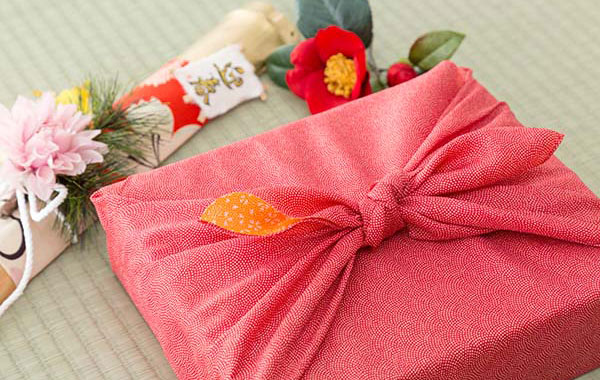
Japanese people gift as omiyage. Photo: ippin
In many parts of the world, Japan included, a little gift of appreciation is a great way to win over anyone in a business or social setting. You can give a gift, or omiyage, from your home country as a way to exchange cultures. This is a perfect way to teach your hosts something about your own culture.
However, you must be careful with the types of gifts you offer to a business associate.
First, make sure the gift is wrapped, as they value the wrapping sometimes more than the gift itself. When offered a gift, appreciate it with compliments and awe and only unwrap it when you have left the meeting venue.
When handing over the gift, do so with both hands (a bow depending on the seniority of the receiver is an added bonus). Regardless of the size or type of gift, it is considered respectful to accept it with the same excitement.
Examples of gifts include quality liquor, sweets or top-choice beef, among others. You can think of such gifts or cultural artefacts from your home country to offer to your hosts.
There is no limit to the type of formal gift you can give in a business setting, but there is one rule you must not forget: do not give anything in fours. The number four is considered taboo in Japanese culture because its translation sounds close to a phrase which means ‘death’ — ‘shuh shuh’.
In conclusion, respect for the Japanese culture, even in business is key. Taking the time to learn about how things are done in Japan will help assure you of success when doing business.
Photo: Freepik
How to Cook up a Great Restaurant Floor Plan
When looking to draw up a great restaurant floor plan, the most important things to keep in mind are a positive customer experience and a great ambience.
Your restaurant floor plan should make clever use of available space and comply with all legal and regulatory requirements.
ANZ Food Standard Code
According to the Australia New Zealand Food Standard Code, the layout of the restaurant should be planned in such a way as to minimise the possibility of food contamination.
You must have a proper separation between food preparation areas, storage areas and cleaning facilities.
The construction materials are also covered in the Food Standard Code. You must use specific materials, depending on the permanency of the restaurant. All equipment to be used must be easily accessible to all staff during construction and once the restaurant is in operation.
The code also advocates for adequate space for all your needs, which include food preparation areas, storage spaces, waste disposal zones and changing rooms. The code basically advocates for little to no food contamination when planning for a restaurant.
The Food Standard Code also requires a restaurant plan to cater for lighting, ventilation, water supply, water storage, disposal facilities and any equipment requirements.
Common Restaurant Plan Elements
There are common areas in any restaurant that you can include in your plan, each with its own regulations and rules. Paying attention to detail early on in the planning stage can help avoid any bottlenecks or unsightly areas you don’t want customers to see.
Restaurant Kitchen Floor Plan
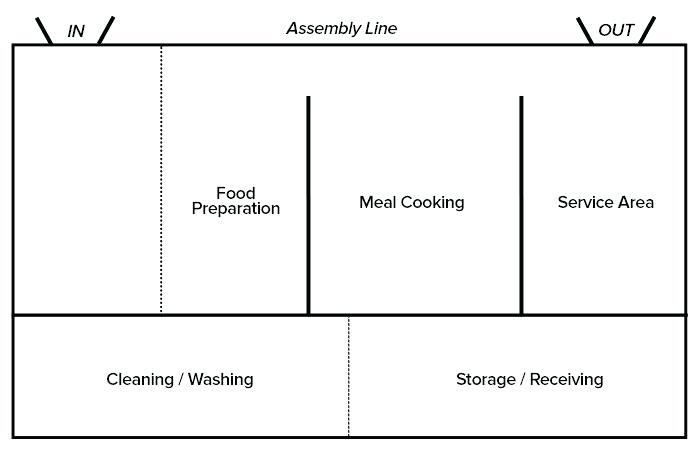
There is a variety of common restaurant kitchen floor plans you can choose from. These plans must include a preparation area, cooking area, serving station, food storage area and washing facilities. Each of these elements is designed to promote a working environment that ensures excellent food safety and the safety of staff and customers.
Zone Style: This is where the common areas in the kitchen are clustered in their own space with equipment being placed along the walls. The great thing about this kitchen style is that there is a large space at the centre for supervision by the chef which also enables effective communication.
Island Style: The island style means that the cooking area is set up in the middle of the kitchen with the cleaning and preparation areas being set around it. This is one of the preferred styles for large kitchens, but you can renovate your kitchen to fit in this type of layout. This also has a lot of floor space between the other areas and the cooking island, which allows for easy movement between areas and ease of communication.
Assembly Line Style: If you have a limited menu but serve a high number of customers, then this is an ideal kitchen style to consider. This is also the preferred plan for schools, fast food restaurants and even correctional facilities. The style starts with the preparation and cooking areas and goes all the way down to the service area. This means the team is able to send food items down to the next area easily and efficiently.
Restaurant Dining Area
This is another crucial element of your restaurant plan. Here, you will plan for dining furniture, a bar area and decorations, among other items. You must keep in mind when planning your dining area that you must reserve about 6 metres for fine dining, about 4.5 metres for a regular dining area, and between 3.3 and 4.2 metres of space between tables for fast food restaurants.
According to Seating Expert, an ideal dining area plan should leave at least 0.4 metres from the edge of the dining table to the back of the seat. They also suggest that a diagonal seating arrangement can save on space. You must keep in mind the size of the furniture you want to purchase.
Customers are usually turned off by small tables and little spaces between walking aisles. Therefore, when planning for your dining area, you must consider not only the available space but also the furniture you will buy.
The Entrance and Waiting Zone
An effective restaurant plan must have a provision for an attractive entrance area and guest waiting zone. For the entrance, you can have a billboard every few hundred meters to direct customers to your restaurant. In addition, the sign towards the entrance must be visible and attractive to customers. Small details like the exterior design should be put into consideration.
Many restaurants sometimes overlook a space reserved for waiting guests. To avoid confusion at the entrance, have an area set aside for them. It can have a coat check area, a storage space for customers with large packages and ample seating if your restaurant space allows for this.
Restaurant Restrooms
The Code highlights that the restroom facilities must be adequate and accessible for both customers and staff. They must also be well-lit and ventilated as well as have suitable handwashing and drying facilities.
These regulations recognise the fact that some restaurants may use mobile toilets or nearby facilities such as fast-food restaurants or pop up restaurants. Licenses and permits must be obtained separately for such cases.
What Other Elements Can You Consider When Creating a Restaurant Plan?
- Bar Area: This is not mandatory when planning for your restaurant, but it is common for larger restaurants. The bar area must be designed to fit the bar and ample sitting areas for customers. A trick that some restaurants will use is that the bar area can also double up as the waiting zone as guests wait to be seated. It’s important to obtain a valid liquor licence in order to plan for a bar area.
- Payment Station: Depending on your restaurant size, you can have a point of sales (POS) system in a central hidden spot or have multiple ones around the restaurants for waiters and waitresses to easily access. Alternatively, payment tablets allow customers to order and pay for their meals without waiting.
- Back Rooms and Storage Spaces: In a restaurant, you must plan for staff quarters as well as storage spaces. Depending on the restaurant size, you can have multiple rooms or one large staff zone in the back. Make sure it is out of sight from dining customers.
When it comes to storage areas, you must have cold storage for perishable items, dry foods storage and an equipment closet. These will all be determined by the size of your restaurant as well as the local food safety rules and regulations. - Outdoor: This can include an outdoor seating area, the parking zones and the back of the restaurant. The dining rules of spacing tables still apply. When it comes to parking, ensure you have adequate space either underground to save on space or somewhere accessible. At the back of the restaurant, make sure it is secure, clean and can even have space for delivery vans.
- Overall Safety: When running a restaurant, safety is of utmost importance, not only for the staff but also for the customers. The first thing to have is adequate, well-stocked first aid kits in the restaurants in case of any emergencies. You can put up first aid safety posters around the restaurant, especially in the staff access areas.
Image: Freepik by @rawpixel.com
6 Reasons Why Employees Avoid Your Workplace Washrooms
Let’s face it, people don’t want to spend more time in a workplace washroom than they have to and they can’t be blamed for this.
Among the top complaints are dripping taps, bad odours, running out of toilet paper, empty soap dispensers and lack of a hook in the toilet stalls. These might sound like trivial things, but they make your workers avoid using the toilets at work.
These complaints aren’t just about pleasing your employees. They pose serious health risks, too. It’s a basic human need to have access to a decent washroom, whether it’s at home or in the workplace.
However, some washroom facilities don’t adhere to basic safety and quality standards, adversely affecting your employees’ happiness, health and morale.
What Are Some of the Workplace Washroom Problems Employees Face?
Despite the rules, employees face some problems in their workplace washrooms. Some are due to the employers’ negligence, including inadequate washroom consumables. Other times, the employees are not properly educated on how to keep the toilets clean and sanitary to minimise cases of cross-contamination.
As an employer, when you neglect your duties of maintaining the toilets, you compromise your employees’ health and happiness.
Here are 6 problems with workplace washrooms.
Workplace Washrooms Problem #1: Inadequate Washroom Facilities
In New Zealand, employers should provide adequate washrooms according to the Guidelines for the Provision of Facilities and General Safety and Health in Commercial & Industrial Premises. The minimum requirements include:
- 1 washroom for every 20 or fewer males
- 2 washrooms for up to 30 males and 1 extra for additional 30 males
- 1 urinal for 15 males
- 1 washroom for 15 or fewer females
- 2 washrooms for 20 females and an additional 1 washroom for each extra 20 workers
Enough accessible washroom facilities and other hygienic necessities are also paramount. If you have up to 15 employees. It isn’t mandatory to provide separate washrooms for females and males. One unisex washroom with a locking door is enough in that case.
Workplace Washrooms Problem #2: Lack of Privacy
People want soundproof washrooms in order to maximise privacy when going about their business.
However, some washrooms can be less than ideal. Here are some instances where toilet users violate their colleagues’ privacy.
- Keep comments to yourself: Some people think it’s okay to comment when they hear something from the next stall. Don’t do this. washroom breaks should be alone time for everyone.
- Don’t start a conversation: It’s also inappropriate to hold conversations with another employee while there. Not everyone feels comfortable holding a conversation while using the washroom.
This is common in urinals too and it’s a bad habit that people need to stop. - Don’t peek: Urinal users find it rude when the person standing next to them keeps on peeking. This can leave them feeling uncomfortable. Always allow the next person all the privacy they need to use the washroom.
- It’s occupied: As an employer, it’s your duty to ensure that washroom stall doors can tell users whether the stall is in use or vacant.
- Please go the other way: There should not be an entry through changing facilities used by employees of the opposite sex.
Workplace Washrooms Problem #3: Unhygienic and Unsanitary Washrooms and Inadequate Hygiene Facilities
A clean washroom is key to minimising employees’ illness, which could affect your workforce. Washrooms are one of the dirtiest areas in the workplace if not looked after properly.
The irony is that many people don’t clean properly. Some don’t wash their hands after using the washroom. They end up spreading germs by touching different office surfaces, such as tables.
Other people stain the toilet seats and fail to clean up after themselves. This is unsanitary, causes foul smells and accelerates the spreading of germs. It is the duty of employers to have washrooms disinfected regularly.
To maintain clean washrooms, you need to ensure there are adequate hygiene facilities. They include hand-washing products and consumables. Include odour-control measures to keep your washrooms smelling fresh and clean.
Here are some of the washroom hygiene services to offer your employees.
[b3_row]
[b3_column lg=”6″ md=”12″ sm=”12″ xs=”12″ ]
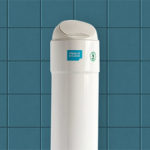
Feminine Hygiene: Give your female employees peace of mind while disposing of their hygiene waste.
[/b3_column]
[b3_column lg=”6″ md=”12″ sm=”12″ xs=”12″ ]
[/b3_column]
[/b3_row]
[b3_row]
[b3_column lg=”6″ md=”12″ sm=”12″ xs=”12″ ]
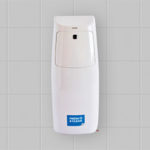
Toilet Seat Sanitation: This will help you minimise cases of cross-contamination.
[/b3_column]
[b3_column lg=”6″ md=”12″ sm=”12″ xs=”12″ ]
[/b3_column]
[/b3_row]
[b3_row style=”margin-below: 20px;”]
[b3_column lg=”6″ md=”12″ sm=”12″ xs=”12″ ]
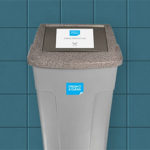
Nappy Disposal: Offer your visitors a proper way to dispose of their soiled nappies and keep your washrooms sanitary.
[/b3_column]
[b3_column lg=”6″ md=”12″ sm=”12″ xs=”12″ ]
[/b3_column]
[/b3_row]
It’s not enough to tell your employees to wash their hands after visiting the washrooms. Stocking the washrooms with enough soap is a great compromise. Make sure all dispensers are working.
Washrooms need adequate ventilation. A fan system, combined with an air deodoriser, prevents offensive odours from lingering.
Take measures to ensure odours do not enter other rooms in the workplace, especially where you process, prepare and eat food.
Workplace Washrooms Problem #4: Poorly Maintained Washrooms
When you neglect your toilets, you compromise your employees’ health and the reputation of your business. Some of the common complaints from toilet users include:
- Lack of hot water
- Toilets flushing incorrect amounts of water, which leads to blockages
- Basin taps that aren’t working
- Poorly maintained urinals
- Lack of soap and paper towel dispensers
- Broken toilet paper roll holders
Your toilets’ walls and floor tiles will eventually get worn out, becoming unappealing and a safety hazard.
These issues create the perfect breeding grounds for germs and can lead to cross-contamination in your workplace.
Don’t neglect your washrooms to the extent that they ruin your business’ reputation.
Get qualified personnel to offer you advice and help with washroom maintenance.
Workplace Washrooms Problem #5: Lack of Sanitary Disposal Facilities
Feminine sanitary waste disposal is a sensitive issue you shouldn’t ignore.
Your female workers need a sanitary solution for disposing of their feminine waste.
Sanitary bins are bacteria breeding grounds and should, therefore, be professionally sanitised to avoid cross-contamination.
Provide your female employees with hygienic and safe ways of disposing of sanitary waste. This involves installing the right bins.
Sanitary bins include scented antibacterial linings that mitigate the spread of germs and keep foul odours at bay.
The slimline design enables them to fit in any washroom cubicle. Some key features of the Alsco service include:
- Cleanliness: Thoroughly cleaned and serviced regularly
- Freshness: Comes with a 100% biodegradable liner
- Approved: They are EPA-approved
- Sizes: They come in different sizes
- Options: Manual and automatic options
With our disposal system, you can maintain clean, hygienic and fresh washrooms. You don’t have to worry about maintaining these units, as we do all that for you through our managed services.
Workplace Washrooms Problem #6: Inadequate or Lack of Washing Facilities
Your washrooms should have running cold and hot water. If your employees’ work requires them to shower afterwards, they need proper washing facilities, including:
- Showers: to bathe after work. The showers need hooks to hang dirty clothes and shelves for storing personal belongings
- Secure Lockers: to keep non-work clothes close by whilst at work.
- Changing Rooms: to ensure your employees’ clothes do not get wet or contaminated.
So, What Is the Solution?
Remember that your workplace toilets speak volumes about your business.
Deal with workplace washroom problems by ensuring:
- Good hand hygiene is encouraged
- Washrooms offer a pleasant, comfortable environment
- Overpowering odours are combatted with air fresheners and good ventilation
- A regular cleaning schedule is in place
- Sanitary bins are provided for women
Good Washroom Management
We understand the importance of washroom hygiene in your business. It not only boosts your employees’ morale and health, but it also says much about how you run your business.
Call Alsco today for an obligation-free quote.
Are You Doing It Correctly? 10 Effortless Tips on How to Properly Wash Your Hands
One of the ways people interact with the world is through touch. It is likely that you touch many things every day, including your nose, mouth, eyes and dirty surfaces.
When you get to the office, shaking hands with your colleagues is a habit. This exposes you to more germs, as you don’t know what they have touched on their way to work, including their cell phones.
This exposes your hands to harmful bacteria and germs, and washing them is important, as it helps you avoid getting infections or spreading them.
Did you know that cell phones are far dirtier than you think? A study carried out by Arizona University found out that they harbour ten times more bacteria than most toilet seats.
Hygiene is the first line of defence against germs and infections. Stop the spread of germs in your workplace by offering your workers effective handwashing solutions. These include sanitisers and soaps. In this article, you will learn 10 tips to properly wash your hands.
Tip #1: Washing Your Hands the Right Way
A study by The Harvard Medical School concluded that the right way to wash your hands is to rub them together for 15 seconds after you apply soap.
FACT: washing your hands with water and soap is enough to get rid of germs, dirt, bacteria or viruses and can help minimise the risk of diarrhoea by nearly 50%.
Proper handwashing includes cleaning the fingertips, the back of the hands and the palms thoroughly.
When you wash your hands with soap and water, you greatly reduce more bacteria than when you use water alone. Here are the steps to washing your hands the right way to keep them free of harmful bacteria.
- Rinse your hands under running water that is at a comfortable temperature.
- Apply soap. Try to include foams, liquid formulas and those with moisturisers.
- Lather up your hands for at least a minute. Spread the lather to cover your entire hands, including wrists, between your fingers and under the fingernails.
- Rinse your hands thoroughly and dry them.
- If you are in a public washroom, use a paper napkin to turn off the faucet and turn the doorknob/handle when leaving.
Tip #2: When to Wash Your Hands
There are different instances when you should wash your hands, whether you are at work, school or at home. Keeping your hands clean helps you stay healthy. It’ll protect you from infections and harmful germs while helping you keep the environment around you clean, too.
Wash your hands before and after:
- Handling, eating or feeding a child
- Playing in water that is used by different people, like water table
- Preparing beverages and food
- If you work in the healthcare industry
- Applying a cream or an ointment to an injured person with cuts, scrapes and sores on the skin and giving medication
Wash your hands after:
- Changing a baby’s diaper
- Using the washroom or helping a child use one
- Cleaning up animal waste or touching animals
- Handling bodily fluids such as blood, mucus, and vomit,
- Touching sores, mouths, or noses, especially after sneezing or blowing your nose
- Playing outdoors
- Cleaning
- Playing on wooden playsets or in sand
- Handling garbage
- Coming into contact with dirty objects or when in high-traffic places
Tip #3: Keep Your Skin Moisturised and Clean
Too much of anything has negative consequences, including hand-washing. If you constantly wash your hands, leaving them red, dry and rough, you are overdoing it. Cracked hands are more susceptible to infections from bacteria and germs.
Use a moisturising soap after washing your hands to avoid dryness. You can use a lotion or cream, too.
Tip #4: Consider Your Storage and Soap
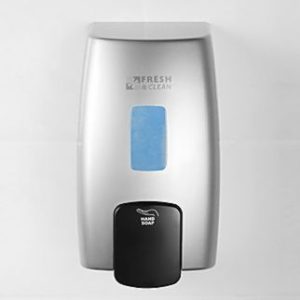 Wall-mounted soap dispenser
Soap can spread germs and bacteria to your hands if not stored properly. When stored incorrectly, bacteria grows on the soap, and these harmful microorganisms get transmitted to the user during the hand-washing process.
In New Zealand, among the top sources of workplace infections and illnesses are bacteria and germs people pick up on their hands while in the toilets.
Employees use washrooms every day, which increases their chances of coming into contact with germs. It’s therefore important to have an efficient first defence which starts with hand-washing.
Provide your employees with soap dispensers to avoid a germ invasion in your washroom soaps. There are different soap dispensers to meet every business’s needs and washroom design.
Choose from liquid, spray or foam soaps, among other options. All these are hygienic options, and when used properly, they enable excellent hand hygiene.
Tip #5: Do Not Overdo It
Some people including children like to wash their hands frequently. This could be a sign of anxiety or even a condition known as obsessive-compulsive disorder (OCD). People with this condition have anxiety about dirt, germs and fear of contamination. To deal with the anxiety, they end up washing their hands for prolonged periods.
People with hand washing OCD are filled with fear of contamination and will wash their hands non-stop until they are raw, chapped and even bleeding.
This creates an easier route for cross-contamination if they get exposed to bacteria and germs. This condition is treatable, and anyone suffering from it should seek assistance.
Tip #6: What to Do if There Is No Soap or Clean, Running Water
Global Handwashing Day is celebrated on 15 October every year. This campaign is meant to raise awareness of using soap for handwashing as a preventative measure against diseases.
What do you do if you don’t have any water or soap available? An alcohol-based hand sanitiser will do the job perfectly. It should contain at least 60% alcohol. In some instances, such sanitisers can help minimise the number of germs.
However, sanitisers shouldn’t be used to remove harmful chemicals, as they don’t get rid of all types of germs.
If your hands are visibly greasy or dirty, a hand sanitiser won’t be as effective. So, how do you use a hand sanitiser?
- Apply the labelled amount to one of your palms
- Rub your hands together
- Cover all your fingers and the surfaces of your hands with the sanitiser until your hands are dry
Tip #7: Make Hand-Washing Time Fun for Kids
Whether you are a parent, teacher or caregiver, getting kids to wash their hands can be a daunting task. To ensure they do it correctly, the following tips can help:
- Come up with a poem or song that outlines the steps of good hand washing. Recite it together with the child often and especially when it is time to wash hands.
- Have your child sing their favourite song while washing their hands. Let them try it in their own voice.
- Get fun soaps, including liquid and foam soap that changes colour. Brightly coloured bottles and soaps with child-friendly scents will also work well.
- Ensure the sink is installed within the child’s reach.
- Do finger spelling or play a thumb game while washing hands.
Tip #8: Use Cold or Warm Water
A study done by Donald Schaffner, a professor at Rutgers University-New Brunswick showed that water temperature has nothing to do with effectively cleaning your hands.
Using cold water is also great for your business, as it helps save on energy costs.
A new study suggests that when it comes to getting rid of harmful bacteria from your hands, the water temperature doesn’t matter.
Tip #9: Skip the Anti-Bacterial Soap
Those antibacterial soaps with triclosan are no more effective than your regular soap in killing germs. In fact, antibacterial soap might lead to the development of bacteria resistant to their antimicrobial agents, making it more difficult to get rid of these germs in the future.
In 2013, the FDA (Food and Drug Administration) put a rule into place to stop the over-the-counter sale of antiseptic wash products that contain a number of antibacterial ingredients such as triclocarban and triclosan. These include bar soaps, body washes, and foam, liquid and gel hand soaps.
There isn’t evidence that antibacterial soap offers any health benefits. Its widespread use could end up doing more harm than good.
Tip #10: Practise Hands-Off Habits
Alsco’s Feminine Hygiene Service
How do you keep your hands clean? Practise hands-off habits where possible, including when using waste disposal bins and drying your hands.
Disposal bins harbour germs and other infectious microorganisms, and you should avoid touching them.
Employers ought to get touchless hand towel dispensers and disposal bins. These units will help reduce the risk of cross-contamination.
If you are in New Zealand, Alsco can supply you with these hands-off units, including dispensers and sanitary bins.
Takeaway
Handwashing is an effective way to avoid spreading bacteria and germs. You will also reduce the risk of gastrointestinal and respiratory illnesses. Always wash your hands with soap and running water — and remember that regular soap will work just fine.
Do you need hand sanitisers or soap dispensers in your workplace? Alsco offers fully-managed hand care supplies and systems for cost-effective and convenient hygiene solutions.
Call us today for an obligation-free quote.
10 Statistics Every Washroom Manager Needs to Know
It is the task of a washroom manager to ensure toilets have the required hygiene systems put in place to keep them clean and sanitary.
Did you know that World Toilet Day is celebrated on the 19th day of November each year? It is not clear how people celebrate it, though. Maybe they get themselves a new bottle of Windex? Or a new toilet brush?
However, it’s known why people should celebrate this day. Toilets save lives, like human waste pass killer infections from one person to the other.
This day is meant to inspire action to deal with the worldwide sanitation crisis. The sixth Sustainable Development Goal (SDG) aims to avail a safe toilet to everyone and ensure that no one defecates in the open by 2030.
This article explores 10 shocking and fun toilet statistics that every washroom manager needs to know.
Statistic #1: Toilet Turmoil Statistics
Many people are so worried about catching something nasty from the toilet seat that they overlook other possible turmoils that lurk there. Did you know that:
85% of washroom injuries are sustained by people falling in the toilet with the seat up. (More of a reason to always put the seat down.)
Every year, 7 million cell phones get dropped in the toilet. (It’s said that you can get the affected phone working again by putting it in dry rice, but tossing it in the oven doesn’t work.)
Statistic #2: About a Quarter of the Soap Found in Public Washrooms Is Contaminated
Microbiologists found that some public washrooms’ soaps are contaminated with faecal matter, making them unhygienic to use.
Unsanitary soap dispensers have a lot to do with this problem. How is this possible? When you use open containers to hold your soap, you are exposing it to airborne bacteria. Also, if the dispenser is filled by someone who just cleaned the toilet, they may be spreading harmful bacteria.
Overdiluting the soap mixture is another cause. It makes the soap less resistant to harmful bacteria and viruses that live there.
How do you deal with this problem?
- Use sealed and sanitised soap dispensers
- The person refilling the soap should practise good hand washing before refilling
Get the right dispensers for your washrooms, such as these Alsco soap dispensers to keep your soap from getting contaminated. They come in hypoallergenic and antibacterial options.
Statistic #3: Few Men Wash Their Hands Appropriately After Using the Washroom
A study shows that only 30% of men wash their hands properly. As appalling as this might sound, it’s the truth. In research carried out by the American Society for Microbiology in 2007, it found that one-third of men skip washing their hands after visiting the washroom, compared to only 12% of women.
However, this was an improvement from 2005 when only 25% of men washed their hands after using the toilet. The next time you think of shaking your male colleague’s hand in the office, keep this in mind
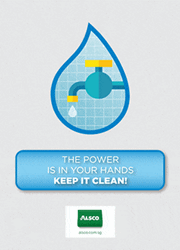
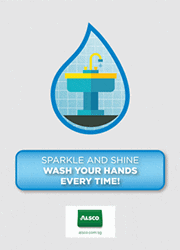
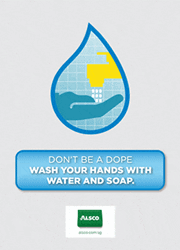
A washroom manager can change this by sensitising all your employees to practice good hand hygiene using posters in the washrooms.
[b3_row]
[b3_column lg=”4″ md=”12″ sm=”12″ xs=”12″ ]
[/b3_column]
[b3_column lg=”4″ md=”12″ sm=”12″ xs=”12″ ]
[/b3_column]
[b3_column lg=”4″ md=”12″ sm=”12″ xs=”12″ ]
[/b3_column]
[/b3_row]
Statistic #4: It’s Easier to Get Sick from an Elevator Ride than from Public Toilets
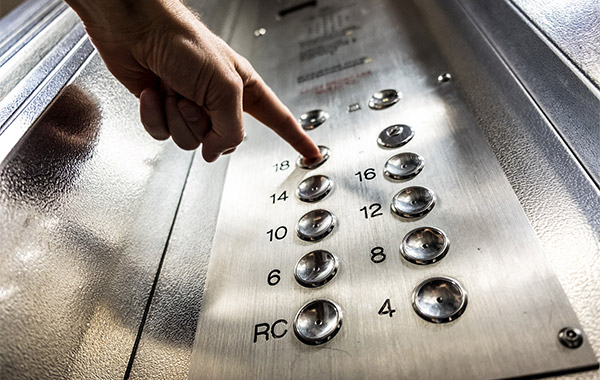
Image from: Pixabay by Jolimaison
The University of Toronto researchers took samples of 96 toilet surfaces and 120 elevator buttons from Several Toronto hospitals to test for bacteria prevalence.
Their research found that the bacteria prevalence of elevator buttons stood at 61% while toilet surfaces only had a prevalence of 43%.
The reason for these findings could be due to the fact that airborne germs move easily in small, poorly-ventilated areas such as elevators. It’s normally difficult to avoid touching other people or breathing when you are in a crowded elevator.
Elevators expose people to a wider range of bacteria as opposed to those you might pick from public toilets. The worst infection you can get from a washroom is a flu virus.
However, all kinds of people use the elevators, and you are likely to catch a more serious infection such as tuberculosis from an infected person. Tuberculosis is transmitted through tiny droplets that an infected person releases into the air through coughs and sneezes.
Statistic #5: In New Zealand, More Men Use Their Phones in the Washrooms
If you opened to any search engine and typed, “How long do men spend in the toilet in a year”, you’ll be surprised by the results. Men spend seven hours in the toilet a year.
That’s not all. In a study carried out by Colmar Brunton among 1000 men, one-third of them admitted they hide in the toilet for peace and quiet. They also go there to avoid the nagging they get from their better halves and children. It was also a great opportunity to look at their mobile phones undisturbed.
In the survey, only 32% of New Zealanders found it repulsive to use their cell phones on the toilet. This shows that more than two-thirds of Kiwis find it OK to socialise online while going about their toilet business.
Although women are better at multitasking, using cell phones on the toilet seems to be more of a male pastime. In fact, 23% of men admitted to using their phones on the toilet while at home compared to only 14% of women.
In the office, the situation was the same. 18% of men use their cellphone in the workplace washrooms compared to only 5% of women.
Statistic #6: On Average, One Person Uses 75 Sheets of Toilet Paper Daily
Toilet paper is meant for use by everyone who has a standard digestive system. They also have secondary uses like removing makeup and wiping surfaces, among others. The size of one sheet of toilet paper is approximately 4.5 inches by 4.5 inches.
The roll’s diameter is also around 4.5 inches. A roll has around 1000 sheets if it’s a one-ply and 500 for two-ply.
An average household uses one roll of toilet paper in five days. For each toilet use, an average consumer uses 8.6 sheets of paper.
This totals to 57 sheets every day and 20,805 sheets every year (21 rolls of one-ply or double the number for two-ply papers).
Statistic #7: People Use More than 10 Litres of Water with Every Flush
Most people flush the toilet automatically without giving it a second thought, but given that the old toilet models in New Zealand use around 12 litres of water per flush, this is something people should put some thought into.
According to various websites like Home Water Works and Dŵr Cymru Cyf, a household uses more water to flush their toilet than anything else. It actually makes up to 30% of indoor water consumption.
Doing regular washroom maintenance will help a big deal in conserving water. Get an approved company to do all the maintenance for you without having to go through all the hassle. Other ways you can save water include practising these toilet water-saving tips:
- The toilet is not a trash bin: Refrain from using the toilet as a trash can. Train all your family members and workers to always put trash in the garbage bins.
- Go for the low volume mode: If you have dual flush toilets, use the low volume mode as often as possible. You can experiment first to gauge how much the mode can handle.
- It might need an adjustment: If you notice the water is running in your toilet tank for prolonged periods, check the cause. Doing a simple adjustment will help return the operation to normal.
- Don’t let it go overboard: If you have an indicator in your toilet tank, ensure that the water doesn’t go beyond it when it refills.
Statistic #8: Women Stay Longer in Toilets than Men
Research has shown that women stay longer in washrooms than their male counterparts. On average, they spend one year, seven months and 15 days locked in the toilet. This is one month longer than men do.
Statistic #9: About 70% of People Don’t Use Toilet Paper
Around four billion people don’t use toilet paper, translating to between 70% and 75% of the world population not using toilet paper. This is because some people live in parts of the world where there are no trees while others simply can’t afford it.
Some people choose to use their money in better ways rather than spending it on fancy toilet paper to wipe with. Water is considered the universal solvent and not paper.
Toilet paper is also used for other purposes, including removing makeup, cleaning the nose, covering toilet seats, cleaning glasses, as a packaging material and cleaning mirrors, among others.
Statistic #10: Only a Small Percent of People Wash Their Hands for the Recommended Period
According to the U.S. Centres for Disease Control and Prevention (CDC), you should rigorously wash your hands with running water and soap for 15-20 seconds. This is the best way to eliminate harmful germs.
The sad fact is that only 5% of people follow this guideline, meaning 95% of people don’t clean their hands long enough to eliminate harmful germs.
And that’s just the tip of the iceberg! The research also showed that only two people in three use soap while washing their hands. And guess what? Men are the biggest culprits, as they got lower marks than women when it comes to hand hygiene.
Takeaway
All the above facts and statistics point to one thing: You need to invest in good washroom hygiene practices. This all starts with good handwashing habits to avoid spreading germs which can leave you and those around you sick.
If managing your washroom hygiene seems like such a headache, leave everything to a trusted and qualified team. Alsco New Zealand helps businesses maintain clean, sanitary washrooms through their managed services.
We’ll provide you with all the necessary supplies to keep your washrooms clean and sanitary to minimise the spread of germs in your workplace.
Give us a call today for an obligation-free quote according to your business needs.
Photo: Xenocryst @ Antares Scorpii
12 Foolproof Ways to Make a Restaurant Less Costly
Starting up a restaurant business is a great feeling, especially when you have a constant flow of customers and business is good.
But the stark reality is that even if a restaurant gets a good start in terms of its patronage, it can just as easily hit the wall if its finances aren’t managed properly.
We get it, you’re a restaurateur, not an accountant. But a solid financial plan is not as daunting as it might seem.
It basically comes down to two key types of expenses:
- One-time costs; and
- Recurring expenses.
Most budding restaurateurs manage to get a handle on the one-time costs – raising the set-up capital, buying the big-ticket items for the kitchen, furniture and so on.
But they often neglect to account for the pesky recurring costs – wages, training, marketing, ad infinitum. It’s the Achilles’ Heel of many an otherwise successful business. Following your initial restaurant business plan will help you to save up and make the running of your restaurant less costly.
One-Off Costs
Licences
When setting up a restaurant, there are generally a number of licenses you need to have before opening. In New Zealand, you must first find out from local government if you have consented to start a restaurant business in the chosen location.
Once this is done, you must apply for food registration. Many agencies work together to ensure your restaurant follows the standards set when it comes to food safety. Finally, depending on your business plan, apply for an alcohol license which allows you to serve alcoholic drinks at your establishment.
Payment for Restaurant Location
When looking for restaurant real estate, make sure you have all the required funds to secure the location. You must put into consideration the location accessibility, the human traffic in that area and any legal costs you need to pay before locking down the location. This must be part of your business plan.
Building Costs
Once you have secured the location, the next step is to build the restaurant or make renovations if there is an existing building in place. Connect with an experienced contractor who will be able to give you a clear picture of how much you will spend on this project and help you to save by costing only the mandatory projects.
Restaurant Furniture
When the building and all legal documents are good to go, it’s time to look at what kind of restaurant furniture you want to buy. In addition to furniture, you should also factor in costs for interior and exterior design to make your restaurant appealing to customers. When choosing furniture, budget for quality pieces that will last for a long time without worrying about replacing them. Remember in the long run cheap is expensive.
Kitchen Equipment
One of the most important things you must budget for is kitchen equipment. It’s advisable to research on the newest types of kitchen equipment that will boost your business. When unsure of what type of kitchen equipment to buy, you can visit supplier directory sites. For example, the Restaurant Association of New Zealand has a list of reputable suppliers you can contact. Keep an eye out for special offers to help you save.
Recurring Expenses
Employee Costs
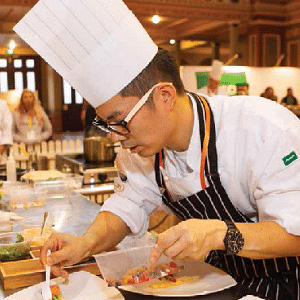
Part of your financial plan should include employee costs, which include salaries, benefits and other relevant costs like uniforms. You must have an idea from the outset how many staff members you want on your team. This will make it far easier when planning for their salaries and other costs.
Make sure you do not over-employ to avoid wasting funds on labour. In addition, to keep up-front costs to a minimum, consider a Managed Uniform Rental Service to keep your staff looking clean and professional at all times.
Licence Costs
It’s important to find out which licenses are a one-time expense and which are recurring. This will let you plan well ahead and avoid nasty and potentially costly surprises. One way to keep this simple is to set up an arrangement with your bank to transfer the funds to the relevant government bodies on a set date.
Staff Training
Aside from the initial training and onboarding session when staff join the team, you must keep in mind that continuous training should be budgeted for. When there are changes to the software or equipment in the restaurant, time must be put into refresher training for all staff. This will ensure that work flows smoothly. When planning for training, ensure that sessions are mandatory for all staff members to avoid wasting time and funds on repeat training for absent staff.
Food Ingredients and Alcohol
This is the largest expense for any restaurant. While it can’t be fully captured in your initial business plan, you need to set aside funds to replenish supplies regularly. According to research done by the University of Otago, food wastage is a major factor for many restaurants. The research found that 46% of waste in restaurants was what consumers left on the plate, while preparation waste and food spoilage stood at 36% and 21%, respectively.
To keep waste to a minimum, close monitoring of food during preparation is vital. This will allow you to determine what to order and how much to spend at any given time on food supplies.
Menu Changes
This is a less common recurring cost for a restaurant, but must not be ignored. You must keep in mind that menu changes mean a change in the supplies ordered for your restaurant. It also includes design changes for every menu change done. To avoid consumer plate waste, revise your menu to have reasonable serving portions. Also, to keep design and printing costs low, choose simple but classy designs which aren’t too costly.
Marketing
Businesses tend to assume that marketing is a one time expense prior to launch. But it’s wise to set aside some funds for periodic marketing of your restaurant. The reason why regular marketing is important is that you need to keep in touch with your customers about menu changes, special events and offers and to keep your brand top-of-mind. To keep the marketing budget manageable, make good use of social media and email marketing to keep customers informed.
Technology and Equipment
It’s also important to note that regardless of the initial planning for equipment and technology, there will be some recurring costs as you go along. You must closely monitor your equipment and furniture to ensure that you are able to replace when necessary. Restaurant software and other technology should also be upgraded from time to time to ensure smooth business management.
Photo: epicantus
Should Your Restaurant Invest in Pay-at-the-Table Technology?
For the longest time, people have been going through a tedious back and forth process when paying at a restaurant. The process involves the staff taking a bill to the table and walking away.
The diner has to find their credit card and hand it over to the waiter who will have to come back to the table.
The waiter will then proceed to the POS (Point of Sale) terminal and bring the diner a receipt for a signature and maybe a tip. Later, the waiter will grab the receipt and go back to the POS to adjust the transaction for the tip.
This is a lot of work. But to simplify the whole process, a new system has been introduced to the market, known as pay-at-the-table.
What is Pay-at-the-Table Technology?
Just as the name suggests, it means that a customer pays the bill at the table. A server will issue the diner with the bill and offer a handheld EMV payment terminal. This means that there’s no need for a fixed point of sale terminal in the restaurant.
Most new debit and credit cards come with EMV chips which work as tiny computers. All the diners may have to do is enter their PIN to authorise the payment.
Should Your Restaurant Invest in This Technology?
Many diners are finding this technology very efficient and secure. Knowing that their cards will not leave their sight is also reassuring. The fact that they do not have to wait for the bill also makes the dining process seamless. All the customer has to do is handle the payment. This is convenience at its best.
Here are some of the reasons your restaurant should invest in pay-at-table technology.
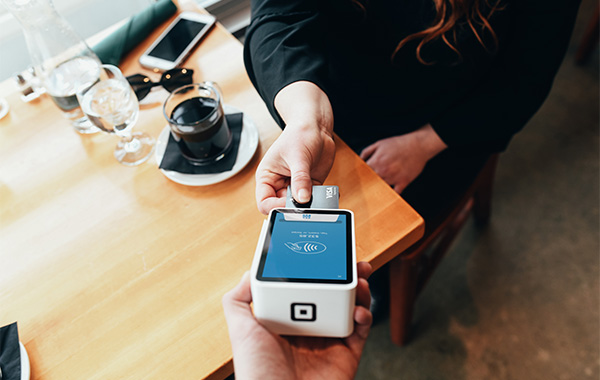
Customers Enjoy Reduced Wait Times
What makes dining out frustrating for most people is the wait time.
Servers have to move from one customer to the other and also rush to the POS terminal while other guests sit there waiting to be served. During peak hours like lunch, dinner or on weekends, restaurants can receive huge numbers of customers. This keeps the servers swamped as they move from one customer to the other.
It can mean long wait times which can frustrate your customers.
However, with pay-at-the-table technology, customers don’t have to wait for extended periods to have their bills handled by the servers. They can make the payments instantly once they are done with their meals or drinks. A faster checkout also means that servers can turn tables more frequently.
Less Identity Theft Cases
For so long, the hospitality industry has been known for the dreaded card skimming scenario, which happens when the card leaves the customer’s sight for a short time. Some servers are part of the fraud. All they need is to wear concealed card skimmers on the loops of their belts and use them to collect card data.
When customers pay at the table, it helps eliminate any chance of credit card fraud as the servers do not actually take possession of the cards. This can be reassuring for your customers and help keep your restaurant top-of-mind on their list of go-to dining-out venues.
Minimise Chargebacks to Your Restaurant
Restaurants are often faced with chargeback cases that arise from credit card fraud. Pay-At-The-Table technology can help them deal with this issue and prevent any future chargebacks.
With more people choosing to go with EMV chips, there will be a reduction in card fraud cases and your restaurant can benefit from the reduction in chargebacks. It can also minimise any adverse effects on your reputation.
Better Customer Experiences
When people go to a restaurant for a meal, they expect to have a wonderful time and go home feeling happy and satisfied. When you offer your customers first-class service, they are likely to become loyal clients and even recommend your establishment to their family and friends.
Word-of-mouth referrals can do wonders for your business and people tend to believe reviews from people with first-hand experience. Introducing pay-at-table technology is a great way to improve your customer experience, as patrons have the option to split bills or even pay with multiple cards.
Get to Know Your Customer Better
With pay-at-the-table, servers can have more face time with patrons. Instead of handing over the bill and walking away, they can now be at the table as the customer makes the transaction. This offers them a chance to keep a conversation rolling.
At the same time, servers can ask diners to complete a short survey of their dining experience, gaining valuable feedback and insights for the restaurant manager. The technology also allows the manager to send receipts to their customers via email and creates the opportunity to build an email marketing list.
Enjoy Increased Profits
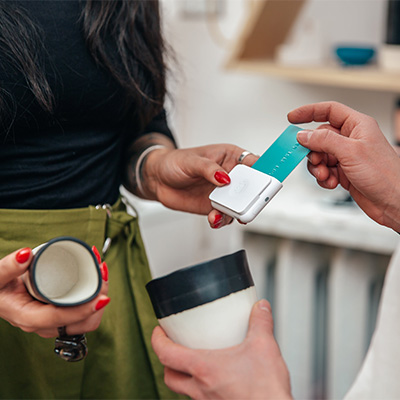 When tables are turned faster, customers are kept happy and satisfied and the restaurant operates more efficiently with minimal cost; the result is more profit.
Happy customers become repeat clients for any business. They also act as a marketing tool as they spread the word to their family and friends. Nothing is better for a business than great reviews from satisfied clients.
It helps them gain loyal customers and advertises their services at the same time. Restauranteurs are actually using pay-at-the-table technology to help improve their ROI as more customers translate to more revenue.
Be Considerate of the Environment and Minimise Expenses
Restaurants are major waste contributors due to the volume of paper receipts they dispose of from their transactions. Pay-at-the-table technology eliminates the need for printed paper receipts, which translates to less waste and reduced receipt expenses.
Paper receipts also need ink cartridges and rolls of paper. Even thermal paper is not a safe alternative as it is known to expose people to BPA, a well-known carcinogen.
Receipt printers are also costly and require maintenance from time to time. All these costs can be removed when restaurants adopt pay-at-the-table technology. From accounting spreadsheets to receipts, this technology can help in getting rid of paper and helping the business reduce overheads.
Any environmentally conscious person will also appreciate this digital revolution as fewer trees are converted to paper for printers, reducing the burden on our forests and minimising a restaurant’s carbon footprint.
Going Mobile With Your Restaurant
There is no perfect point of sale, but pay-at-table technology is a more sustainable option and helps to minimise the cost of paper products. It also gives customers a feeling of security when they use their credit cards. Happy customers tend to tip more, which boosts staff morale and leads to better service.
And once you’ve gone digital, you can complete the transformation into a sleek modern establishment by ensuring your staff look the part, too. Ask us today about our fully managed rented uniform and workwear service and smart managed garment system. Your staff will always be immaculately presented and we take care of the entire process for you.
Photo courtesy of Freepik
Photo courtesy of Unsplash by Blake Wisz
Photo courtesy of Burst by Matthew Henry