Trusted by 237K+ Business Worldwide. Find a Location
Trusted by 237,000+businesses worldwide across 250 locations delivering uniforms, linens and more. Find a Location Near You


Delivering Excellence Since 1910
Contact Us
8 Tips For Environmentally Friendly Workplaces
What makes an eco-friendly workplace? Employees who are aware of their responsibility in caring for our environment.
Everyone has a role in helping the planet.
What follows are a few ideas that can increase your employees’ awareness and also help make your workplace green.
1. Cleaning Can Be Green Too
If you want clean surroundings, try not to use standard cleaning products. It isn’t an overstatement to say that many cleaning products contain toxins.
If they’re extremely unhealthy to humans, what do you think they are doing to the environment?
Since you still have to clean your workplace, it’s best to go green when cleaning as well.
There are many green cleaning products that are now available in the market. If you have hired a cleaning service for your office, you can ask them to only use green cleaning products or those that do not contain any harsh chemicals.
There are some who are hesitant to use environmentally cleaning products because they are afraid that it’s costlier than regular products.
However, remember that these chemicals pay for themselves by not harming our environment and are, therefore, more cost-effective in the long run.
2. Uniforms To Rent
Some employers demand their workers wear corporate clothes. Why buy new ones? Consider getting a workwear service that provides uniforms to businesses and companies. Professionally washed and repaired rented uniforms last longer. Having uniforms that last longer is one way of conserving resources and taking care of the environment.
Consider getting Alsco’s workwear service that provides uniforms to businesses and companies.
3. Reduce, Reuse and Recycle
Waste management is one of the greatest environmental problems that we face today. Too much is garbage produced and it doesn’t just disappear on its own. It doesn’t matter how you get rid of it. Take it to a landfill, burn it or process in some other way, it is still an environmental problem.
It’s not like garbage would disintegrate when it hits the bottom of the trash container. Properly dispose of the garbage still has to take to a landfill, an incinerator, or to some other place where it can be processed. In other words, trash is still an environmental problem no matter how you get rid of it.
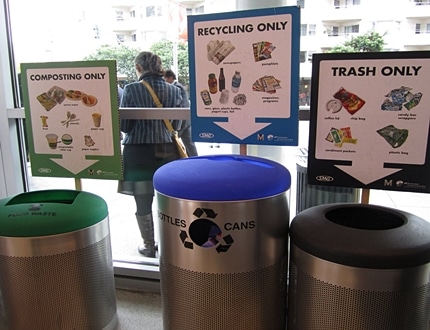
Image from: Flickr by Intel Free Press
So what can you do about the waste in your workplace? It’s not really possible for you to stop making waste, but there are ways that you can control it. This is where the three R’s come in and those are to reduce, reuse, and recycle.
The first step is to reduce the amount of waste being produced in your workplace. There are many ways of doing this. After you have done this, check the waste and pick the ones that can be reused or recycled. By keeping the three R’s in mind, the volume of trash coming out of your workplace should go down significantly.
4. An Office Can Become Almost Paperless
Are tons of stacked paper the first thing that comes to mind when you think of an office? Of course, some can be recycled, but that doesn’t solve the biggest problem. A significant component of total garbage an ordinary office produces is still – paper.
The aim is to have a paperless workplace. This is still hard to achieve because there are certain documents that must be on paper.
But people should try and cut down the amount of paper waste. Preserve only those files and documents that can be stored in a digital form.
5. Use Refillable Office Equipment
There are so many pens, markers or printers of various kinds in every office. All are easily refillable. Preserve their outer casings. Buy refills or cartridges instead of getting new ones.
6. Bring Your Own Mug
Reduce the use of disposable cups to a minimum in your workplace. Minor as this may seem, it adds to the workplace waste. Instead, employees should bring their own mugs to work.
That way, their morning coffee and other daily drinks can have a more personal note. Some employers might decide to give their workers an “official” work mug that they can use.

Image from: Max Pixel
7. Smart Use of Electric Energy
Constantly, every workplace thrives on electricity, sometimes without a single worker present in the offices.
After all the work is done, there are a few simple steps to follow before you go home. Turning off all the lights. Checking monitors for the most efficient power setting. Using only energy-efficient lighting around the offices.
8. Office Supplies Can Be Environmentally Friendly
Not every employer has already switched to eco-friendly office supplies. The reason is simple. They do cost more. How much more? Your workplace can become eco-oriented for only 5% more expensive supplies. That’s not too much to pay for the environment, is it?
If your workplace still uses worn-out uniforms, check out the uniform service options offered by Alsco. We are all about forwarding your business towards a more environmentally friendly future.
Photo: Marc Mueller
Hand Drying: Paper VS. Technology
These days, people prefer technological solutions. Anything that belongs to the so-called ‘old world’ is out the window. This is often the reasonable side of the argument.
However, forgetting that gadgets don’t always outperform non-technological solutions is a mistake.
One of the areas in which this is really relevant is hand drying. Old school hand drying techniques such as paper towels are still very much relevant in the world of automatic hand dryers.
There is a very good reason for that – they simply do their job. And not just that, they are also more hygienic!
In a 2008 research conducted by the University of Westminster in London, it was concluded that the advancements in the field of hand drying didn’t go far enough to completely eliminate the need for paper.
Here are some aspects in which automatic hand dryers and paper towels can be compared:
Contamination Risk
The chasm in drying efficiency and bacteria removal comes down to hard graft. The rubbing motion on the skin physically removes more bacteria.
The paper hand towel absorbs moisture from the skin, thereby lifting the water-bound bacteria off. But hand dryers rely on powerful streams of air blowing the moisture and bacteria off the skin, a method of hand drying that could never be fully effective.
What is more, ‘blowing’ moisture off the skin is not a hygienic option either. As any microbiologist will testify, air movement only disperses micro-organisms, so contamination is increased dramatically.
And since drying with paper hand towels involves no air movement at all, there is no contamination, making it the most hygienic method of hand drying.
The air streams produced by jet air hand dryers, for example, travel at 400 mph. This blows bacteria outward to a distance of 2 metres. They end up landing on the body and clothing of other washroom users. This is the worst-case scenario when it comes to preservation of hygiene in public toilets.
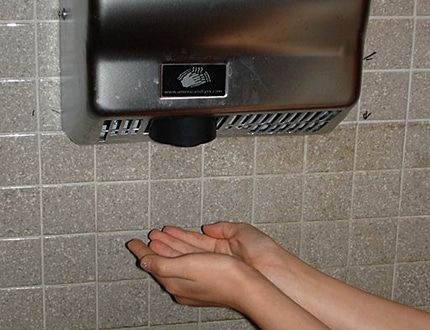
Warm air hand dryers are not so guilty of spreading contamination since they are far less powerful (thus the poor drying ability) and blow downward, so neighbouring users are not in the ‘line of fire’ so to speak.
Efficiency
When it comes to the effectiveness of drying, paper towels are definitely the better solution. One research showed that the number of bacteria on hands after drying them with paper fell by up to 85.2% on palms and by amazing 91.5% on fingers.
On the other hand, air dryers did the exact opposite – they actually helped bacteria thrive rather than eliminating them, with 414% increase in bacteria found on fingers and stunning 478% on palms.
Efficiency-wise, hand towels and jet dryers turned out to be pretty much equal. They both produce 90% dryness after the usual 10 seconds of drying. Warm air dryers weren’t nearly as efficient, though. It took them 40 seconds to achieve the same result.
Environmental Aspect
And what about the impact that the hand drying techniques make on the environment? This is one area in which the warm air hand dryer wins out, at least compared to paper.
There was a study carried out by the US-based Environmental Resources Management consultancy firm. They found that paper towels spent about 64% more electricity over a period of 5 years than warm air hand dryers.
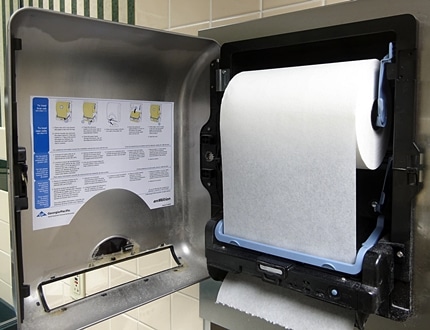
Meanwhile, a World Dryer study of 102 hand dryers installed in public schools in Kansas, US, concluded that annual savings of 34.5 tons of solid waste, 690,000 gallons of water, and 587 trees were made, compared to using paper hand towels.
Also, from a management point of view, the warm air hand dryer option is superior. They are long-term hand drying investment, with machines typically used for 5 or 6 years, while paper hand towels must be restocked continuously, and disposed of regularly.
Bins are an essential item in the workplace washroom to maintain hygiene levels. Regular waste removal is needed to prevent overflowing and ensure a cleaner working environment. It even helps to cut the instances of illness amongst staff, especially when it comes to restaurants or school washrooms.
Choosing the best hand drying technique for a public or staff washroom is important. You should make cost-efficiency a key component in the decision-making process.
In terms of hygiene effectiveness, paper hand towels remain the best choice. In environmental and maintenance terms, the warm air hand dryer wins out.
So what would be the final verdict? It’s hard to tell, but one thing is for sure – various hand hygiene solutions are good for the industry. It never hurts to have options and be able to choose the solution which best fits your current needs. If you are not sure what the best thing for you is, contact Alsco and receive a free audit for your business.
Photo Courtesy of Mega Pixel Images by Nikon D3s
Photo Courtesy of Wikimedia Commons Images by Stilfehler
Photo Courtesy of Flickr Images by Mark Turnauckas
Uniforms: Logo or DIY Work Clothes? Hard Evidence to Support Corporate Outfits
Why do the majority of business owners prefer the idea of corporate uniforms?
An employee can be located on the factory floor, work as a service provider or be a part of a huge financial corporation.
What remains important is the choice of workwear they use.
Especially the choice between the logo work clothes or the adoption of a DIY policy.
It’s All in the Appearance
The client is always right, the saying goes. High standards are expected from professional services and a consumer’s trust is affected by the choice of employees’ work clothes.
Imagine a worker dressed in casual work attire offering you his help. Then imagine another one wearing a neat uniform. The first one is the actual certified electronics expert and the other one is a novice. Yet, people usually conclude otherwise.
Consumers are more likely to place their trust in the person with a company logo on the shirt front. It is true that first impressions generally last. Why not dress professionally to make sure that impression stays positive?
Research confirms the idea of uniforms helping by providing visual clues to the company’s degree of professionalism. The consequence of this is that a consumer will have a higher degree of confidence in that company.
Uniformed, logoed work clothes build a ‘front-of-mind consciousness’ in the consumer, and consequently a higher degree of confidence in the company.
Image Wear as an Effective Branding Tool
Admittedly, uniforms are associated with specific types of industry, like the food and health sectors (restaurants, food processing, hospitals), and public services (police, military). But research has confirmed the overwhelming advantages of adopting a corporate uniform in almost every sector.
The idea that image wear is an effective branding tool is a widely held belief in developed economies.
The Western Workwear Report, published by Frost & Sullivan in 2010, revealed that UK companies spend an estimated €640.9 million on uniforming their workers. It’s a major investment that places the UK high on the corporate uniform and logoed workwear table. In Western Europe, the industry is worth an estimated €3.2 billion, and projections suggest it will grow by 3.3% annually until 2016.
Benefits of Corporate Uniforms Among Workers

There are many other benefits to using a corporate uniform. Consumers are not the only target. It has been proven that wearing corporate uniforms increases attention spans amongst workers. Positive outcomes are numerous:
- Better quality work and increased productivity
- Higher creativity levels
- More resourceful approaches to managing in-house issues.
According to research published in the Journal of Experimental Social Psychology, work clothes influence worker performance. It is said that even their behaviour and attitude can change.
According to the research, wearing a lab coat can increase attention to detail, which is what laboratory scientists are required to have.
The research has also shown that it is important for the workwear to be appropriate to the job role. A painter given a lab coat showed no improvement in performance nor quality of work.
It is as important that a worker feels comfortable in their work clothes as it is to include a company logo in the design.
What Are the Practical Advantages?
There are also practical advantages to having uniformed work clothes. This is especially true for large companies with multiple divisions and departments.
First of all, it is important for workers to feel part of the company. Uniforms achieve this. In turn, this feeling improves workers’ creativity, concentration and overall performance.
For example, a major garden centre might have their nursery staff wear green polo shirts, their furniture staff wear yellow polo shirts, and their warehouse and delivery staff wear blue polo shirts. The clothing design is the same, and all staff wear the same company logo, but the image wear distinguishes in each department.
What About Using DIY work clothes?
No one can claim that a DIY work clothes policy is all that bad! In most cases, it depends on the employer. A particular work branch might be more reliant on individuals. Thus, using DIY work clothes is completely reasonable (though often there is a dress code).
Companies could be dependent on both teamwork and interaction with the public. For them, corporate uniforms are extremely important.
However, it is unlikely for a law firm to demand that all lawyers wear the same “corporate” suit with the firm’s logo on it. No magazine publisher would expect their investigative journalists to wear the company logo while interviewing people or researching news pieces.
Only the right kind of corporate uniform can accomplish a wide range of demands. Competitive sectors need to project a professional image to a consumer public. Why? Because the public expects a high level of professionalism from them. It is also important to build confidence in standards or work, hygiene and honesty.

In the end, a company can be judged by the image wear they adopt. Just as it is possible to reveal an employee’s character by the quality of their handshake.
Alsco Uniforms Improve Both Performance and Customer Service
It is widely known that well-maintained and designed uniforms go a long way. They can boost employees’ self-image, morale and performance at work.
Here at Alsco, we offer a range of industrial workwear and work uniforms that combine style and comfort with durability and safety. We want to ensure your staff look and feel their best in their perfectly fitting workwear.
If you would like to know more, give us a call to find out all the details. Grab yours now!
The Most Overlooked Facts About Hand Washing
The development of transportation and technology has enabled people to move more than ever before.
Also, these two factors have increased the number of contacts an average person has with other people on a daily basis.
Since every interaction between people includes an exchange of microorganisms, the question of our hygiene is becoming more and more important.
Shaking hands with acquaintances, spending time on the means of public transportation or using your gadgets are all situations in which various germs can get into your body.
You don’t know if these people wash their hands regularly or not. What you can do is keep the hygiene of your hands at a high level. This guide will show you why hand washing is extremely important and when it is imperative to do so.
The Risk of Unhygienic Toilets
A recent study has shown that about 30% of men and about 10% of women in Australia don’t wash their hands after using the toilet.
Given that toilets (and bathrooms) are usually rife with germs, such irresponsible behaviour puts other people’s health at risk. Therefore, hand washing is obligatory every single time after you use the toilet, especially in public places.
Apart from that, it’s recommended to sanitise your hands even before you use the toilet.
Also, when talking about going to restrooms in cafes, at bus stations and in other similar settings, you should wash your hands even if you haven’t used the toilet. Touching knobs, towels or taps can also result in acquiring some unwanted germs.
Another smart tip for such places is to wipe your hands with paper towels or dry them with an electric hand dryer. That way you’ll give your hands a proper treatment after washing them, which is also an important part.
The Hygiene of Office Equipment
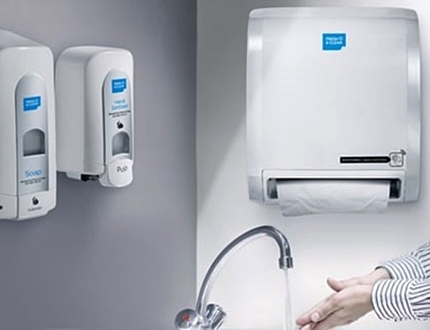
Let’s start with a disclaimer: we are not selling any cleaning wipes or liquids. So, when we say that your computer keyboard is about 20,000 times dirtier than your toilet, we do it only because we want to illustrate how important washing hands really is.
Similarly, your smartphone contains about 9,000 times more microorganisms than your toilet. These data are even more shocking in the offices in which workers don’t work at the same computer.
Knowing all this, you need to clean your keyboard and your monitor with a wet wipe. Also, apply some special liquid made specifically for cleaning computer equipment.
What you can also do is install a hand sanitiser dispenser in your office. It will help you keep your hands clean during busy work hours without having to leave the office.
However, all these actions can only be an addition to your supreme hygienic habit – washing your hands before and after you use your computer and your keyboard. The same principle should be practised by every worker who uses any technical equipment in a public environment.
Washing Hands Before Every Meal
Even if you’re the most pedantic person in the world when it comes to hand hygiene, you can still get infected by other, not so pedantic people. What’s even worse, you don’t have to be in direct physical contact with them at all. It’s enough only to touch “dirty money”. By this, we literally mean money that’s contaminated with bacteria and viruses.
These harmful microbes originate from people who don’t wash hands and places they go to, from their homes to various public venues. When Staphylococcus, Escherichia coli or any other similar microorganism gets into your body, you can have a lot of trouble recovering your own (macro)organism.
This is why your hands need to be washed before every meal. Even if you’re just going to grab a slice of pizza on the street, make sure that your hands are clean before you start your snack.
However, it’s not always possible to wash your hands, especially if you’re eating outdoors. In order to keep your hands in a hygienic condition, have handy wet wipes and sanitise your hands. This routine is even more important in hot summer months, as well as in the high flu season.
These two periods are extremely dangerous for your intestines and your respiratory system, respectively. If you stick with a strict hand-washing policy, you’ll reduce the risk of coming down with annoying diseases.
Hand Hygiene in Nature
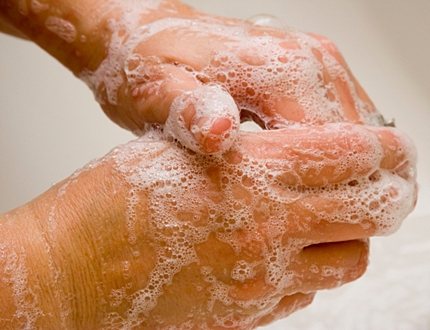
Going for a trip or a vacation in nature shouldn’t make any difference regarding your hand hygiene. On the contrary, you’ll expose your limbs to an even greater number of various bacteria, but this time in uncontrolled, natural surroundings. And if you’re planning to prepare food outdoors, it’s imperative for your health to keep your hands clean.
Also, keep your hands clean on your trip to the country. Let’s say you’ve been driving your car for a few hours and you’d like to stop by to grab a sandwich. Exhausted and hungry, most drivers will forget to wash their hands in such situations.
However, you need to know that cars are often largely populated by bacteria. There’s a two-tier solution to this problem. On the one hand, fight against car germs before you hit the road.
On the other hand, bring a hand sanitiser or a bar of soap and some water with you. That way, you’ll be able to clean and wash your hands whenever you pull over to take a break.
When you finally get to nature, it’s crucial that you wash your hands before you touch your clothes and after you get in physical touch with money. Likewise, touching plants in nature requires the same set of actions.
Beware of Wet Bathroom Towels
It’s much easier to hold on to your hand-washing rules in your domestic environment. However, even if you do everything by the book and wash your hands in every potentially contagious situation, you can still expose yourself to health-threatening germs.
One of the most common sources of such contamination is damp bathroom towels. If your bathroom doesn’t have a window or the bath fan is dead, it will contain a high concentration of damp. Bacteria thrive in wet and damp surroundings.
So, what happens is that you wash your hands and you still end up with some germ-provoked infections.
This is why you should frequently change your bathroom towels and dry them outside the bathroom. Otherwise, the entire effort of regular hand washing will be in vain.
Furthermore, in some offices, people still prefer traditional towels to paper towels for wiping hands. If you work in such an office, make sure that you always have paper tissues stored in your desk. That way, you’ll be able to wipe and dry your hands in a hygienically friendly way every time you wash them.
People who don’t wash their hands regularly behave in a socially irresponsible way. Since it’s difficult to change others, you need to start from yourself. After all, your hands and your arms are among the most active parts of your body. They deserve a great treatment.
If you try and keep them clean throughout the day, they won’t infect you with various transmitted diseases. As a result, you’ll be a healthy and socially responsible person.
Need a hand soap dispenser or hand sanitisers in your workplace? Alsco provides fully-managed hand care systems and supplies for a convenient and cost-effective hygiene solution for your workplace. Get in contact with us today to learn more!
Photo Courtesy of Flickr Images by Arlington County
3 Incredibly Simple Ways to Get Rid of Restroom Odour
 Taking care of your office or restaurant restroom doesn’t mean just cleaning it but also making it smell fresh and sanitised.
So, when running a business, you have to ask yourself a question – will your restroom make your customers want to come back or never return?
Restroom odour can spread all over the workplace and easily affect your work routine and productivity.
If you run any type of business where having a restroom area for your employees is a must, such as a school for instance, then you ought to know every single detail about the effects a restroom can have on your business.
Some people even say that a restroom can be a deal maker or a deal breaker, that’s how important it is. However, taking care of your restroom in a way that it is always perfectly clean, fresh and sanitised is not an easy job to do. Some hire professionals to take appropriate care of the restrooms which is a great idea since it saves you plenty of time.
However, if you want to deal with this area on your own, here is a list of three easy tips to get rid of the restroom odour.
1. Clean the Restroom Thoroughly
Cleaning and maintaining restroom can be a very tricky job. It has to be done several times a day using appropriate cleaners, not the general purpose ones since they can not clean all the surfaces thoroughly.
Also, you have to be careful not to clean just the easily accessed surfaces, but all the corners of the restroom. Different surfaces require different tools and equipment, as well as cleaning agents. The areas which tend to be overlooked are those hard to reach. Be especially detailed here, since these areas tend to be full of bacteria if not cleaned properly and regularly.

When talking about areas which can be overlooked, there are two more that should be included in the list. Walls and ceilings. Some people say that the number of bacteria found on the walls is approximately the same as the one found on the toilet! So, find a way to properly and thoroughly clean all the walls and ceilings with an appropriate disinfectant cleaner.
When it comes to using the best disinfectant cleaner, firstly it is important to use it more than once a day. Secondly, they have to be powerful enough to kill all the types of bacteria found in the restroom.
2. Unblock Airflow
One of the most common causes of restroom odour is definitely improper or inadequate ventilation. So, the next thing you should do in order to get rid of the restroom odour is to improve the ventilation system.
If you have a poor ventilation system, moisture in the air causes the growth of bacteria and germs which just give off the odours.
In addition, proper ventilation in your restroom is a must. It will help fresh air circulate and remove most of the air from closed areas. Also, you can always keep the restroom windows open as long as possible.
In order to keep a good ventilation system, make sure you take care of it properly. While doing the restroom cleaning, do not forget to clean all the vents so they do not become clogged.
3.Prevent Spreading Bacteria
In order to keep your washroom spotless, sometimes you have to pay attention to prevention. In this case, one more of the odour causes is definitely flushing.
Yes, you heard it right! When flushing the invisible mist rises. This mist contains bacteria which are surrounding surfaces like toilet seats, toilet covers, walls, etc.
In case these areas are not maintained regularly with appropriate sanitisers, these bacteria can be the source of the odour problems.
So, make sure you spray and wipe all the areas surrounding toilets with a disinfectant cleaner. This step will be extremely helpful in keeping your washroom fresh and clean.
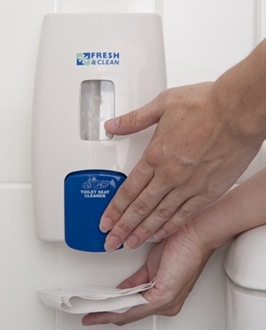
Maintaining the washroom is a serious and responsible job. There are many details that need to be covered. It is way more than just wiping the floors and easily accessible surfaces. You have to choose very carefully all the essentials for your washroom since a well-designed piece is very desirable but also it has to be practical.
Also, you have to choose only the best people to hire and the best tools to use in order to achieve your goal. Remember, your restroom says a lot more about your business than you think! You want to do everything in your power to get the best possible results.
If you still think you cannot do this alone, we have some good news. Alsco is here for anything you need concerning the washroom. Call Alsco now, and their friendly representatives will be happy to help you find everything you need!
Photo courtesy from Freepik Image by Tirachard
Get Rid of Absenteeism Once and For All
$ 1.3 billion is a lot of money! In fact, that is exactly how much money the New Zealand economy lost due to employee absenteeism.
The amount is tallied when you combine the costs of over 6 million days off that people had to take due to different causes.
These numbers are taken from the Wellness in the Workplace Survey Report results from 2013. Of course, there are several factors that influence employee absenteeism.
The same survey showed that manual workers take more days off than those who are non-manual.
It also shows that employees in the private sector have fewer days off on average, but the costs are quite similar to those of the public sector. Also, it seems that the number of sick days taken increase with the size of the business.
If you want to prevent your business from being affected as shown in these statistics, you need to read them through, understand the causes of employee absenteeism and prevent them.
Some of the issues are obvious, such as keeping your workplace washroom clean and hygenic to prevent the spread of bacteria and illnesses. Perhaps there is much less you can do about some other causes, but even a little bit helps.
All the causes of employee absenteeism can be classified into two groups:
- Those that have justified reasons that lie outside the working conditions.
- Those that originate from employee reluctance to come to the workplace.
However, let’s take a closer look at the main reasons for employee absence and suggest some ways you can prevent such occurrences and reduce the costs for your business.
Non-Work Related Sickness
This is the most common reason for workplace absence and over 60% of all sick days are taken for this reason. However, this doesn’t mean that this sickness hasn’t been contracted in the workplace. It simply means that it is not industry-related.
For example, it’s quite possible that a person has been infected with a flu virus in their workplace. This is still not a work-related sickness. This type of sickness is, for example, when a person gets sick by inhaling the fumes that occur in their workplace due to the fact that their job involves working with certain chemicals.
Therefore, you can help prevent these non-work related illnesses by creating a safe and healthy workplace for your employees. Your first step should be ensuring effective workplace hygiene.
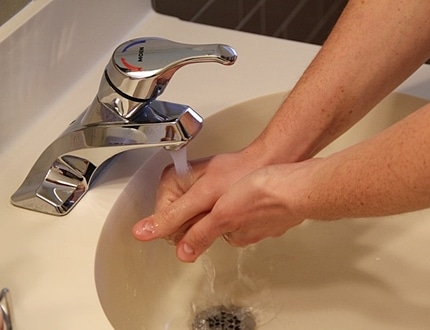
Dirty hands cause a lot of germs to be spread and they are the cause of many illnesses. You cannot expect people to have clean hands if the washroom is not equipped with items such as hand sanitisers, dryers and similar devices.
The other reason why people don’t keep their hands and their workplace clean is much simpler – they forget! When totally immersed in their own work, forgetfulness can happen to anybody.
You can prevent this by hanging useful workplace washroom hygiene posters.
Caring for a Family Member in Need
This is the second most common reason for absenteeism. While you cannot prevent this from happening, you can make sure that you reduce the impact of it on your business in terms of productivity.
If you have one or several employees that have somebody at their home that need their full attention, figure out a way to give them the time they need at home with having a minimal effect on their work productivity.
Some of the options are reducing their daily work hours. It is quite possible that they can be just as productive in 6 hours as they would be in 8 hours of daily work when properly motivated.
Every time you can, offer those workers a chance to work from home or finish their work at home. In this way, they will stay productive and their absence will not hurt the overall productivity of your business.
Non-Work Related Injury
While you should do anything you can to prevent work-related injuries, those that happen outside your workplace are hardly yours to take care of. Therefore, there is not much you can do about them.
However, those employees will have to stay home and get better. If they have paid sick days, they should take them, but if they don’t – consider the work-from-home options with them.
Sick Days Taken Without Being Sick
This is a very tricky reason for using up sick days and it needs to be looked into thoroughly. A large portion of people who excuse their absenteeism in this way are actually avoiding their workplace.
Instead of going for some sort of punishment immediately, try and find the cause behind such behaviour.
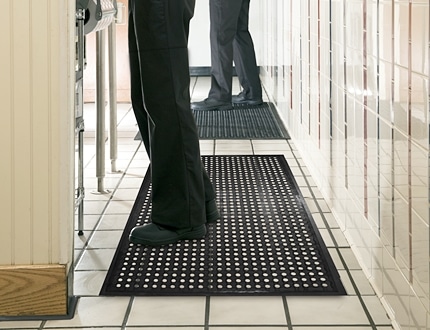
For example, if your barista in a cafe doesn’t want to take up more shifts because their back hurts from all the standing, you can rent anti-fatigue mats that can solve this issue.
If somebody is feeling bullied or disrespected at work, you need to address the issue to ensure that your workplace remains a friendly environment.
Introducing workplace uniforms can also bring people together. They boost the team spirit and the sense of belonging, so they may just be the thing that encourages the employees to become more responsible with their attendance.
Work-Related Injury or Sickness
A lot of workplace accidents can be prevented. In order to do your best and prevent work-related injuries or illnesses, you need to meticulously follow the Health and Safety at Work Act.
It contains extensive and detailed guidelines about what to do and how to act in order to prevent your employees from getting hurt or sick at work.
However, due to many factors, accidents still occur. As an employer, you need to be prepared for that situation as well. You need to ensure your First Aid kits are properly distributed, appropriately stocked and regularly inspected.
This doesn’t mean more work or more responsibilities for you. You just need to contact Alsco and look into our rental programs. We bring, stock, check and restock all the First Aid kits you may need.
You just call us and we’ll give you the best possible affordable quote for your business. In exchange, we bring all the equipment, regularly check it, clean it and deliver it on time – yes, uniforms as well!
Contact us today and find out how we can help you run your business and improve your workplace.
5 Great Heart-Healthy Snacks for Workplaces
As years pass by people realise that being healthy has to be one’s top priority. Nowadays, you can see more and more famous people, TV shows and newspaper articles that talk about a healthy lifestyle.
Sleeping well, doing some kind of exercise and eating healthy are things you have to do in order to be healthy and have good life quality.
However, people find that it is very challenging to have a healthy lifestyle while at work. The biggest problem is said to be the food and snacks they eat while at work.
When you spend almost all day in the office it can be very tiring and very often people find the easiest thing is to eat fast food. Many of them do not even want to walk to the nearest restaurant but they order in.
Considering the fact that lack of physical movement and eating fast food are two main causes of heart attack, you should really think about your lunch break more seriously. Go for a walk, eat well prepared healthy snacks at home and enjoy your lunch break.
Not only that you will do something good for your body, but you will also have more energy and be more productive at work. By following these simple rules, you can improve your life’s quality significantly.
There is an increasing number of businesses that want to ensure a healthy, green and safe workplace for their employees. They go to lengths to make improvements and some of them even offer healthy lunch options.
If you don’t have those options at work and you think that preparing healthy snacks at home is time-consuming and something complicated, here is the list of great healthy snacks which can be made at home very quickly and easily.
1. Oatmeal
Starting a day with oatmeal is the best thing to do to prevent a heart attack. Eating one bowl of oatmeal every day can reduce the level of cholesterol which is significant since cholesterol level increase is one of the causes of heart attack and stroke. The best thing is that it takes very little time to prepare a healthy oatmeal snack.
Oats, via their fibre content, remove the cholesterol from the digestive system and prevent it from building up in the bloodstream and ending up as plaque in the arteries.
They are full of antioxidants too, which slows down the time it takes for the LDL (low-density lipoprotein, or “bad cholesterol”) to become oxidised. In that way building up plaque in the arteries is prevented.
2. Nuts
Eating nuts during your work breaks is the best thing to do for your heart. Apart from containing unsaturated fatty acids and other nutrients, they are a really great, tasty snack too. Also, they are very easy to store and pack.
However, 80% of a nut is fat, so although it is healthy it is still full of calories. That is why you have to be very careful with the size and number of nut portions you eat during the working week. You should also always choose raw and dry-roasted nuts over those prepared in oil.
3. Berries
Strawberries, blueberries and other berries are pure health. They are full of anthocyanins and flavonoids (antioxidants), which help in decreasing blood pressure and dilate blood vessels.
Health Benefits of Berries#weightloss #beauty #skincare #healthy #thefitglobal pic.twitter.com/RZDovNLqCD
— thefitglobal (@thefitglobal) June 7, 2017
They are tasty and easy to pack. This is something you can always carry with you in case you need a good snack which will give you lots of energy.
4. Smoothies
Kale, spinach and other green vegetables are valuable for your health in general and especially for your heart. However, when preparing snacks for work, somehow people rarely think of the green gold they can carry with them.
So, the easiest way to consume all these nutritious veggies is to mix them with some other healthy ingredients into a nice smoothie. Put it in an appropriate container which you can easily carry around and you are good to go.
There are millions of recipes for tasty, healthy smoothies, so decide what is the best combination for you. However, you should not forget to add some yoghurt in your smoothie. It contains the probiotic bacteria which reduces the plaque build-up on the walls of arteries. The thicker the plaque build-up, the lesser space there is for blood to move through.
5. Dark chocolate
Believe it or not, you are allowed to have something sweet as a snack and not harm your overall health. Dark chocolate ( the one made up from 60-70% cocoa) contains flavonoids called polyphenols, which help in reducing clotting, blood pressure and inflammation.
However, you have to be careful since this does not apply to milk chocolate and other candy bars. So, when you crave for something sweet, freely go for a square of good, dark chocolate – satisfy your sweet tooth and protect your heart at the same time.
You will now definitely enjoy much more in your lunch breaks since you will have tasty and healthy snacks which are quick and easy to prepare.
However, in cases of emergency, it is good to have a portable defibrillator at your workplace. The easiest way to always have one of these and not to worry about it is to rent them. Alsco can help you with this!
Contact Alsco’s friendly representatives and find out the best offer and conditions.
Photo courtesy from Freepik Image by Nensuria
Efficient Protection from Hazardous Automotive Chemicals in 5 Simple Steps
The automotive industry is very specific for many reasons. The production process is a complex one and you have to be very careful and cautious especially because of the constant use of hazardous chemicals.
Every step of the production process has to be dealt with thoroughly. Even the usual activities such as cleaning automotive parts need to be done perfectly.
During the processing operation employees work with extremely hazardous chemicals which can be health risks if you are exposed.
There are many different forms of these chemicals, such as various liquids, powders, solids, gases, etc. How bad they can be for your health depends on their form and the way they get in contact with your body.
Employees can have some serious health problems when being exposed to these hazardous chemicals, even if they are not manifested right away.
The most common risks for employees’ health include poisoning, chemical burns, irritation and even cancer. Also, lungs, skin and nervous system can be affected by the unprotected exposure to hazardous chemicals.
Protecting your employees is extremely important. In order to do this properly and to keep your workplace safe here is a list of steps to follow to reduce risks and limit the chances of accidents happening.
1. Categorise and Label the Chemicals
If you want to reduce potential risks from chemical accidents the first step is to make a good inventory of all the chemicals used in the workplace.
By reading the labels of the chemicals you can find out way more about them and then you can classify them in the best possible way. When you know the exact chemical composition you know how to prevent potential hazards.
Furthermore, all the employees have to understand what type of dangerous substance they are dealing with in order to work safely. You achieve this by teaching them what label components, hazard statements and other useful programs are. It is always good to use some illustrations since it is easier for them to learn in that way.
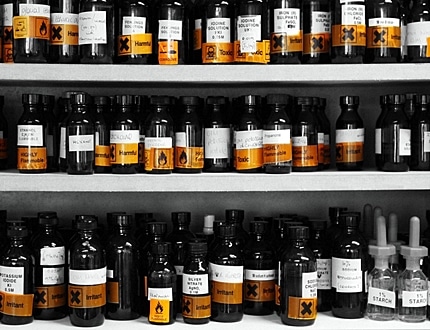
Labels are extremely important since they give info about the container contents. Employees can immediately realise whether they are hazardous chemicals or not. Make sure that all the containers are labelled properly.
However, if the content of the container cannot be identified then it should be properly disposed of in accordance with the professional chemical waste disposal statues for hazardous waste.
One of the methods you can use for labelling dangerous hazardous substances is to make a label with bold caution sign since it can be seen by every employee in the workplace.
2. Assess Risk
Risk assessment might be the best way to get the idea of what should be implemented to control potential risks in the workplace.
A thorough risk assessment includes:
- The potential risks employees face
- The lapses in the safety measures
- What to do to prevent accidents from happening
However, don’t forget to assess the working condition of equipment used in the workplace in order to prevent any accidents. With all this info you can then thoroughly plan in advance, reduce potential risks and improve the safety measures for employees.
3. Put Away Hazardous Chemicals
This is a great idea to reduce people’s exposure to dangerous chemicals. Also, chemicals should be kept away from other chemicals since some of them can cause an explosion when mixed together.
So, the best thing to do is to keep them in different locations and separate containers.
Hazardous chemicals can be kept away safely in the following ways:
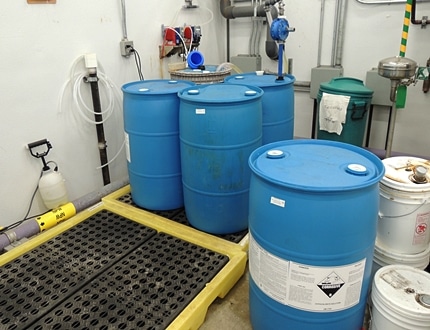
- Using sealed and safe containers
- Put potentially hazardous chemicals in an isolated place far away from people
- Allow only trained employees to enter the areas with hazardous chemicals
Also, hazardous chemicals have to be kept away from food, drinks, clothes, toilets, medication and sources of drinking water.
4. Find Alternatives
Although the automotive industry is a specific one when it comes to using chemicals, there must be some alternatives which are less hazardous. For example, you can use less flammable substances instead of highly flammable ones. In that way, you can reduce a great number of possible accidents.
Another example refers to the use of pastes instead of chemicals in powdered form since the powdered ones can be extremely dangerous when inhaled.
5. Keep the Workplace Clean
All the machines that come in contact with hazardous chemicals have to be properly cleaned for everyone’s safety. Chemical residues can cause harm to workers so they have to be removed completely.
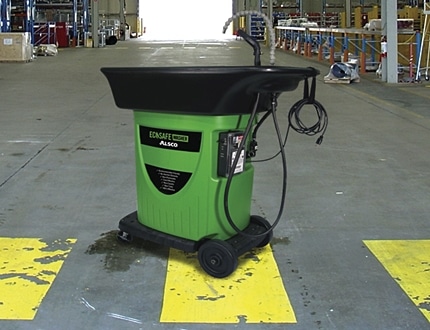
Here, we can help you. Alsco’s Ecosafe Washer is both safe and economical solution for cleaning all types of dirt – oils, greases and hazardous chemicals. And it can be done without the need for harmful solvents.
To make sure your workplace is safe, call Alsco today and we will help you find perfect green and healthy solutions.
Photo courtesy from Freepik Image by Peoplecreations
Photo Courtesy of Wikimedia Commons Images by CGP Grey
Photo Courtesy of Flickr Images by Eric Shea
Turn Your Restaurant Kitchen into a Perfect Workplace
When a customer takes a look into a fancy and renown restaurant, they see perfectly set tables with crisp clean linen, smiling waiters, subtle music and wonderful menus with mouth-watering specialities – as they should!
But what they don’t see is the huge amount of work that any manager needs to put in so that the restaurant looks and operate that way. Getting a restaurant kitchen into good shape takes, experience, hard work and nerves made of steel.
Those who manage and/or own restaurants know very well how challenging it can be to turn the restaurant
kitchen into a superb workplace that people love.
You have to deal with workplace hygiene, many laws and regulations that deal with food serving, different customer-related issues, menu updates and also any issues that arise between employees.
Sounds like too much? It might sound that way, but a career in the food and beverage industry is also very rewarding and quite exciting.
Let’s break down these challenges and see how you can work on them to make your restaurant more efficient and a more pleasant workplace for your employees.
Challenges People Working in the Kitchen Face
There is much more to working in the kitchen than simply cooking and making sure you have your flawless chef apron on. Managing a kitchen requires strong people skills if you want it to work well. Here are some of the things that you might have noticed yourself, but haven’t really looked into that much.
You may notice that the majority of issues that occur in restaurant kitchens are actually caused by employee frustration of some kind. These further causes work-related stress that you have to fight off with any means necessary.
If you diligently work on eliminating these causes, you have a much better chance at organising a smoothly functioning restaurant.
Imperfectly Assigned Workload
It is a common occurrence that people who are hired to do the same job do it at a different level. New employees in the kitchen may cause more damage than good until they figure out how things are done. They need appropriate on the job training.
Surely, somebody who is a trained chef will know how to cut onions, but will they always know where to leave the knife they used after cutting them? Probably not.
Every kitchen is unique when it comes to simple everyday tasks and procedures. If you assign crucial roles in your kitchen to people who have just been hired, you will cause them to be frustrated, senior workers to feel as if they have been passed by and the overall kitchen operation to be slowed down.
On the other hand, if you overburden the experienced workers with all the tasks just because they are good at it, they may become frustrated to be paid the same amount of money as people who are not able to do that same job equally well. This is just contrary to your efforts to eliminate workplace stressors.
Faulty Information Flow
One of the surest ways to get somebody to feel frustrated and irritated at their workplace is to never give them timely information about what needs to be done and when. This can easily happen in the kitchen because the information flow is tremendous!
There are always new orders coming in, you always have to be working, thinking about the next thing to do and do it without getting in anybody’s way, but still do it in time. The meal can never go cold! Kitchen employees need to know what’s coming in and what needs to be thrown out, who is coming to work and who called in sick.
Trying to multitask all the time and keep so much information in your head can cause stress and frustration. Take a look at this quote from Workplace Wellness Systems:
MULTITASKING KILLS! It’s estimated that multitasking causes a 40% productivity drop, with 50% more mistake’s made! pic.twitter.com/JItHXbSuCc
— BrainWorkshops (@BrainWorkshops) March 11, 2017
Forget Multi-Tasking – It’s All About Mono-tasking, Say Stanford Researchers https://t.co/mdMplyoWRT by @bigthink pic.twitter.com/qaswJNkILC
— Big Think (@bigthink) January 4, 2017
Therefore, if you don’t have a good communication system in your kitchen, people will start making more and more mistakes even when doing things they normally do very well. Therefore, without a proper information flow, you have a real recipe for disaster.
No Positive Feedback
This abundant information load leaves little time for redundant talk. Unfortunately, we are keen to leave out praise from our communication, perceiving it is the least necessary part of the message we want to send. Moreover, we are more likely to criticise wrong moves to prevent them from happening again, as a form of “damage control” than to praise good work.
An article from Harvard Review analyses the results of research in which different team members were asked to give positive and negative feedback to other team members in different rations. Here is an interesting quote:
Bad Workplace Conditions
Nobody is motivated to do their best if their workplace is not clean and sanitary. Moreover, if your kitchen is unsanitary and badly equipped, you will not only have to deal with low employee productivity, but you will also potentially need to risk fines.
Kitchens need to be spotless, uniforms and linen need to be crisp clean and presentable. Before anything else, a kitchen that is not designed to allow proper workflow in a kitchen in which your chefs and other staff bumps into each other, spill food and get incredibly frustrated. Here are some basics of commercial kitchen design:
Steps that Take You to Improvement
Once you have identified these issues, your job is halfway done! It is much easier to solve a problem when you know what needs solving. Here are some steps that you can take today and improve your restaurant business by creating a better working environment and improving your employee well-being.
Assign Tasks Based on Employee Skills and Experience
If you don’t want your employees to do a bad job, don’t ask them to do things they don’t know how to do. That’s easy to say, but how to put this into practice? There’s still work to be done and who’s going to do it?
Your employees will but in time. First, you need to do your best at Performance Management.
You need to assign tasks based on the employee skills, abilities and performance. However, you also need to set up Personal Improvement Plans for those that are in your kitchen to stay.
Organise training, practice, shadowing and other techniques that will give your new employees a chance to hone their skills and your seasoned employees a chance to get some help and take some workload off their shoulders.
Create Uninterrupted Information Flow
Avoid the misunderstandings and make sure that your employees always have relevant information in a timely manner. Pick one place in your restaurant kitchen where all the relevant information will be displayed at all times, for everybody to see.
In that way, your employees will not be forced to keep all that data in their heads. That will result in:
- Less stress and frustration
- More focus and productivity
- Fewer misunderstandings
- Better overall information and workflow
Promote Good Work Ethic and Workplace Culture
Good work ethic and workplace culture are definitely key points to employee satisfaction and good restaurant business. In order to improve on these, you need to set some workplace rules and ask everybody to stick to them.
Restaurant Association of New Zealand published an article with the following tips about establishing workplace rules:
Make the Kitchen Clean and Comfortable to Work in
By making kitchen amazing, clean, efficient and well-designed, you’ll improve employee satisfaction. This directly translates to more productivity and overall more efficient restaurant and deals with the employee dissatisfaction about the work conditions. The following is a scheme of a kitchen from a chef’s point of view which may help you make the kitchen more efficient.
However, you can make your job a lot easier if you hire professionals to deal with the part of work that you should not be wasting your time on – uniforms, linen, workplace washrooms and similar details. Alsco can take care of those!
We are a managed rental service and we can have all your uniforms and linen cleaned, washed and delivered for your workers anytime you need them. You’ll only be paying an annual fee that we’ll agree on. To get the best deal tailored for your restaurant, call Alsco now and ask for your best quote.
Photo Courtesy of Flickr Image by Ralph Daily
Benefits of Having Worm Farms in Your Workplace
You are probably wondering now – How are worm farms related to your business?
You don’t have to be involved in agriculture or some similar line of work to be able to benefit from the worm farms.
Do you make organic waste in your workplace? Do you have a dark place for a couple of bins?
Good. Your office is eligible for starting its own, little worm farms.
That’s a start. But why would you do it?
Well, would you like to improve your ‘Green’ office image?
This is one of the easiest ways to do so! And that’s only a start. Vermiculture, or worm farming, is an ultimate recycling approach where waste is decomposed safely and quickly. In that way, it feeds the soil itself.
Although it sounds a bit off having actual worms at your workplace, when you think about the benefits, it doesn’t sound like a terrible idea.
Don’t worry, it doesn’t mean that you’ll have the worms crawling around your office. It is all very clean, safe and environmentally friendly. You just need a bit of space for your new worm farm.
Moreover, it leaves a great impression on your clients as you are showing a high level of care for your surroundings and your waste disposal. And the benefits don’t stop there.
Why Are Worm Farms Such a Good Idea?
Worms produce an amazing fertiliser from organic waste. In simple words: you get rid of the waste and you get powerful fertiliser in a greenway.
In more details: the advantages are numerous:
1. The waste that is decomposed in this way feeds the soil. It influences better seed germination which means more plants!
You can use that fertiliser for the office plants, a little office rooftop garden with spice plants and any other, useful, green, idea.
Don’t be surprised if your employees start asking you for some of your fertiliser for their home gardens.
2. In this way, you are reducing your food leftovers and saving some money too, since you will not buy as many rubbish bags and you are reducing the amount of waste.
We all know that sandwich in the office fridge that has been there for ages. Now, it finally has it’s purpose.

Photo Courtesy of Flickr Images by Cheryl
3. If there is enough of it, you can trade it with the local farmers for some fresh produce for your workplace. It would be a nice, healthy addition to the office lunches and it would promote healthier choices and the local economy, at the same time.
4. You will definitely impress the customers and clients as green initiatives have been proven to boost the company image and to bring some customers your way.
5. It is odour and toxin-free. Did you know that organic waste which is processed in landfills produces methane? Methane is one of the most harmful gases for the environment.
What is more, it needs more than 10 years to dissipate. Using worm farms helps in reducing the production of methane.
6. You are following the natural cycle. Think about it!
- people grow food
- eat it
- organic waste is produced
- worms eat that waste and produce fertiliser
- fertiliser is used to grow food again!
Nature is great, isn’t it?
How to Make a Worm Farm?
It is really simple. You don’t need any fancy equipment, and you don’t have to worry if you don’t like the sight of worms, because you won’t be seeing them. They live deep in the ground.
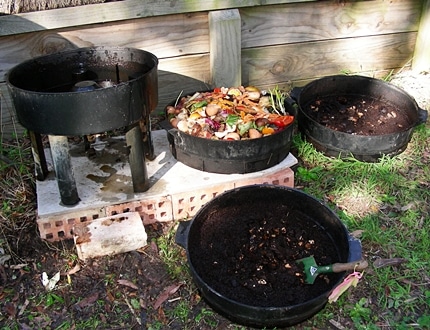
Photo Courtesy of Flickr Images by Doug Beckers
The entire system behind the worm farm is the following: you make containers and put the soil in and a colony of worms. You feed them your food scraps which they eat and they produce their droppings in the form of a liquid.
This liquid sometimes referred to as “worm tea” is collected and used to enrich the soil. It fertilises the soil amazingly and it even repels some of the pests, especially aphids, that attack the plants.
In addition, it can fit almost everywhere! It is not important where you place it, a basement, garage or a simple, small storage room. The worms are not fans of sunlight, so anywhere dark would be perfect.
You need to make sure that you maintain the correct temperature of your worm farm and that you don’t overfeed the worms. There are some tips and tricks about worm farming that will make it easier for you to do this well.
Still Worried about Space?
If you really don’t have a place for a worm farm you can always contribute to the environment by contacting worm farming companies.
Such companies will pick up your waste in order to feed their own worms. They gather their raw materials from restaurants, pubs, hotels as well as from schools and universities. Even more and more schools are starting with worm farming.
All in all, the benefits of having worm farms are numerous. The biggest one is increasing awareness of environmental issues amongst business people. Since it takes less than ten minutes per week to maintain a worm farm, it is something that could be done in every office.
It is a very effective green initiative that will help reduce your waste. You are probably aware that your waste has significant ecological impact and worm farming is one way to reduce it.
If you really want to put more effort into your green initiatives, the next thing you should try and tackle is the way you clean your stubborn, heavy and extremely dirty machinery.
Just like worms use their natural processes to reduce methane emission, certain microorganisms are very effective in cleaning greasy and dirty machinery.
That is the technology Alsco harnessed and now we offer the amazing Ecosafe Washer. It is environmentally and people-friendly.
A water-based product which completely eliminates grime, grunge and dirt within seconds!
What is more important, it is 100% safe both for the environment and your staff and clients.
If a safe and green environment is what you want as much as safe and healthy staff, contact Alsco for more info. Your satisfaction is guaranteed!
Photo Courtesy of Flickr Images by USDA


