Trusted by 237K+ Business Worldwide. Find a Location
Trusted by 237,000+businesses worldwide across 250 locations delivering uniforms, linens and more. Find a Location Near You


Delivering Excellence Since 1910
Contact Us
What Do Overalls Protect You From?
Overalls can protect their wearers from many possibly harmful or unwanted influences from their environment, provided that they choose the right size. It is important to note that not all overalls protect you from all these influences. Their ability to protect depends on the overalls design and material.
In other words, you cannot simply buy any type of overalls for your employees and hope that it will guard them against burns.
In order to be an effective defence against fire or water, the material of the overalls needs to be treated in a special way. The same goes for protection against some chemicals.
However, here are some of the things that good overalls can protect you from:
[b3_row]
[b3_column lg=”4″ md=”12″ sm=”12″ xs=”12″ ]
- Cold temperatures
- Excessive heat
- Certain chemicals
- Fire
[/b3_column]
[b3_column lg=”4″ md=”12″ sm=”12″ xs=”12″ ]
- Water
- Stains and splatters
- Accidents (hi vis overalls)
[/b3_column]
[b3_column lg=”4″ md=”12″ sm=”12″ xs=”12″ ]
[/b3_column]
[/b3_row]
To protect you from accidents, the overalls have to have hi vis properties. This means that they need to have fluorescent materials and reflective tape on them, according to the New Zealand standards AS/NZS 4602.1.2011 and AS/NZS 1906.4.2010.
[b3_row]
[b3_column lg=”4″ md=”12″ sm=”12″ xs=”12″ ]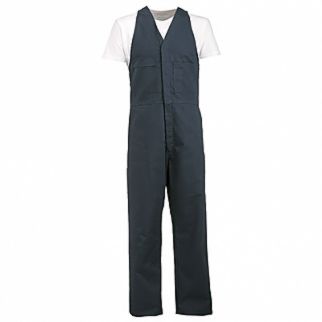
[/b3_column]
[b3_column lg=”4″ md=”12″ sm=”12″ xs=”12″ ]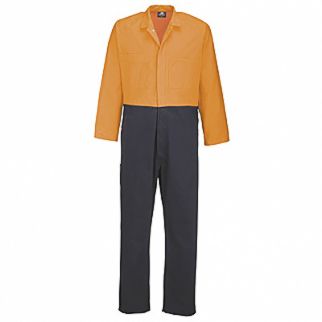
[/b3_column]
[b3_column lg=”4″ md=”12″ sm=”12″ xs=”12″ ]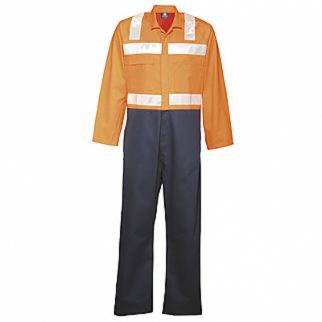
[/b3_column]
[/b3_row]
How do you know whether your overalls meet all the standards for certain use? You can simply ask those that already have a ton of experience with different kinds of overalls. Alsco New Zealand rents a wide range of overalls for different purposes. We can advise you and help you make the best choice.
After all, overalls are important! Why? Let’s discuss it a bit and explain.
Why Are Overalls Important?
Safety is the primary reason why a company would make sure their employees have good and appropriate work overalls. However, that is not the only reason why you should invest in these protective uniforms. Overalls in NZ workplaces are important because they offer:
- Protection – Of course, the first function of overalls is to protect. However, they don’t protect only the body of the wearer. Overalls can be used to protect the clothing, as well. If your employees work with food, for example, their overalls can be used to protect their everyday wear from spatters and spills.
- Temperature regulation – There are stuffed overalls that are excellent for cold days or night shifts. They keep their wearers warm. In the mining industry, they are especially important, since the underground conditions usually mean low temperatures. On the other hand, breathable fabrics are also available for overalls. That makes them perfect for warmer climates.
- Visibility – Hi-visibility overalls are important for those occupations that work alongside highways, as well as those that are first responders. Visibility of such overalls is achieved with the combination of fluorescent fabrics and reflective tapes. If there is only fluorescent fabric used, the overalls are to be used only during daytime. The hi-vis overalls that have reflective tape can be used during nighttime, as well.
- Brand exposure – Overalls cover a big portion of the wearer’s body. Surely, there is enough space on that amount of fabric for a company logo or a brand name. Just make sure, if you want to put a logo on hi-vis overalls, there has to be a minimum of fluorescent material visible.
The purpose and the function of overalls are now clear, but have you ever wondered about their name? The answer is quite simple.
Why Are overalls Called Overalls?
The etymology of the word “overalls” is pretty much transparent. It is a piece of clothing that covers the rest of your clothing. In other words, it goes “over-all-other-clothes”. However, it didn’t start that way.
The first commercially made “overalls” were actually jeans with suspenders. Levi Strauss, the inventor of jeans initially intended for them to be used as protective work overalls. They were meant to be a sort of waist-high overalls.
Work overalls had to wait for their upper part all until 1900s. Harry David Lee created this type of overalls by connecting the pants and the shirt. He also added the straps that went over shoulders to support the garment.
While they were designed to be overalls for men, they were also used as overalls for women and even kids. In time, the versatile use of overalls grew and they are now present in many industries.
Different purposes of overalls led to different overall designs and different overalls types. The most common type of overalls being the coveralls. What is the difference?
What Is the Difference Between Coveralls and Overalls?
There are two versions of this answer. Some will say that the difference is only a matter of regional language. “Coveralls” is mainly an American word, while in the UK, Australia and New Zealand, the word used for the same garment are “overalls”. Another word for “overalls” is “dungaree”
There is another definition of what is overalls and what is coveralls. Some people think that overalls include connected trousers, bib and over shoulder straps or suspenders.
[b3_row]
[b3_column lg=”6″ md=”12″ sm=”12″ xs=”12″ ]
[/b3_column]
[b3_column lg=”6″ md=”12″ sm=”12″ xs=”12″ ]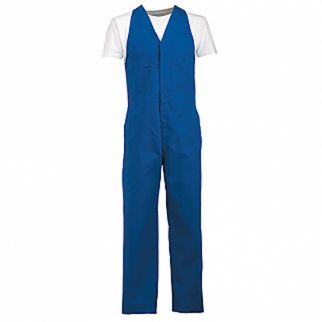
[/b3_column]
[/b3_row]
On the other hand, coveralls also include a shirt with sleeves. Coveralls are also sometimes referred to as boilersuit. However, in New Zealand, you can expect the words “overalls” and “coveralls” to be used interchangeably.
[b3_row]
[b3_column lg=”4″ md=”12″ sm=”12″ xs=”12″ ]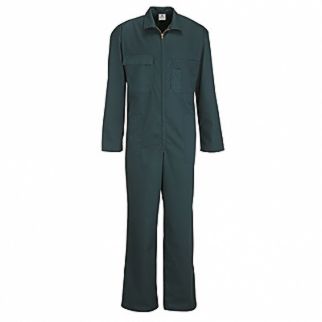
Spruce Green
[/b3_column]
[b3_column lg=”4″ md=”12″ sm=”12″ xs=”12″ ]
Red
[/b3_column]
[b3_column lg=”4″ md=”12″ sm=”12″ xs=”12″ ]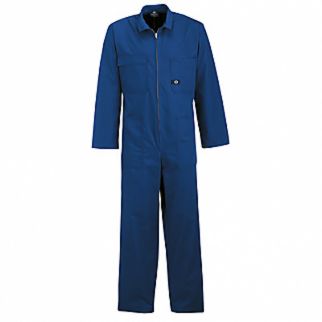
Royal Blue
[/b3_column]
[/b3_row]
Therefore, you are safe with using overalls and coveralls for the same type of garment, but you would have to make it clear whether you need the overalls that have the sleeves or not, just in case.
What Are Duck Bib Overalls?
Instead of just overalls or coveralls, you will also hear the term “duck bib overalls”. This is what a lot of people think about when they say “overalls”. This is the type of overalls with pants, bib and braces, but made out of special duck fabric.
Duck fabric is actually cotton duck fabric. This is a type of plain-weave canvas that is much softer to the touch than the regular canvas, but with all the durability and sturdiness. It also has a higher thread count than plain canvas.
These types of overalls are quote versatile in their use, but they are not to be used in situations when the fire retardant properties are necessary. These overalls are good for occupations where the minimal to moderate protection is needed and their main goal is to help protect the clothes from dirt and wear and tear.
Therefore, if you are interested in work overalls for different industries, your better bet are polycotton or cotton overalls or even hi-visibility coveralls. All of these clothing items can be found in Alsco New Zealand’s range of products.
When browsing the Alsco NZ range of overalls and coveralls, focus on the material and the purpose of this garment. If you are not sure which one is the best for your line of work, contact Alsco NZ representatives and ask them. They will gladly answer all your questions.
What you needn’t worry about is maintenance and laundering. When you rent the overalls from Alsco NZ, it involves paying a flat annual rate. This flat rate also involves regular laundering and maintenance of your overalls.
You just need to make sure they are in one place, so Alsco NZ representatives can pick them up and deliver the freshly cleaned and ironed ones to replace them. This will happen as often as you like.
Call Alsco New Zealand today and discuss your needs for work overalls, so our representatives can help you with your choices and make sure you are pleased to work with us.
Does an AED Require Maintenance?
Yes. Your AED requires some maintenance because it needs to be operational at all times. Check it every 6 weeks, at least. You should do the following every 4-6 weeks:
- Test primary battery by pressing the button and checking if the AED starts to work.
- Test the secondary battery, if there is one, by inserting it into the AED.
- Check the AED pads for expiry date.
- Check the data card if your AED uses one.
You can never tell when an emergency can happen. When it does, there is no time to fix an AED that is not working for some reason.
A broken AED means reduced chances for survival until the ambulance arrives.
That is why you should maintain your AED. If you are not sure if you can maintain regular servicing, leave that to Alsco New Zealand. We rent AEDs that are perfect for the workplace. Moreover, you don’t have to worry about their maintenance.
We include the servicing, maintenance and all regular checkups in your monthly fee. You call us and we set it all up. Get Alsco NZ to provide you with fully functional AEDs at all times.
What Is an AED?
AED is a portable electronic device that is used for emergency treatment of dangerous heart conditions which can cause grave consequences. AED stands for Automatic External Defibrillator. Defibrillation is the emergency treatment of cardiac dysrhythmias by the means of administering electrical shocks to the heart.
You should use an AED as your first response tool when a person suffers from a sudden cardiac arrest (SCA). Actually, what you treat with an AED is the abnormal heart rate that happens because of a cardiac arrest. There are different abnormalities in heart rate and an AED helps with Ventricular Tachycardia (V-Tach) and Ventricular Fibrillation (VF).
What Is the Average Cost of an AED?
Your average AED costs anywhere from $2,500 to $3,000. That is only the price of the new device. Here are some comparative prices.
| Device model | Lowest price | Highest price |
| Heart Saver AED7000 | $1,895.00 | $2,425.00 |
| Heart Saver AED7000 Plus | $2,195.00 | $2,695.00 |
| ZOLL AED Plus | $2,750.00 | $2,800.00 |
| Defibtech Lifeline AED Semi Package | $2,450.00 | $3,050,00 |
Remember that you need to replace the pads regularly and they don’t cost less than $80. The waterproof wall box for your AED costs around $1,000. These costs add up to a significant amount within a year.
Not to mention the time it takes to replace these when necessary as well as making sure to remember! That’s why it’s a much better option to rent the AEDs for a flat monthly fee. This means that all that fuss about batteries, pads and installation won’t have anything to do with you.
Alsco New Zealand offers HeartSine Samaritan 500P AED. It is portable, durable and easy to use. Anybody can use it, even without specialist training.
In the case of an emergency, using the AED like HeartSine Samaritan 500P, you will drastically increase the chances of survival for the person who’s suffered a cardiac arrest.
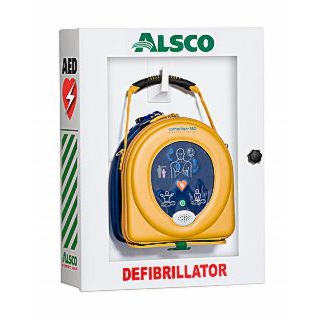
This AED model is:
- Practical and portable – weighing 1.13kg and measuring 20×18.4×4.8cm. Our defibrillators can be used by anyone, anywhere
- Durable and long-lasting – dust, water and shock-resistant and come with an 8-year warranty. These defibrillators are suited for even the most hazardous workplaces
- Advanced technology – cardiac detection selects and delivers the charge automatically for maximum safety and effectiveness
- Foolproof – voice instructions, automated shock delivery and 2-button operation means anyone operating the HeartSine Samaritan 500P will be able to save lives
Does an AED Expire?
The device itself does not expire. Just like any other electrical device, it can go on for decades, or it can stop functioning suddenly. However, since the fully operational AED is of vital importance, it is regularly checked. There is no time for such nasty surprises in the time of emergency.
From the moment a person had a cardiac arrest, to the moment the AED shocks them into normal function, there should be no more than 3 minutes. The sooner the better. Therefore, if your AED is not functional for any reason, there will be no time to find another one. That is the time that you don’t have a luxury of losing.
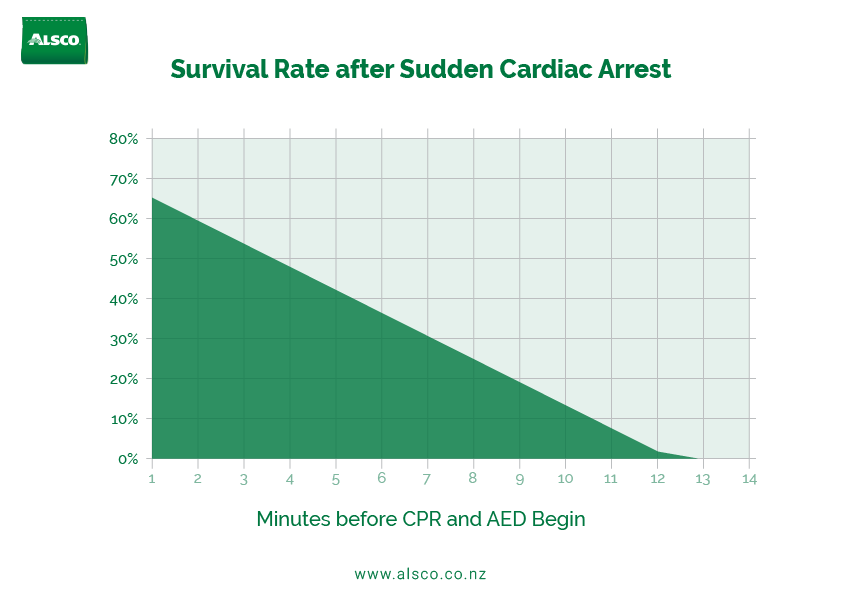
As you can see, this table is showing the sudden and steep drop of the survival rate as the minutes pass by. That is why you need to act fast and to have a fully operational AED handy.
Why Do You Need an AED in Your Workplace?
Take a look at these statistics that concern cardiac arrest in New Zealand and it will all be make sense. These numbers were published by Parliament NZ.
- Every year, there are 1500 primary cardiac arrests outside hospitals in New Zealand. This includes workplaces.
- Using an AED on a person suffering from cardiac arrest increases the chances of survival until the ambulance arrives from 7% to 30%
- On average, in New Zealand, it will take approximately twelve minutes for ambulance officers to get to a patient in cardiac arrest and attach and use a defibrillator. By that time, the chances of survival are very slim.
Do AEDs Need to Be Inspected?
Yes. For all the reasons listed above, the AEDs need to be inspected. The fact that you inspect it yourself regularly is great, but you should let an Alsco NZ representative do this, also.
This is done so that you are sure that the AED device is operational and all the wearable parts are functional and at their best. Inspections should be done every month.
If you rent your AED from Alsco, this is included in your monthly price. A professional will come at an agreed time and inspect all AEDs in your workplace. That is the best way to ensure they will not fail when they are the most needed.
How Often Do AED Pads Need to Be Replaced?
It is expected that your AED pads will need to be replaced every 18 to 30 months. Usually, there is an expiry date on your pads, so you need to make sure that they are replaced before that date.
The main reason why the pads need to be replaced is that they use gel as an adhesive. During CPR and the AED use, the gel is used for the AED pads to stick to the patient’s body. During CPR especially, the pads can peel off if the adhesive is not sticky enough.
This can be catastrophic as the pads need to be positioned during CPR so that the AED can determine whether a new shock is needed or not.
If the pads stay are out-of-date, the adhesive gel dries off. When they dry off, they cannot perform their function and therefore need to be replaced.
How Long Do Defibrillator Batteries Last?
The batteries in your defibrillator usually last anywhere from 2 to 5 years. However, this can depend on the manufacturer. To be absolutely sure if they are still operational, you should check the batteries and their expiration date.
In some devices, there is a spare battery. You should check both of these at least once a month. For the primary battery, you just need to click the ON button (some devices have the TEST button, as well). As for the secondary battery, simply take out the primary one, replace it with the secondary one and do the same test.
Research in the USA claim that one in four deaths, in which an AED was used, was caused by flat batteries. That’s a horrible statistic and one which could be prevented.
How High Should an AED Be Mounted?
Your AED should be mounted on the wall, so that the handle that’s used to grab it, is not lower than 40 cm and is not higher than 120 cm. This may sound very specific, but the idea behind it is that this is the range within which a person in a wheelchair can reach the AED.
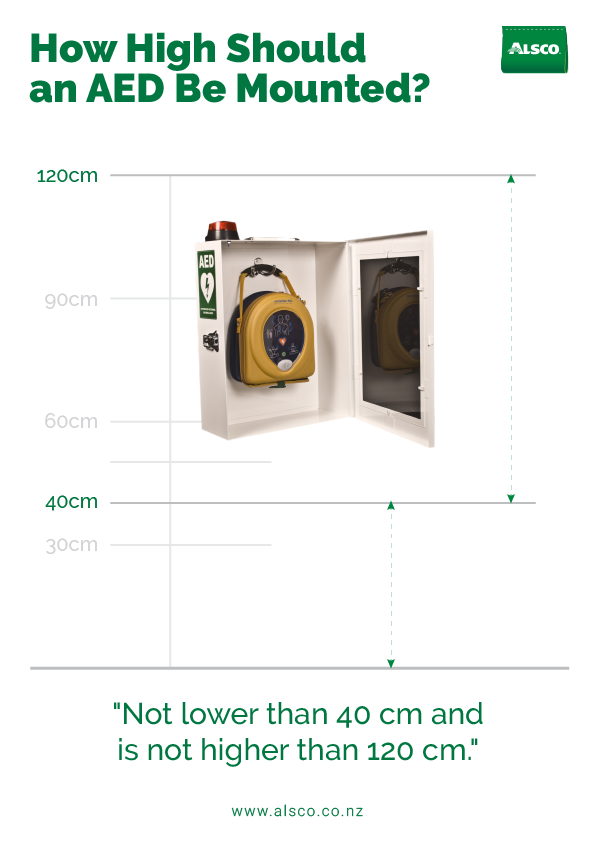
It is essential that the AED is put to use as soon as possible, so it needs to be positioned in a way that facilitates easy retrieval. This means nothing should be blocking it and it should not be behind plants and similar decorations. It also needs to have a bit sign pointing to it.
When an emergency occurs, people typically get flustered and they cannot remember simple things – like where the AED is! A clearly visible sign helps.
Do You Need Training to Use a Defibrillator?
No. There is some training available that can teach you about first aid and CPR, as well as how to operate an AED. This is highly useful and, if there is any chance, offer such courses to all your employees.
But even if there is nobody in your workplace who has first aid training, AEDs are very self-explanatory.
Simply open it, press the button, and it will talk you through all the steps you need to do. You will get short and to-the-point audio instructions about what to do. It’s all about placing the pads on the person and allowing the AED to administer the shock if necessary. If it isn’t, the AED will signal that, and prompt you to continue doing CPR.
Alsco NZ includes all that maintenance in the price you agree on. Call us today and rent your workplace AED.
Where Do You Place a Defibrillator?
One of the best decisions you can make when it comes to workplace safety is to get workplace AEDs installed. They should be easily reachable and there should be at least one AED on a building storey. While there is no direction and official legal requirement about its placement, here are the recommendations about where to place a defibrillator:
- One on each storey if you have a multi-storey workplace
- In the central, easy-to-access access area
- In secluded hard to reach areas where it is difficult to arrive with an AED quickly
- In areas that are frequent and/or the cardiac arrest is more likely to happen
- In the lobby or reception
- Near the phone
When you contact Alsco New Zealand and tell us you want portable AEDs to be installed in your workplace, our experienced representatives will help you decide where and how to position them. They will also install them, check on them and regularly re-check them. Rent your workplace AED today.
What Height Should a Defibrillator Be Placed?
All of your workplace AEDs need to be accessible and visible. Everybody should be able to reach the handle of the defibrillators without the danger of it to drop down.
This means that it should be positioned at no more than 120 cm of height. Also, it should not be at less than 40 cm. In this way, people who are using wheelchairs can also reach it without problems. For the same reason, the unobstructed side reach should be no more than 25 cm.
The height is not the only requirement when it comes to positioning the defibrillator. There are others, as well:
- It should not be in a locked compartment.
- It should never be blocked with furniture, plants or other items.
- It should always be marked with proper signs.
Feel free to download Alsco New Zealand AED sign in as many copies as you need. They will help you in the time of crisis when people are not quick to think, but they need to act fast.
Is It a Legal Requirement to Have a Defibrillator at Work?
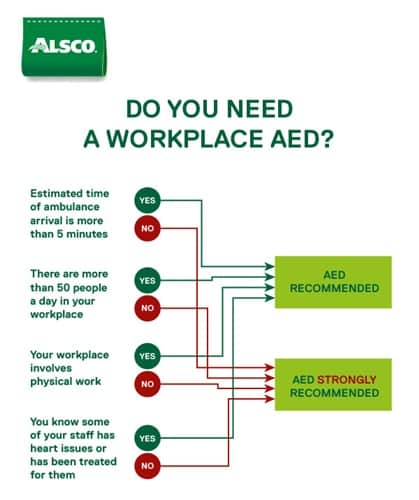
There is not a legal requirement for you to have an AED at work, but there is a recommendation that all workplaces have at least one. Moreover, New Zealand government is trying to spread awareness about the publicly placed AEDs. So, does your workplace need an AED or more?
Find out by following this flowchart:
How Does a Defibrillator Work?
The defibrillator shocks the heart into working properly. When the heart’s ‘electrical work’ doesn’t work properly. Regular electrical impulses are essential for the heart’s function, because they make the heart contract.
The contractions make the heart pump the blood and feed all the organs with nutrients and oxygen. No electrical impulses – no contractions – no blood flow. It is not that the heart needs to contract. It needs to contract in the precise way. Irregular contractions are heart palpitations or fibrillations.
It is all in the name. De-fibrillation means interrupting the fibrillation of the heart. The electrical shock that is administered to the heart stops it for a split second so that the heart can restart at a regular rate.
First, when you attach the pads on a person and push the button, the AED will check their pulse. If the pulse is OK, the AED will not release the current. The same will happen if the AED detects no pulse. The shock will be administered only and only if there is irregular heartbeat that poses danger to the patient.
What Rhythms Are Shockable?
Shockable rhythms are those rhythms of the heart that are caused by the electrical activity. This mainly includes ventricular fibrillation and the ventricular tachycardia, but also supraventricular tachycardia.
Since they are caused by the irregular electrical activity, they can benefit from the restarting. On the other hand, asystole and the Pulseless Electrical Activity are not shockable since they are not the result of bad ‘electricity’ but rather the blood supply to the heart, clogged or disrupted arteries.
Who Is Allowed to Use AED?
Anyone who is around a person that is suffering a cardiac arrest should use AED. You don’t need medical training to use it and you don’t have to worry that you will hurt or kill anybody. Modern day AEDs come with easy instructions and they are designed so that even untrained people can use them.
They analyse the heartbeat on their own and administer the shocks only if they are necessary. They choose the power of the electrical impulse. All you need to do is make sure it is attached properly.
Can a Defibrillator Kill You?
No. AED doesn’t kill people. You should not worry that you will hurt the person that is in cardiac arrest by using AED. AED can hurt a person that has a normal heart rate. However, if and when an AED analyser checks the heart rate and sees that there are no irregularities, it will not administer the shock.
Even if the AED fired, which is extremely unlikely, it is almost impossible that it would kill a person. The electrical shock should have to be released in such a tiny time-window within the heart cycle that it is almost impossible that it would be lethal.
With all this in mind, it is obvious that having an AED in the workplace is a matter of wishing the best for your workplace and your employees. Adding this essentially important level of workplace safety doesn’t even have to be expensive, or a capital investment.
You can rent your defibrillators. Alsco New Zealand offers AEDs that are perfect for the workplace. We install them, show you how they work and regularly check them from time to time, to make sure they are fully operational.
In this way, you just pay an affordable annual fee. You can always decide that you don’t want them anymore or that you need more or less of them. We are flexible!
Call Alsco New Zealand today and get your AEDs as soon as possible.
Photo courtesy of Flickr Images by Cliff Johnson
What Are the Steps for Using AED?
If a person has collapsed and is not breathing or not breathing regularly and you cannot find their pulse and they have changed colour, it is likely that a cardiac arrest has occurred. Take the following steps to use an AED:
- Turn on the AED and listen to the instructions.
- Remove the patient’s shirt
- Dry the patient’s chest
- Locate the pacemaker and medicinal patches
- Attach the pads
- Ensure nobody is touching the patient
- Press the analyse button
- Begin CPR after the shock
- Listen to the further instructions from the AED device
AED is used in the case of cardiac arrest. That can happen to anybody and anywhere. To make sure people in your workplace have the greatest chances of survival, place one or more portable AEDs in your workplace, so they are easily reachable and used.
What Are the Steps in the Chain of Survival?
 Click the image to view the whole Infographic.
AED is an extremely important part of the chain of survival, but it is not the only one. When an accident like a cardiac rest occurs, time is of essential value.
The chances of survival drop with every minute. On the other hand, there are several things to do. You need to call the ambulance, begin CPR, get the AED and use it, all while waiting for the ambulance to arrive.
When to Use AED?
As you can see from the first step in the chain of survival, the early detection of the issue is important. You should use the AED when you notice that the person has collapsed without consciousness, you cannot find their pulse and they are not responsive.
| Symptom | How to check for it? |
| Person is not responsive | Call their name and gently shake them. Kids should not be shaken, only gently pinched. |
| Breathing issues | Look if the chest is moving; check their breath on your cheek for 10 seconds |
| No pulse | Place the index and middle finger on the person’s carotid artery, next to the windpipe |
| Change of skin colour | Visual estimate |
| Spasms | Visual estimate |
AED helps with cardiac arrest. The heart attack victims will benefit more from the constant and well-performed CPR. However, don’t waste time on trying to make a 100% accurate diagnosis and administer both CPR and
Do You Need Training to Use Defibrillator?
No. You don’t need training to use modern AEDs. When you attach them to the patient, they mostly do their work all by themselves. You just need to get it attached to the patient in time.
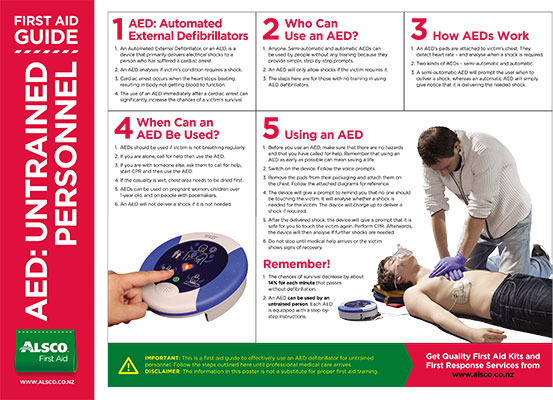
When you remove the patient’s shirt, it is best if you place one pad over the right nipple and the other on the left side of the patient’s chest, below the left breast area. If you need to use the AED on a child, then one pad should be placed on the front and one on the back of the chest.
Keep the AED pads on the patient even when the shock is administered and you are resuming CPR. The AED will continue to analyse the heart rate and warn you if it is about to administer another shock.
When Not to Use Defibrillator?
There are several instances when you should not use the AED and when you should use AED with caution. However, always keep in mind that the reasons FOR the defibrillation usually always outweigh the reasons not to use it. After all, that is the matter of life and death.
| When NOT to Use AED? | How to proceed? | When to Use AED with Caution? | How to proceed? |
| Patient is in water | Remove the person from water, take off their wet clothes and dry their skin | People with pacemakers | Avoid direct contact with the pacemaker |
| Patient is surrounded with combustible material | Move the person to a safe area | People with excessive chest hair | If possible remove the hair or find hair-free patches of skin |
| Children | Use pediatric pads if necessary. Do not use it on infants under 12 months of age. | ||
| People with medical patches | Remove the patch |
Can You Use AED in the Rain?
No. You should not use AED in the rain. You should move the person to the dry area, remove their clothes and wipe their chest dry. Otherwise, the AED will not be able to get accurate readings of the heartbeat and it will not be able to administer the appropriate shock. Also, this can present a danger for the people around the patient.
Can You Use AED on a Pregnant Person?
Yes. There is no fear that the AED will hurt the baby of a pregnant person. The same goes for the CPR. On the contrary, stopping of the mother’s heart means that the baby’s oxygen is cut off, as well.
That can cause more damage than any mechanical injury that is not impossible during the CPR or the AED shock. Don’t worry and if a pregnant person goes into a cardiac arrest, administer the CPR and AED immediately. AED can have a pregnant person’s life.
Can you use an AED on Someone with an Implanted Defibrillator?
Yes. The implanted defibrillator is actually another name for the pacemaker. It is usually located right beneath the collar bone. Earlier models were in the shape of disc that could, sometimes, be seen or felt underneath the fingers. However, today, more and more pacemakers are becoming smaller.
However, the presence of the pacemaker should not worry you. You should just do your best not to place the AED pads on it and everything should be just fine.
AEDs save lives. That should be a good enough reason for you to get them for your workplace. There is no need to make a capital investment just yet.
Rent your workplace AEDs from Alsco NZ and make it easy for yourself. We install them, service them and check them. You just let us know you need them. The rest is our concern.
Photo courtesy of EMS Safety
When Should You NOT Use an AED?
In most cases, you should use an AED in case of a cardiac arrest. However, there are instances when the AED should not be used
- If the victim is in water or is wet for any reason.
- If the victim is surrounded by the combustible material.
- If the victim is less than 12 months old.
These are the situations when you should not use the defibrillator. In addition to these, there are situations when you should use your AED with caution:
- If the person has a pacemaker
- If the victim has a medication patch
- It the victim is a child under 8 years of age or weighs less than 25 kg
In all other situations in which you are dealing with a person who is unconscious and unresponsive, you should perform CPR and use the AED. Whether the AED will or will not administer the shock is not up to you. The device itself will analyse the pulse and make that call for you.
For this to happen, you need to have a functional AED ready and easily accessible in your workplace. Get it today from Alsco New Zealand for a monthly fee.
When Should AED Be Used?
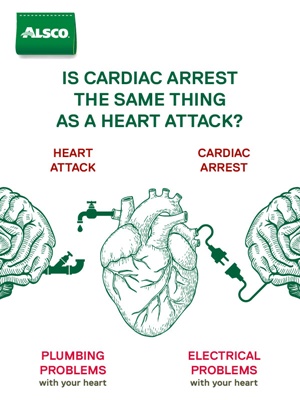 AED should be used in case of a cardiac arrest. The symptoms of a cardiac arrest usually include an sudden collapse with irregular or no pulse or heartbeat. The victim is unresponsive, so they don’t react to your calls, shakes and touches.
However, cardiac arrest and heart attack are very similar in their symptoms. While AED can help with the cardiac arrest, it is not effective in the case of a heart attack.
If the person is suffering a heart attack, the only thing that can help them survive until the ambulance arrives is CPR. The AED shock will do no harm, but it will do no good either.
So, how do you know if the person is having a heart attack or a cardiac arrest? You don’t. There is no time for you to make these conclusions and diagnose the condition. If you determine that there is no pulse or the heartbeat is irregular, don’t hesitate and start with the CPR and AED immediately.
While AED won’t help with the heat attack, it will not do any harm either, so it is best to cover your bases, just in case. AED simply won’t administer a shock if the heart rate is not “shockable”.
Should AED Be Used Before or After CPR?
You need to start CPR the moment you see that a person has collapsed and doesn’t have a pulse. CPR is used to continue the blood flow that has stopped due to the heart failure. If the blood stops, brain doesn’t get its oxygen and can die. CPR should be done immediately while the AED is set up.
Shout for help if there is anybody nearby who can hear you. Tell them to call 111 and ask for the ambulance. Grab the nearest AED and start performing the CPR while the other person sets up the AED so you can use it, preferably within a minute.
How Long Should You Perform CPR after a Successful Shock from the Defibrillator?
Generally, the AED should be performed as soon as possible, but some researches showed even a minute-long CPR before the AED shock helped the outcome of these first aid efforts. Setting up your AED will last at least a minute and there is no reason why that time should not be used for CPR.
In that way, you have prevented the complete halt of the blood flow, which is essential for the preservation of all important organs and tissues and you have administered the shock within the first two minutes from the moment of the accident, trying to restore the electrical function of the heart.
When Should You Stop CPR?
If you are in a safe situation when performing a CPR there are only a handful of reasons why you should stop CPR:
- There is an obvious sign that the person is better. They are breathing and/or are responsive.
- A trained medical professional has arrived to the scene and is taking over.
- You have done 40 pushes and you are quickly checking for the pulse.
In other words, unless the person is well, don’t stop with the CPR until ambulance has arrived and somebody is taking over the CPR from you.
What Are the Chances of Survival When Using AED?
This depends on the time that has passed from the moment you the cardiac arrest happened and the moment you have started the defibrillation.
According to the USA researches and findings, if you shock somebody’s heart with an AED within a minute of their cardiac arrest, their chances of survival are 90%. With every minute passing, those chances drop from 7% to 10%. The Australian resources claim that the success rate within the first minute is 70%.
There have been initiatives around the world for the portable defibrillators to be placed in the public places. This also happens in New Zealand. Due to the importance of the quick response and the timely use of the AED, it is logical that people want to have it nearby at all times.
The majority of cardiac arrests that turn out fatal happen in home. This is because there are no AEDs in most households and while the ambulance arrives, it is usually too late to help.
Some of the cardiac arrests will happen in the workplace. Those who already have heart issues are in greater risk of suffering a cardiac arrest than those who don’t. You can never be 100% sure that all your employees are aware of the state of their heart.
Therefore, you need to do whatever is in your power to make your workplace as safe as possible for everybody. This includes acquiring portable AEDs and installing them, so that they are always within a reach.
There is no need to buy so many AEDs. You can rent them from Alsco New Zealand for a reasonable monthly fee. Call Alsco NZ today and get your workplace AEDs.
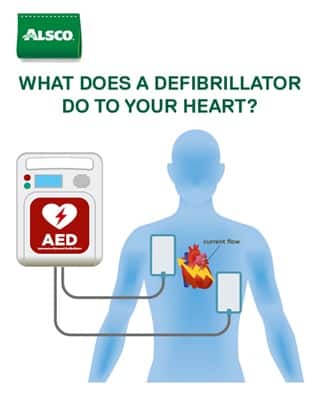
What Does AED Do to a Heart?
AED releases electrical shock to the heart. In that way, it restarts the heart. It is important to know that an AED will not revive a heart that doesn’t have any electrical activity left in it.
It will simply try to establish regular heart activity in cases when it is disrupted and dangerous.
The TV series that show a patient that is flat-lining being rushed into a hospital and doctors reviving them with electrical shock are wrong.
It doesn’t happen that way. Once stopped, a heart should be supported by the CPR compressions until medical professionals can take over.
They do everything in their power to restart the heart, usually by medications and quick attempt to remove the underlying cause of heart failure.
However, it is essential that the First Aid is administered ASAP in case that a person is unconscious and unresponsive. CPR should be started immediately, with the AED to follow. Also, the ambulance should be phoned instantly.
 For this to happen, your workplace needs to have AEDs at hand. Their location should be known and they should be positioned so that they can be reached within a minute from every place in your company. Every minute counts in the case of emergency.
Rent portable AEDs for a monthly fee from Alsco New Zealand and never worry about them again. They will be regularly maintained and checked, and we will even install them ourselves.
Do You Use AED on Heart Attack?
AED will not help in the case of a heart attack, but you should still use it if you see an unconscious person who is not responsive. AED is used in a case of a cardiac arrest, but you cannot be sure if you are facing a cardiac arrest or a heart attack just by looking at a person.
It would take you several minutes to establish what really happened, and by then it can be too late to do anything about it. While AED will probably not help with the heart attack, it will not do any more harm either. That is why you should perform CPR and use AED just in case.
What Is a Heart Attack?
A heart attack or a myocardial infarction is when one or more of the arteries that supply the blood to the heart are blocked for some reason. So, the heart would function properly, but the blood supply is cut off. Since it is rare for the arterial blockage to happen instantly, a heart attack can happen anywhere from a matter of minutes to a matter of hours.
The symptoms of a heart attack are:
- Chest pain
- Dizziness and/or fainting
- Cold sweating
- Grasping for breath
However, the heart of the patient will most probably still be beating and they will have a pulse, although the pulse and the heartbeat may be irregular and abnormal.
During the heart attack, the electrical function of the heart is not in jeopardy. It is most probably still preserved and that is why the heart is pumping. However, in the later stages of the heart attack, this may stop being the case.
What Are the Symptoms of a Cardiac Arrest?
Cardiac arrest happens when there is a disturbance in the electrical impulses through the heart. They are what makes the heart contract and, therefore, pump the blood, supplying it to the rest of the body. When these impulses are irregular, a patient is experiencing irregular heartbeats or arrhythmia.
When the arrhythmia is so severe that it prevents the heart from pumping the blood entirely, the person suffers the cardiac arrest. The symptoms of a cardiac arrest are:
- Shortness of breath
- Palpitations
- Lightheadedness
- Fainting and collapsing
The cardiac arrest itself happens suddenly. It strikes in a matter of minutes. However, there can be some warning signs that it is about to happen. These include:
- Weakness
- Vomiting
- Shortness of breath
- Blackouts
- Dizziness and fatigue
Cardiac arrest is fatal within 5 minutes if the person doesn’t get the CPR and the AED shock. Therefore, treat every suspicious state that involved unconsciousness and non-responsiveness as a cardiac arrest.
How to Use an AED?
AED should be used as an addition to the CPR. This means that you have already started the CPR and called for help. The CPR and the AED should be continued until the ambulance arrives to take over. When performing the CPR, your pushes are the only thing that keeps the blood flowing and the person alive.
Here are the steps you need to take when using the AED:
- If necessary, connect the pads to the AED device if they are not plugged in.
- Remove the shirt of the patient.
- Remove all wetness, water or sweat from the person’s chest. They need to be dry.
- Place the pads on the person’s chest, making sure they are not over a pacemaker or a medical patch.
- Make sure nobody is touching the patient.
- Start the AED device.
- When the shock is administered and the device reports it is safe to touch the patient, continue the CPR
- Don’t stop the CPR even if the AED reports that it is not needed to shock the patient.
If you truly want what is best for your staff, you will have at least somebody who knows how to do CPR and perform First Aid. However, as you can see, there are instances when CPR is not enough. That is why you need to have one or more AEDs so that they are easily accessible from every corner of your workplace.
Purchasing them would be a significant setback, but renting your AEDs for a monthly fee can be the perfect answer for your company.
It means you can have them in a matter of days and you don’t have to invest too much in them. If you decide to close the company, move it or resize it, you can simply return the AED or rent more or less of them.
Rent your AEDs from Alsco New Zealand and make your workplace safe.
Can an AED Start a Stopped Heart?
The short answer is no – an AED cannot start a stopped heart. What a defibrillator does is actually restart of the heart. For that to happen the heart needs to have any sort of electric activity, meaning – it needs to have some contractions.
AED is used when the heart doesn’t work regularly. It can be pumping too hard or too slow and it will most likely be pumping without the rhythm. The rhythm is essential for survival and that is why it is so important that the heart rate is restored.
However, an AED is still essential as the means of First Aid when a person is experiencing a heart attack. In combination with CPR it is what keeps the person alive until the Ambulance arrives. They are then transferred to a hospital where they will get the help they need.
That is the reason why an AED should be in every workplace in New Zealand. The time window in which the reaction can help the patient is very limited, so an AED needs to be close at hand. Contact Alsco NZ to rent enough defibrillators to keep your workplace safe.
What Does a Defibrillator Do to Your Heart?
The defibrillator releases a shock that will disrupt the electrical activity of the heart that causes it to contract for a split of a second. Hopefully, the heart will continue working properly after that, because AED shock works like a restart button.
The state of irregular heartbeat is called arrhythmia. The types of arrhythmias that can be fixed with the AED shocks are ventricular fibrillation and the ventricular tachycardia.
Ventricular fibrillation is the state in which the ventricles (lower chambers of the heart) don’t contract like they should in order to pump blood, but rather quiver too quickly. These mild and irregular movements are not enough to push the blood out, so the blood flow stops. VF can be caused by a damage of the heart muscle, some severe infections, issues with aorta and many more.
Ventricular tachycardia is when the ventricles of your heart have more than 100 beats in a minute and are in discordance with the upper chambers of the heart. Even though this means that the heart beats faster, the irregularity doesn’t allow for the chambers to fill with blood enough before the pumping out. In other words, there is not enough blood being pumped from the heart to sustain a person.
The rhythm of the heart is caused by electrical impulses. So, when these impulses are not sent properly, AED restarts them by disrupting them in hope that the heart will assume the normal impulse rate.
Why Is Asystole Not Shockable?
Asystole means that a person doesn’t have a heart rhythm at all. The heart has stopped. There are several systems in the heart that produce the electric charge that keeps the heart contracting and pumping. When that system is disrupted, you can restart it, but when the system is entirely broken that is another story.
Asystole means no electric activity, so there is no activity to disrupt or jumpstart. That is why the asystole is a very dangerous condition that cannot be helped by an AED.

What helps with the asystole is the CPR. At least, this is what helps to keep the blood pumping and preserve the body from shutting down completely before the real help is administered. The real help that has the chance of restoring the systolic activity of the heart are the medications.
Epinephrine is the most commonly used medication in this situation. In case of severe emergency, it is given to the patient every 3-5 minutes, while performing the CPR.
Can CPR Restart a Stopped Heart?
CPR alone is unlikely to restart a stopped heart but it can help delay the dying off of the tissue until the medical professionals arrive and try to revive the person.
Brain damage and brain death happen when the air supply is cut off for more than 3-4 minutes. When the heart stops, there is no way for the oxygen to be distributed throughout the body. However, there is still some of the air left in the body when the heart stops, and CPR helps it keep moving through the body.
In combination with mouth-to-mouth, this First Aid method can even help more oxygen reach the blood and delay the fatal outcome even longer.
What Are the Steps of CPR?
CPR is conducted in several steps:
- Place the heel of one hand on the lower half of the person’s breastbone. Locate the lower part of a person’s breastbone. Press it with the base of one hand and put your other hand over, grasping your wrist or interlocking your fingers.
- Press down the chest, trying to reach one third of the total chest depth.
- Keep pressing in the rate of 30 compressions to two breaths of mouth-to-mouth or 100 compressions without mouth-to-mouth.

Click the image to download the poster
CPR stands for Cardiopulmonary Resuscitation. It should be started as soon you see that a person is unconscious and unresponsive.
First, check if the person’s airways are blocked and if they are – remove the obstacles. Check if the person is breathing at all. If the breathing is normal, roll them on their side, if it isn’t or the breathing is irregular, start the CPR compressions.
If there is anybody else there to help you, rotate when doing the CPR, because it is tiring and it is easy to lose the rhythm.
CPR is your best chance for the asystole. However, AED is the best option for the VF and V-Tach. Since the symptoms of both of these things are similar, you have no time or the means to determine whether a person suffers from one or the other.
That is why your best bet is to start CPR immediately and then add AED to your efforts. AED will not release shocks if they are not needed, so you don’t have to worry about doing more harm than good with it.
Contact Alsco New Zealand today and rent portable AEDs for your workplace. Inform your workforce about their location and how they are used and boost the safety levels in your company.
Photo courtesy of stryker
Who Can Use an AED?
Anybody who can follow simple instructions can use an AED. A person does NOT have to be qualified or trained in order to conduct defibrillation in case of sudden cardiac arrest. Of course, it is best if the person has at least minimal training in CPR or AED.
The best results are achieved with the combination of CPR and AED. CPR helps with the heart failure issues that cause the electric activities of the heart to stop entirely. In simple words, when the heart stops pumping.
It is important to start CPR immediately so that the pressure on the heart helps pump put the blood and mimic the normal heart function.
AED usually helps with the situations in which the heart has an abnormal function. This means irregular heartbeat or arrhythmia. When this occurs, especially when there are irregularities with the function of the lower chambers of the heart, such as ventricular fibrillation or ventricular tachycardia.
In this case, the heart starts beating in an irregular rhythm, too fast or too slow and it leads to the loss of blood pressure and unconsciousness. It can be fatal.
That is why each workplace needs to have at least one AED so that the first aid in the case of a cardiac arrest can be administered in the first 3 minutes. After that, the chances for survival are reduced drastically. Get your AED from Alsco New Zealand and avoid big upfront investments.
What Are the AED Laws?
So far, New Zealand laws do not require mandatory AED in the workplace. However, the law should not be your main reason for acquiring AEDs for your staff. The chances of survival when there is a defibrillator used increase up to 80% than when only CPR is involved.
That should be a reason enough to have one or more defibrillators in your workplace ready and clearly marked, so that anybody can see them.
From the moment a cardiac arrest occurs, to the moment when it is too late to offer assistance before brain damage occurs, there is only a 3-minute window. During that time window, somebody needs to react, start the CPR immediately and use the AED right away.
This is less likely to happen if people in a workplace don’t know where the AED is located or it is too far away, or if they are reluctant to use it because they think they don’t know how to use it.
The truth is, modern defibrillators, especially the ones that Alsco offers, can be used by anyone. They do all of the work themselves, including the analysis if the electric shock should or should not be administered and when.
The proper workplace signs that show where the AED is should be put everywhere because, in the state of shock and fear when something like a cardiac arrest happens, people get flustered and they don’t think clearly. That is why the signs need to be put on prominent places to remind them in the moment of crisis what needs to be done.
How Do You Use a Defibrillator?
The defibrillator is used when you see that a person is unconscious, has irregular heartbeat and isn’t breathing normally. In that case, you should call for help or, ideally, ask somebody else to call the ambulance. Quickly grab the AED or send somebody to grab it while you perform the CPR.

Click the image to download the poster
Once you have the AED by your side, go through the following steps:
- Connect the AED pads to the device if necessary.
- Remove or open the patient’s shirt, exposing the chest.
- Determine if the patient has a pacemaker or a medicine patch.
- Remove the medicine patches if any.
- Wipe the patient’s chest clean if they are wet.
- Place the AED pats on the patient’s chest avoiding direct contact with a pacemaker.
- Let everybody know that they need to “STAY CLEAR”
- Push the analyse button.
- Listen to the instructions from the AED.
- Resume CPR until the next electrical shock and repeat the steps 8 and 9 until the ambulance arrives.
Can AED Be Used on Anyone?
You can use an AED on almost anyone. You should not use it when the person is wet for any reason before wiping them dry. There are also different types of patients that can get people doubting if they should use AED on them, fearing that they can do more harm than good.
Can I Use an AED on Someone with a Pacemaker?
Yes. You should use an AED on somebody with pacemaker. Make sure that you don’t position the pads directly over the pacemaker, though. It is usually located right below the left collarbone. The older models can be felt like a hard disc-shaped surface, while the smaller ones are less likely to be detected.
Can I Use an AED on a Pregnant Woman?
Yes. Don’t be afraid that you will hurt the unborn baby. Neither AED nor CPR will hurt the baby. There will be more damage to the unborn child if their mother doesn’t survive due to the lack of first aid.
Can You Use an AED on a Child?
If available, use a pediatric AED. There are special pediatric pads for children and special settings on the AEDs that administer milder electrical shock. If this is not available, use the adult AED on children above 12 months of age only and that is only if you are their only option available. Children under 12 months of age should be treated with CPR and without the AED.
The cardiac arrest related deaths in New Zealand are not unusual. They are frequent enough for the government to start introducing the public defibrillators. Therefore, it is advisable that company owners do their part in this effort and introduce the AEDs as a part of their First Aid.
The easiest way to do this is to contact Alsco New Zealand right now. Call us and tell us that you want AEDs in your company. That’s all you need to do. Alsco does the rest.
We will asses how many you really need, where is the best place to put them and what needs to be done with them. We will control them, replace batteries and check up on them. We will install them. Your obligation is only to let people know they exist and to pay affordable annual rental fee.
Get your workplace AED from Alsco today.
Photo courtesy of Medisave
13 Great Ways To Stop Work-Related Back Pain
Work-related back pain is one of the most common workplace injuries. It is usually caused by common work activities, such as sitting in your office chair or heavy lifting.
Of course, a lot depends on various personal factors, such as genetics, shape, and lifestyle. Also, not all back pains are the same. You can have pains in your pelvis, lumbar, or neck.
Among the most common causes of backaches suffered at work are poor posture and prolonged periods of sitting, especially in positions that are unhealthy for your back, such as slouching in an office chair.
Back pain is usually an annoying condition, but it can also be a crippling condition that renders you unable to perform regular daily tasks. That is why you should do everything in your power to prevent this from happening to your employees.
At the same time, preventing work-related back pain can reduce absenteeism and increase your company’s productivity. Among all the simple steps that can be taken in fighting back pain, the most important ones relate to proper posture and exercise.
Here are some ideas how to prevent and fight work-related back pain.
1. Set Up An Ergonomic Workplace
Your employees spend a better part of the day in their office chairs. This means that they are critical in providing a proper support to spines and back muscles.
Ergonomic chairs are rather common these days as a lot of businesses have recognized their great effects on employees’ health and safety.
Since they have become a common office item, you should be able to find them at affordable prices. But you should always keep in mind that a good ergonomic chair should enable the correct sitting posture of its user at all times.
It needs to have appropriate lumbar support, adjustable backrest and seat tilt. This will prevent painful episodes because the chair prevents back muscles and ligaments from being too strained.
2. Instruct Your Employees On How To Correct Their Posture
Here are some things to do while sitting and working:
- lean your back on the backrest
- hold your back straight and relax your shoulders
- bend your knees under 90 degrees and rest them on the floor
- avoid slouching or bending forward
- keep your elbows in line with your wrists while typing
The easiest way to figure out the best standing posture is to stand with the back of your head against a wall. Place your heels approximately 15 cm away from the wall. Your buttocks and shoulders should be touching the wall. Draw in your abs. This is how a good posture feels. Keep that in mind and mime it until it becomes your habit.
Correct posture at all times prevents vertebra from slipping from their natural position. This can turn into a crippling condition if not prevented and treated.
3. Consider Installing Standing Workstations
Experts these days say that sitting is the new smoking and that too much sitting can kill you. As dramatic as it may seem, sitting places more pressure on your lower back than standing does. So, it is worthwhile considering the option of standing while working. The ideal option is to change between standing and sitting while working.
Standing stations don’t take up much of your office space. As there are great benefits to your employees’ health, so should definitely consider placing them in your office.
4. Consider Moving Desks
Old habits die hard and some employees will no be keen on using standing desks. Another great option to consider is moving desks.
Moving desks are forcing your employees to change positions which does wonders for their spine and prevents back pains. These adjustable height desks automatically raise and lower the desk, forcing people to stretch their legs and back.
5. Properly Position The Computer Monitor
One frequent cause of recurring back pains and headaches is the way you hold your neck. If you bend it forward too much, you prevent the blood from circulating and you press on the nerves.
People usually do this while trying to look at their computer screen. This is why it needs to be positioned properly so you can clearly read the screen without bending your head, neck or trunk forward or backward. Any awkward position should be avoided. Also, make sure that the monitor is positioned at your eye level so that you are not forced to look down or up to use it.
6. Use Document Clip Holder For Computers If Necessary
Your employees might sometimes be required to look at their papers and a computer screen at the same time. This involves a lot of neck twisting and turning, which consequently results in neck pain, headaches and back pain.
By fixing a document clip holder onto a computer screen, this can be prevented by providing your employees with a comfortable position for working on their computers.
7. Provide Posters With Proper Lifting Techniques
Although lifting heavy objects is not usually a part of the everyday routine in the office, it is still better to have your employees informed about proper lifting techniques. If the need arises, they will be ready for it and some serious injuries will be prevented.
Posters illustrating proper ways to lift objects are visual everyday reminders that come in handy in making your employees aware that a lot of injuries and back pain can be prevented.
8. Make Use Of Cushions
Spending a lot of time in the office requires proper lumbar support. Ergonomic chairs usually have it and you don’t have to worry about that if you choose to buy them for your office.
However, if you cannot afford to buy ergonomic chairs, you can always use cushions or even a simple folded towel. All of these are good for maintaining your proper sitting position as proper lumbar support will be ensured.
9. Encourage Employees To Practice Yoga
Apart from having many great benefits on the human body and mind, it is also healing for your back. It makes your ligaments, muscles, and bones more flexible and prevents strains and back injuries.
There are many ways to encourage your employees to practice yoga. You can offer a free membership at a yoga centre, or work out a discount. Or even better, hire a yoga teacher to come to your office and practice there.
10. Teach Your Employees Breathing Techniques
The importance of breathing is easily overlooked because it’s something we all do, all day, every day. However, few do it correctly. Learning breathing techniques is important as it improves many health aspects of people’s lives. Proper breathing is a simple way to relieve stress, lower your heart rate and blood pressure, and leave yourself energised to carry on with your day. But it also builds your abdomen muscles, which makes it a great prevention strategy for back pain.
Abdomen muscles help you keep your body straight. They also relieve the pressure your entire body puts on the spine. Proper breathing strengthens them and it also forces your body to assume a proper posture.
11. Emphasize The Importance Of Regular Stretches
At least hourly, and ideally every 15 minutes, stop, drop and shake. Stretching exercises will help you get rid of any tension in your muscles and boost your energy levels and productivity.
Regular stretches don’t have to last long. Even a short break will do if exercises are done properly and at regular intervals. Your body is designed to move. On the plus side, regular stretches and exercises reduce absenteeism due to back pain and boost productivity. They are definitely worth the trouble.
12. Provide Headsets For Telephone Conversations
Using a proper headset on a daily basis will reduce unnecessary back pain and fatigue caused by cradling the phone between your head and shoulder. By not holding an actual telephone receiver, you can freely move your head, neck, and shoulders, and both of your hands are free. This significantly reduces muscle tension and allows longer job performance. This is why you should make sure that everybody in your office has proper headsets.
This will allow your employees to maintain healthy posture while talking over the phone. This especially applies to employees who work in call centres and use phones in their everyday work constantly as this can badly reflect on their health.
13. Have A First Aid Kit And Ice Packs Ready And Easily Accessible
Apart from the usual back pains and aches, bad posture and inactivity are causes of many injuries and accidents. In this case, you’ll need to have a first aid kit and ready ice packs to alleviate the pain and damage caused by an injury.
Employers are required to have adequate and appropriate first aid kits that are easily accessible through the venue. They need to be compliant with the rules and regulations and restocked on a regular basis.
Give us a call and we will offer you our rented first aid kits that are carefully tailored to your needs. We will also make sure they are compliant and well-stocked at all times.
Photo courtesy of Freepik Images by Yanalya
7 Safety Measures All Healthcare Workers Should Consider
The injury rate among healthcare and social assistance workers is higher than any other sector. They are exposed to various health risks and hazards including back injuries, needle-stick injuries, allergies, blood-borne pathogens, potential chemical and drug exposures, to name just a few.
With all the good they are doing for their patients, it is important for them to take extra safety precautions in order to prevent work-related injuries and illnesses.
Although it is impossible to eliminate all the risks associated with the healthcare industry, here are 7 safety tips that can help workers avoid extreme situations and minimise the risks.
1. Take Extra Measures When Lifting
From time to time, healthcare workers are required to do heavy lifting. Some patients need help getting up or need to be lifted entirely. Heavy equipment needs to be moved around the healthcare centre.
Mechanical aids should be the first option when it comes to heavy lifting. They are guaranteed to help distribute the load and strain rather evenly. Examples of these are lifts, pivot disks, and slide boards which make patient transport so much easier.
If these are not available, make sure to master and implement proper lifting techniques for medical staff. There are some specifics in this industry which require special care.
2. Pair Work Is Always Better
Another alternative to consider when mechanical aids are not available is working in pairs. More often than not, this option is overlooked. Unfairly though, as it helps distribute the load between two people. However, here are some things that you need to have in mind.
First, you need to work with someone of the similar height and build. This will help distribute the load more evenly. Second, make sure your movements are fully coordinated with your partner’s to avoid dropping and damaging the load, especially when lifting a patient.
3. Regular Maintenance Is A Must
As the quality of your services heavily depends on how effective and functional this equipment is, you just cannot afford to have any malfunctions.
When it comes to health care center and hospital equipment, nothing is of minor importance: from bed cranks and wheelchair casters to patient monitors and sterilisers, all must be checked and tested on a regular basis.
Make sure to constantly check the quality of work of employees responsible for maintenance. It is of critical importance that their job is done properly. There’s no room for poor performance given the seriousness of those affected.
4. All Hazards Should Be Reported Immediately
Spills and leaks aren’t considered a serious danger in most workplaces. It usually requires a simple mopping of the floor to get things all cleaned up. However, this is not the case in the medical industry.
The biological matter like blood and other bodily fluids that might potentially contain infectious bacteria/strains require special handling and care.
But simple hazards should not be ignored either. Small pieces of broken glass on the floor are potentially harmful to both your patients and yourself. This is why these incidents need to be reported immediately.
5. Prioritise Safe Needle Handling
All healthcare employees need to be aware of safety measures of needle handling and disposal. Used needles are a genuine potential medical hazard. The risk of infection and transference of diseases is far higher with improper needle handling.
To make sure that all of your staff is familiar with the procedures, schedule a training session. Put up posters and reminders about the centre so that the staff is constantly reminded of safe handling procedures.
Although they are a bit more expensive, it is worth investing in safe needles as they’re guaranteed to provide proper protection for workers at all times.
6. Use Protective Equipment At All Times
From masks and gloves to safety goggles and scrubs – all these items are mandatory to every healthcare worker and should never be left out. Wearing protective equipment creates a barrier between your and germs. This barrier reduces the chance of touching, being exposed to, and spreading germs.
Each department in your medical centre is connected to specific dangers it is exposed to. This is why you need to be aware of them in order to properly distribute protective equipment. By working in different conditions, each of your employees has different protective needs. Also, they might need to use different types of protective equipment for specific patients.
For instance, employees who handle laundry need sturdier gloves because they are at risk from stray needles. Medical professionals who work with patients that suffer from highly infectious diseases need high-quality masks.
7. Keep In Mind That Physical Assault Is A Possibility
Finally, physical violence against medical staff is a reality you should we aware of. Certain patients are prone to violence and you might be in real danger.
While much rarer than other risks, it’s still something to bear in mind. It is important to identify potentially problematic patients who have a history of psychiatric disorders that involve violence. If there are any that are probable problem cases, make sure that handlers of such patients are working with a partner.
There are a lot of important things to consider when it comes to occupational health and safety in the healthcare industry. For many years, Alsco has been a reliable provider of services and products for a wide range of industries, including healthcare. From uniforms to safety mats, first aid kits, defibrillators, and other relevant equipment, Alsco can cater to all your needs.
Call us today and we can customise packages and programs for rental or purchase specific to your company’s needs.
Photo courtesy of Freepik Images by Nensuria


