Trusted by 238K+ Business Worldwide. Find a Location
Trusted by 238,000+ businesses worldwide across 250 locations delivering uniforms, linens and more. Find a Location Near You


Delivering Excellence Since 1910
Contact Us
Going Green with Greenroom
What to Expect from Greenroom Tips?
Did you know that recycling is not the only way to be eco-friendly around your office? While it is important, there are many other ways to go green.
They require a little bit of research from your side. Or, you can cut yourself some slack and let Greenroom feed you all the info you need.
Greenroom is this great blog from Alsco. It is all about making your workplace a greener, safer and healthier place.
This resource is packed with excellent and well-researched articles. It makes it a great read for anyone that owns, manages and works in an office.
Greenroom benefits workplaces all over New Zealand, boosting workplace efficiency by making people happier, safer and healthier.
Green Blog and Green Plants: More Similar Than You Think
Implementing Greenroom tips will help you reduce the number of sick days taken, improve stress relief, increase productivity, as well as air quality.
Do these sound familiar? They should because these are also the benefits that you get from having potted plants around your office. Many New Zealand office workers and corporates make the most of these benefits already.
Does this plant the idea in your mind about getting more foliage for your office? If you are not entirely persuaded, here are some good Greenroom tips.
Lush Office Plants Reduce Absenteeism
People take less sick days in offices that have plants. This is because plants improve air quality, reduce the levels of toxins and moulds, and even have beneficial psychological effects on the office goers.
The sick building syndrome can be the cause of many days off around an office. Foliage reduces these effects and soothes the symptoms.
All this adds up to decreased cases of sick leaves and absenteeism.
Foliage Filters Toxins from the Office Air
Plants ‘breathe’ by filtering the air. They take the carbon dioxide from the air, process it and release oxygen. This reduces the levels of carbon dioxide from your indoor space.
It’s beneficial for your workplace because high levels of CO2 affect decision-making processes. It even makes simple tasks difficult for those that have been exposed.
Besides CO2, plants will get rid of different bacteria and harmful chemicals from paints, carpets and other parts of your workplace.
Plants Make the Office Cooler
Can you do your best work in a hot office that makes you sweat? Even if you can, it is much easier to work in a pleasantly cool environment.
While the excessive use of your AC is not eco-friendly, having a couple of plants around definitely is.
By transpiring, plants reduce the temperature around them and increase the levels of humidity. Workplace temperature can drop by ten degrees if there is enough greenery around. People enjoy the 30-60% of air humidity.
Those are precisely the levels that a couple of plants can maintain.
Office Pots Drastically Improve Wellbeing
Plants can help you fight depression, anxiety, and stress.
First of all, workplaces that have plants in them are more beautiful. In that sort of environment, it is much easier to relax and deal with stressful situations.
Some of the plants that work wonders around the office include:
- Rubber Plant
- Philodendron
- Aloe Plant
- Greenery Boosts Performance
Greener offices help people be more productive and boost their performance. A case study from Washington State University showed that people are 12% more successful in performing stressful tasks when plants are in the room.
Leafy Plants Reduce Noise Levels
There are many sources of noise in an office. Printers and phones, machine buzzes and different conversations are just some of the things that you hear all the time.
Noise can seriously elevate your stress levels and reduce your ability to perform at work.
However, some thick and lush foliage reduce the noise. If that is what you need, choose one of these:
- Bamboo Palm
- Peace Lily
- Lady Palm
Go Green Today
Is there one good reason why you shouldn’t put some attractive pot plants in your office? No.
Start improving your workplace today. Well-chosen plants do not have to be expensive, they can be easy to maintain and they are a great investment.
This is just one of the many ways you can join many businesses in New Zealand in creating a greener, healthier and safer workplace.
Check out our sustainability stories for more ideas to go green. We are regularly publishing high-quality articles with practical tips that you can easily use in your office space.
5 Workplace Recyclables That You Were Unaware Of
When we discuss workplace recycling, the first thing that comes to mind is paper recycling. When we doodle, we throw it away. If we realise we’ve made a huge mistake, we throw it away.
Letters that we receive that have no use for, we throw them away. We use paper wipes though there are reusable cloth wipes which are more environment-friendly.
We do it every day, and we do it just as much with plastic and paper. However, while these are the two prime suspects, there is a lot more workplace recycling we can do.
Reusing and recycling resources are best valued when they’re managed properly, contact Also for fully-managed rental services.
Five Most Uncommon Items That Can Be Recycled
#1. Damaged Electronics
Forgotten to take your MP3 player out of your jeans before washing them? Dropped your phone in the sink while washing the dishes? If you haven’t, you probably know somebody who has.
When people travel, they often have their earphones in listening to music. Whether they are listening to it on their phone, or on an MP3 player, the chances are that they’ve had a few different MP3 players.
Broken MP3 players can be recycled and be put towards creating new technology. Similarly, so can calculators or broken computers.
From a financial point of view, sometimes a broken computer isn’t worth fixing and buying a new one is a better choice. If this sounds like a situation you’ve been in, recycle the broken one!
#2. Polystyrene Packing Peanuts
While these peanuts are fun to play with, they aren’t as delicious as other peanuts. The peanuts that we are referring to are the foam-like pieces which are commonly inside of your electronic packages so that they don’t get damaged.
Instead of disposing of them, collect them inside of bags and call up a local moving company. They will find a lot of use out of them and they will appreciate them due to how it can help prevent damaging their customers valuable and fragile goods.
#3. Umbrellas and Rainwear
Umbrellas are very fragile, which is unfortunate when heavy rain is accompanied by heavy winds. We’ve all walked passed an abandoned and broken umbrella on the street, similar to how we’ve all seen an abandoned raincoat. They are specially designed to prevent us from getting wet, however, they happen to be very fragile too.
Get in touch with a recycling centre and find out where you’d be able to recycle your employee’s rainwear.
#4. Mobile Phones
When we get a new mobile phone, a lot of us aren’t entirely sure what to do with our old ones. Some of us throw them away, some of us like to take them apart to see their insides, and some of us just like to sell them for a little extra cash. However, another option is to simply recycle your old mobile phone.
Selling your mobile can put you at risk of a hacker buying it from you, and taking all the data off of it (even if you have deleted that data!). This can be very worrying for those who use their mobiles for online banking. So, why not take the safer and more environment approach and recycle it!
On top of recycling, there are charitable organisations who have professionals clear the phone’s data and fix it up so it looks as good as new, sell them, and put all the profit towards charity!
#5. Prescription Glasses
After a routine eye check-up, it’s not uncommon for us to need new glasses. This leaves us with a pair of glasses that we put in a drawer, and will most likely never use again. But why cause clutter when we can simply recycle them?
Organisations such as “Lions Clubs International” have many recycling centres all over the country. They take all unwanted and donated glasses and ship them to third-world countries where the less fortunate are able to benefit greatly from them.
Talk to your employees and enquire about whether some of them have old and unused glasses at their homes and whether or not they would like to donate them to a good cause? Who knows, those glasses could have a journey of their own and be put to great use over in India.
An Example of How Effective Recycling Can be
A prime example of recycling is when we order a new television. The television will arrive in a cardboard box, a polystyrene barrier, a plastic bag, and polystyrene packing peanuts. What can you do with the packaging?
- Cardboard box – Recycle just as you would with paper.
- Polystyrene barrier – Contact a local moving agency about them reusing them.
- Plastic bag – Recycle just as you would with plastic.
- Polystyrene packing peanuts – Contact a local moving agency about them reusing them.
To Conclude
As you can see from above, there are a few different things that you wouldn’t expect to be recyclable. Educating yourself on what you can recycle is a good thing to do, as not only does it help contribute to the health of our environment, but it gives you a sense of satisfaction due to knowing that you are doing your part.
The best way for you to help and support the environment while controlling your carbon footprint – is to recycle.
So start greening your workplace today and take care of both the environment and your pocket. Use Alsco’s reusable wipes. They’re biodegradable and reusable. Send us an enquiry! Our friendly and informed staff are waiting to help.
Photo: Pixabay
The Dirty Truth on Paper Towels and How to Make the Greenest Choice
Going green means choosing greener options from food selection down to washroom supplies.
Maintaining eco-friendly business practices is a social obligation to your community. Obvious benefits include reducing waste and cutting costs.
So what can you do? Alsco has the answers. Employers can start with the paper towels in the workplace washroom. In New Zealand, papers represent 7% of wastes, equivalent to approximately 200,000 tonnes.
Are cloth towels really better? For green solutions tailored to your business, contact ALSCO now.
Why Going Paper Towel Free Matters?
Even with hand dryers and dishcloths in the market, paper towels have long ruled as the choice of habit. It’s one of the most wasteful things people dispose of every day without regret. Every year, discarded paper towels result in 254 million tons of trash worldwide.
To make one ton of paper towels, 17 trees are cut and 20,000 gallons of water are consumed. This creates a major drain on the earth’s resources. To replace the number of discarded paper towels, 51,000 trees are required every day.
Virgin Paper Towels Are Toxic
Virgin fibre comes straight from a tree. Can you imagine chopping down a tree for a single-use item? You may also notice how virgin paper towels are gleaming, bright white, which is actually not natural. Paper made from wood would ordinarily be brown.
Several methods are done to bleach these paper products, including using chlorine and its derivatives. In fact, the paper industry is known to be among the worst-polluting industries on Earth. The process releases cancer-causing chemicals, which pollute the air, waterways, soil and the food chain.
Dioxins and furans, by-products of pulp and paper mills that use virgin timber, are linked to a number of health concerns. These include immune system impairments, hormone alterations, birth defects, and other reproductive problems.
What Are The Better Alternatives?
According to a study, 72% of consumers would recommend a brand that supports a good cause over one that doesn’t. This just shows that going green can help you establish your company’s image as a good corporate steward.
Partially-recycled paper towels – A better alternative from virgin fibre, they contain at least some recycled content. However, trees have still been cut down to make them. Some of its content comes from papers that were left unattended for years.
100% Recycled Paper Towels – Now you are entering a green territory. These are totally chlorine-free and made entirely from recycled paper. It means no new tree was chopped down for this product. Because they didn’t go through the bleaching process, these towels are brown.
Two types of materials are used:
- Post-consumer fibre comes from papers that have already been used by the consumer and sent to recycling, such as newspapers and magazines.
- Recovered fibre comes from paper waste left over in manufacturing, such as damaged paper, trimmings, scraps, and unused stock.
A Greener Choice: Cotton Towels
Cotton towels are soft, super absorbent and comfortable to use. It is considered the greener option to using paper towels. Here’s why – paper towels involve a complex process from harvesting to bleaching, polluting the environment, all for single use.
The process for cloth napkins or dishtowels may be similar in some areas, but they can stay in your drawers for many years. Its advantage can only be lost in terms of careless washing. For instance, when you use too much water for just a few bunches of barely-soiled towels.
Here are some tips when using them:
- Always wash a full load of towels.
- Separately lightly soiled towels from heavily soiled towels.
- Use the appropriate washing cycle on your machine.
- Ensure that soiled napkins are pre-soaked.
- Avoid using dryers, let the sunlight do the drying for you.
What is the Greenest Choice?
The greenest choice are towels made from linen or hemp. Aside from being the most eco-friendly option, they are more durable too. You don’t always need to buy new ones. You can make your own dish towels by cutting up old sheets, or towels, then hemming the edges.
These are also available at second-hand stores, flea markets, and online. Cotton is still a highly irrigated crop that uses pesticides during its growth. Therefore, hemp or linen are more sustainable. In washing your eco-friendly towels, you can also use eco-friendly laundry detergent.
ALSCO Solution for your Towel Needs
Alsco’s dedicated team will help keep your business clean, green, and organised. Their trusted services include affordable washroom and hand hygiene solutions for the workplace, including hand drying supplies such as cloth towels.
Their smartly designed Continuous Towel dispenser ensures a hygienic dry with every use without the risk of cross-contamination, which is tremendously important at crowded places such as a restaurant or school washrooms. Environmental benefits include up to 63% less energy, 48% fewer greenhouse gases, and up to 79% less waste.
For all your towel related queries, visit the website www.alsco.co.nz now! Get in touch with us for a safer, healthier workplace.
If You Don’t Go Green Now, You’ll Hate Yourself Later
A green workplace promotes practices that can reduce the ecological footprint and help the environment.
Obvious benefits include reducing waste and cutting costs. It can also have a positive effect on employee health and productivity.
Turning into an eco-friendly business is not an overnight exercise. We’ve put together some tips to help your business Go Green. It’s time to enhance your reputation for greener, cleaner, and more efficient practices!
For green solutions tailored to your business, contact Alsco now.
What are the Benefits of Going Green?
Going green is a trend with a variety of benefits for business owners. It will create a healthy environment for employees, reduce unnecessary waste, and promote a positive response from customers.
Research has shown that businesses with eco-friendly work practices are more highly thought of. The 2009 Auspoll survey revealed that consumers are now concerned with the environment and countering climate change.
Reduce operating cost. Going green involves money-saving practices. Printing less lowers the budget spent on paper usage and printing materials. Turning off lights in vacant offices can help you save on utility costs.
A healthier workplace. Going green means choosing greener options from food selection down to cleaning supplies. A healthier workplace will help decrease the number of sick days and increase productivity.
Save the environment. Maintaining eco-friendly business practices is a social obligation to your community. A large value of going green goes to the environment. Green methods help in preserving our natural resources.
6 Easy Ways to a Green Workplace
Adapting to greener business practices does not mean imposing strict rules. It will require an effort but the steps are easy. Get ready to create a more positive work experience for your staff and contribute to a better environment.
1. Upgrade to energy-saving appliances
The old equipment you’re using at work may be consuming more energy than they need to. It’s time to switch to energy-saving appliances and get a difference in consumption that can range from 50% to 90%.
For instance, cloth towel dispensers are a greener choice over hand dryers. To prevent water wastage, consider installing modern dual-flush toilet units, which use only 25% of the water per flush than the older single flush toilets do.
A survey of 2,000 retail and manufacturing professionals was conducted and found that:
- 31% fitted energy-efficient appliances and saved money
- 22% installed automated energy control systems and experienced a genuine difference
2. Cut back on resources
Most businesses consume tons of paper per year. The most cutbacks come down to the decisions that employees make during their working day. Some examples include reducing the demand for printing or switching off lights in rooms when unused.
Business owners should ask themselves the following:
- Are separate recycling bins provided in work for plastic, paper, and glass?
- Is waste being placed in the provided recycling bins?
- Does a document need to be printed? If so, why not on both pages?
- Is the paper used recycled?
- Do the lights need to be on? Or is there sufficient light from windows?
- Are the lights turned off when leaving the office?
- When work is finished, is the computer turned off?
3. Regulate heating and cooling systems
Heating and cooling systems account for around 40% of a business’s energy consumption. You can either regulate their use or switch to energy-efficient heating, ventilation, and air-conditioning systems.
The following are suggested:
- HVAC equipment should be regularly serviced to maintain the highest performance rates
- Set heating system timer, so it’s off after working hours
- Open a window and let fresh air in on hot days, instead of using the air conditioner.
- Attach weather strips on the base of doors to prevent heat from escaping
4. Buy green cleaning products
A green workplace also needs to be clean and hygienic. The cleaning products used will have an impact on the greenness of your workplace. So, choose eco-friendly products to mop floors, clean windows, and keep the staff kitchen and restrooms spotless.
For greener washroom options, check with Alsco’s own washroom hygiene systems. Garages and workshops should consider switching to EcoSafe Washer, which provides effective, eco-friendly machine parts washing.
5. Use eco-friendly modes of transport
Why not encourage your staff to consider green commuting? It’s an excellent way to lower your business’s carbon footprint. You can walk, use a bicycle, and choose a greener way of getting to work.
Popular green commuting options include:
- Public transport – Helps lower fuel consumption and greenhouse gases.
- Carpooling – Sharing helps in reducing the number of vehicles on the road.
- Walking – Perfect for those living close to work and can benefit their health too.
- Cycling – The best option for anyone living between 5km and 15km from work.
Ride2Work is a national program aimed to encourage employees to get involved in commuting green. Direct and indirect subsidies are paid to workers. A tax deduction is also provided for bicycles purchased by workers. Check with your local authority to see what financial incentives can be passed on via the workplace.
6. Be a proactive member
In developing a sustainable Go Green program, make sure to get workers involved and make the benefits clear to everyone.
Staff Involvement – Green practices will be more effective if you work together. Appoint a team for your recycling and energy reduction drives. Come up with fun activities and events that promote greener practices.
Educate on benefits – Let them know why the change is good. Put up posters or monthly newsletters to promote the benefits of going and staying green. Share the results of your energy-saving and recycling efforts.
Choose the ALSCO Solution
Alsco’s dedicated team will help keep your business clean, organised and professional. Their trusted services include affordable washroom and hand hygiene solutions and eco-friendly options for the workplace.
There is plenty of help out there for those who want to maximize their green status. Organizations worth checking out include:
- Emissions Trading Scheme from the Ministry for the Environment
- MBIE New Zealand The government’s principal adviser on environmental and climate change issues for businesses
If you were waiting for the perfect time to Go Green, the time is now. Get in touch with us for a safer, healthier workplace.
Image Courtesy: Zhao!
A Greener Workplace Through Leveraging Technology – Is It Possible?
Green workplaces have recently been all the rage, with many businesses investing in green technologies at a handsome cost.
You might consider it an expensive endeavour that’s not really feasible for a business trying to make its way to the top.
However, recent studies demonstrate that employing technology to create a greener workplace could help out the bottom line.
You can make a greener workplace by encouraging and implementing better technology in areas such as office design, equipment, software, hardware and employee commutes.
By following some of the recommendations below, your workplace can be a greener, healthier and more productive.
Use Settings and Options that Save Power
The modern workplace makes use of a range of appliances. They consume a large amount of power, but this does not need to be the case. Consider some of the following measures:
- While switching the lights off when leaving a room might seem to be inconsequential in terms of savings, over the long run it may result in a noticeable difference.
- Try implementing policies that require all peripheral equipment such as printers and scanners to be switched off and unplugged when not in use.
- Save power by setting computers to turn off after a set period of not being in use.
- One of the most efficient of technologies to save energy that I found is the eco button, which is a USB device that you can use to switch off your computer with a single touch.
- Consider investing in smart strips that turn off multiple devices with one switch.
Go Digital With Your Documents
How many times have you written two lines on a document only to crumple up the paper and throw it in the trash? We use a lot of paper that not only increases costs but is destructive to the environment.
Unfortunately, we can’t completely get rid of paper just yet. Nevertheless, you can still benefit from technological advancements to make the workplace a better place.
Try out the following:
- Make use of safe and innovative cloud solutions such as Google Drive. It is relatively cheap given that it eliminates the need for physical backups of your records.
- Perform most of your document reviews onscreen rather than printing the document every time.
- With software such as GreenPrint, you can remove any blank pages in your documents and make them more accessible for printing.
Make the Commute Greener
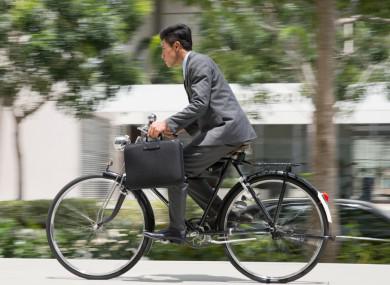 Most people will spend quite a significant amount of time commuting to and from work.
Productivity in the workplace will suffer from the wasted hours and the stress of driving.
Consider some of the following options:
- Educate and incentivize carpooling, public transit, biking and walking as viable and less stressful alternatives that will help make the workplace greener.
- Encourage employees to adopt car-pooling as a practice. It will leave most of them less stressful. Ride-sharing services are also more freely available than they’ve ever been.
- Encourage employees to bike to work. It is not only an eco-friendly means of transport, but one of the fastest ways of getting around on streets clogged with vehicular traffic.
- There are advanced bikes and folding bikes that are very convenient in crowded cities. See if your company can help cover some of their costs.
Take Advantage of Telecommuting Technologies
The internet presents you with innovative technologies that will enable you to make the workplace greener through telecommuting.
Advanced technologies such as instant messaging and video conferencing can result in significant advantages by cutting out the costs of the commute altogether.
However, I have to assert that while a telecommuting framework is cost-efficient and creates a greener workplace, it comes with security risks to your company’s data. I would recommend you use a Virtual Private Network (VPN) to ensure the security of your corporate data from hackers.
As some of your employees may use public networks that may be lacking the protection your sensitive information deserves. A VPN will encrypt device connections to keep hackers out.
Use Recyclable and Environmentally Friendly Materials
While you should strive for a paper-free workplace, the achievement of such an objective may not be practical in the short term. However, you could still create a greener workplace by making use of the following materials and options:
- Switch to using paper and envelopes made using recyclable and green technologies.
- For your cleaning needs, try using biodegradable eco-friendly products that will not only make for a safe workplace but also reduce your ecological footprint.
- Recycle printer cartridges. According to this study refillable cartridges are usually cheaper than buying new.
- Use paper or cloth towels made from recyclable materials. Also use biodegradable soaps, pens and pencils.
Re-engineer the Workplace
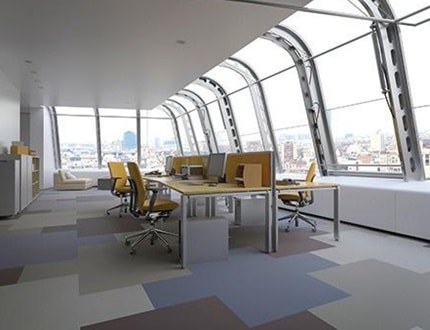 Reengineering the workplace to make it greener is one of the most cost-effective ways you can use to enhance the bottom line. Try out some of the following options to optimize your workplace:
- You can adopt a cradle to cradle model in the redesign of the workplace for huge savings. The cradle-to-cradle model makes use of recycled materials to create recyclable products.
- For your overhead lighting and desk needs, adopt the energy-efficient LED and Compact Fluorescent (CFL) lights for huge savings over the long term.
- Take advantage of modern architectural design and floor planning to leverage natural daylight for the workplace.
Implementing a greener workplace strategy through technology will make the workplace a more productive and healthier one for your employees. Employing such an approach will enable you to improve your organization and have an edge over competing firms.

Alsco would like to thank Catherine Black of Secure Thoughts for contributing this article for Greenroom. Secure Thoughts is the industry leader in helping people make sure their information and loved ones’ are protected online.
For more green solutions for your business, visit the Greenroom blog. Spread the word about how easy it is to create a greener, safer and healthier workplace.
Have A Clean And Green Workplace You Can Be Proud Of – It’s This Easy
Summary: Green Cleaning promotes the health and safety of your workers, clients, and other individuals in the workplace.
It is achieved through cleaning methods and products that have environmentally-friendly ingredients, and free from hazardous chemicals and toxins.
Keeping a green working environment is not as difficult as you think. It is most successful when best practices are implemented so that everyone can benefit.
If you want a clean and green workplace you can be proud of, contact Alsco now.
————————-
Ever wondered how the office custodian cleans the kitchen facilities and washroom? In many workplaces, Green Cleaning is not considered a priority. This means you might be exposing yourself to harsh chemicals in your work environment, without your knowledge.
How Green Workplace Cleaning Works
Two issues have been identified when it comes to conventional cleaning products:
- The impact that old cleaning products have on the environment.
- The impact they have on worker health.
With workers constantly coming in contact with all kinds of surfaces, toxins can easily get on the skin, eyes, and possibly be absorbed by the body. These chemicals also invade our wastewater system and seep into the soil.
Green Cleaning is the key phrase to keep in mind. The concept promotes cleaning methods and products that use environmentally-friendly ingredients that are free from hazardous chemicals and toxins. True ‘Green’ products also come in environmentally-friendly packaging and disposal.
Benefits of Keeping a Green Workplace
Keeping a green working environment is not as difficult as you think. It can be challenging for other places of work, such as garages and manufacturing complexes, but by no means impossible. You can get the following benefits by just switching to green cleaning:
1. Healthier Environment
For a mechanic working in an auto shop, old chemical cleaners and solvents used in parts and engine cleaning are highly detrimental. Waste liquids not only pollute the workplace but also the water system when these untreated wastes are disposed into the sewage.
Chlorinated solvents are resistant to environmental degradation. Meanwhile, petroleum hydrocarbons, heavy metals (fluid), heavy oil distillates and detergents all contribute to highly pollutant concoction.
Upon changing to greener methods, you help in reducing pollution to our waterways and the environment in general. These methods can reduce chemical runoff through proper cleaning techniques, are less toxic to aquatic life, and produce less greenhouse gas emissions.
2. Healthier Workers
The use of chemicals in cleaning parts has long been linked with a variety of illnesses and injuries. Workers may absorb contaminants from residues of cleaning products on food preparation surfaces, as well as from poorly cleaned hands.
A recent Healthland report by Time.com shares that according to the Environmental Working Group (US), some all-purpose cleaners contain 2-butoxyethanol, which can damage red blood cells.
Illnesses and injuries caused by chemicals in traditional parts washer include:
- Liver and eye damage – linked to acetone vapours
- Respiratory problems – linked to ammonia
- Headaches, blackouts, cancer, death – linked to benzene
- Carcinogenicity, neurotoxicity – linked to ethyl acetate
Green Cleaning reduces the exposure to toxic chemicals, therefore, benefits the health of both employees and clients. Green cleaners can improve indoor air quality, reduce airborne dust, and chemical gases. You can also expect less of the stench caused by strong chemical odours.
3. Safer Work Area
Whether running a portable parts washer or increasing washroom hygiene levels, green cleaning is one of the best solutions for a safer workplace. Green products don’t pose risks such as chemical burns to the skin and eyes.
Environmentally-friendly cleaners also aren’t corrosive. Ingredients contained in these products meet strict standards regarding inhalation toxicity, combustibility and skin absorption.
Green Cleaning Products to Use
Low environmental impact products for home and office use are now being recognized — such as a cloth towel dispenser for the washroom.
**A study conducted by the University of Westminster revealed that cloth towel dispensers are far more hygienic. Hot air dryers can cause cross-contamination by blowing bacteria into the air.
Now, ‘green cleaning’ options for machinery parts washers and engine products are also available!
For a workplace where a machinery parts washer is used, alkaline detergents mixed with water is a favourable option. Water-based parts washers give you all the cleaning power of the solvent, with cleaning solutions that are safe and biodegradable.
According to the EPA, water-based cleaners are “better than solvents from an overall human health and environmental standpoint. They reduce worker exposure and exposure to the surrounding community”.
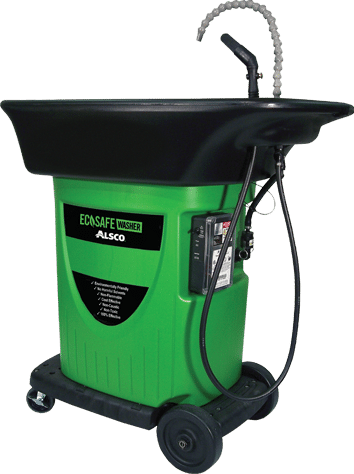
Alsco Ecosafe Washer
One example is the Alsco Ecosafe Parts Washer, which is designed to use OzzyJuice, a non-flammable, pH neutral, non-toxic and non-corrosive solution instead of traditional engine cleaning solvents.
The Alsco Ecosafe Parts Washer converts hydrocarbons into water and carbon dioxide, while oil and grease are converted into oxygen and carbon dioxide. It provides a safer alternative since the number of pollutants left in wastewater is only 7% that of the pollutants in traditional wastewater.
Green Cleaning Made Easy
Businesses are gradually becoming aware of the impact they are making on the environment. The next time you hire a cleaning team for your workplace, make sure that they are using eco-friendly products. Look for the Design for Environment (DFE) logo.
Keeping a green work environment doesn’t mean compromising your standards. In fact, it can even promote health, and eventually productivity, among your workers by decreasing potential risks for injuries.
Take Green Cleaning as a chance to increase your knowledge of efficient cleaning practices that can help reduce waste and chemical use. The EcoSafe Washer is safe to use, cost-effective and remarkably strong.
Curious on how our Alsco Ecosafe Parts Washer can transform oil and grease into water and carbon dioxide? Contact our Experts.
Photo Courtesy: atelier PRO


