Trusted by 237K+ Business Worldwide. Find a Location
Trusted by 237,000+businesses worldwide across 250 locations delivering uniforms, linens and more. Find a Location Near You


Delivering Excellence Since 1910
Contact Us
The Ultimate Guide to Office Hand Hygiene
Did you know that your health status says a lot about your hand hygiene practices? That’s right!
According to experts, handwashing is the best way to protect the body from illnesses.
The workplace is one area where hand hygiene should matter the most. Your workers are the pillar of your business’s success, and they deserve to work in a hygienic setting.
Establishing a culture of hand hygiene among your employees reduces cross-contamination by 80%. This decreases the frequency of office absenteeism and makes staff healthier.
It’s amazing what a big difference handwashing can make!
“The higher your energy level, the more efficient your body. The more efficient your body, the better you feel, and the more you will use your talent to produce outstanding results.”
You can jump on the bandwagon and encourage hand hygiene practices in your office. This guide answers all your questions and it’s what you need to get a head-start!
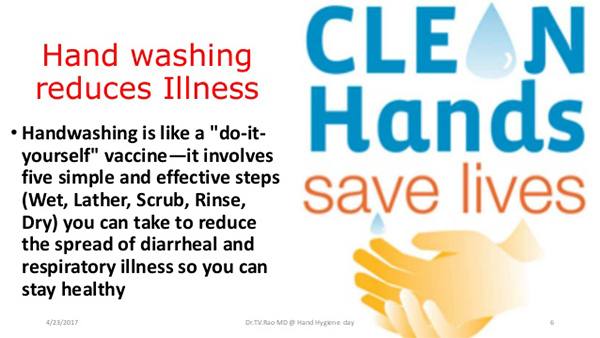 Source: slideshare
1. Stock up on High-Quality Hand Hygiene Products
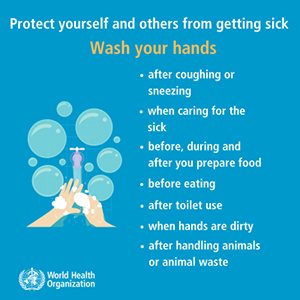 Source: surewash.com
During an ordinary workday, employees touch many items. Hand washing is essential in killing bacteria that lodge on their hands.
A combination of soap and water is the best way to make this happen. Soap traps the microorganisms and water washes them away. Together they play a key role in keeping our hands germ-free.
Hand hygiene relies on the availability of the best products. This may seem pretty obvious, but one in every five people don’t wash their hands.
The products you provide should influence people to wash their hands. An ordinary bar of soap is less compelling because it may keep germs from previous users.
Installing an automatic soap dispenser is a better option. These dispensers use the no-touch principal which helps reduce cross-contamination among employees.
Liquid soap gets onto the palms without the touch of a button. This helps in reducing the spread of the common cold and influenza too!
Did you know that hand drying makes us 1,000 times safer compared to leaving the washroom with damp hands?
Bacteria stick to moist surfaces where they can grow. This may put your colleagues at risk of getting sick.
It’s desirable to provide the best hand drying products, such as paper towels and air dryers. This allows your employees to dry their hands well before leaving the washroom.
A common myth is that hand dryers are more hygienic. So, which is the best hand drying product to provide?
Research shows that paper towels are the best because they absorb all the moisture. They also contain eco-friendly materials that promote sustainability.
Buying the best paper towel brand for your washrooms helps build a positive brand image. The best part about going green is it attracts like-minded clients to your business.
2. Install Hand Sanitiser Dispensers in Common Areas
Did you know that workplace illnesses spread fast through communal touchpoints? Studies show that door handles spread germs to 60% of employees in less than two hours.
Hand washing is effective, but your employees can’t wash their hands all the time. They need a product to use when they’re on the move.
Hand sanitiser is the best go-to option when soap and water aren’t nearby. With an alcohol base, this product cleans off microbes within seconds.
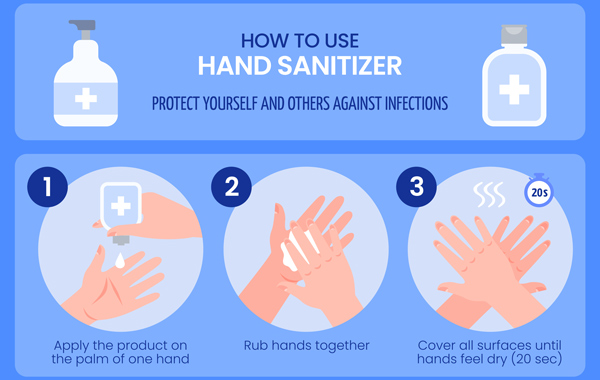
Source: Freepik
It gives your employees the confidence to go about their tasks without the fear of getting sick. You should install wall-mounted sanitiser dispensers in common office areas, such as:
- Conference rooms
- Employee work areas
- Workplace kitchens
- Office building entry points
By doing this, you’re able to tackle disease-causing germs at the source.
Remember, showing concern for your employees’ well-being makes them feel valued.
Go the extra mile and provide a pack of anti-bacterial wipes at each employee’s workstation. This helps to defeat the spread of viruses through stationery items.
3. Maintain Spotless Workplace Washrooms
Illnesses spread when a sick person coughs or sneezes on a surface.
Your employees are at risk of falling sick when they touch these surfaces and forget to wash their hands. This is because viruses can enter through the eyes, nose or mouth after you touch your face.
The major takeaway point is: you should clean all surfaces to reduce the spread of infections.
‘’80% of all infectious diseases are transmitted by touch.’’
One key area of concern is workplace washrooms. They’re a source of germs and need special attention.
Your employees are more likely to wash their hands in a clean washroom.
Developing a cleaning plan ensures your washrooms stay sanitary all the time.
Consider hiring expert deep cleaning services to complement your workplace hygiene efforts.
Thorough sanitation helps get rid of dirt, especially in sink areas.
To make hand hygiene a habit, you should put up subtle reminders in your washrooms. Using eye-catching posters is the best technique to attract your employee’s attention.
Creative signs make them remember: ‘’Oh, I need to wash my hands!’’
‘’Reminder signs are successful in encouraging more handwashing.’’
This nudges them to take action and collaborate with your efforts to keep them safe.
4. Offer Hand Hygiene Training and Workshops
Areas frequently missed during hand washing. #GlobalHandwashingDay #firstaid #nurse #paramedic #doctor #handwashing pic.twitter.com/SYqVZjI2Rs
— Simon Nash
(@simonnash1980) October 15, 2014


Data shows that 5% of people know the correct handwashing technique.
Don’t let this get you down!
Stay ahead by offering training sessions to teach your employees more about handwashing. During these sittings, invite a hygiene expert to give them the best hand washing tips.
After these sessions, send a breakdown of the discussion via the office newsletter. This gives your employees the chance to keep abreast with hand hygiene information. As a result, they become more aware of their hand washing practices.
Stay Informed on Medical Developments
As the old saying goes, prevention is better than the cure. You need to enforce extra guidelines to protect your workforce.
Learning better habits goes a long way in protecting our health status. This is why medical experts use Non-Pharmaceutical Interventions (NPIs).
Other than vaccinations, NPIs are actions each person can take to stay healthy. In the event of a pandemic, NPIs are at the forefront of keeping individuals and communities safe.
Examples of NPIs include eating healthy and maintaining a safe distance from others. Although these are minor efforts, they effectively control the spread of contagious illnesses.
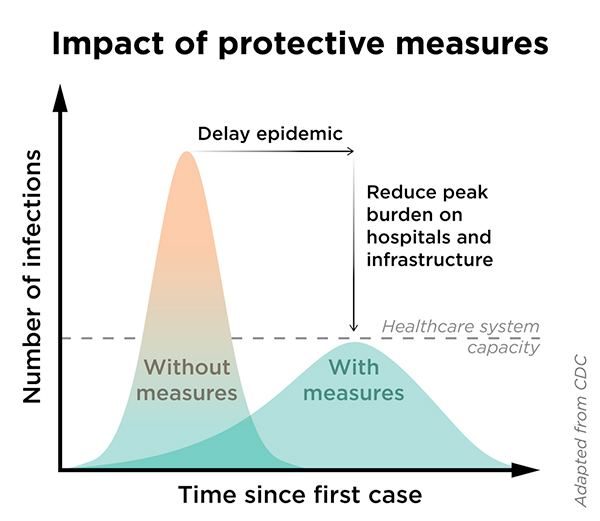 Source: NEJM Journal Watch
Different NPIs work for different situations. So, staying up to date on medical developments helps you understand the best NPIs to use.
The bottom line is you shouldn’t take shortcuts when it comes to office hand hygiene.
Leave no stone unturned by using high-grade cleaning products. Maintaining a clean environment adds to your office hand hygiene practices.
In the long run, your immunity system becomes stronger as a result of falling sick less often.
A great manager makes their employees’ well-being a priority. These incredible hand hygiene tips are the key to fighting the spread of diseases.
Photo: Freepik
Best Tips for a Healthy Workplace
Great companies are built by great teams. As a business leader, you will know just how hard they are to find. When you are fortunate enough to have one, keep them. They are invaluable assets.
Healthy employees are happy employees. In your personal life, staying healthy is a daily practice. The same principle applies to the workplace.
Healthy workplaces have daily practices that help them stay aligned with their mission. Your goal is to create a framework that does this.
Start implementing workplace health promotion today. It needs continuous improvement of wellness measures according to needs that arise. It is a collaborative process that starts as soon as you feel ready.
Occupational and non-occupational factors affect the health of your employees. They include:
- Organisational atmosphere
- Emphasis on a healthy lifestyle
- Household and commute conditions
- Family relations
- Personal ailments
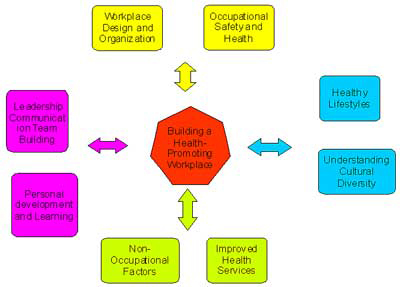
Source: World Health Organization
Benefits of Workplace Health Promotion
Besides creating a sustainable workforce, workplace health promotion has wider effects. The biggest one is the creation of stable families through sustainable employment. This is especially the case with blue-collar jobs. It has the ripple effect of making your staff proud of their vocation.
At an organisational level, the benefits are two-pronged;
| Organisational benefits | Employee benefits |
|---|---|
| Spike in productivity | Upskilled in safety measures |
| Cost-savings on health care & insurance | Greater feeling of well being |
| Avoid legal disputes | Better physical and emotional shape |
| Sustainable safety programme | Great working atmosphere |
| Positive company image | Improved self-esteem |
| Motivated workforce | Decreased worry and stress |
| Low staff turnover | High spirits and morale |
| Decreased absenteeism | Improved job satisfaction |
How to Promote Workplace Health
Be proactive in creating healthy workplaces. Educating staff is key and you need creativity. Measures can include anything from writing articles to hanging handwashing posters in washrooms.
The responsibility falls on both the management and the larger team. Create an atmosphere where people are happy to take turns in sanitising high use areas. Efficient janitorial services are effective in maintaining health. Yet, it is not enough.
1. Create a Wellness Program
The best thing about wellness programs is changing employee behaviour long term. A well-made program is structured to help people create and maintain positive behaviours. It does this through education, motivation, support systems and skills training.
Create a program that enforces behaviour long term. Programs that manage to change lifestyles are able to reduce lifestyle-related problems. A direct result of the emphasis on healthier meals, portions and exercise.
Wellness programs reduce depression while improving general life satisfaction. A healthy body and mind go hand in hand.
Why should you build your own wellness programs?
Reduced Workplace Absenteeism
Harvard researchers found out that for each dollar used on wellness, you save $2.73 in reduced absenteeism. Wellness programs reduce absenteeism for a variety of reasons:
- Employees who maintain a healthy weight have lower rates of absenteeism.
- Stress control and management through wellness can reduce absenteeism.
- Keeping vitals like blood pressure stable keeps your staff strong and lowers absenteeism.
- Employees who learn the discipline of healthy living have lower absenteeism.
Reduced Health Costs
Effective wellness programs, that lead to lifestyle changes, lower health care costs. Another study by Harvard reveals that for each dollar spent on wellness, you save $3.27 in direct health care.
A hidden health cost is a phenomenon called presenteeism. Presenteeism is when employees are present at work but are not working. It is caused by coworker distractions, lack of skills, fatigue or overuse of social media.
Another key cause of presenteeism is poor health and bad lifestyle habits. Poor habits like smoking and lack of exercise increase the rate of presenteeism at work. They also lead to health risks like catching chronic ailments. People with persistent health problems suffer from increased presenteeism as illustrated below.
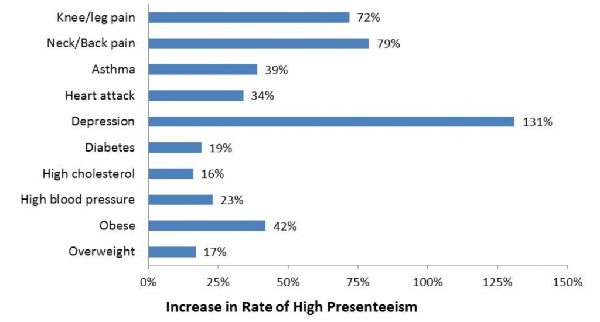
Source: WellSteps
Reduced Elevated Health Risks
Elevated health risks only reduce by changing eating and exercising behaviours. Your wellness programs should build healthy habits. This is the only way to be effective.
It’s a common misconception to think that wellness programs take too long to show results. When you change your diet and exercise, amazing things start to happen. In fact, you start to see results as soon as 6 weeks into the program.
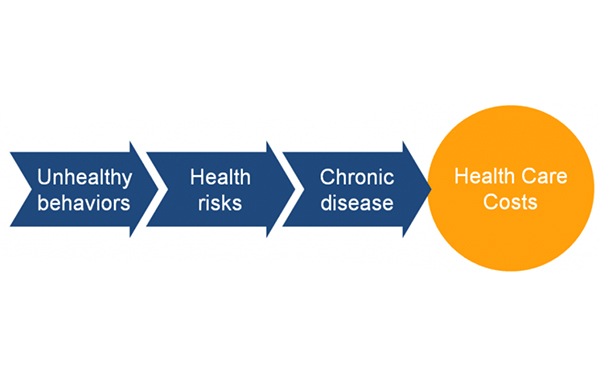
Source: WellSteps
2. Disinfect and Clean Surfaces
Did you know that viruses like influenza can remain alive on hard surfaces for up to 24 hours? With this in mind, ensure your office or workplace gets wiped down regularly, especially the public and shared areas.
Keep a cleaning calendar to manage your cleaning staff. Consider outsourcing to trusted vendors who can help with office maintenance. It will make your work easier.
Since employees spend all day at their workstation, it’s the best place for germs to hide. The University of Arizona found out that the average worker’s desk has 21,000 germs per square inch! A toilet seat has 49 germs per square inch!
Provide easily accessible sanitation facilities to staff and remind them to pay attention to germ hotspots. These include the keyboard, phones, mouse and frequently used office supplies like staplers.
3. Prioritise Hand Hygiene
Good hand hygiene prevents a lot of gastrointestinal and respiratory conditions. These ailments are self-inflicted and you can protect yourself with clean hands.
Wash your hands each time they feel dirty. Make it a habit to wash your hands after you’ve been out in public. Use soap and water to rub your hands for at least 20 seconds. Wetting your hands does not remove the disease-causing germs. How long your wash is as important as when you wash your hands.
At the office, wash up after walking around or going out for lunch. You’ll have touched public surfaces like the elevator buttons, door handles and desks. Remember to wash up after visiting the restroom and before eating.
As a manager, you have two roles in promoting hand hygiene:
Educate and Communicate
Face to face conversations about hygiene can get awkward. Take advantage of channels like email to send out educational material or surveys. They are a great platform to gather or disperse information. Always keep the communication channels open.
There is room to get creative by using humour. Posters provide an interactive way of using visual cues to talk about hand hygiene. They can be placed in washrooms and strategic areas. Laughter can make concepts easier to remember.
Provide Hand Hygiene Supplies
Did you know that 70% of people who wash their hands use sanitiser due to its convenience? Besides having well-stocked hand washing stations, provide hand sanitisers. Place these around desks or entrances.
Whenever staff need to disinfect their hands but don’t have time to wash, ensure a sanitiser is close by. The recommended sanitiser should be at least 60% alcohol. These are the only sanitisers that kill disease-causing organisms.
4. Improve Your Washrooms
In the workplace, washrooms are social places. Their use is beyond utilitarian. They are social and intimate spaces where your staff go to feel refreshed. They are both functional and emotional. A well-kept bathroom is a marker of how the management treats the staff and customers.
A comfortable bathroom appeals to all the senses. It looks good, smells good, sounds good and feels good. Pay attention to decor and provide sanitation necessities. A bathroom that runs out of tissue breeds anxiety. Stock it with more than enough supplies to prevent awkward situations.
Other ways to improve your workplace washroom include:
Provide Hand Drying Options
While some people like automatic hand dryers, others swear by tissues. If possible, provide dryer options for your staff members. This makes it comfortable for them to wash their hands each time they use the washroom.
If you have to pick one, choose a tissue dispenser. This is because tissues are discarded immediately after use. Automatic Hand dryers are a breeding ground for bacteria due to their warmth. They circulate the bacteria to your hands and can leave you dirtier than before.
Upgrade Washroom Products
When providing things like soap and sanitiser, pay attention to the dispensing mechanism. Are automated versions available? Upgrade to contact free dispensers that give the right amount of product for each use. They also prevent cross-contamination since people don’t need to touch the machine.
For tissues, provide a dispenser inside and outside toilet cubicles. This gives enough tissue for drying your hand or relieving yourself. If you provide a changing room for nursing mothers, go the extra mile and provide wet tissues.
Ensure Good Air Circulation
While designing washrooms, install large windows that allow a generous flow of air. If you already have windows, have them opened for greater aeration. When adding windows is not an option, use a good air conditioning system.
Improve air quality in the washroom with the use of an air freshener. The automated spritz machine works best to spray lovely scents into the air in intervals. A fresh smelling washroom is comfortable.
Schedule deep cleaning to get rid of stubborn smells that linger in your washrooms. Deep cleaning removes the stains that remain after routine cleaning. It gets rid of build-up and stubborn spots.
Add Creative Educational Material
Humour increases productivity in the workplace. It makes concepts more memorable and fun. Use creative posters inside the washrooms to reinforce good habits. Making them cheeky will increase their effectiveness.
The best places to place the posters include the back of the toilet door, above the sinks and on washroom walls. They give people something fun to skim while reinforcing good hygiene habits.
5. Support Sick Employees
Your staff should know that the organisation values their health. Show this by supporting people who get sick. Have a good insurance plan to help them meet hospital expenses. Create an efficient handover system that ensures the work of a sick colleague is handled.
Have a generous leave policy that allows people to stay at home if they get sick. People who insist on coming to work while sick put everyone at risk. They could start an office-wide epidemic. Lead by example to encourage your staff to stay home when sick.
Healthy Workplaces Are a Team Sport
It takes coordinated effort over a period of time to create a healthy workplace. Craft a strategy that caters to your unique needs as a company. This way, your wellness program will be effective.
Healthy workplaces rely on healthy habits. The most important habits to reinforce are hand washing and healthy lifestyle choices. Create a system to maintain hygiene and encourage your team to join in. Contact us to start your journey to wellness today.
Better Safe Than Sorry: 9 Preventative Measures to Protect You and Your Employees
Better safe than sorry.
You’ve probably heard this saying before. Yet, you may never have considered it in relation to workplace safety.
A safe work environment is a fundamental aspect of any business. Business owners should never overlook workplace safety, nor should it ever be ignored by human resource managers.
According to Stats NZ Tatauranga Aotearoa, in 2018, 238,800 work-related injury claims were made to ACC or ACC-accredited employers. This number indicates an increase of about 5,600 from 2017.
The number of work-related injury claims has been increasing each year. This is after a steady decrease between 2005 and 2012.
As employers, it is important to ensure that work-related injury reports are on the decrease. You don’t want to be slapped with unending court cases.
It is essential to examine the relationship between workplace safety and performance.
Working in a safe environment reduces accident cases and motivates employees. This, in turn, boosts the productivity of the business.
Note that safety isn’t just about a clean environment it’s also about taking preventative measures to protect employees. Creating a safe workplace is a worthwhile investment.
A safe workplace:
- Keeps the business solid and moving forward.
- Saves you time and money.
- Ensures that employees are comfortable and thus more productive.
Workplace Responsibilities as a Business Owner
As Kevin Jones explains, business owners should not allow employees to erode a safety culture that may have taken years to develop. Occupational health and safety regulations must be enforced as follows:
- Business owners must oversee the management of safety measures.
- They must carry out risk assessments.
- Ensure employees are trained on safety measures.
- Owners provide education and training on workplace safety.
Workplace Safety Responsibilities of HR Managers
HR professionals play a big role in balancing the best interests of employees and those of the organization. This applies even to safety regulations:
- HR Managers communicate occupation and safety regulations in an organization.
- They enforce the work-place safety measures of their organization.
- They ensure employees are trained in workplace safety.
Preventative Measures to Protect You and Your Employees
1. Enlighten Employees on Safety Rules
To keep your employees accountable, ensure that they understand the safety rules. Try printing safety procedures and strategically placing them throughout the establishment, as a constant reminder to staff of their responsibilities.
Additionally, present the safety rules during orientation. This way, every employee understands their responsibilities.
2. Ensure the Workplace Is Neat and Well-Organized
A clean and well-organized workplace will experience fewer cases of accidents.
Make sure everything is in the right spot. For example, boxes should not be lying on the floor. Take caution with washing detergents and cleaning water which could spill and cause slippery floors.
3. Encourage Safety Awareness
When we think of workplace safety, sometimes we think of high-risk industries like manufacturing. It is important to note that even seemingly safe environments can have accidents.
Business owners have one of the biggest roles to play in ensuring safety in the workplace. Yet, it is the responsibility of every employee to ensure that the environment is safe.
Business owners and HR managers should encourage employees to take up safety training. They should also encourage them to be aware of their surroundings and to report any potential risks.
Business owners should emphasize the importance of employees’ reports on hazards and unsafe working conditions. Safety at the workplace is a collective responsibility.
4. Provide and Wear Protective Gear
Different work environments pose different risks. Wearing appropriate protective gear is one of the best ways to protect you and your employees from accidents and injuries in the workplace.
Hard hats protect employees from falling objects, gloves protect hands against dangerous chemicals, safety glasses can protect the eyes and overalls protect your body and clothes from paint and dirt.
As a business owner or manager, you should lead by example. Wear protective gear at all times. You should also ensure that employees have appropriate workwear. You can easily check your workers’ workwear sizes.
5. Provide Training on Best Safety Practices
Organizations must provide comprehensive health and safety training programs to all its employees. This should include emergency action plans in case there are any incidences that pose a threat.
Emergency drills are a good way of ensuring that employees are efficiently prepared for emergencies. As such, business owners and HR managers should regularly schedule drills as part of safety preparedness.
6. Ensure Employees Understand Safety Rules and Procedures
As an employer or manager, it is your responsibility to understand and implement safety procedures.
Additionally, you are tasked with the role of educating employees on these procedures and ensuring they are correctly followed.
Establish a lock-out tag-out maintenance procedure and ensure it is well understood by all employees.
When carrying out such a procedure, employees should be notified in advance. Additionally, they should also receive prompts on when to resume normal operations.
7. Schedule and Perform Routine Inspections
Safety inspections and audits are a must! They help to identify potential hazards and unsafe workplace practices, as well as providing feedback on your existing safety procedure.
Inspections and audits perform the following functions:
- Identify existing and potential hazards.
- Listen to the concerns of the employees.Gain further understanding of jobs and tasks to be undertaken.
- Determine underlying causes of hazards.
- Recommend corrective action.
- Monitor the steps taken to correct the risk.
- Evaluate an organization’s established safety program and practices.
Note: Planning is essential in carrying out a successful inspection.
8. Improve on Visual Communications
Improved visual communications can highly improve an organization’s workplace safety.

Source: Pexels
Safety posters should be appropriately placed to indicate hazards and avoid accidents. Improving signage can help keep employees at work even as you take appropriate safety measures to improve the space. To learn how to use safety posters to your advantage click here.
9. Be Ready for the Unexpected
No matter the number of measures you install to protect yourself at the workplace, there is bound to be that one incident that will catch you by surprise.
It is important to ensure that you and your employees are prepared for such eventualities. A power outage may be solved by a generator: However, fire outbreaks require more preparation.
The organization should be ready to deal with any emergencies that may occur; be it a fire or an attack.
In the case of an emergency, it is important that employees can locate and access all emergency exits.
Preventing risks at the workplace helps keep your employees longer and thus run your business smoothly. It will also save you time and money.
It’s Time to Implement Safer Workplace Practices
To keep your workplace safe, ensure everyone is well aware of the rules and regulations. Additionally, take all the appropriate measures to keep the environment safe. And lastly, do not forget to stock up the workplace with some first aid kits.
By practicing the above safety tips and learning more on workplace safety procedures, your company will thrive.
Photo: Nikitabuida
Increase Your Organisation’s Safety Training With These 8 Brilliant Ideas
Who wouldn’t want to work in a safe work environment?
A workplace culture that highlights safety is an important aspect of making sure the environment is secure for you, your employees and other visitors to your business.
In 2017, more than 200,000 work-related injury claims were made to the Accident Compensation Corporation.
Many organisations believe they are ticking all the safety boxes by providing safety training and reducing the number of hazards in the workplace.
Yet, it takes more than this to make your organisation’s safety culture a success.
Safety training shouldn’t only be about learning safety signs. This doesn’t translate into a top-notch safety culture which is what you want for your organisation.
What new unique strategies are you using and how committed to building a culture of safety are you?
Here’s how to get started.
Involve Managers and Supervisors
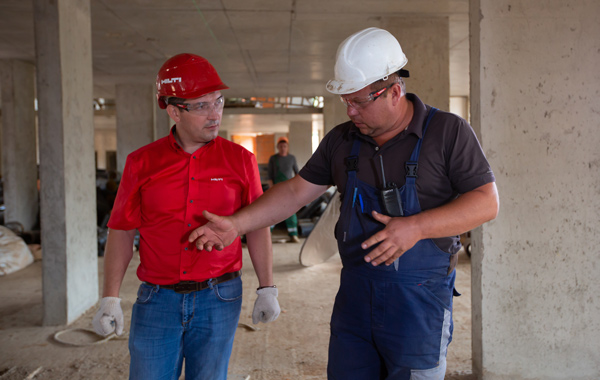
Source: Pexels
Employees love seeing managers and supervisors take the lead in complying with safety measures. Not only do they lead by example but they also motivate employees to play their part.
For a safety program to succeed, it has to have the backing of managers and supervisors.
Managers have to approve budgets for training. Supervisors have to adjust working schedules to allow for adequate training.
To demonstrate their commitment, managers and supervisors must:
- Make a point of attending safety training sessions. This improves their knowledge and inspires other employees.
- Understand safety training. They should direct the safety instructors to make it more relevant for their different departments.
- In carrying out performance evaluations, managers should include performance reviews of training. This will encourage employees to take part in safety training.
- Expand manager and supervisor safety roles. This will build a strong foundation in training.
- Supervisors should provide reports on safety training performance to safety trainers. This enables them to schedule further training when needed.
Tips to Help You Develop an Effective Safety Training Program
1. Seek to Create Partnerships With Employees
Ever thought about what impact it may have if your employees were to become trainers?
This simple move may be what your training needs to make it more effective.
Instead of having your employees sit through training, recruit some as trainers.
It may take a few coaching lessons, but once started, your training will experience a freshness you never thought existed.
What’s more, your workers will speak from a point of experience.
In most cases, trainers will use the same material for different organisations. With employee trainers on board, there is bound to be a change in the delivery of content.
Ask them to tweak the training material to ensure that it is relevant to their experiences at work. This will make it better for employees to know what to do in specific circumstances.
Do not forget to make after-training evaluations of your employees.
It takes time to assess the effectiveness of training. Such evaluations provide you with tips for further improvement.
2. Get Creative With Training
Training ought to be interesting and fun in order to attract proactivity and engagement.
Presenting information in a new and creative way will make your employees enthusiastic.
Think of tools that you can use to revolutionise your training. Your training tool kit may already have handbooks and posters.
Bring in DVDs that employees can watch as part of the training. To encourage active participation:
- Include games and rewards
- Bring physical safety signs
- Use PowerPoint presentations
- Use e-learning tools like videos
- Add some humor to your teaching
3. Engage Employees in Discussions on Safety
Wondering how to engage employees in lively discussion? It’s pretty simple.
From the onset of training, make employees understand that you are their facilitator. Add some humour into training to make the environment more conducive for learning.
There’s nothing wrong with asking employees how they’d want you to run the training.
If they agree to have you break them into groups, ensure that you visit each group during training. Also, encourage them to share their ideas as you go on.
To inject fresh perspectives, let your employees take part in discussions.
4. Customise Your Safety Training
Safety laws and regulations can be quite difficult to comprehend.
Customise your training to enhance understanding.
You may understand all the jargon, but others may not. Present information in the most straightforward way possible to ease understanding.
It is important to make training more relevant to the organisation. Start by making a checklist for specific departments. The list should be easy to understand and you can place it on small portable cards.
5. Practice New Skills Learned
You can only test effectiveness by allowing your employees to practice the skills they have learned.
Here’s how to involve them:
- Conduct demonstrations during the sessions. These allow your employees to understand certain procedures.
- Coach employees as they practice new skills. This allows them to learn from your cues, as you are able to correct them when they make mistakes.
- Organise an occasional drill to test performance on the job. This is important for people who must have safety training skills while on the job.
Learning is a continuous process.
Practising new skills allows employees to become better. Even if they make one or two mistakes, they will quickly learn new procedures.
What’s more, they will feel more confident knowing that they have a coach who has their back.
Scheduling exercises early enough allows employees to be prepared for any eventualities.
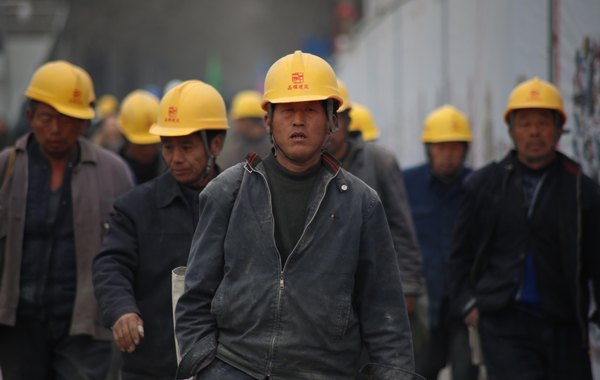
Emphasise the importance of wearing appropriate workwear for their protection. These industrial garments are easy to find and are available in different sizes.
Source: Pixabay
6. Embrace Technology In Learning
We are living in the digital era. You have no choice but to embrace technology in learning.
Computer-based training has an advantage over other training methods. It allows training to be fun and interactive. It has also made teaching large groups easy.
To add e-learning to your training program:
- Introduce safety topics through computer-based training before you start class sessions.
- Schedule webcasts on relevant topics to act as supplementary training.
- Use video conferencing as a way of exchanging knowledge from different locations.
- Use digitised cameras to film in house training sessions and take pictures. These serve as a future resource.
7. Train Everyone at the Workplace
There is no telling when an accident will happen and who it will befall.
As such, safety training is for everyone at the workplace and is essential in developing a good safety culture.
Training everyone is a good way to remind employees that everyone is responsible for safety in the workplace.
Get leadership involved in safety training as much as everyone else.
8. Offer Regular Safety Training
Training on safety will not instantly create a safety culture.
It takes time to build a safety culture that will last through the years.
Observe employees and ensure that they are following safety rules. Get all trained personnel to act as safety advocates and point out any hazards that may cause accidents.
Reward employees who excel in observing safety standards at the workplace. This motivates them to keep at it and encourages others to follow suit.
Emergency drills are a great way to test preparedness. Educate employees on what is expected of them in case of an accident.
The Way Forward for a Safer Workplace
This article has offered brilliant ideas on how to improve safety effectiveness. There is so much more you can do, but first, start with the basics.
Check to ensure that employees choose the right workwear. Encourage adherence to safety guidelines, and work towards building a strong safety culture.
5 Clues You Need to Update Your Workplace First Aid Kit
Congratulations on stocking your workplace with first aid kits. It shows your commitment to safety.
Your staff feel safe and secure in case of an injury. However, when was the last time its contents were replaced?
It is easy to forget to replace the items in your workplace first aid kits.
As it’s used on a need to need basis, items can expire and put your company at risk during a real crisis.
There are telltale signs to signal that it’s time to change the first aid kit.
Maintaining a First Aid Kit.
Responsibility doesn’t end after buying a first aid kit. Since it can mean the difference between life and death, it needs to always be ready for action. Maintaining a first aid kit involves many tasks:
Ensure It Is Well Stocked
A first aid kit is an essential part the first response to an accident before paramedics arrive. A well-stocked kit increases the chances of saving lives. What are the essentials in each first aid kit?
- Eye pads
- Sterile first aid tape
- Sterile gauze pads
- A pair of metal tweezers
- Strong metal scissors
- Sterile non-adherent pads
- Box of safety pins
- Cotton balls
- CPR face mask
- Cold compress
- Disposable gloves
- Strong elbow/knee bandages
- Adhesive wound dressing
- Alcohol wipes
- Good quality antiseptic wipes
- Several butterfly closure strips
- Abdominal pad
Place It in the Same Place Each Time
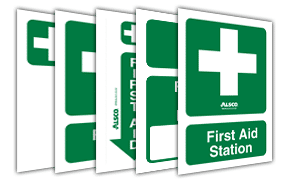
Ease of access is important during an emergency. Placing a first aid kit at the same spot each time helps staff locate the kits during an emergency.
Knowing how to use the first aid kit is part of the responsibility of owning one.
When you notice a knowledge gap in the knowledge surrounding workplace emergencies, organise a first aid training.
The training should introduce staff to first aid skills and how to act fast in emergencies.
First aid signs can be a great memory tool to remind them how to use the kit or where to find one.
Inspect the Kit Regularly
Make a habit of looking at the first aid kit often to spot any problems or defects. Start with the box itself and then open it to inspect the contents. Check if anything is expired or discoloured and discard it. Perform this ritual at least 4 times a year. That’s once every 3 months.
How to Know When the First Aid Kit Needs Updating
If the Kit Has Been Used
Staff can use the first aid kit for a variety of reasons. From small scratches to occasional aches and pains. It is important to ensure staff know what to do after using something in the first aid box.
Have a system for inspecting the first aid kit to ensure it’s replenished before it’s needed again. Place posters or signs above the first aid kit to let staff know what to do after using something.
Look out for the following tell-tale signs:
- Resealed items
When a product is resealed, it indicates usage. This is dangerous since a shared kit can lead to cross-contamination. Especially from things like ointment or products with applicators. Replace any suspicious product as soon as you discover them. - Stained products
Check items like gauze or pads for contamination by foreign fluids. Any discolouration or staining is a hint of usage. Discard the item since it is no longer safe. - Partially used products
Single-use items should be opened and immediately disposed of after use. When you find such an item partially used, throw it away immediately. Do not reuse it even if there’s no physical sign of contamination. Exposure to the atmosphere is harmful to single-use items.
Inspect the First Aid Kit Box
In your inspections every 3 months, start by looking at the first aid box itself. Is it in optimal condition? Is it keeping the contents safe? If the box is rusted or damaged, clean it up or replace it. It depends on how bad the damage may be.
As you check your box, open it up and scan the contents. If you spot items that you do not recognise or don’t know how to use, remove them. They can become potential hazards. Never add items that your staff don’t know how to use. Remove them until you arrange training for these new items. Only keep items that can be used in an emergency.
Inspect the Contents of the Kit
Remove each item from the first aid kit to inspect it. Check for dirty or partially used items. It is best to practise to consider all items in a first aid box as single-use products. This prevents cross-contamination. All partially used products thus have to be tossed out.
For items like gauze or bandage, check the wrapper for yellowing or discolouration. It is a sign of ageing and that the packaging is failing. It should be thrown away since the item is no longer sterile.
With items like ointments and eye drops check for expiration dates. Check carefully and toss out any item past its expiry date. When replacing products, place the older ones first to practise product rotation. Ensure all the previous inventory is used up before opening your new refill.
As you inspect, take note of the most frequently used items. Increase their quantities in the box to ensure they never run out. It’s important to also take note of the least used items. Reduce their quantities or replace them with a popular item.
Changing Safety Needs in Your Organisation
As an organisation grows, the safety needs change. Factors like an aging workforce brings its own complications. The bigger your organisation, the larger the scope of risks you could encounter.
To stay on top of the changes, conduct regular evaluations of your worker’s routines. Ask about their challenges. Have annual surveys to assess what needs improving in the next year’s wellness programs. Be ready to change along with your team.
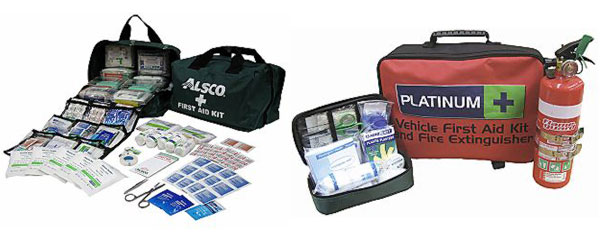
There are various types of first aid kits that cater to different problems. A standard kit contains enough supplies to deal with accidents and general first aid. Yet, you could find out that you need to buy specialised kits.
These include:
Vehicle/Portable first aid kits
When your organisation grows, teams spend a lot of time on the road. Prepare them for eventualities or accidents. Portable first aid kits are great for businesses that have employees on the move. They are compact enough to fit in a glove compartment.
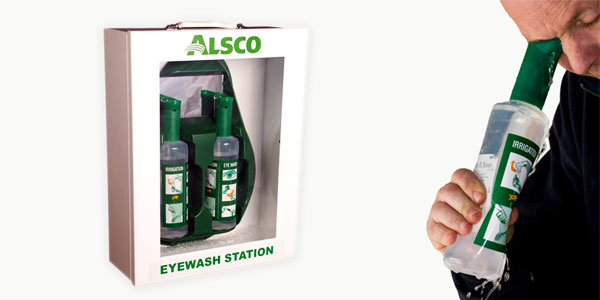
Eyewash stations
Most products come with a warning to rinse if it comes in contact with the eyes. Do you know the proper way for your staff to rinse their eyes? Eyewash stations are a great first aid essential for diverse organisations.
Eyewash stations provide an easy solution to removing eye debris. They come in easy to mount wall cabinets that store bottles of sterile eye rinse solution and have easy to follow instructions.
Portable Defibrillators
With the surge in lifestyle diseases, cardiac complications are a real potential threat. Make sure you have defibrillators that are easy to use and modern. They come with audio instructions and are lightweight.
After updating your first aid kits, use posters to educate your staff on how and when to use them. They will be a reminder to stay safe and a reinforcer of safety training. The posters are also great for updating your staff on new and modern first aid kits.
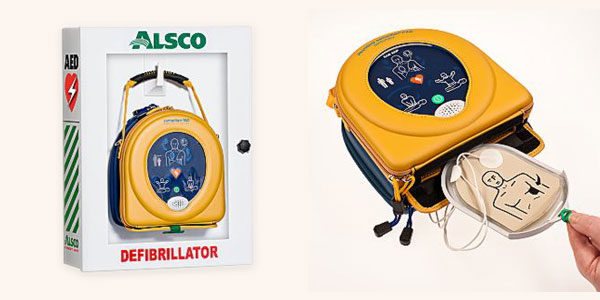
If the Kit Has Never Been Used
If your workplace goes a couple of months without accidents or incidents, congratulations! However, this poses a different type of challenge. The contents of your first aid box could be contaminated or expired. Check the content every quarter or at least every 6 months.
If you haven’t checked it for a couple of months, it is time to see if you need to replace anything. If it looks old and tattered, remove it. Make sure the supplies in the first aid kit are always sterile and safe.
Create a First Aid Kit Maintenance Plan
To keep your first aid kits updated, you need to have a lot of information at your fingertips:
- The safety needs of your organisation.
- How many kits have been used?
- What supplies in the kit need to be replenished?
- The latest safety requirements for your industry
- Where to source and maintain first aid kits?
Outsource these functions to a vendor who will take care of everything. Choose one who is reliable and can deliver to any location in New Zealand.
Alsco’s managed rental service will source, stock and maintain your first aid kits for one affordable monthly payment. We use hospital-grade products and can customise the kits to suit your business needs.
You can never go wrong with the right workplace safety partner.
6 Benefits of Training Your Employees in First Aid
The 2015 Health and Safety Act mandates employers to ensure safety in the workplace. This includes protection from all perceivable workplace health and safety risks.
According to the act, you must provide your employees with industry-specific safety training. As a bonus, this should include first aid training for employees.
The first aid training complements the safety training. It provides employees with the skills needed to respond to workplace emergencies & accidents.
This reduces the severity of injuries, giving employees a better chance at recovery.
How to Offer Comprehensive Workplace Training
While preparing the training, you must choose who will receive the training. Since this is a highly beneficial skill, you can offer it in two packages:
- Basics of First Aid – You can offer this to everyone in your workplace. As it is a short course, you can include everyone in the office. It introduces your employees to first aid. Each team member gains basic first aid skills.
- Comprehensive First Aid Training – Because this requires a lot more time and resources, you can offer it to a smaller number of people. Choose a few people on each floor, such as supervisors and floor managers for the package. These are people you will refer to in extreme situations.
Resources for Workplace First Aid Training
Proper first aid training begins with finding the right training partner. Some potential workplace first aid trainers include:
- Redcross New Zealand – They offer a variety of workplaces courses. You can choose a course and request them to customise it to your industry’s safety requirements.
- St. John NZ – Speak to a representative and customise the training to suit your workplace.
- Corporate trainers – You can choose from a range of corporate training companies. Each company will offer a unique mix of first aid training packages.
Image courtesy
6 Advantages of Employee First Aid Training
1. Help Speed Up Your Response to Workplace Emergencies and Accidents
An emergency or accident can happen at any time. In many cases, the survival of the victim depends on how fast they receive first aid services.
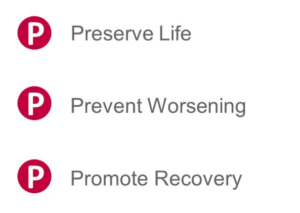
Three P’s of First Aid. Image courtesy
If you train most of your employees in first aid, anyone close to the victim can administer basic care. This speeds up the response time, giving the victim a better chance at a quick recovery.
When everyone on the team has basic skills, they can work together to support the victim before medics arrive.
Having a few people with advanced first aid training helps the victim get more support. You can have a highly-trained supervisor or floor manager coordinate the first-aid efforts.
This person is also in charge of communication with the emergency responders.
2. Training Improves Safety Awareness in the Workplace
First aid training improves employees’ safety awareness. It gives them more on the possible causes of accidents.
Training gives your team a better sense of the severity of workplace accidents. This encourages them to adhere to safety standards.
The training also helps expand their understanding of workplace safety. Each trainee understands how their behaviour affects the safety of others.
This deeper understanding of workplace safety improves behaviour. Employees become more cautious, reducing the number of injuries and accidents.
3. Show Employees You Care, Improving Morale
High employee morale improves productivity in the workplace. It can even lead to higher employee retention rates.
Through training, you show your employees you care about their wellbeing. You are willing to invest time and resources on their safety.
In return, employees feel more confident in your ability to prioritise their safety. They can invest more in their work without worrying about safety.
This translates to high morale, productivity and positive brand association. As your representatives, employees will speak highly of the company. This will improve your brand’s perception among clients.
4. Reduce Costs Related to Workplace Injuries and Accidents
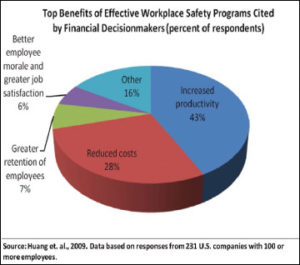
Source: OSHA
Employee recovery time translates to lost company time.
Even if you provide comprehensive insurance, you are better off avoiding workplace injuries.
Increased accidents can lead to an increase in your insurance premiums. In some cases, you might have to take out money from the business to help an employee with medical expenses.
The cost of workplace accidents affects both you and your employees.
With first aid training, you improve your response to accidents. This helps minimise the severity of injuries, reducing medical expenses. It can also reduce recovery time for the employee.
5. Tailor the Training to Your Industry
By bringing the training to your workplace, you can tailor it to your industry’s safety standards.
While looking for a training partner, make sure you share with them your:
- Ongoing risk management strategy.
- Financial budget for the training.
- Company safety manual.
- Industry’s safety guidelines.
This gives the first aid trainers enough information to tailor the training. They have the resources needed to create a first aid training package that is:
- Current
- Effective
- Focused
6. Equip Employees With Life-Saving Skills They Can Use Outside the Workplace
Employees can use the first aid skills outside of work. They can respond to emergencies in the home with confidence.
This is a valuable gift to employees. They will appreciate it more when these skills come in handy in relieving pain or helping others.
If you offer non-monetary benefits to your employees, you can add the first aid training as a bonus.
Equipping Your Office After the First Aid Training
Once your team learns basic first aid skills, you must provide them with the right equipment. They will need this equipment to manage workplace emergencies or accidents.
While sourcing first aid equipment, make sure you find a supplier who understands you.
A leading supplier such as Alsco NZ will help you equip your office properly. They’ll give you everything you need in case of an emergency or accident.
You can refer to Alsco NZ for:
a) Managed First Aid Kits
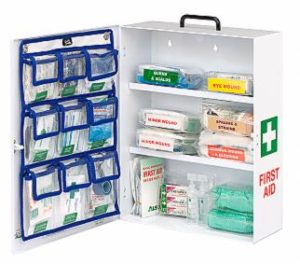
Alsco’s first aid kit Affordable – we charge you a single, all-inclusive annual fee
Alsco NZ supplies managed first aid kits, helping keep your business safe. With the kits, you’ll have everything you need to meet New Zealand’s workplace safety standards.
The Alsco NZ team will refill your kit every three months with hospital grade material. They will even customise it to your industry at no extra cost.
If needed, you can request vehicle and portable first aid kits in your package. They will come in handy if:
- You have field tasks where teams work away from the office.
- You own a fleet of vehicles serving the company.
- You work onsite and need to set up remote work stations.
Why Choose Managed First Aid Kits
There are many advantages to choosing an Alsco NZ Managed First Aid Kit:
- Affordable – You pay a single, all-inclusive annual fee.
- Quarterly Refills – The Alsco NZ team will refill and maintain your kit every three months for free.
- Customised Package – You will get a kit with all the basic supplies. It will even include extras tailored to industry-specific accidents.
b) Portable Defibrillators
New Zealand loses more than 1,600 people to out-of-hospital cardiac arrests. In 2017/2018, St. John medics treated five people daily for cardiac arrests. Most of these cases were in the workplace.
Proper preparation in the workplace can reduce the risk of cardiac-related deaths in the workplace.
Portable defibrillators help you respond to cardiac emergencies. You can use defibrillators to:
- Correct an arrhythmia (an uneven heartbeat).
- Restore the heart’s beating if it stops.
Alsco NZ provides a portable and easy to use HeartSine Samaritan 500p defibrillator. It can save a life in case of an emergency.
With Alsco NZ, you get:
- An easy-to-use defibrillator. Anyone with basic first aid training can operate it.
- Maintenance services every 3 months at no extra cost. If it breaks down, they will replace it for free.
- A single annual fee. You don’t have to worry about monthly payments or upkeep.
The Benefits of Getting Your First Aid Supplies From Alsco NZ
Employee first aid training works best if employees have easy access to first aid kits.
Since first aid is a support service, you need a partner you can trust to keep your kit supplied all year round.
With Alsco NZ, you can request a managed first aid kit. They will customise each package to help you:
- Ensure you have enough supplies for everyone on your team.
- Get enough supplies for industry-specific accidents.
- Meet all regulatory first aid kit standards.
- Refill and maintain your kit every 3 months.
If you are looking to improve workplace safety, contact Alsco NZ today.
Photo: WikiMedia
Do You Need an AED in the Workplace?
The best way to care for your employees is to provide them with the best health and safety equipment.
One way to do this is to install workplace AEDs.
This ensures you are well prepared for any cardiac emergency.
Posting emergency signage around your workplace will help in times of crisis and lead rescuers straight to the available equipment.
1. What Are AEDs?
AEDs, or an Automated External Defibrillator, is an electronic device used for medical emergencies.
It is a lightweight, portable device. Its purpose is to send an electric shock to a victim whose heart ventricles lose function. Or instances when the heart stops beating, this is known as cardiac arrest.
Did you know that cardiac arrest is one of the leading causes of deaths in New Zealand?
According to the Heart Foundation, cardiovascular disease cause 33% of deaths every year. Read more here.
AEDs are in many public spaces such as airports, gyms, schools, banks, churches, casinos, and recreation centres.
An AED can be used by untrained bystanders in an emergency. However, training is advisable for every individual, community, and workplace.
2. What Are the Signs of Cardiac Arrest?
Familiarising yourself with signs of cardiac arrest can help you notice symptoms early. This could mean the difference between life and death.
Knowledge is power. No doctor rushes in blindly to save a life without a general idea of what they are dealing with.
You need to be keen as, for many people, an arrest can happen without warning. A person suffering a cardiac arrest may stop breathing and is likely to lose consciousness immediately.
In the event that there are warning signs to work with, you can expect:
- Dizziness
- Chest pain
- Fainting
- Palpitations
- Breathlessness
Taking care of yourself and those around you helps make the world a better place. We live fast-paced lives and can forget to take care of ourselves. Be sure to keep your heart beating with these tips for a healthy lifestyle.
3. Using an AED in an Emergency
The first ten minutes of cardiac arrest are the most crucial for the victim’s survival. The first sign is fainting.
In an emergency you can try to carry out the following steps:
- Confirm the state of the victim, are they breathing? If the person is already unconscious you need to check their response. They could either be very still or have seizure-like movements.
- You can shout at the victim or gently shake them to get a response and make sure they are not sleeping. You should never shake an infant or a young child because this could send them into shock. Instead, pinch them gently to try and wake them up.
- Ensure to call for professional medical help if two or more rescuers are present. One rescuer can provide CPR while another calls for help.
- No signs of breathing will mean you need to prepare to use the AED as soon as possible.
- There needs to be clear space around the victim, so get rid of bystanders. Any contact with the victim could affect the AED’s reading of their heart.
- An AED uses voice prompts to alert you of when and how to administer the shock. And how to connect the electrodes.
- It can also instruct you to give CPR again after delivering the shock.
- Some AEDs can deliver more that one shock with a higher level of energy
4. Should You Have AEDs in the Workplace?
Considering the value of an AED and the statistics of cases in New Zealand, you should get an AED if there:
- Is a risk of electrocution in your workplace. Employee safety is a top priority for your business and a legal requirement.
- Your workplace is remote. Workspaces that are located far away from any medical services can delay the prompt arrival of an ambulance. (Remember the ten minute period of cardiac arrest.)
AEDs should be easy to locate and in an area that is clearly visible. Maintenance levels must be adhered to according to the manufacturer’s instructions.
You don’t have to be the one concerned with the maintenance and upkeep of your defibrillator. Partnering with a rental company such as Alsco, which maintains your AED, will give you peace of mind.
5. What Does the Law Say About AEDs in the Workplace?
There is no law that requires you to have a defibrillator at work. However, the government of New Zealand recommends all workplaces have at least one.
Remember that workplace AEDs must be accessible and visible.
6. Benefits of Having a Workplace aed
They can save a life! This is the biggest advantage of an AED. They improve the survival rates of victims. The inbuilt voice prompts also help guide the user step by step through the process.
Companies and employers benefit too. The profile of the company is elevated when it demonstrates care for its employees. Everyone wants to work in an environment where they will be taken care of.
Because they are growing in popularity in many public spaces, social expectations call for companies to have access to an AED.
Employees benefit from AED training sessions. This is because many AED manufacturers can provide basic training to familiarise staff with the functions of an AED. This increases confidence in those using the device.
7. Do You Need Training on How to Use AEDs?
As mentioned earlier, even untrained bystanders can use the device.
But, nothing beats hands-on training. This will build upon your staff’s theoretical knowledge of how to use a defibrillator.
Proper training on a defibrillator can help make its usage more effective.
There are several options when it comes to taking an AED or Cardiopulmonary resuscitation (CPR) class. Some course providers have packages that include CPR, AED and first aid. These cover protocol for basic emergency response action.
A Basic Life Support class (BLS) can also come in handy. This is because employees learn advanced techniques in emergency response and AED operation.
8. Should You Rent or Buy an AED?
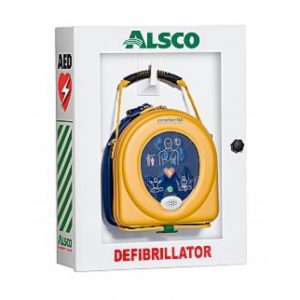
Alsco manages Defibrillator Rental Services
Renting out an AED is a great way to ensure you have an up-to-date, durable and high-quality defibrillator for your employees. A straight year lease means you don’t have to worry about monthly payments.
When you rent equipment, the chances of you having the latest equipment is guaranteed.
The longer you lease out equipment, the cheaper it is for you.
Contact Alsco for your AED needs. Our representatives will help you decide where to place them for easy access. They also install, check and replace them for you on a regular basis. All this at an affordable annual fee.
Check out some of our rental options. Contact us for a quote today.
The Perfect Amount of First Aid Kits for Your Workplace
How many first aid kits does your workplace have? This is a simple question, yet so vital for organisations to answer.
Injuries in the workplace are increasing. Workplace accidents cost the economy of New Zealand upwards of $20 billion per year.
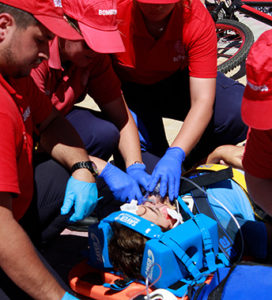
Accidents are unavoidable; yet, preparing your employees can help reduce the number of fatalities. First aid kits are essential in any workplace. First aid in the workplace is dynamic, so office managers should provide first aid kits and train employees to offer first aid.
You must also conduct a needs assessment.
As a manager, you will understand the risks involved in the layout of the organisation and its size.
Source: Daniela Santos
Make sure first aid equipment and facilities are adequate to cater to all workers. They include:
- First aid kits
- Portable defibrillators
- Eyewash stations
- Vehicle and portable kits
- Emergency response systems
Note: Besides providing first aid equipment, you must also provide trained first aiders. They could be members of the organisation or from outside your employment.
First aid requirements vary in every organisation. Factors to consider include:
1. The Number of Employees Affects How Many First Aid Kits You Need
The number of first aid kits required increases with an increase in your number of employees.
The higher the number of employees, the higher the number of injuries or fatalities.
A high number of employees is already a risk in itself. Picture this scenario:
A fire breaks out in a workplace with 500 employees. They all rush out at the same time. This is likely to cause further accidents in cases of limited exit points.
It is important to ensure the number of kits available is enough for the whole team.
2. What Risks Are Involved in Your Workplace
The level of risks involved depends on the activities carried out at an organisation.
Some work environments pose greater risks than others. An office environment will have fewer accidents compared to other high-risk environments. In a warehouse, objects may fall. In a manufacturing company, chemicals may spill. In a construction site, machinery may malfunction.
The nature of the risks involved will determine what number of first aid kits will be enough.
3. Where Your Workplace Is Located
Companies in remote areas need more first aid kits compared to those within major towns and cities.
Take an example of a company that constructs windmills in a far off area. Think of a company constructing a bridge in a remote area.
Areas that take an emergency service such as an ambulance more than thirty minutes to arrive are remote.
The only easy way such a place would be accessible is through air emergency services. This may not always be available and would make it difficult to reach the workers in case of an emergency.
Major construction projects take more time and involve a huge number of employees. This requires employees to work in shifts. These factors pose unprecedented dangers.
4. Size of First Aid Kits Available
First aid kits come in different sizes. You can pick from the different sizes depending on the number of people the workplace caters for. Also, think of the industry and the level of risk involved in the activities of your business.
The table below provides general guidelines on the sizes. This is dependent on the work environment and the number of employees. Besides this guide, a first aid risk assessment is useful in making crucial decisions.
| Workplace Environment | Number of Employees | Recommended First Aid Kit |
|---|---|---|
| Low risk | Less than 25 | 1 small kit |
| Low risk | 25-100 | 1 medium kit |
| Low risk | 100+ | 1 large kit per 100 employees |
| High risk | 5-25 | 1 medium kit |
| High risk | 25+ | 1 large kit per 25 employees |
Source: https://enfieldsafety.co.uk/news/a/how-many-first-aid-kits-workplace/
Low-risk workplace environments: This includes offices, conference rooms, libraries, and schools.
High-risk workplace environments: This includes warehouses, construction sites, and manufacturing companies.
5. Complexity of the Workplace Layout
The complexity of the workplace determines the first aid kits you require.
In large buildings, different departments are housed on different floors. Some buildings are complex and need a thorough check on emergency exits.
In such a situation, place the kits in designated areas where workers can access them with ease.
Other Factors to Consider When Choosing a First Aid Kit
Your work environment can get hectic. There are absent employees, differences in experience and changes in shift patterns. To add to the mix, there are lots of unforeseen circumstances.
A first aid assessment test is important to ensure you leave nothing to chance.
Do not forget other potential factors, such as first aid provisions for:
- Site visitors
- Travelling workers
- Shared occupancy sites
Where Should First Aid Kits Be Located?
Place first aid kits at a position where all employees are able to access them.
For larger and more high-risk organisations, employers should provide a first aid room. Keep all first aid equipment such as portable defibrillators, vehicle kits and eyewash stations here.
Being in charge of the workplace, you should ensure the location is:
- Easily accessible for all employees.
- Supervised by a member of staff.
- Complete with clear signage.
- Connected to a telephone or clear communication channels.
- Always open when people are at work.
- Clean and organised.
- Supplied with water.
- Located close to exit points.
Remember:
- Check first aid kits for expiry dates.
- Restock the first aid supplies to ensure there is no shortage during emergencies.
- Source first aid kits from reputable companies only.
- Most importantly, remember that kits are not enough while dealing with life-threatening conditions. Be sure to dial 111 in cases of emergency. Contact a first aid officer to track the situation before the emergency team arrives.
Increase Your Workplace Safety with Alsco New Zealand
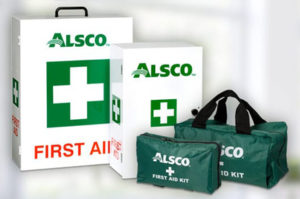
By now, this article has given you enough insight into work safety. You now know the number of first aid kits you need and the factors to consider in making your choices.
Empower your employees early enough so they are ready for any emergency scenario. Stock your workplace with the best range of first aid products from Alsco New Zealand.
By making the above considerations, you will make your workplace a safe haven for you and your employees. How about getting started?
Where Is the Best Place to Keep a First Aid Kit in the Office?
The safety of your employees is important to keep your business running smoothly.
Exposure to different elements over time can affect your employees. New safety measures are required.
They include hygiene procedures, quality uniform suppliers, and stocking suitable first aid kits for your workplace.
A first aid kit contains supplies and equipment used for medical treatment. They are essential for any establishment. Do you know the contents of a first aid kit?
You should use first aid signs that show the locations of the first aid equipment. They make first aid kits easier to locate in an emergency.
Did you know that by posting signs to denote first aid kit locations, you comply with NZS/AS 1319: 1994 Safety Signs for the Occupational Environment? Find out more about standards on www.standards.co.nz
Where Should You Keep First Aid Kits in the Workplace?
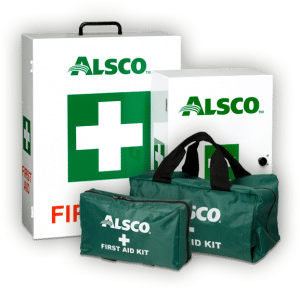
Alsco’s managed first aid kit service offers your workplace safety.
First and foremost, you need to place the kits within reach.
You should have at least one full first aid kit wherever employees are stationed. This extends to work vehicles and equipment.
The size of your establishment (both architecture and workforce) plays a big role in determining how many kits may be required, as does the kind of labour and activity involved.
A needs assessment test is important to determine how many extra kits may be necessary.
The number of kits you need also depends on the number of employees you have. You must have one kit for every 50 employees.
A multi-story building should have at least one kit on each floor.
Large spaces such as stadiums and airports should have industry first aid kits. They should be placed wherever staff work in order to meet occupational health and safety requirements.
All venues must have clear information on how to access the equipment. It would be useless to have kits locked away in a cupboard in the event of an emergency.
Kits should be unlocked wherever possible. Employees should be informed of their accessibility during orientation.
Sealed emergency kits should be available in instances or places where kits must be locked, such as areas with high traffic from the public.
Water is often needed to clean up wounds, which is why first aid kits should be placed close to washbasins with running water and clean towels.
When water is not available, a well-stocked kit would have sterile saline solution or wet wipes and hand sanitising gel.
Kits should be placed in high-risk areas. If they are mounted on a wall, the contents should be accessible at all times.
Types of First Aid Kits
Regulations apply to both contractors and employees under the Health and Safety at Work Act 2015.
The Act and related regulations demand that workers are given the best level of protection from workplace health and safety risks within reasonable practice.
Providing such necessities can boost the image of your workplace. It could also improve relationships with your employees.
You can choose from a variety of kits, such as:
1. Office First Aid Kits
Work-related injuries can range from paper cuts to broken bones.
Accidents can happen in the most mundane ways. If not accidents, then there’s one’s health to consider.
Most first aid kits consist of nonprescription drugs, such as mild painkillers and antihistamines, which can be restocked after use.
2. Managed First Aid Kits
[b3_row]
[b3_column lg=”8″ md=”12″ sm=”12″ xs=”12″ ]
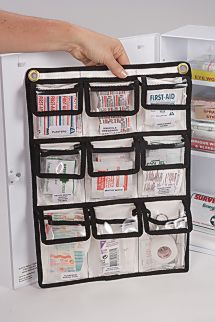
Can you picture having your first aid kit tailored to your business requirements, with the ability to choose ready-made kits that have all the basics?
This package also makes you compliant with New Zealand legislation all year round since the kits will be installed, checked, and restocked for you.
There are three restocking intervals during which hospital-grade material is refilled and expired contents are removed.
Alsco carefully selects the highest quality and most durable first aid supplies as part of our service.
Plus, you get all that for a single annual fee. That means you can take a break. We’ve got it covered.
[/b3_column]
[b3_column lg=”3″ md=”12″ sm=”12″ xs=”12″ ]
[/b3_column]
[/b3_row]
3. Vehicle and Portable First Aid Kits
[b3_row]
[b3_column lg=”7″ md=”12″ sm=”12″ xs=”12″ ]
Accidents can happen at any given time. It is more practical to be safe and cautious rather than sorry.
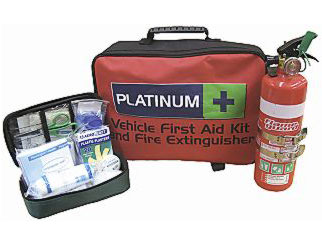
When employees have tasks that keep them out of the office and in their vehicles driving across New Zealand, they need to be well-equipped.
Employees who also operate heavy machinery, hot/cold equipment, sharp objects and so on need access to proper safety equipment.
Having the proper kit is crucial, especially if your employees are alone. On the road, you need a light and compact first aid kit that can fit in small nooks and crannies.
[/b3_column]
[b3_column lg=”3″ md=”12″ sm=”12″ xs=”12″ ]
[/b3_column]
[/b3_row]
4. First Responder Kits
Emergency medical responders are known to have their kits close by in case of emergencies.
You never know what distress call you could be walking into.
This is why all levels of emergency medical response kits include stethoscopes, blood pressure cuffs, belt packs with shears and flashlights.
You can buy these kits online or in local stores.
5. Sports First Aid Kits
These kits focus on orthopedic injuries.
They have cold packs that vary in proportions depending on the size of the group and compression wraps.
These are great to have during outdoor activities such as team-building sessions.
They can also be bought online and in local stores, too.
Frequently Asked Questions About First Aid Kits
1. Do First Aid Kits Expire?
It is essential you ensure your first aid kit contents are checked regularly and replenished. This is important because there are cases where they are rarely needed. In such cases, some of the content expires and goes unnoticed for extended periods of time.
First aid kits often have a three- to five- year shelf life.
2. Who Regulates What Is Inside a First Aid Kit?
The contents of a business’ first aid kit is determined by WorkSafe, which sets strict guidelines. Their guidelines differ depending on the size of the site and the number of employees.
3. What First Aid Documents Need to Be Kept?
The Safety Statement must hold the name of the professional first aider and the location of the first aid rooms, facilities and equipment.
A health and safety inspector should be able to give out written records of the dates of all first aid training, including recertification training upon request.
The information should be kept in a secure place, appropriate for their confidential nature and be made available to the health and safety inspector should the need occur.
4. What Are the Situations in Which a First Aid Kit Can Be Used?
All kinds of wounds can be treated by a first aid kit. It does not only come in handy for emergencies and large wounds. Adhesive bandages can cover up paper cuts.
A first aid kit is a place to keep and organize essentials that could come in handy in any given medical situation. It is wise to get familiar with the contents and their uses, no matter the size.
You could also read more about the main aims of first aid in the workplace
5. Which First Aid Kit Is Best?
The best first aid kit is one that has current functioning medical supplies. Kits vary on who makes them and may be different save a few crucial items.
For example, a sports kit may be slightly different than a kit in your office, which could also vary to one meant for your vehicle. If unused for a long period, supplies may expire or become less effective.
You should review the contents of your kit on a yearly basis or replace items that may be low in stock.
Why Choose Alsco’s Rented Portable First Aid Kits?
At Alsco, we believe our kits are a grand representation of our company. We aim to deliver quality, durable first aid supplies to best suit your needs. Our kits are:
- Stored in sturdy and compact cabinets that can be installed anywhere in your workplace.
- Supplied to meet the needs of unrelated industries, whether you’re in a blue-collar workspace, hospitality, a white-collar office, etc.
- Organised with colour-coded elements so injuries are treated as efficiently as possible.
- Affordable. You only get charged once a year. No reminders, no annoying emails.
If you’d like to guarantee safety at your workplace, get a quick quote here.
New Zealand’s Laws for Workplace First Aid Kits
It was due to the railway construction in 1888 that first aid kits emerged.
Robert Wood Johnson was on a train en route to Colorado when he wound up speaking to the chief surgeon of the Denver and Rio Grande Railway.
The doctor revealed the dangers of railroad construction. Especially the shortage of medical supplies to treat industry-specific ailments.
Hospitals were a distance away and proved troublesome to reach for emergencies.
This gave Robert his eureka moment, a chance to both advance the field of healthcare and develop his business.
Then came the genesis of Johnson & Johnson’s First Aid Kit!
What First Aid is Required in the Workplace?
First aid refers to immediate help given to any person in distress or pain over a serious illness or injury before a doctor, health professional or emergency service intervene.
The aim is to preserve life and prevent the condition from worsening.
This is done by maintaining breathing and circulation levels, immobilizing broken bones, stemming blood, protecting the unconscious and more.
At work, there are three categories for first aid requirements:
- Well stocked facilities and first aid kits
- Information for employees on first aid dispositions
- Trained first aiders available where needed
Here you will find suggestions to help you organise adequate first aid kits, the number of first aiders needed, facilities and helpful information for employees.
Find out What are the contents of a First Aid Kit?
Did you know that every workplace has a legal obligation to ensure ample first aid provisions?
If you are a person conducting business or undertaking (PCBU), it is your responsibility to ensure your workplace provides employees and others with access to proper first aid equipment.
Several factors come into play when determining the set-up of your first aid equipment and the number of first aiders you may need.
Certain workplaces have heightened risks of injury and illnesses because of the nature of the work undertaken.
These factors could range from the size of your workforce, the industry, location and so on. they aim to help you counter the possible risks and be better prepared.
Employers must then provide first aid kits that take into account all the potential hazards of the workplace or industry.
A sure way to get this done is to conduct a needs assessment that will help you determine your first aid requirements.
Note: this should also include deliberation with your employees to take their views into account.
How to Conduct a First Aid Needs Assessment
You can use these questions as a guideline:
1. What Are the Hazards in my Workplace and Is There Any Potential Harm?
Examples of hazards are:
- Physical: Physical hazards consist of environmental factors that can harm an employee. Including (but not limited to) heights, noise, radiation and pressure.
- Biological: Biological hazards could be bacteria, insects, viruses, animals, etc., that can bring about dire health impacts. Click this link to find 4 Ways to Maintain Your Workplace Hygiene Effectively.
- Chemical: Chemical hazards are substances that can inflict harm. These hazards can have both health and physical impacts, such as skin irritation, blindness, respiratory system irritation etc.
- Ergonomic: Ergonomic hazards come about when physical factors can result in musculoskeletal injuries. For example, a poor workstation set up in an office, poor posture and manual handling.
2. How Many Employees Are in the Workplace and Where Are They Located?
The higher the number of employees, the more the facilities required. An awareness of the number of employees will also help you determine if you need trained first aiders, and how many.`
When it comes to trained first aiders consider:
- Location of the establishment and the distance from medical services.
- The likelihood of people being hurt and the intensity of the injuries.
- The size of the workplace and how dispersed your employees are within the location.
- The number of employees in the workplace at all times.
- The nature of their work and the hazards they face.
- Whether there are other people than employees at the workplace i.e. clients.
You need to allow some of your first aiders to have their leave days, or to be absent on unplanned occasions such as sick leave.
This means your first aid provisions must be able to cover all hours when employees are working. This includes their shifts and overtimes.
Regardless of their work plan or schedules, employees need access to first aid.
Workplaces that have employees with disabilities or special needs need to also have their medical and first aid needs taken into account.
To do so, consultation should occur with the employees concerned (with their consent) for their best medical advice.
3. If Employees of More Than One Employer Are Working Together Can They Share First Aid Resources?
It could be easy to get equipment mixed up if there are multiple first-aid boxes present. In such environments, it would be advisable to agree to share first-aid provisions. An agreement could be made, for example, the employer with a higher number of employees on-site can handle the first aid provisions.
To avoid conflict, the agreement should be in writing and both parties owning copies. Each employer has to make sure the employees are also aware of the agreement.
4. How Does the Size and Layout of My Workplace Affect My First Aid Needs?
This depends on accessibility.
First aid kits should be easy to access especially in case of an emergency. To do so, you must consider:
- The size of your workplace.
- The time it takes to access the first aid kit.
- If employees are spread out in several buildings across a worksite.
- If employees work on several floors or one floor of a building.
- The communication channels in large worksites and how fast they are i.e telephones, pagers.
- The security on site and after-hour requirements.
5. What about Employees Who Work Away from the Site?
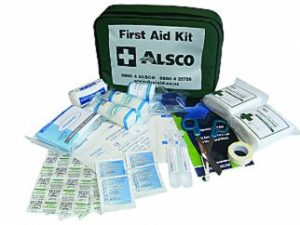
When employees are working away from the main workplace you should ensure they have portable first aid provisions with them. It varies according to the work being conducted, the potential risks and if they are working in groups or alone.
Alsco offers light, compact and portable vehicle first aid kits that would be great to have in such situations. They are colour coded thus easy to use and have the most essential supplies meaning your employees as safe as possible wherever they are.
6. How Does the Location of My Workplace Affect First Aid Needs?
Your employees may require immediate medical attention that surpasses the abilities of a first aid kit. If hospitals, medical centres or ambulances are far away this could pose a challenge.
Workplaces in remote locations need to have back-up plans or special arrangements. Find a medical service you can partner with and understand how they operate; their working hours, their efficiency and so on.
7. Can You Provide First Aid for People Who Aren’t Employees?
Yes, anyone who requires first aid in your workplace should be able to receive it.
This could include contractors, volunteers, interns or work experience trainees and loaned employees.
As such your first aid provisions should take others into account. Your kit needs to be as extensive as possible.
You can get Alsco to provide your workplace with managed first aid kit services that are regularly restocked and tailored to suit your business at a single, all-inclusive annual fee.
8. What If My Workplace Provides In-House Occupational Health Services?
This is a bonus to your workplace and first aid planning can be done in consultation with the medical practitioners in charge.
It does not need to be staffed continuously, as long as there is sufficient help or coverage for employees when the service is not operating. This is when the trained first aiders can step in.
Trained First Aiders Needed?
This is dependent on the hazards in your workplace, the number of your employees, their workstations and how your location in terms of access to medical services.
The needs assessment test should help you be able to gauge the needs of your workplace better and judge how many trained first aiders you should have.
You need to think about ensuring that first aid cover is available on all shifts and determine if the first aid response is adequate for the hazards employees face.
Alsco’s managed rental service has other types of first aid kits and services to handle various emergencies. Remember, having a well-stocked first aid kit can make all the difference in an emergency.


