Trusted by 237K+ Business Worldwide. Find a Location
Trusted by 237,000+businesses worldwide across 250 locations delivering uniforms, linens and more. Find a Location Near You


Delivering Excellence Since 1910
Contact Us
First Aid Kit Servicing New Zealand | First Aid Suppliers NZ | Alsco Uniforms
First Aid Suppliers NZ
Wash Stations & Burns Kits
Servicing All NZ Regions
No Upfront Costs
Established 1910
237,000+ Businesses Worldwide
Always Compliant
Managed First Aid Kit Restocking
First Aid Suppliers NZ
Wash Stations & Burns Kits
Servicing All NZ Regions
No Upfront Costs
Established 1910
237,000+ Businesses Worldwide
Always Compliant
New Zealand’s Managed First Aid Service
First Aid Kit Servicing
New Zealand
Fully stocked first aid kits. Restocked on schedule. Burns kits, wash stations, and all consumables managed for you. No upfront costs. No gaps. Just compliance.
What We Do
First Aid Suppliers & Managed Restocking Service Across New Zealand
Your first aid kits are a legal requirement under the Health and Safety at Work Act 2015. But a kit that hasn’t been restocked is worse than useless. It gives you false confidence and puts your people at risk.
Alsco Uniforms removes the problem entirely. We supply first aid kits, burns kits, eyewash and wash stations across all New Zealand regions on a fully managed restocking cycle. You never have to check what’s missing, chase a supplier, or worry about compliance falling through the cracks.
One partner. Everything covered. Every region in New Zealand.
How the Managed Service Works
Simple. Reliable. Zero Hassle.
We Assess Your Requirements
Tell us your site size, team numbers, industry, and the type of work your people do. We recommend the right kit types, quantities, and restocking frequency for full compliance.
We Supply and Install Your Kits
First aid kits, burns kits, eyewash stations, and wash stations delivered and installed at your site. No purchasing, no sourcing. We handle all of it.
We Restock on a Managed Cycle
Our service team visits on a regular schedule to inspect, restock, and replace any used or expired items. Your kits are always full and always compliant.
We Replace When Needed
Expired consumables, used supplies, and worn components are replaced automatically during each service visit. You never need to place a restock order.
You Pay a Simple Service Fee
No capital outlay. No surprise costs. One predictable fee that covers supply, servicing, restocking, and replacement across all your locations.
Our Products
First Aid Kit Servicing, Burns Kits, Wash Stations & More
Every product available on a fully managed restocking basis. No purchasing. No tracking. We supply, service, and replace.
First Aid Kits
First Aid Kit Servicing NZ
Workplace first aid kits supplied and maintained on a managed restocking cycle across all New Zealand regions. Always stocked. Always compliant with AS/NZS standards.
- Available in wall-mounted and portable configurations
- Multiple sizes for teams of all sizes
- Fully stocked with all required consumables
- Regular service visits to inspect and restock
- Automatic replacement of used and expired items
- Compliant with the Health and Safety at Work Act 2015
Burns Kits
Burns Kit Supply & Restocking
Burns kits for workplaces with heat, chemical, or electrical hazards. Managed supply and restocking so your team has the right treatment materials immediately available when they need them.
- Burns dressings, gels, and cooling agents included
- Suitable for industrial, food processing, and lab environments
- Specialist contents for chemical and thermal burns
- Clearly labelled for fast, confident access
- Restocked automatically on each service visit
- Available standalone or paired with first aid kits
Wash Stations
Emergency Wash Stations NZ
Emergency eyewash and body wash stations for workplaces with chemical, biological, or contaminant exposure risk. Installed, maintained, and serviced as part of your managed safety programme.
- ANSI/ISEA Z358.1 compliant eyewash stations
- Portable and plumbed options available
- Suitable for laboratories, manufacturing, and industrial sites
- Simple one-hand activation for immediate access
- Regular fluid replacement and unit inspection included
- Available across all New Zealand regions
First Aid Suppliers
First Aid Consumables & Supplies
Beyond the kit. Alsco stocks and supplies all first aid consumables your workplace needs, delivered as part of your managed service. You don’t need a separate supplier relationship for every item.
- Bandages, dressings, gloves, and wound care
- CPR face shields and resuscitation supplies
- Cold packs, slings, and immobilisation equipment
- Sharps disposal and biohazard containment
- Delivered and restocked on your service schedule
- One supplier for your entire first aid programme
Portable Kits
Portable & Vehicle First Aid Kits
For mobile teams, remote sites, and vehicle fleets. Compact, fully stocked portable first aid kits that go wherever your team goes, with the same managed restocking service applied to every unit.
- Lightweight, durable cases for easy transport
- Sized for individual workers to full crews
- Vehicle kits for fleets, trucks, and utes
- Suitable for construction, forestry, and field service
- Restocked on return or on-site service visits
- Available in all NZ regions
First Response Stations
Combined First Response Stations
An all-in-one emergency response point housing a first aid kit, eyewash station, and burns kit in a single wall-mounted unit. Reduces response time and centralises your workplace safety equipment.
- Compact cabinet housing multiple emergency kits
- Clearly labelled for stress-free access in emergencies
- Ideal for manufacturing, warehouse, and industrial floors
- Fully managed servicing for all components
- Custom configurations available by site type
- Available across all New Zealand regions
Why Managed Restocking
Why a Managed Service Beats Buying Your Own Kits
Buying first aid kits and managing restocking yourself sounds simple. In practice, it’s one of the most commonly neglected safety obligations in New Zealand workplaces. Here’s what you get with Alsco’s managed service instead.
No Upfront Costs
No capital outlay and no large purchase orders. One simple service fee covers everything: supply, installation, restocking, and replacement.
Always Compliant
Kits that aren’t restocked fail compliance. Our managed service means every kit is checked, stocked, and compliant on every service visit.
Automatic Replacement
Used supplies, expired items, and worn components are replaced automatically. You’re never left with a depleted kit when it matters most.
We Handle Everything
Delivery, installation, inspection, restocking, replacement. You manage your business. We manage your entire first aid programme.
One Supplier for All Sites
One partner for every location across every New Zealand region. Consistent standards, consistent restocking, consistent compliance nationwide.
Purpose-Built for Your Industry
First aid kits for an office are not the same as for a manufacturing floor. We configure kits for your specific hazard environment and team size.
NZ-Wide Coverage
Auckland, Wellington, Christchurch, Hamilton, Dunedin, and all regions. Your whole operation covered under a single managed service agreement.
Scales With You
Growing team or new site? We scale the service to match. No renegotiation, no new suppliers. One call and it’s done.
Standards & Compliance
Our First Aid Products Meet These Standards
Every kit and product supplied by Alsco meets or exceeds the relevant New Zealand and international safety standards. Our managed service maintains compliance throughout the product lifecycle.
Who We Serve
Industries That Rely on Our First Aid Managed Service
If your team faces any physical, chemical, or workplace injury risk, our managed first aid service is built for you.
The Complete Guide
First Aid Kit Servicing in New Zealand: What You Need to Know
Providing adequate first aid facilities is a legal obligation for every New Zealand employer under the Health and Safety at Work Act 2015. But compliance isn’t just about having a kit on the wall. It’s about having the right kit, in the right locations, stocked with the right contents, maintained on a regular schedule.
What Does First Aid Kit Servicing Mean?
First aid kit servicing refers to the regular inspection, restocking, and maintenance of workplace first aid kits. A serviced first aid kit is one that has been checked to confirm all contents are present, none have expired, and the kit is correctly stocked for the hazard profile of the workplace.
For most New Zealand businesses, self-managing this process is unreliable. Kits get used, items run out, expiry dates pass unnoticed, and nothing gets replaced until there’s an incident. Alsco’s managed restocking service removes this risk by putting a professional service team on a regular cycle across all your locations.
What Are First Aid Suppliers Responsible for in NZ?
As a first aid supplier in New Zealand, Alsco’s responsibility goes beyond simply delivering a product. Under our managed service model, we are responsible for:
- Recommending the correct kit type and quantity for your workplace
- Supplying all kits, burns kits, wash stations, and consumables
- Installing units at the right locations on your site
- Servicing and restocking every unit on a regular schedule
- Replacing expired or used items automatically
- Ensuring every unit meets the relevant NZ compliance standards at all times
Wash Stations: When Are They Required?
Emergency eyewash and wash stations are required in any New Zealand workplace where employees may be exposed to hazardous chemicals, biological agents, or other contaminants that could cause eye or skin injury. Common environments include laboratories, food processing facilities, industrial manufacturing, and chemical storage areas.
WorkSafe NZ guidelines require that eyewash stations are accessible within 10 seconds of the hazard location. Plumbed stations provide continuous flow for the required 15-minute flushing period. For locations where plumbing isn’t practical, Alsco supplies portable gravity-fed units that are maintained and refilled on each service visit.
Burns Kits: What Should They Contain?
A compliant workplace burns kit for New Zealand should contain, at minimum: burns dressings in multiple sizes, sterile non-stick dressings, burns gel or cooling agent, cling film or sterile covering for larger burns, disposable gloves, and clear first aid instructions. For chemical burn environments, the kit should also contain appropriate neutralising agents or flush solutions relevant to the chemicals in use on site.
Alsco configures burns kits based on the specific hazard environment of each workplace, ensuring the contents are appropriate for the type of burns risk your team faces.
How Often Should First Aid Kits Be Restocked?
The restocking frequency for your workplace first aid kits depends on the size of your team, the nature of your work, and how frequently the kits are used. As a general guide, WorkSafe NZ recommends that kits are inspected after every use and formally reviewed at least every 12 months. For high-use environments, more frequent service visits are warranted.
Alsco’s managed service schedules restocking visits based on your actual usage and workplace profile. High-hazard sites get more frequent visits. Lower-risk environments are serviced on an appropriate cycle. You don’t have to guess or track it yourself.
First Aid Kit Servicing Pricing in New Zealand
Rather than purchasing kits and managing restocking independently (which involves capital outlay, storage, and ongoing purchasing administration), Alsco’s managed service operates on a simple per-site service fee that covers everything. There are no upfront costs to get started.
Pricing depends on the number of sites, kit types required, and your service frequency. Contact Alsco directly on 0800 425 726 for a custom quote for your New Zealand operation.
FAQs
Common Questions About First Aid Kit Servicing in NZ
Where We Operate
First Aid Kit Servicing Across New Zealand
Servicing all regions across New Zealand. Call 0800 425 726 to confirm service frequency for your location.
Your Team Deserves Kits That Are Always Ready.
Managed first aid kit servicing with no upfront costs, automatic restocking, and NZ-wide coverage. Get started today.
What You Need to Know About CPR Before It’s Too Late
Do you know in which cases you should start CPR? Do you know when to stop? Do you know what it actually does?
These questions seem like their answers are a part of everybody’s general knowledge, but you should not rely on that in the case of an emergency.
As a business owner, you need to do everything in your power so that your employees are safe and secure. One of the first steps is to step up your First aid game.
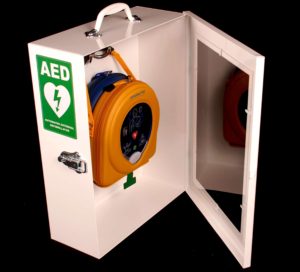
This includes renting a law compliant First Aid Kit. For more severe cases, it is best to ask Alsco representatives to send an AED, as well.
These steps are precious, but they are not enough. You need to have trained first aiders among your employees because you need people that know how to perform CPR.
It will take at least two minutes to get and set up your AED. During that time, CPR is the only thing that keeps a victim of a cardiac arrest from suffering brain damage.
Basic Facts About CPR
There are several questions about CPR that need proper answers. Even if you know them, it is never a bad idea to refresh your knowledge on such an important topic as this one.
- What Does CPR Stand for?
CPR is short for Cardiopulmonary Resuscitation. In simple words, it is a life-saving technique that is used to help restore functions of heart and lungs. - When to Perform CPR?
CPR should be performed when a person stops breathing or their heart stops working properly. This is usually a consequence of a heart attack. - How Long Should CPR Last?
You cannot start CPR too soon and it can hardly last for too long. You should perform CPR until a medical expert arrives. If that is impossible, try to get in touch with a medical expert and ask them for advice. - What Does it Do?
Contrary to the common belief, CPR does not restore the heart function. When the heart stops beating or it is beating ineffectively, it is essential that the brain keeps getting oxygenated blood. Therefore, CPR is doing the heart’s job.
There are two types of CPR. One is the famous “kiss of life” during which a person is breathing air into the victim’s mouth and presses the chest rhythmically. The other is the compression-only CPR that does not involve mouth-to-mouth.
Facts and Figures About CPR
According to the American Heart Association, almost 90% of people who suffer cardiac arrest outside of a hospital die. However, if a bystander performs CPR, the chances of survival double up.
AHA also states that chances of survival after a heart attack drop by 7%-10% with each minute of delay before performing CPR. Brain death starts to occur 4-6 minutes after blood stops feeding it oxygen.
The University of Arizona conducted a five-year study about the survival rates and the types of CPR. They published their results in 2010 and they showed that the lowest rate of survival was with people that did not receive CPR. Around 8% of patients survived after receiving ‘hands-only’ CPR and over 13% survived thanks to the conventional CPR.
Importance of the Trained Staff
The New Zealand Medical Journal published the results of a study that analysed the outcomes of out-of-hospital cardiac arrest in Wellington area from 2007 to 2009. One of the factors that were analysed was the CPR provided by a bystander.
According to their study, CPR was provided in 55% of cases. However, it did not help the outcome because it was not performed properly.
The conclusion is obvious – it is necessary to train employees to perform proper CPR. Training is not only important for their skills. It is also important for their willingness to help.
Getting proper CPR training boosts confidence to help somebody in need. It also greatly increases the chances of a positive outcome.
Step-by-Step CPR
It cannot be emphasised enough that proper training is necessary for proper CPR. However, there are 7 simple steps that a bystander should take to help a person who collapsed.
- Check for a response from the patient
- Call for help or send somebody for help
- Open the airway and check for breathing
- Place both hands-on patient’s chest and push hard and fast
- Pinch the patient’s nose and blow air into their mouth so that their chest rises
- Repeat pushes and air blows
- Use the nearest AED
New Zealand Doctor Newsroom published an article in 2015, stating that 1600 people died in New Zealand every year because bystanders did not know how to perform CPR or did not have a defibrillator.
Prevent your company from becoming a part of this worrying statistics. You need to:
- Get managed First Aid Kit
- Equip your workplace with portable AED
- Train your staff
Alsco will make sure that your First Aid Kits and your AED are up to standards, fully stocked and in perfect condition. Fill out our form and get a more than the fair quote on Alsco’s rental services.
Remember, we take responsibility for regular maintenance, stocking and restocking. You just need to learn your CPR and get your staff trained. Join Alsco in making your workplace safe.
Is There a Threat of Falling Objects at Your Workplace? Ask Your PCBU
Let us say that an empty box falls on your head at your workplace. You are not hurt and people have a laugh.
Tomorrow, a heavy book falls down and really hurts your head. There is nothing funny about that. You are hurt and that could have been prevented. All that is left to do is to reach for your Alsco First Aid Kit and take care of your injury.
Who is responsible for your injury? The person who put it there? You – for not being careful? Somebody else? The responsibility is shared.
Every business needs to comply with Health and Safety at Work Act from 2015. It lists step by step guides on how to prevent injuries from taking place. Falling objects are one of those threats that need to be prevented.
People Responsible for Your Safety
Of course, you need to take care of your safety. However, if you are at your workplace, there are others that share that responsibility with you. Health and Safety at Work Act recognises following people as duty holders:
- PCBU
- Officer
- Worker
- Other persons at the workplace
PCBU is the ‘person conducting business or undertaking’. It can be an organisation or an individual and they have the primary duty of care.
This means that they need to make sure the health and safety of the employees are not put at risk at their workplace. Of course, it is their responsibility to ensure this as long as it is reasonably practicable.
The Officer is usually a company director. It is a person who has control or significant influence over the management. Their duty is to make sure that PCBU enforces all the safety measures.
Workers and other persons at a workplace are not without their responsibilities when it comes to health and safety. They need to do take care of themselves and everyone around them when performing their work.
Prevention Steps a PCBU Needs to Take
The main responsibility for the safety of the employees falls upon the PCBU. There are several steps that he needs to take to prevent accidents, including the injuries by falling objects. The first is to eliminate the risk and if that is not possible, then to minimise it.
For example, let us say that you work in a warehouse and there are many heavy boxes stored. Eliminating the risk from one of those boxes falling on you would be – storing them on the ground.
Minimising the risk, on the other hand, can be done in several ways.
- Substitution – replacing the hazard with something of lesser risk. In the case of warehouse boxes, it could mean packing stuff in smaller boxes or placing them on lower shelves.
- Isolation – preventing people from getting in touch with the hazard. In this example, this would mean limiting the access to the areas below the boxes.
- Engineering control measures – coming up with physical control measures, including processes or mechanical devices. For example, placing strong bars that keep the boxes from falling.
- Administrative control measures – these are all work processes and procedures that are not managed by engineering or wearing PPE. In this example, it could be introducing all warehouse workers with a guide about how to store and handle boxes safely.
- Using Personal Protective Equipment (PPE) – the name says it all. In the case of warehouse boxes, it would mean wearing a protective helmet.
When it comes to threat of falling objects, HSW Act requires from your PCBU to try and do the following:
- Prevent objects from falling
- If that is impossible, arrest the freefall
- If even that is impossible, introduce a ‘no-go’ zone
How To Prevent the Objects from Falling?
Nobody can have full control over every little thing that happens at the workplace. Accidents always happen. Gravity will do its thing and some of those tools will fall down from the scaffolds.
Your PCBU should do everything that is reasonably practicable to keep those falling objects from hurting you.
- All the objects and tools at heights need to be secured, tied down or put away from the edges.
- Ensuring safe ways of raising and lowering the objects
- Arresting the fall by providing safety nets, covering pedestrian walks and providing overhead protection
How to Protect People Around You
Some people work at heights and they need to be trained on safety measures. In that way, they will know how to protect their coworkers and themselves. Safety measures include:
- Keeping everything away from edges
- Securing tools and materials and fixating them
- Keeping the work area clean and tidy
- Using chutes to place debris into the skip area which needs to be below
If you are moving a load from one place to another, make sure that you take care of the following:
- Secure and balance load before lifting it
- Take into account the weight and the external factors like wind
- Make sure that the equipment that you use is fully operational
- Establish a ‘no-go’ zone while you move the objects
Worst Case Scenario: Someone Got Hurt
Even if everybody is being very careful, somebody might get hurt. In that case, you need to have your First Aid Kit ready. Moreover, it needs to be compliant to all the legal requirements.
Your First Aid Kit needs to be positioned near the places where is more likely for accidents to occur. If your workplace includes some potential risks, there should be a trained first aider among your employees.
Having a proper First Aid Kit that is always up to date and fully stocked is somewhat challenging. Replacing the items from it can slip your mind. However, if a falling object hurts somebody, you need to know that your Kit contains all you need for dressing that wound.
Don’t allow yourself to be caught unprepared. Contact Alsco and they will take care of your First Aid needs. They will rent you a Kit that matches your needs. They will check up on it, restock it and replace it when it reaches its expiry date.
It is much better to rent your First Aid Kit for a very low price than to risk being fined up to $3,000,000 for not being First Aid compliant. Moreover, you cannot put a price on the safety of your employees.
Photo Courtesy: Flickr Image by Orsorama
How to Develop a Practical Health and Safety Plan to Perfectly Suit Your Business
A Formula One racing team is the perfect blend of precision, planning, and execution. When that race car pulls into the service bay, everyone knows where they need to be and what they need to do because literally, every second counts.
How would your team, in your workplace respond to an accident or emergency?
Compared to that Formula One team, do your employees or colleagues know where exactly they need to be or what precisely they need to do when something goes wrong and every second is precious?
A health and safety plan is so much more than backside-covering compliance paperwork. Your workplace health and safety plan should outline how your team will respond in an emergency when the pressure is on.
Tailor Your Health and Safety Plan to Suit Your Business’ Unique Hazards
Every business faces unique challenges based on their location, industry, and tools of the trade. That means your health and safety plan must be customised for you, to reflect your business and circumstances.
You can’t copy someone else’s plan and hope it will perfectly work for you, as well. Dedicate some time to discussing the unique hazards you’re likely to face in your business, so you can figure out how your team should respond.
Involve Your Team Members in Your Health and Safety Planning
 Image from: Freepik by Katemangostar
In order to be truly effective, your team should be involved in your health and safety planning.
Just as the managers of the Formula One team listen to the crew members on the ground, you should ask your team about what would improve their working environment.
Research shows that businesses who place a heavier emphasis on involving their team in health and safety experience greater staff retention and more positive working environments.
One way you can engage your employees in your operational health and safety plan is holding regular Toolbox Talks.
Have a meeting, discuss a health and safety issue and what they should be looking for. You can find examples of Toolbox Talks and meeting agendas on the Take 5 Health and Safety Stationery website.
Ensure Proper Disposal and Easy Accessibility of All Your Health and Safety Equipment
When every second is invaluable, does your team know where the first aid kits or fire extinguishers are located in your business? Do you even have first aid kits and fire extinguishers? When was the last time they were checked, itemised and refreshed to make sure they are current?
If your business has company vehicles, does each car, truck and van can hold its own fire extinguisher and first aid kit? After all, accidents can happen anywhere at any time, and it pays to be prepared when every second count.
Your health and safety plan should set the standards and expectation across the whole team, so regardless of where an accident takes place, all the health and safety gear you need is easily accessible and readily available.
It’s encouraging to see more defibrillators installed in malls and public places, and that most first aid training these days covers how to use one. When suffering a heart attack or cardiac arrest, you must not waste a second.
The sooner you can get to those people with a defibrillator, the greater chance you have of saving their lives.
Your health and safety plan may also cover keeping your business hygienically clean to prevent the spread of sickness and disease. Proper disposal of sanitary equipment will protect your employees, the environment, and generally reduce the risk of infection.
Find a Reliable Partner and Work Together to Your Mutual Benefits
All ‘Formula One’ racing teams have partners – companies who provide operational assistance to keep you going around the track faster, and better than ever. Think of Alsco and Take 5 Health and Safety Stationery as your health and safety partners.
Alsco can take care of all your first aid needs, from first aid kits to portable defibrillators and all of your sanitation requirements. Involving Alsco in your health and safety plan means they can provide the first aid, safety and sanitation equipment you need, along with a regular maintenance schedule to keep your business health and safety compliant.
If you’re not sure where to start with your health and safety plan, or your business has undergone some changes, and your plan needs to be updated to suit, contact the team at Take 5 Health and Safety Stationery. Most of our health and safety stationery range can be customised to your industry, and we can even provide cloud-based systems tailored for your business.

Get your workplace Formula One ready! Between Take 5 Health and Safety Stationery and Alsco, we can help your business prepare and execute a health and safety plan that actively involves and protects your team.
As a precision, performance racing crew, everyone will know what to do, when to do it, and have the right tools at hand. After all, from racing pit crews to accidents and injury or matters of life and death, every moment is worth its weight in gold.
Alsco would like to thank Take5 for this article. Take5 are OHS consultants that help small to medium-size businesses maintain workplace safety.
Photo: Voltam
What Needs to Be in a First Aid Kit?
What you include in your first aid kit greatly depends on your type of workplace. There is a minimum requirement for the contents of the first aid kit for a workplace that doesn’t have any specific risks. These include:
- First aid manual or guide
- Saline solution
- Moist wipes (individually wrapped)
- Adhesive dressings (at least 20 in different sizes, individually wrapped)
- 2 sterile eye pads
- 2 sterile triangular bandages (sterile, individually packed)
- Clasps or safety pins
- 2 stretch bandages
- Unmedicated wound dressings (6 pieces 12 cm x 12 cm and 2 pieces 18 cm x 18 cm)
- 2 pairs of disposable gloves
- Resuscitation mask
- Scissors
- Tweezers
- Hand sanitiser
These are just suggestions based on the experience of the professionals and the needs that they have had in the practice. However, you may need a completely different set of provisions.
For example, you may need a lot more of adhesive dressings if you are running a big kitchen. Cuts are to be expected in such a workplace, and first aid is all about being prepared and acting fast.
Alsco New Zealand has fully stocked First Aid kits that can be packed with supplies appropriate for your workplace. We also restock the kits and check them regularly, so that you always have what you need in the case of an emergency.
How Do You Maintain the First Aid Box?
You maintain your first aid supplies by putting them in an appropriate box, replenishing the supplies before the expiry date and checking them regularly.
First aid box – First of all, you need a well-made box to keep your supplies in. This box needs to be clearly marked with the recognisable cross on it. It needs to keep the supplies sterile and it needs to protect them from moisture and dust, as well.
Restocking the supplies – many of the first aid supplies have an expiry date. You need to keep those dates in mind and to replace the expired items before that date. That is the only way to ensure that the first aid box is functional and ready to use.
Regular checking – Some of the sterile packages may be compromised for some reason. Moisture may have entered the first aid box and damaged some of the supplies. You never know what may happen and in the case of emergency, you will rarely have the time to open one first aid kit by one and look for usable dressings.
All this is regularly done by Alsco NZ professionals when the first aid kits are rented from us. We drop by regularly, check the state of the kits, replace the items that are close to their expiry date and leave you with a perfect kit.
Are Workplace First Aid Kits Required?
The New Zealand Department of Labour issued First Aid for Workplaces – A Good Practice Guide to help businesses understand the requirements when it comes to first aid. This includes the first aid kits. This guide recommends the following:
- At least one first aid kit in the workplace
- At least one first aid kit on each storey if the workplace has more than one storey
- Additional first aid kit should be provided on every 50 employees of the company
- At least one kit in every company vehicle
Health and Safety at Work (General Risk and Workplace Management) Regulations 2016 say that the first aid facilities (i.e. first aid kits) need to be:
- In good working order
- Clean, safe and accessible
- Suitable for work being carried out
- Suitable to match the hazards of the workplace
- Suitable to the size and location of the workplace
- Suitable for the number of people who frequent the workplace
Visibility and accessibility – First aid kits need to be easily visible to anybody in the room and they should never be locked. There are situations where even the first aid kits need to be locked and if that is the case, you should ask for sealed kits.
Location – In the vicinity of your first aid kit, there should be a washbasin. The access to hot and cold running water is important, as well as the supply of clean towels. If this is not accessible, it is essential that your first aid kits contain the sterile solution, wipes and hand sanitising gel.
If your workplace has areas with increased hazard, that is where you should position your first aid kit.
How Many First Aiders Are Needed in the Workplace?
The Health and Safety Employment Act from 1992 covers the requirements about the workplace first aiders but doesn’t explicitly state how many first aiders are needed per workplace.
First aiders are the trained and qualified people within the workplace, who have their certificates on first aid and they should be the go-to people in case of an emergency.
To find out how many qualified first aiders you need for your workplace, you need to conduct the first aid needs assessment. The assessment includes closely examining the conditions and the requirements of your workplace while considering the following:
- Size and location of your workplace
- The number of people present at all times
- Distance from the nearest medical facility
- Shift work
- Presence of a registered nurse or other medical workers
The first aiders should be trained by an organisation which is authorised to issue the first aid certifications. They even have to take regular refresher courses every two years.
That is a lot to think about when it comes to first aid requirements for your company. To make your first aid kits one thing less to worry about, rent them from Alsco New Zealand. We offer both vehicle and workplace kits that match all the requirements. We install them, check up on them and restock them without additional charge.
Get your first aid kits today!
17 Easy Tips For Your Workplace And Employee Safety
Every good businessman knows the importance of workplace safety. We don’t want people to get hurt on their job, right?
To keep employees safe is the top priority when creating a clean and healthy workplace environment for them to enjoy working in.
It is also important to make sure that your workplace is in accordance with local regulations and standards.
They represent an assessment and mitigation of risks that may harm the health, safety or welfare of your employees.
These legal requirements are a must for every good business owner. They ensure a safe workplace for everyone – from employees to customers, contractors, visitors, volunteers and even suppliers.
Apart from complying with legal terms, the safety of the workplace is essential to the long-term success of any business.
A safe workplace helps:
- Retain staff
- Maximise productivity
- Minimise sick leaves and absenteeism
- Reduce the costs of injury and workers’ compensation
You can always do something to make sure that all your employees look and feel good when they go home as if they just started their day.
Here are some tips on workplace safety you’ll probably want to share with your coworkers.
1. Keep everything clean and organized
Scattered objects or spills can often cause people to slip and trip. Be sure that your workspace is always clean and fresh. Turn it into a habit to clean the spills up right away.
To make sure that nothing can get in the way and/or hurt workers, a good businessman will see that aisles are kept clean and organised.
2. Use mats on slippery floors
Alsco’s line of wet area rubber mats is an excellent solution for employee safety. They are industrial quality and are able to absorb up to 80% of water and dirt.
Strategically placed around your workplace, these mats prevent your employees from nasty falls and slips.
Besides that, Alsco provides laundry services for these mat rentals that suit your own schedule. This means we need to know when you want the job done! Call Alsco and arrange the schedule.
3. Store flammable materials the right way
If not stored properly, these flammable materials a real threat from fire hazards. Everyone’s safety is at risk! Be sure to store these materials in areas with proper ventilation.
Again, properly clean right away any spill or splatter made while working with such materials.
4. Train your employees to properly handle equipment or machinery
Every employee that handles the equipment, tools, or machines should be properly trained first.
And if there’s anyone not trained, they should never be assigned to handle heavy machinery. Instead, they should refrain themselves from it except if there’s a trained person present who can supervise.
5. Prominently mark hazardous areas
Clearly label places where dangerous equipment is stored. Also, be sure that the walkways are highlighted with necessary singes.
Mark the hazardous zones with black and white stripes or with tape. This proved to keep employees aware of possible dangers. It also helps them avoid accidents that cause severe injuries.
6. Provide employees with appropriate suits
Employees in charge of power tools have to wear the proper workwear while they operate such machinery.
They have to wear protective equipment and proper shoes for that kind of job. Only gloves that are appropriate for a certain job. They also have to fit right.
7. Everyone should be provided with first aid training
First aid stations provide your employees with a great stepping stone towards their safety and an efficient way in dealing with emergency situations. These wall-mounted stations always have to be fully stocked with a first aid kit with all necessary supplies and meds.
For advanced safety, Alsco also provides a First Aid techniques training program. It will provide your employees with useful knowledge on how to react to the first emergency signs.
This course is very thorough and it covers everything that is essential for these kinds of situations.
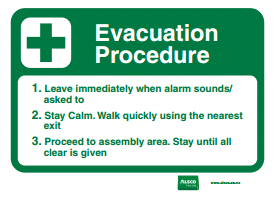
8. Set out evacuation procedures
This will increase safety from fires as well as from possible natural disasters such as earthquakes. Employees should be trained and able to use fire safety equipment correctly.
9. Avoid twisting or stooping
Providing your workplace with ergonomically designed furniture can prove to be useful. Also, it would be best to arrange the workspace in such way to make everything within easy reach. This prevents people from falling and other accidents.
10. Use mechanical equipment in lifting
Mechanical aid is mandatory when it comes to heavy lifting. It’s best to use a wheelbarrow, conveyor belt, crane or forklift because they prevent back injuries.
11. Be fully aware of the risks
Particular hazards specific to your job should be discussed when introducing new employees. This raises their awareness and cautiousness when moving around the workspace. It reduces risks of injury during work.
12. Avoid repetition of tasks
Vary employee’s activities so they don’t become dulled from doing one task for a long period of time. Rotating them through tasks allow them to change their activities and their posture.
13. Maintain tools properly
Workers are exempt from using forceful movements if they are using properly maintained tools, which prevents injuries as well.
14. Reduce stress level in your workplace
Long hours, job insecurity, conflicts and heavy workload are the most common causes of stress and work burn-out. They can lead to lack of concentration, sleeping difficulties and even depression.
Create a stress-free environment and promote a healthy lifestyle in your workspace.
15. Stay hydrated all the times
Motivate your employees to evenly drink water every day. Consuming more water, juices and other non-alcoholic drinks in even time periods will help regain all the fluids your employees have lost from working.
16. Make regular breaks
Employees tend to feel more fresh and alert when they have regular breaks, unlike those who don’t. Have your employees rest in a nice place. It will help them avoid injuries and burnouts.
17. Always be ready for a real emergency situation
First aid only covers the basics. But what if a true emergency happens? Cardiac arrest can happen at any time in any place.
To be prepared you’ve got to have an automated external defibrillator ready for situations like this. You and your employees must have an easy, yet effective solution to a dangerous emergency.
The HeartSine Samaritan 500P is a quality, single button operation device, and you can get it for a single annual fee.
Instructions on proper use, regular checks and maintenance are all included. Even the device itself gives easy step-by-step instructions, so everyone can use it at any time.
X has been providing quality commercial services to Australia for over 50 years. We’ve put all our experience into services you can always rely on.
Our Managed Rental Services make sure that you don’t spend too much on workplace safety. Additionally, you don’t have to worry about the functionality of any equipment you got from us. We include their upkeep in our offer.
Moreover, all our services are customizable to fit the needs of your company. Where you need us – we’ll be there. We also guarantee that we are compliant with complex WHS laws, so you can put that out of your mind, too.
Call Alsco today and we can come up with a solution that suits your needs the best.
Photo courtesy of Freepik
What Is A First Aid Qualification?
First aid qualification means that a person has taken an accredited first aid course and received a first aid certificate. It is important that the course the person is taking is approved by the New Zealand Qualifications Authority.
Courses are offered by the New Zealand Red Cross Society and The Order of St John.
These institutions offer different kinds of first aid courses or qualifications. There are even some courses that can be taken online.
It is up to you to choose the best first aid course for your company and your employees.
However, first aiders will have a hard time administering first aid without the first aid kits, AEDs and other supplies needed for these purposes. Contact Alsco New Zealand to take care of these requirements for you and equip your workplace with the best first aid supplies.
How long does a first aid certificate last in New Zealand?
New Zealand authorities require the refresher training course to be taken every 2 years. That is the only way to keep the certificate current and to update the skills and knowledge of the first aiders.
Sometimes, the refresher course is not taken and the certificate expires. In that case, the first aider should just take the course as soon as possible. However, if three months have passed from the expiry date, the certificate holder cannot take the refresher course but has to take the full, first aid course, like it is the first time.
Once the refresher course is completed, the first aider receives a new first aid course that is valid for another 2 years. If the first aid training provider has deemed that the first aider’s knowledge is satisfactory and their qualifications are entered in the NZQA database.
First aid certifications can be:
- Basic
- Specialist
First aiders can take the basic first aid course, or they can go for specialist training.
What Is A Specialised First Aid Course?
Specialised training is needed for those workplaces that require additional skills from a person who is expected to administer the first aid in case of emergencies.
Which specific skills should be acquired depends on the hazards that are characteristic to the workplace. The employer is the one who determines if these skills are needed. Once this assessment is done, the appropriate institution – the course provider is contacted and requested to tailor the specific course.
Upon completion of such training, a first aider should be able to:
- Identify the nature of the hazard and come up with the ways to deal with it
- Identify the signs and symptoms of exposure to this hazard
- Describe the treatment to the exposure to the hazard
- Understand the mechanisms of such treatment, as well as the side effects
- Demonstrate the use of specialised equipment used for providing specific first aid
- Keep records of incidents caused by the specific hazard
How many first aiders are in the workplace?
Health and Safety at Work Regulations don’t explicitly regulate the number of the first aiders in the workplace. These regulations only talk about the duties of an employer. The employer’s (PCBU) responsibilities are regulated in the following way:
1. A PCBU must ensure that—
(a)adequate first aid equipment is provided for the workplace; and
(b)each worker at the workplace has access to the equipment; and
(c)workers have access to facilities for the administration of first aid.2. A PCBU must ensure that—
(a) an adequate number of workers are trained to administer first aid at the workplace; or
(b) workers have access to an adequate number of other persons who have been trained to administer first aid.3. In complying with subclauses (1) and (2), the PCBU must have regard to all relevant matters, including—
(a)the nature of the work being carried out at the workplace:
(b)the nature of the hazards at the workplace:
(c)the size and location of the workplace:
(d)the number and composition of the workforce at the workplace. – New Zealand Parliamentary Counsel Office
This means that every workplace needs the first aiders unless they have a different, specific type of access to people who are trained in first aid. New Zealand Parliamentary Counsel Office
This may mean the workplace is next to the medical facility or the company is in the medical industry, so most of the employees are trained, medical officers. Perhaps, there is a registered nurse in the workplace. There are other options, as well.
In regard to the details of the workplace-related hazards, size and location, here are the factors that should indicate to the employer that there may be more than one first aider needed:
- Number of employees. The more employees you have, the more first aiders are needed.
- Large probability that injuries or illnesses can happen due to the nature of work.
- Increased number of task specific hazards (working on heights, adventure tourism, heavy machinery, etc)
- Shift work. There should be first aiders in each shift.
What are the roles and responsibilities of a first aid officer?
Health and safety regulations don’t specify the responsibilities of first aiders. They only regulate the PCBU’s duties and one of them is to have first aiders and/or to enable access to first aiders for all employees. However, what is the duty of a first aider is a bit vague.
The obvious answer would be: the role of the first aider is to administer first aid in the case of emergencies. That is clear enough, but is that the only thing that the first aider has to do? This depends from one workplace to another, but here are some of the reasonable duties for a first aider:
- To provide a reasonable level of help in case of emergencies. You cannot expect from your first aider to treat illnesses and administer medication and perform complex treatments that can only be done by a medical professional. You can only expect them to know how to administer the first aid.

- To be able to use the equipment to protect themselves while protecting others. If the first aider is the one that is best at administering first aid, this means that if they are injured, there is nobody else to do it properly. Therefore, it is important for a first aider to be able to take care of themselves, as well.
- To work with PCBUSince the first aider is the person who has the hands-on experience with the first aid in the workplace, their insight is precious. That is why they need to work closely with PCBU and improve the first-aid efforts in the workplace or maintain satisfactory levels.
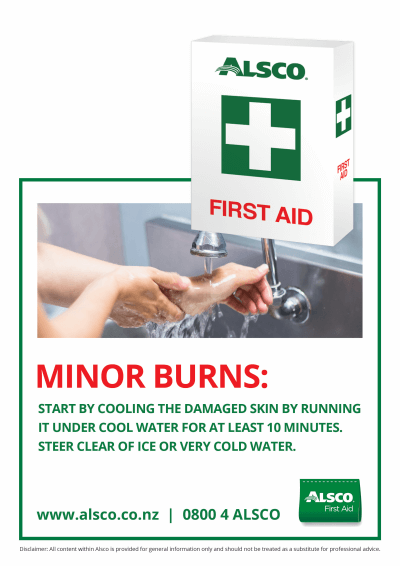
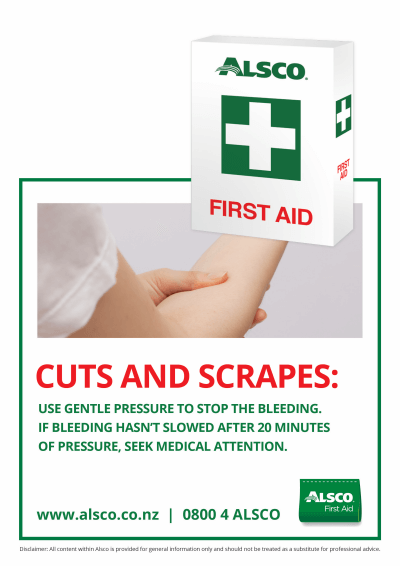
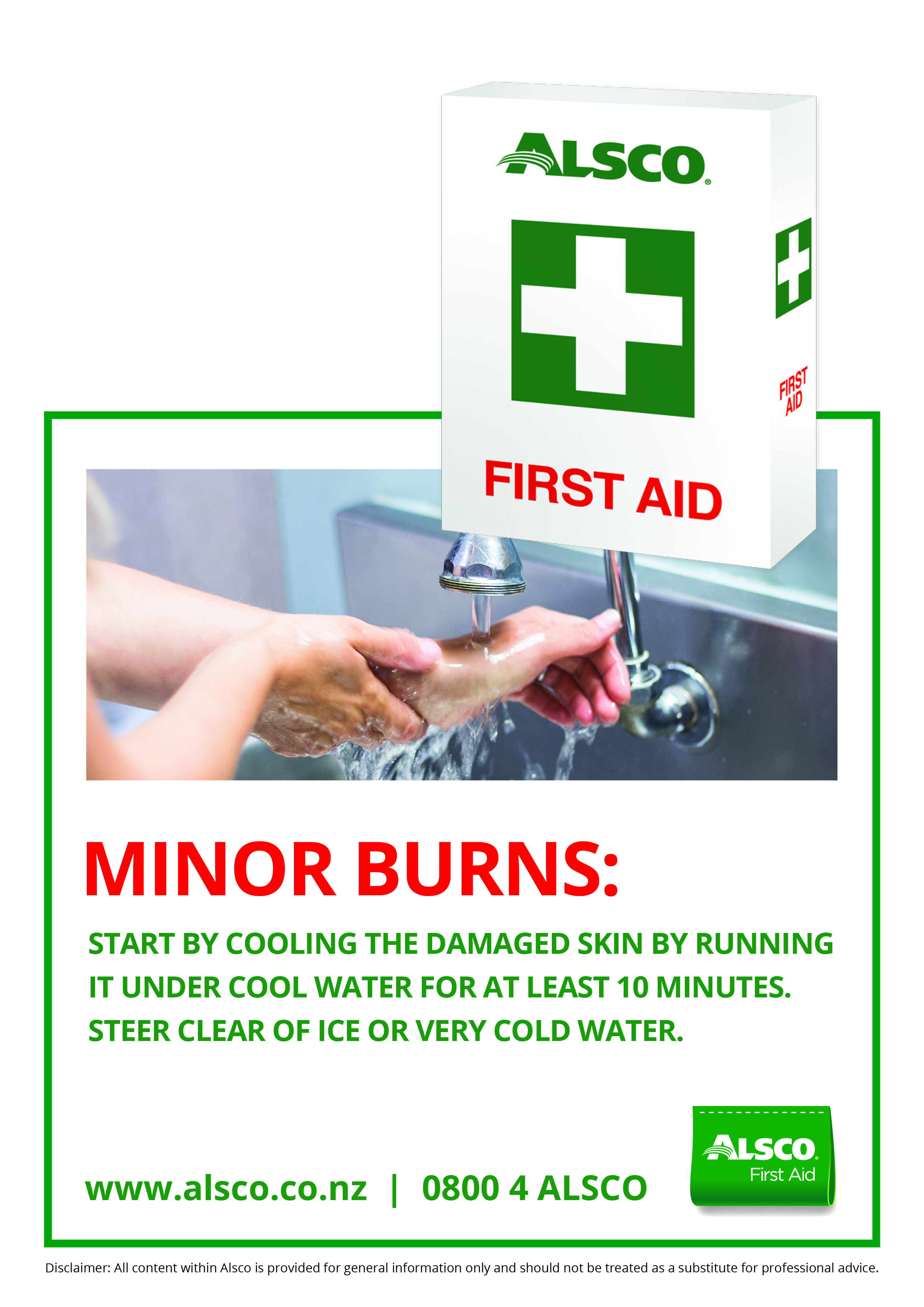
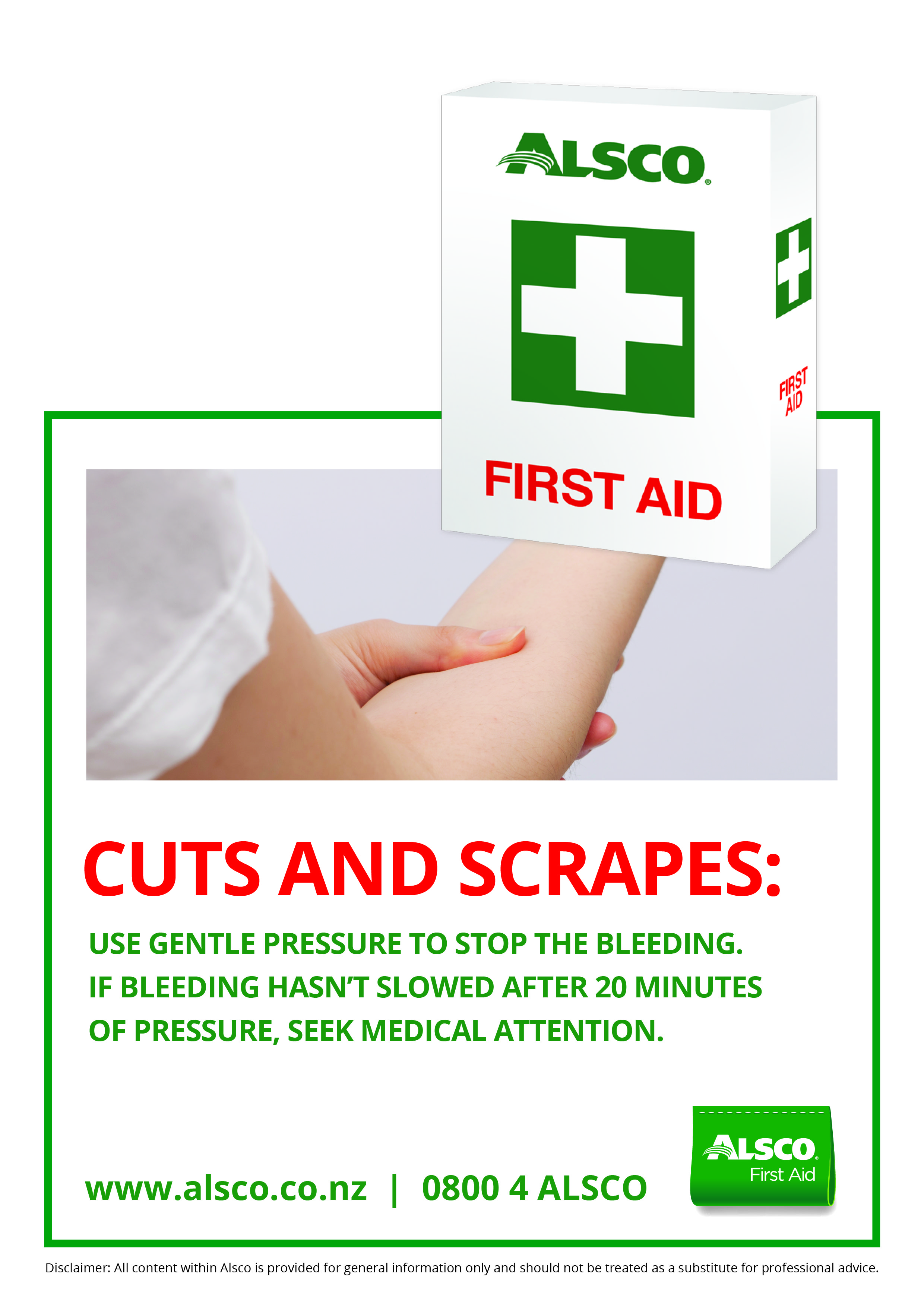
- To know the location of all first aid kits and first aid equipment. People get confused in the case of emergencies and they can easily forget where the first aid kits are or what is in them. The first aider is trained to keep his head cool and make the most efficient steps to contain the dangerous situation. First aid posters and signs can help.
There are some workplaces in which the first aider is expected to take care of the first aid kits and make sure all the supplies are up to date. This is a bit too much to expect from an employee in whose job description is not workplace maintenance. That is why you should rent Alsco New Zealand first aid kits.
For a monthly flat rate, we offer first aid kits with contents that match your business needs. We also check them regularly and make sure they are always stocked with supplies that are up to date. Get your first aid kits today.
Everything You Need for Your Workplace First Aid Kit
Imagine witnessing an accident and being unable to help?
First aid is the immediate help given to an injured person before a professional arrives. First aid knowledge is invaluable in the workplace.
Workplace accidents can be a never-ending chain. When you think you’ve sealed all the safety loopholes, another accident happens.
What’s worse, accidents happen at the least expected times. They can throw your workspace into confusion. It doesn’t matter how prepared you are, accidents can be upsetting and disruptive to the flow of work.
First aid training helps to reduce the impact of accidents in the workspace. Proper first aid also helps address injuries in the best way possible.
First aid knowledge is important because it:
- Can help save lives.
- Can reduce the severity of accidents.
- Provides relief to the injured party.
First Aid Requirements for Your Workplace
Every workplace has a legal obligation to provide first aid provisions for its workers.
As an employer, you are bound by law to provide first aid facilities and equipment to your employees.
Employees and employers are both required to work together in creating a safe workplace.
Employer Responsibilities
- Provide first aid kits and facilities at the workplace.
- Hire trained first aiders.
- Offer safety training to all employees.
Worker Responsibilities
- Accept training on safety.
- Report any potential hazards or threats.
- Conduct themselves in a safe manner.
First Aid Equipment and Facilities
Your workplace first aid must follow the health and safety guidelines set by the government.
There are essential items that should be in any first kit. These include:
- Dressings
- Bandages
- Tweezers and scissors
- Gauze pads
- Pain relief medication
- Instant cold pack
- Alcohol swabs
- Elastic bandages
- Defibrillator or AED
- Portable eyewash station
The video below shows you some basic first aid kit essentials.
A suitable room should be set apart to function as the first aid room. An ideal first aid room should contain:
- Telephone or means of communication
- Sink with running water
- Examination/medical couch
- Incident book where you record incidences and near misses
- First aid kit supplies
First Aiders
Every workplace needs to have trained first aiders on stand by. Employers are free to hire first aiders or to enhance employees’ training on first aid.
A proper needs assessment should be carried out to determine the number of first aiders required.
Note: The number of first aiders should be enough for your workplace. First aid staff should be scheduled at all times when there are staff working in the facility.
Maintaining Your First Aid Kit
You may have your workplace stocked with all the first aid essentials. But when was the last time you looked into their maintenance?
First aid supplies need to be well maintained to make them ready in case the need arises.
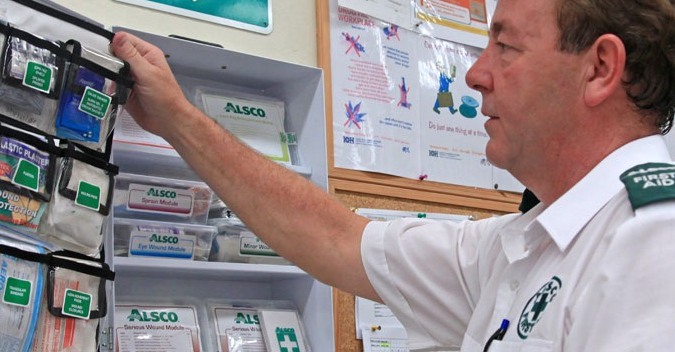
Inspect the First Aid Kit
Inspection of the first aid kit involves checking that all the items are available and ready to use. It also means organising the items in a way to make them accessible in times of emergencies.
Remember to check for the following:
Damaged or Contaminated Items
In an accident, your main aim is to save lives and ease discomfort. Avoiding further contamination is an important way to ensure this happens.
While inspecting your first aid kit, make sure you remove any damaged or contaminated items.
Dispose of these items and take note so you remember to restock.
Expiry Dates
Expired items in a first aid kit pose a potential threat to injured workers. Make sure you remove any expired items.
Check the expiry dates on each of the packages. This will help you organise your first aid kits and prevent the use of expired items.
Items should be made available so that the first to expire are at the front and the newest products are placed at the back of the queue.
Review Usage
Depending on your work environment, some first aid items will be used more than others.
Take note of the items that are more frequently used. Reviewing will help you plan your restocking better. It may also help you identify common hazards in your workplace.
Sanitise Your First Aid Kit
Accidents have a way of throwing everyone into confusion. In an emergency situation you have no control over who grabs the first aid supplies first.
Ensure first aid supplies are well sanitised to prevent further contamination. Follow these steps in sanitising:
- Empty all the contents of your first aid kit.
- Put on a pair of latex gloves for your protection.
- Remove all contaminated items which shouldn’t be there.
- Spray and disinfect all the items one by one.
- Once done, organise all the items and return them to their designated places.
Note: Do not forget to disinfect all the shelves and cabinets where the kit is kept.
Restock the First Aid Kit
Keeping a list of damaged, contaminated and expired items makes restocking easier.
Different workplaces also have different usage patterns. Knowing your workplace usage patterns will make it easier for you to know what to replenish.
Consider a managed first aid kit from Alsco New Zealand. Instead of restocking the kits yourself, Alsco will replace the expired, used and contaminated items in your kit, all for one yearly fee.
Are You Ready to Make Your Workplace Safer?
This article is a resource to get you started creating a safer workspace.
As you have already learnt, there is a lot that goes into creating a safe, first aid compliant workplace.
Alsco New Zealand has a wealth of experience on first aid at the workplace. They have you covered with top range first kits as well as other first aid solutions for 2020.
Do not hesitate, get in touch and discover their cost-effective first aid solutions for all your safety needs.
You can have a peace of mind with Alsco’s managed first aid kit rental service. The fully managed service provides legislation compliant products throughout the year.
Why Choose Alsco?
- Managed first aid kit: Services tailored to meet all your needs.
- Hospital-grade supplies: High-quality, long-lasting first aid supplies.
- Colour coded modules: Well-labelled supplies which save time in an emergency.
- Fast and reliable service: Regular restocking and servicing for your first aid kits.
Make your workplace first aid ready today.
The 3 Top Options for Office First Aid Kits
Health and safety practices in the workplace inspire productivity. Employee commitment to your mission and goals improves if they feel safe.
While evaluating health and safety practices, you need to think of:
- A risk management strategy.
- Workplace safety and first aid training.
- Safety equipment in the workplace.
- Accident and emergency response equipment.
Accidents will happen at some point, your role is to:
- Minimise the frequency of accidents.
- Respond fast and with the right equipment.
- Prepare your employees with the right skills to help manage accidents.
In your emergency preparedness, you must adhere to safety laws and regulations. In New Zealand, every business must adhere to the Health and Safety Act 2015.
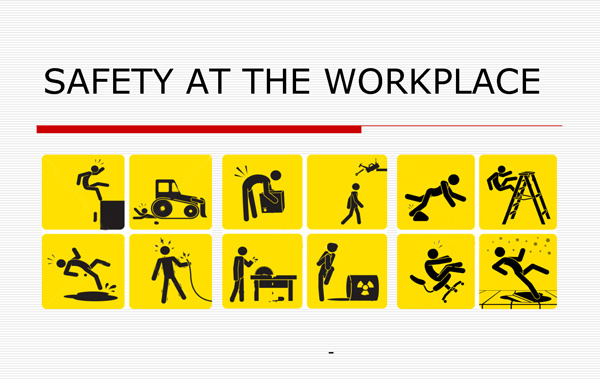
Safety Responsibilities for Businesses in New Zealand
According to the Health and Safety Act 2015, your business should:
1. Reduce the Risk of Injury
Take responsibility for the health and safety of all your workers. This includes mitigating risk and providing employees with safety equipment.
You can do this by:
- Providing safety equipment specific to your industry.
- Enforcing health and safety policies. You should hold all employees accountable for their safety.
- Encouraging communal responsibility. Employees must understand how their actions affect the safety of others.
2. Offer Safety Training
Safety training comes in 2 packages:
a) Industry-Specific Safety Training
This is a mandatory training in most workplaces.
During the training, you will refer to a safety manual and other regulatory training.
You should offer the training while onboarding employees. Thereafter, offer refresher courses several times a year.
b) First Aid Training
This is optional, yet crucial training.
Since you cannot avoid accidents, first aid training can help you save lives.
Training your employees equips them with the skills they need to save a life or reduce suffering during an accident.
Employees can work with more confidence as they know they’ll receive first aid treatment if necessary.
3. Equip Your Office
A well equipped first aid kit completes the safety tri-factor for businesses.
The first aid kit you choose will depend on factors such as:
- The number of people in your office.
- The common types of accidents for your industry.
- Industry-specific safety standards.
As a business, you can choose from a wide variety of industrial first aid kit solutions.
Types of First Aid Kits
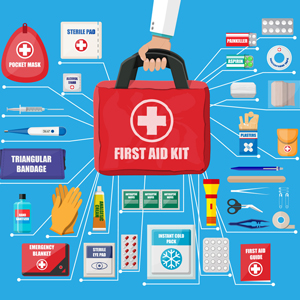
Regulatory and logistical factors will affect the type of first aid kit you choose.
With an industry leader like Alsco NZ supplying your kit, you can choose from a wide variety of kits.
Some common options include:
1. Managed First Aid Kits
With a managed first aid kit, you contract an external supplier to install and service your first aid kit.
With this package you get:
- Basic first aid supplies.
- Industry-specific emergency and accident supplies.
- Regular kit servicing.
Once you choose a managed first aid kit, you will work with a supplier to assess your needs. The supplier will then prepare a quote with a subscription fee. The frequency of the subscription will depend on your supplier.
Most serviced kit contracts run for a year. In this time, the supplier will service and refill the kits regularly.
Who Needs a Managed First Aid Kit?
Managed first aid kit solutions work well for teams with 4 or more people. You should consider signing up for one if you are a:
- Medium-large office.
- Public sporting facility.
- Retail facility.
- Business such as a restaurant that is prone to accidents.
Managed first aid kits help you respond to multiple accidents or emergencies.
With the kit, you will always have enough supplies to serve as many people as necessary.
What to Ask for In a Managed First Aid Kit
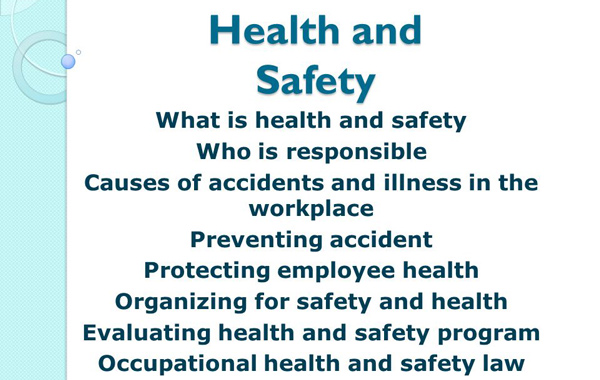
In your request for a managed first aid kit, you need to make sure you meet all safety and health regulations.
Before getting your first aid kit, ask for a first aid needs assessment. In the assessment, you should ask questions such as:
a) What are the Potential Workplace Hazards?
Each workplace presents a different set of hazards. The hazards can be physical (falling from a ladder), chemical (acid burns) or environmental (sunburns).
Poor handling of machinery or change of equipment also presents a safety risk.
Identifying and anticipating these hazards will help you select the right supplies.
b) How Many People are in the Workplace?
The number of people in your office will influence the type of supplies in your first aid kit.
You need to think about:
- The number of people on location at any given time.
- How many people have basic and/or comprehensive first aid skills.
- The nature of work different people do and related risks.
- The spread of people around the workplace. Do you have more people at certain locations than others?
- The number of visitors (suppliers or customers) you receive and the places they visit.
You can answer these questions by consulting your employees and mid-level managers. They are in a better position to inform your decision-making process.
They can tell you when numbers change, for example, when you have an increase in temporary employees coming in.
With these numbers, you can have a valuable conversation with your kit supplier.
c) Do You Have Teams From Different Employers?
If you manage a shared workspace, you might have teams from different employers on-site.
Instead of having every employer install a first aid kit, encourage them to work together. Several teams can share the same first aid resources.
The managed first aid kit will cater to their different needs and help everyone save money.
d) How Does the Layout and Size of the Workplace Affect First Aid Needs?
With a managed first aid kit, you will have several first aid stations in your workspace.
Understanding the layout and functionality will help determine:
- How many first aid kits to install.
- The placement of each first aid kit.
- Accessibility to all kits. If you need to lock some spaces at night or over the weekend, will it affect access to first aid kits?
- The workplace communication system and how it can help speed up the first aid response.
e) How Close Is the Nearest Medical Facility?
If you work far away from medical facilities, you will need more provisions.
While selecting your supplies, you need to consider your proximity to medical services. Look out for hospitals, emergency response centres or ambulance services.
Even then, make sure you consider the operating hours at these facilities. Do they run a 24/7 service or do they close in the evenings or weekends?
e) Does the Workplace Provide In-House Health Services?
If you have an in-house medical team, consult them before signing up for a managed first aid kit.
They will offer a more professional perspective. They interact with workplace emergencies and accidents more often and can advise you accordingly.
Consulting them will help you avoid wastage and save money.
2. Vehicle and Portable First Aid Kits
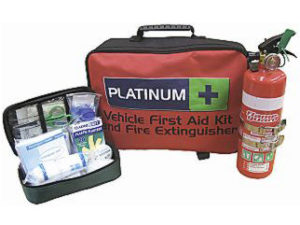
Vehicle and portable first aid kits are similar to managed first aid kits. The major difference is the size and mobility of the kits.
They come with the same supplies as managed kits but in smaller quantities.
Who Needs a Vehicle and Portable First Aid Kit?
You should ask for vehicle and portable first aid kits if you:
a) Manage a Fleet
If you have several vehicles, each vehicle should have a first aid kit.
Instead of the standard kit, customise it to your industry. You can add supplies such as hand sanitisers for garbage handlers or eyewash kits for chemical transporters.
b) Work On-Location
If you set up a work station away from the office, always bring a portable first aid kit.
The number or size of the kit will vary depending on the number of people you have on location.
3. First Aid Kit Add Ons for the Workplace
Managed and portable kits will often have everything you need for emergencies & accidents.
Nonetheless, you can improve your response by adding:
a) Eyewash Stations
Eyewash stations work best if you handle chemicals, such as in a lab, school or a kitchen.
An eyewash station is easy to install and use. It can make a difference between a temporary accident and permanent eye damage.
b) Portable Defibrillators
Portable defibrillators help you respond to cardiac emergencies.
You can use them to restart a heart or reset the rhythm of a heart. Quick cardiac response saves lives.
Who Should You Contact for Your First Aid Supplies?
While looking for a managed kit and other first aid services, you can trust Alsco NZ. All their first aid kits include:
- A single annual fee for all your supplies, including industry-specific customisation.
- Quarterly refills and equipment maintenance on all your kits.
- Easy to use equipment.
Take your workplace safety to the next level with Alsco NZ. You can contact them today and request for a managed first aid kit.
How to Maintain a Workplace First Aid Kit
Picture these two scenarios at the workplace:
Scenario 1: An accident happens, you know where the first aid kit is. You grab it and are ready to help.
Scenario 2: An accident happens, you do not know if there is a first aid kit on site. After making rounds in the office, you find one. It is missing some essential items.
What situation would you rather be in? Well, neither. Nobody wants to deal with a workplace accident.
Yet, workplace accidents are a common occurrence. They happen not only in industrial sites but also in normal office environments.
Injury claim statistics show an increase in accidents in the workplace.
Business owners can enhance safety by providing first aid kits for the workplace. In case of an accident, a basic first aid kit can make the difference between life and death.
You never know what kind of accidents will come your way. Having a fully stocked first aid kit will help keep you and your team safe.
The kind of first aid kit you choose varies depending on your workplace environment. But, there are various items a basic first aid kit should not miss. These include:
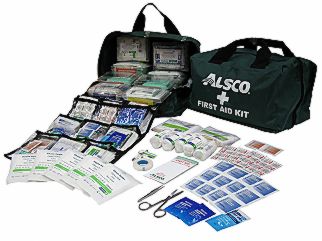
- Dressings: Apply them on the wound to protect injured areas.
- Crepe and roller bandages: These offer light support for sprains and strains.
- Triangular bandages: These can act as slings, towels or tourniquets.
- Sterile Gauze: This is used in the absorption of blood and can be used as a bandage.
- Hypoallergenic tape: Allergen-free adhesion.
- Scissors: Use them for cutting bandages, clothing, etc.
- Safety pins: Use these to hold a bandage or sling in place.
- Disposable gloves: Use the gloves to avoid cross-contamination between the one providing first aid and the patient.
- Eye pads and shield: This cushions and protects the eye from infection.
- Resuscitation mask: Protects the person performing CPR from bodily fluid.
- Saline water: Used to clean wounds.
- Eyewash solution: Rinses the eyes in case of injury.
- Antiseptic solution: Used to clean wounds.
- Torchlight: Provides light in case of a power outage.
- First aid manual: This will help people who may not know how to use the supplies.
First aid kits should be located in a central location where they can be reached by all your employees.
Hire a first aid team who can be available on-site during working hours. Also, offer your employees first aid training. You need to have a team in place who can deal with an emergency situation before the medics arrive.
Maintenance of Your First Aid Kit.
You may have a first aid kit in place, yet there’s one important aspect you must consider.
First aid kits need proper maintenance so that they are ready for use in case of an accident.
Organise the items in your first aid kit to ensure you are not fumbling in panic when an accident happens.
Health and Safety Employment Regulations ask employers to provide first aid facilities. First aid supplies must be:
- Available in sufficient numbers
- Suitable for the intended purpose
- Maintained in good order and condition
- Conveniently placed and accessible to all
Where possible, a room should be set aside for the storage of first aid supplies and equipment. This should be within the main building and it should be accessible to all your employees.
First Aid Kit Maintenance Steps
1. Inspect the First Aid Kit
Oftentimes first aid kits are placed in a shelf or cabinet; a safe space where everyone can reach them.
Some of the items can be removed for usage in case of an accident. In some instances, your employees may forget to put the items back in place.
When inspecting your first aid kits, go back to the storage spaces and check for all first aid kit supplies. Organise them and take stock of any opened or used items. Unused items should be returned to their proper places. This makes it easier to trace them when you need them next time.
When inspecting, also check for the following:
a. Expiry Dates
As you arrange the first aid kits, take a peek at the expiry. Check the expiry dates on each of the items in your first aid kits. Get rid of all expired items and replace them with new ones.
While you reassemble the kits, place the older items in front so they are used first.
b. Damaged or Contaminated Items
Damaged or contaminated items in first aid kits should be disposed of. Any discoloured items or those with torn packaging should be removed.
Note: Most items in first aid kits are single-use items. Once used they should be well disposed of.
c. Review Usage
It is important to take note of the most used items to ensure that they are always replenished in time.
2. Sanitise Your First Aid Kit
In case of an accident, you have no control over who handles the first aid supplies first. It could be one of the injured persons who reaches the kit first, meaning they could cover the kit in blood.
To avoid contamination, always sanitise your first aid kit supplies.
To sanitise your first aid kit:
- Wear protective gloves made of vinyl or latex.
- Clean each shelf at a time.
- Spray and wipe down empty kits with quality disinfectant.
- Sanitise all the items one at a time.
- Return them to their designated kits.
Different surfaces can harbour various germs. Do not forget to disinfect the shelf or cabinet surfaces such as the doors, handles and ledges.
3. Restock the First Aid Kit
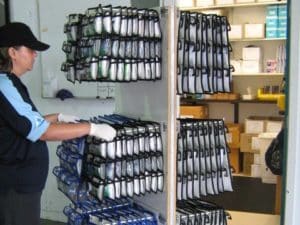
First aid supplies need to be replenished to avoid any shortages in times of need.
Keep tabs on the contaminated or expired supplies and replace them with new ones.
Most importantly, keep track of your workplace usage patterns. What items does your workplace use the most? If it is bandage strips, be sure to order more of those. It is better to have too many rather than too few.
Maintaining your workplace first aid kit is time-consuming. Yet, this is a rewarding undertaking every business must consider.
If you are already feeling overwhelmed, do not hesitate to reach out to Alsco today.
We offer first aid kits that are:
- High quality: Each kit is packed with high-grade functional materials.
- Easy to use: They have a colour-coded system to allow you to work efficiently.
- Restocked: Our rental service guarantees quarterly restocking with quality supplies.
- Of a wide variety: We offer a wide array of kits for different needs and industries.
Our team will help you conduct a needs assessment based on your workplace. We also offer a fully managed first aid kit rental service that is cost-effective and legislation compliant.


