Trusted by 237K+ Business Worldwide. Find a Location
Trusted by 237,000+businesses worldwide across 250 locations delivering uniforms, linens and more. Find a Location Near You


Delivering Excellence Since 1910
Contact Us
5 Proven Factors That Make a Workplace AED Necessary
 Every hour and a half, a person in New Zealand dies from heart disease. This figure is a result of a research conducted by Ministry of Health in 2015, published by the Heart Foundation.
The same study shows that cardiovascular diseases cause 30% of all deaths in New Zealand, making them the leading cause of death. Cardiovascular diseases include angina, diseases affecting blood vessels and heart attacks.
However, despite the efforts to reduce these worrying numbers, a heart attack is still a serious issue that needs to be addressed by individuals and society in general.
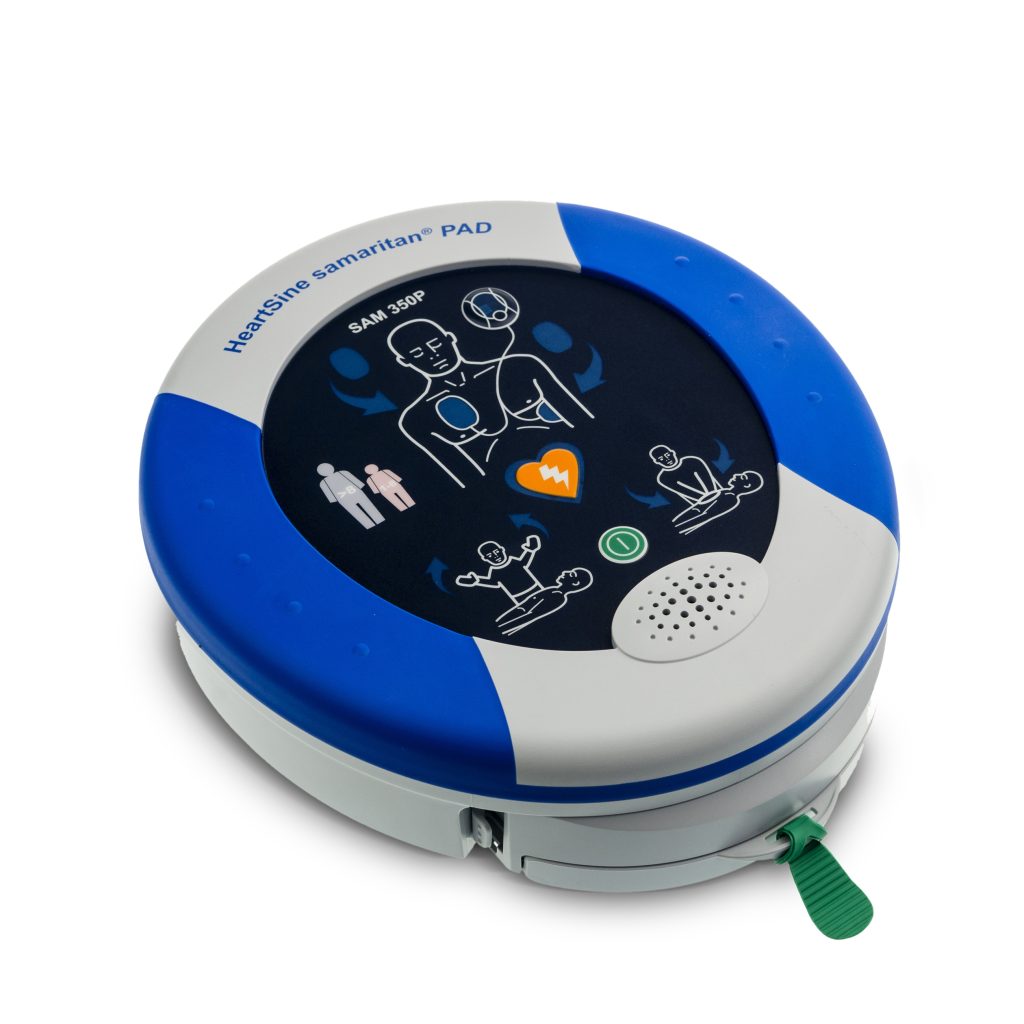
When an episode occurs, time for reaction is limited and it can happen to anybody, anywhere, anytime – including workplaces. Therefore renting an workplace AED from Alsco Uniforms can save lives of your employees.
The question is – why is the risk of a sudden cardiac arrest so high? Here are the five most important factors that cause it. These are the factors that, consequently, make workplace AED an important part of your workplace inventory and your First Aid efforts.
1. Work-Related Stress
Every person has different triggers for stress, so it is hard to make a uniform list. Stress is a natural reaction of our body to dangerous situations.
Needless to say, your body is pulling out all of its resources so you can defend yourself or survive that situation. If you force your body to act that way during prolonged periods of time, you will soon feel the negative effects on your health.
Work-related stress happens when you have serious issues with your work. The most common causes of this type of stress are:
- Inadequate management and leadership – improper management style that frustrates employees increases the stress levels. The same goes for management is not family-friendly.
- The nature of the job – if an employee is required to perform tasks that are well above their abilities or more tasks at the same time, it will make them feel frustrated and inadequate.
- Lack of workplace safety – jobs that involve high risks from injuries also involve higher stress levels.
Stress causes chest pains and increased heart rate. It also causes increased blood pressure, different heart diseases and significantly raises the risks of a sudden heart attack.
2. Dietary Limitations of Workplace Lunches
Working long hours usually means that people do not have a lot of choices when it comes to their lunch. In most cases, they want to grab something quick and easy in order to get back to work and go through the day. This leads to some worrying eating habits that increase the possibility of heart disease.
- Deep-fried or oil-fried meals
- Increased sugar, fat and sodium consumption
- Sugar packed drinks and snacks
- Binge eating instead of smaller portions throughout the day
3. Side Effects of Sleep Deprivation
People who work too much often report that they get too tired to sleep. Moreover, a lot of employees take their work home or long hours cause them to lose sleep in order to catch up on time with their family and friends.
However, sleeping less than 7-8 hours a night greatly influences heart health. Glucose metabolism, hormonal balance and blood pressure are influenced by the lack of sleep.
According to some studies, people who had 6 or fewer hours of sleep every night are 66% more likely to have increased blood pressure which, consequently, increases risks of a cardiac arrest.
4. Downsides of Shift Work
Having enough sleep is not all that counts. The equally important factor is – when that sleep occurs. People have a circadian rhythm pattern that influences when we sleep, eat and work. It is tied with hormonal balance throughout a day.
Therefore, shift work can interrupt this cycle and that has many consequences on a person’s life. While it causes fatigue, it can also cause depression, anxiety, and stress. All these things have tremendous negative effects on your heart.
5. Specific Workplace Factors: Tobacco and Toxins
There are many studies about the horrifying effects of smoking, active and passive, on one’s health. Especially notorious are the effects both kinds of smoking have on one’s heart.
Carbon monoxide is another gas that significantly increases risks from a sudden cardiac arrest. It is present in exhaustion gases from vehicles of all kinds. People most usually exposed are those that work in tunnels and other closed spaces where engines are running.
Carbon disulphide is another gas that should be eliminated from the employee surroundings. It is mostly present in the plants that produce viscose.
Ways to Reduce Risk of a Heart Attack
Changes in lifestyle can help fight off increased chances of a cardiac arrest. Businesses should definitely encourage their employees to make those lifestyle changes and improve their health. Also, this means that their safety in the workplace will be improved, as well.
- Offer healthy lunches at the cafeteria
- Replace sugary and fatty snacks with fruits and vegetables
- Encourage employees to take the stairs
- Introduce an exercise area or a gym in your building
- Make regular health checks obligatory
- Have trained first aiders in your office
- Have an operational workplace AED ready for use
While you can ensure that most of these things are available in your workplace, Alsco can definitely help you with that defibrillator. Ask Alsco Uniforms for a portable HeartSine Samaritan 500P for the following reasons:
- It’s light – anybody can pick it up, carry it and use it
- It’s easy to use – there are only two buttons and it is very much intuitive
- It’s durable – there is an 8-year warranty on these AEDs
- It’s automated – it sets the needed charge automatically
Usually, with this sort of service comes a hefty price tag. Not in this case. You cannot put a price on somebody’s life, and with Alsco, you don’t have to. Call your local Alsco branch and ask us about our rental fee.
Alsco representatives come, place workplace AEDs strategically and come back to check it every three months.
You pay a small rental fee that includes all these and you can stop worrying about your workplace AED once and for all. Try us now!
Eye Injuries in the Workplace: Causes and Treatments
Mere seconds of delay in treating an eye injury can make a difference between temporary and permanent damage to one’s eyes. The immediate and efficient first response to eye injuries is necessary to save someone’s vision.
To do that, you need skills, knowledge, and a fully stocked First Aid Kit.
Skills and knowledge can be acquired through training, but a First Aid Kit should be rented from Alsco. That is the most reliable way to be 100% sure that it is stocked, up to date and up to legal standards.
In some workplaces, it is more likely to obtain an eye injury than others. Still, the types of eye injuries that occur are more or less the same at all of these places.
It is more likely to get a chemical burn in a lab and a black eye in a warehouse, but a foreign object in your eye can happen anywhere.
Here are the most common types of eye injuries and what to do if something like that happens:.
Foreign Objects in the Eye
There are all sorts of things that can find their way into the unprotected eyes. Splinters, larger dust particles, and even bugs occasionally end up there. If this occurs, there are some dos and don’ts about treating this injury.
You SHOULD:
- Wash your hands before touching the injured eye
- Try to rinse the eye, preferably using the eye washing station
- Remove the contact lenses from the victim’s eyes
- Use clean and wet cotton swab if the object is in the white area of the eye, but only so that the objects stick to the swab. Never to dig the object out.
You SHOULD NEVER
- Rub the injured eye
- Try to use tweezers or similar tools to remove the object
- Try to remove metal objects from the eye. Only a doctor should do that
Scratched Cornea
This injury is usually the consequence of a foreign object being stuck in the eye. In most cases, the cornea gets scratched because a person attempts to rub the eye. The recommended actions are similar to those when the foreign object gets stuck in the eye:
- Don’t rub.
- Rinse or remove the object if possible.
- Close your eye or wear an eye patch until it heals.
Black Eye
This is a bruise that occurs when the area around the eye has been injured. A black eye does not occur instantaneously, so there are steps that can be taken to prevent it.
- Step 1 – Keep the person’s head elevated. This will prevent the blood from building up and causing swelling.
- Step 2 – Check the eye itself for possible injuries. Black eye affects the surrounding area.
- Step 3 – Apply an ice pack to the eye to reduce the swelling and bruising. These should be applied every 10 minutes. Do not use packs that contain chemicals. These can rupture and cause further damage to the eye.
- Step 4 – After several days, when the swelling calms down, use warm packs to speed up the bruise fading.
Chemical Burns
Chemical burns can be very serious and they should be prevented at all times. If you are working in an area where these types of injuries are possible, make sure that you wear eye protection at all times.
There are two major classes of chemicals that can hurt your eyes: acids and alkali. These chemicals are found in different cleaning products. They don’t have to reach your eyes directly in order to hurt you, but they can produce fumes that are harmful.
Either way, if any other liquid besides clean water reaches your eyes and causes a reaction of any kind, you should rinse the eye and seek immediate medical help.
Small Cuts to the Eye
If there is a cut in the eye area it is important to react quickly. The first thing to do is to grab the First Aid Kit and get a sterile cloth to apply pressure to the bleeding area.
Pressure should be applied gently but firmly in order to stop the bleeding. However, do not apply it directly to the eyeball.
As soon as possible, go to the doctor’s for an exam because some cuts can cause further damage to tear ducts or your vision.
Heat Burns
There is no reason to expose your unprotected eyes to the sources of great heat. It that happens, it is absolutely necessary to seek help immediately. Three things should be done one after another.
- Flushing with cool water. This should be done immediately. The eye should be under the cool,running water and the injured person should attempt to close and open the eye and move it while underwater. This should be done for half an hour.
- Applying sterile bandage. The bandage should be taken from the First Aid Kit to make sure it is sterile. Also, it should be applied carefully and without any unnecessary pressure.
- Seeking professional help. Burns can cause serious damage that is hard to repair. They can get infected and cause much bigger problems. Therefore, a doctor should check any eye injury that was caused by heat.
You can be prepared to provide proper First aid in cases of all eye injuries if you have a proper First Aid Kit. Moreover, if it contains the eyewash station, you can provide even better and safer care.
These are only a phone call away. Call 0800 4 ALSCO and ask about our rental services. Once you agree to let Alsco help you, you will get:
- First Aid Kit and eyewash station that meets legal requirements
- Regular and thorough check-up of these items
- Regular and full restocking and repairing in case this is needed
- Regular replacement after the expiry date
- Priceless advice on where to place these items and how to use them
All this is included in only ONE annual fee. There will be no additional costs and no hidden charges. Make an enquiry today and make the first step toward a safer workplace.
Defibrillator Success Saves Alsco BGM
On a cold winters evening on July 18th 2016, at the gym inside the Avantidrome Cycling Velodrome in Cambridge, Ron Kemp (me) suffered a Sudden Cardiac Arrest (SCA).
This in layman’s terms essentially means I was “dead” on the floor.
I had been exercising at the gym for around 20 minutes when the SCA occurred. Another gym occupant hit one of the fitted “panic buttons” and laid me in the recovery position. When the panic alarm sounded, the emergency procedures kicked into gear and people came running.
The Fastest Way To Save A Man’s Life
One of the people to get to me immediately was Talya Thomas, who works in the café attached to the Avantidrome Cycling complex.
Talya, who has been accepted to begin training in 2017 as a paramedic, recognised from the symptoms that this was a cardiac issue and that my heart had gone into fibrillation (not beating but electrical pulses going crazy) and was immediately able to organise CPR and get me hooked up to a defibrillator that had been brought to the scene as part of the “panic alarm” procedures.
Within a short time, Talya had administered three shocks in addition to performing CPR and my heart started back in rhythm prior to the ambulance arriving. An ambulance arrived within 12 minutes and I was transported to Waikato Hospital still in an unconscious state.
The Recovery Period
I spent the next 3 days on life support in the ICU (Intensive Care Unit) at Waikato Hospital where I was diagnosed, after an angiogram, to have major restrictions in several of my heart arteries. While in ICU I was on a ventilator, as well as all the other whiz-bang gadgets they could find to plug into me and my body temperature was kept very low to aid in recovery.
On Thursday I had recovered sufficiently to be transferred to CCU (Cardiac Care Unit) to await the procedure recommended by the Cardiologist. On Monday, 7 days after my SCA, I had 3 stents inserted into my heart arteries under a procedure called an angioplasty.
Fortunately, this is a fairly non-invasive way of fixing the immediate heart issue. 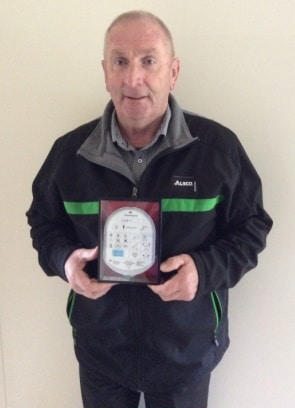
Due to other injuries sustained when I collapsed while having a sudden cardiac arrest, I remained in the hospital for 3 additional days.
Recovery has been a slow affair as I needed to take the time to understand what happened and what changes needed to be made immediately.
Slowly Going Back To Normal Life
It was around 10 days before I could speak with any confidence, probably a result of having a ventilator down my throat.
The part of the body to take the longest to recover has been the chest cavity as the CPR done correctly often cracks or breaks ribs.
It has taken around 6 weeks for my chest to heal sufficiently to be able to contemplate a return to work.
Some history regarding the Avantidrome – In 2012 when the Avantidrome was being constructed, Alsco submitted a proposal for a level of sponsorship in addition to the supply of washroom dispensers, consumables, First Aid, Civil Defence and a Defibrillator.
This sponsorship package, worth a considerable sum per annum to the Avantidrome, was agreed, and all dispensers were fitted by myself and Peter Martin (now Business Manager, Napier).
The defibrillator was installed and Alsco ran several training sessions for staff in the operation of the defibrillator, in addition to organising multiple First Aid Training for staff since 2013.
To be the first person to have needed the defibrillator at this site is kind of crazy.
The Real Deal About Sudden Cardiac Arrest
There are many stories of people surviving an SCA but the survival rate is approximately 6% of people who have a cardiac arrest outside of a hospital and approximately 24% of people who are in hospital at the time of their SCA.
It needs the right people at the right time, with a defibrillator, for this to happen. There are on average 10 SCA’s in NZ daily. In most incidents, there is no warning an SCA is about to happen. I am now on a graduated return to work plan, still aware that I have been incredibly lucky to have survived.
My story has been great for our Sales Executives as a sales tool and as you can imagine I have become an ambassador for the placement of as many defibrillators in the market as possible.
Ron Kemp, BGM, Alsco Hamilton NZ
Why Is Alsco Necessary for Your Business
Do you feel like a Jack-of-all-Trades sometimes? Every small business owner does. You start by doing what you do best and end up being an accountant, a driver, a sales representative and a marketing manager.
At times, having so many responsibilities stop you from the one thing that should be your priority – running your company.
It is important that you keep your eyes on the big picture. You shouldn’t lose time on the less important tasks that can be done by somebody else. Let the professional rental service like Alsco take care of those things for you.
Alsco will supply you with all sorts of materials and equipment that you need. Moreover, we will take care of it, replace it and restock it. In other words, you talk to an Alsco representative and you can forget about dealing with your uniforms, washroom hygiene, mats and First Aid Kits. They are our responsibility from that point on.
We at Alsco understand how challenging it is to run a business. That is why we tend to be reliable, flexible, efficient and budget-friendly. Learn how Alsco can work for you and save you time and money.
Contact ALSCO now. Our friendly staff will give you all the info you need to make your life easier and your business better.
Never Stretch Your Budget
You will spend only what you really need to spend. Also, there are no upfront fees. We care about your business and we want to make sure it runs smoothly. That means that you get your equipment and all that you need to do your work.
On top of that, you can always count on our ability to be flexible. That is right. Alsco allows you to tailor your orders according to your business flow. Using our rental service instead of buying your equipment fits into your budget perfectly.
If you buy your materials in bulk, you will get a fair price. But, that price does not include restocking, maintaining and the time spent dealing with all that equipment. What is worse, you don’t even need some of the stuff you buy. We will help you avoid trapping your money.
Let’s say you run a restaurant. You need aprons, tablecloths, headwear and many other details. You don’t need to bother buying all that stuff. Rent your well-fitting workwear from Alsco and forget all about washing, ironing and maintaining it. We do all the hard work for you.
Do you expect busy days during Christmas season? Never mind. Give us a call and we’ll boost your supply. Business is kind of slow? Say no more. We will slow down, as well and you will get the service you need. At times, you won’t have to spend more than $1 a day on our services.
Save Your Precious Time
In business, time directly converts to money. Think about the time you spend thinking about your workers’ uniform maintenance. Let alone doing the actual work of washing them and ironing them. Now add the tablecloths, towels, and napkins. Don’t you have anything better to do? Leave it to Alsco to provide you with fast and flexible service.
How about your First Aid Kit? Do you know if it is up to date? Does it comply with all the Health and Safety laws? You don’t have the time to check and missing out on details like that can cost you a lot of money in fines.
Stop worrying about it and rent it from Alsco. We will restock it, check up on it and upgrade it so that it always complies with all the necessary laws and regulations.
Get Exceptional Service
Alsco is a business with a long tradition. This means that we understand all the challenges that you are facing first hand. That is why we do our best to provide the service that truly makes a difference to our clients.
There are several aspects of our service that you should take into consideration
- Our materials and equipment are always top-quality
- Our customer service staff goes the extra mile to meet your needs
- We offer a two-week trial period on our rental services
On top of all that, Alsco offers First Aid training for your employees. If the person trained leaves your company, we will gladly train their replacement free of charge.
Using Alsco rental service is a necessity rather than a luxury. It saves time and money and takes a lot of responsibilities off your shoulders. In addition, it is budget-friendly and flexible.
We always take the specifics of your business into consideration when providing you with our services. Get your best price quote from your local Alsco branch and start saving money while letting us do all the work.
Photo: Sigre
What Every Business Owner Needs to Know About First Aid Compliance
Did you know that you are twice more likely to get hurt doing a job in New Zealand than doing the same one in Australia?
Facts and figures gathered by the WorkSafe New Zealand show that health and safety records in New Zealand are two times worse than those in Australia.
Naturally, New Zealand is doing something about it and a new Health and Safety at Work Act were made in 2015. It is a good and honest attempt to make workplaces safer. In order for it to work, everybody needs to do their part.
One of the many things a business needs to do is to become First Aid compliant. Accidents happen from time to time, whatever you do to prevent them. Still, both prevention and being prepared for them makes all the difference between a safe and unsafe workplace.
Additionally, you risk a big fine for not being First Aid compliant. Therefore, here are some key points that every business needs to know about First Aid.
Three Things to Think About: First Aid Requirement Categories
There are three main factors you need to think about when you are trying to make your business First Aid compliant. Your workplace needs to have:
- First Aid Kits and facilities
- Trained first aiders (not all businesses need this)
- Properly displayed and distributed information about first-aid arrangements for your employees
A number of necessary First Aid kits, facilities, trained first aiders and additional arrangements depend on many factors. Type of your business and number of employees are the most important ones.
The First Step: Assessing Your Workplace
In order to make your workplace safe, you need to conduct a proper assessment. To do that, you need to read and understand the Workplace First Aid Needs Assessment Checklist.
This checklist consists of questions about factors that influence safety at your workplace. This includes:
- Likelihood of getting hurt or ill at your workplace
- Workplace specific hazards
- Number of workers
- Workers with disabilities or special needs
- Shifts, overtime and work hours
- Type of building
- The proximity of emergency services
Your assessment will help you determine the number and position of your Kits, their inventory, as well as the number of trained first aiders.
Number of First Aid Kits and Their Positions
Every workplace and every company vehicle need at least one First Aid Kit. You need one Kit for every 50 employees. Also, if you have a multi-level workplace, every floor needs its own Kit.
Place your First Aid Kits near hazardous areas at your workplace. Also, if you can, place it near a washbasin with hot and cold running water.
Remember that a wall-mounted First Aid Kit needs to be light enough to be carried by a single person. First Aid Kits need to be easily visible and properly marked.
Things You Must Have in a First Aid Kit
Your workplace Kit will be different than the one that you use for your vehicles. Also, when you assemble your Kit, take into account the specifics of your workplace and the hazards that are more likely to occur than others.
First Aid for Workplaces – A Good Practice Guide from 2011 suggests the following minimum of every First Aid Kit at a workplace:
- The First Aid Manual
- Saline solution or wet wipes
- 20 adhesive dressings in different sizes
- 2 eye pads
- 2 triangular bandages
- Safety pins or clasps
- 6 wound dressings, approximately 12 cm x 12 cm
- 2 wound dressings, approximately 18 cm x 18 cm
- 2 pairs of disposable gloves
- One resuscitation mask
Keep in mind that all wipes, pads, bandages and dressings need to be sterile and individually wrapped. In addition, dressings need to be unmedicated. This is just a suggestion and you should add the items according to your Assessment.
If you operate a high-risk business and you have over 100 employees, or if there are no emergency facilities nearby, consider setting up a First Aid Room.
Your Workplace First Aiders: Training and Certificates
Only certified organisations can offer First Aid training that is recognised by the HSWA.
Once obtained, the certificate is valid for two years. After those two years, the first aider should take a refresher course.
However, if the certificate has expired and the certificate holder has not attended the refresher course within 3 months, they need to take the entire course again.
Proper Way of Informing Employees About First Aid Arrangements
Informing your employees about the First Aid arrangements is just as important as having those arrangements. You need to know what to tell them and when to do it.
What to tell:
- Number and location of all First Aid Kits
- Number and location of all First Aiders
- Procedures to follow in case of emergency
- Location of the First Aid Room, if available
When to do it:
- When they first get the job or change jobs within the company
- When something important changes about First Aid
- When they once a year, just to remind them
Shortcut to Your First Aid Compliance
All this is can be quite overwhelming for a business owner. You should read through everything that NSWA recommends, but you should also consult somebody that makes First Aid their business. Alsco is the ace up your sleeve when it comes to First Aid compliance.
You get to rent managed First Aid Kits that are absolutely compliant with current laws. Alsco maintains them, restocks them, takes care of them and checks upon them.
All that – only one fee.
Call 0800 4 ALSCO and enquire about the First Aid rental service.
Pros and Cons of Workplace Uniforms
Military and the police take pride in their uniforms. For their occupations, wearing a uniform is not a matter of choice, but a part of their job.
Miners, health workers, and industrial workers cannot imagine their day without their uniforms. For some, it is there for protection, while for others – it is a symbol of the work they do. Either way, uniforms are important.
Other businesses follow their lead these days, preferring the reliable uniform rental service from Alsco. Different hotels, restaurants, and similar establishments are among those that opt to introduce this practice.
You can be a judge of whether it pays off or not to have them after you read the pros and cons of uniforms at the workplace.
Workplace Uniforms: Pros
- When staff wear uniforms, it makes the business look more professional. Waiters, chefs, and other staff in the catering business resemble a team or an army in their uniforms. They look classy and professional in good catering uniforms.
- Having your uniform over clothes prevents your clothing from wear and tear. All sorts of stains end up on uniforms during work hours. After work, your employees simply leave them for Alsco workers to take care of them and go home in their clean wardrobe.
- Properly designed uniforms can play an important role in safety in the workplace. They can be made of special kinds of materials, and have reinforcements on certain parts or special markings or symbols on them.
- Uniforms boost the team spirit within a company. Just like all the players in a team identify with it by wearing the same jerseys, your employees will have a stronger sense of belonging to your company.
- Employees who wear uniforms are walking advertisements. Your logo, colours or even the slogan of your company can find their place on your uniforms. Wherever your employees go, it all goes with them.
- Uniforms make everybody equal. Some people like to dress up, while others do not have the time or the money to do it. Once employees are all in the same uniforms, those gaps become invisible, and everybody is the same.
- When a person puts on a uniform, it changes their set of mind. Uniform means that the leisure time is over and the work begins. People who wear uniforms are more productive.
- The staff that wears uniforms is easily recognised by the customers. When a customer needs to be serviced or has a question, they do not want to wait. If they have to wait, they will give up. So, contact with a member of staff needs to be made quickly. If staff members wear uniforms, customers will easily find them and ask for help.
- Pools and studies showed that customers feel that they are getting better service when serviced by people in uniform. Also, they tend to trust staff wearing uniforms more.
Workplace Uniforms: Cons
While all this sounds great, there are also some downsides to wearing uniforms. Here are some of them:
- Uniforms suppress the individuality of the employees. They make everybody look the same, so the personal style of the employees is affected.
- Sometimes, uniforms can be uncomfortable. Also, they do not look good on everybody.
- Unfortunately, uniforms are not free. They cost money and that needs to be paid by an employer or the employee.
- Uniform maintenance is always annoying.
Easy Fixes for Uniform Downsides
Still, the reasons for having uniforms at work greatly outnumber the reasons for not having them. Moreover, all four reasons for uniforms are easily fixed.
- Personal style can be expressed through accessories or ways the uniform is worn.
- Uncomfortable uniforms can be altered and staff can be included in the process of choosing the uniforms. Learn how to determine the right size of your workwear for maximum comfort and you won’t face this problem again.
- Firstly, the money spent on uniforms comes back through advertisement. Moreover, renting uniforms from Alsco means that the cost can be managed.
- If you use Alsco’s managed garment system you do not worry about maintenance anymore. You get your uniforms washed, ironed, folded and delivered in time. It is all included in the price of your rental.
The Best Way to Deal With Uniforms
Obviously, uniforms are a good idea and the downsides are fixable. Your first concern is the choice of uniforms. That is something that a designer and members of your staff can help you with.
Another thing that can worry you is the maintenance. With a certain number of washings, uniforms will wear out. Not if you rent them. Alsco always brings you freshly washed and ironed uniforms in perfect condition.
The last, but not the least is the price. Again – not a real problem. Renting is better than buying. For as low as $1 a day, you can forget about your worries when it comes to uniforms.
Let’s say you buy a uniform and your employee gets replaced with another person who does not fit into the same size. Do you buy a new uniform? No. You simply contact Alsco and enjoy the amazing flexibility of their service.
Call 0800 4 ALSCO today. People from the nearest Alsco local branch will answer all your questions and help you deal with your uniform issues.
4 Ways Cloth Towels are Better Than Hand Dryers
Did you know that drying your hands properly is just as important as washing them well? If you leave your hands all wet or moist, all sort of dirt and bacteria will stick to them.
At your own home, this is not a problem. You have your fresh and clean towels and not many people use your bathroom. But, what happens when you need to wash and dry your hands in public?
Public washrooms have several options for drying your hands. They include hand dryers, paper towels, and cloth towel dispensers. Alsco can offer different hand drying options for your washroom.
Still, you might want to take a closer look at Alsco’s cloth towel dispensers, because they are better than all the other options for many reasons. Here are the 4 main reasons why this is better than hand dryers.
Hand Dryers Spread Harmful Microbes
It is better to dry your hands with a hand dryer than to leave them wet, that is for sure. But, if there is an option to use cloth, rather than a jet of air, you should do that.
Scientists from the University of Westminster conducted an experiment, comparing different hand drying methods.
They concluded that hand dryers increase the number of bacteria on hands. Moreover, they can spread the bacteria, by blowing them around the washroom. This increases the chances of contamination.
On the other hand, cloth towel dispenser isolates the microbes by retracting the used portions of the towel to a separate chamber. You never touch them after they have been used.
Fresh portions of the towel are kept in another chamber and they are sterilised. This means that there are no microbes waiting for you on your towel.
Cloth Towels Are Environmentally Friendly
It can be argued that hand dryers are a more eco-friendly option than paper towels. However, cloth towels are definitely the greenest option.
Cloth towels do not need electricity. Also, they can be washed, sterilised and reused. Even when they cannot be used as towels anymore, that cloth can be recycled or even reused for other purposes.
Cloth Towels Do a Better Job
Have you ever dried your hands completely using a hand dryer? Nobody has. Hand dryer always leaves a little bit of water between your fingers.
Don’t you hate the line that forms behind you while you are drying your hands?
On the other hand, using a cloth towel dispenser is fast and efficient. Clean and sterilised towel reaches to all the folds and wet spots on your hands and dries them quickly.
Cloth Towels are Easier to Use
Truth be told, hand dryers can be a bit loud. They usually work using sensors that trigger the jets of air when needed.
However, the jets of air stop if you move your hands away from the sensors. It is quite a chore to dry your hands while trying to keep the air jets working. This leaves you with a part of your hands dry while the other parts are still wet.
When it comes to cloth towels, everybody knows how to use them. Drying your hands with a cloth towel is something a two-year-old can do anytime, anyplace.
This particularly makes sense in the environments where children spend most of their time – schools. School washrooms must be perfectly safe and promote health according to all the New Zealand standards.
So, if you are looking for the best way to dry your hands, a cloth towel dispenser in your workplace washroom is the answer. Don’t worry about replacing or washing your towel. Once you rent the dispenser from Alsco, we do all the work.
You get the dispenser and we regularly come to replace the towel with a freshly sterilised one.
This is not expensive, either. Enquire now and get the best price for the most efficient, hygienic, easy to use and environmentally friendly way to dry your hands.
Photo Courtesy: Flickr Image by Owen Photography.
Update on the Great Work Within Alsco Charitable Donations Program
The shortest day has passed, so it is time for an update on the activities of Alsco Charitable Donations.
All the Branches and individuals did their best and made valuable contributions of stock.
The objective is to pass on as much of this surplus product to as many good homes as possible.
It is very worthwhile to help those in need and assist Alsco to reduce what is sent to landfill.
Efforts of Alsco and De La Salle College Students for MAA
So far, in 2016, Alsco has continued the association with MAA (Medical Aid Abroad). They have supported 8 developing countries already this year, including:
- many of the Pacific Islands
- Zambia
- Uganda
- East Timor
MAA has moved into a new home, called Costley House, at Greenlane Hospital. This time, they needed a little bit of help with the moving, so Alsco gladly responded. Alsco provided a truck and some volunteer labour to help in the big move.
Alsco was not the only one to assist. It was great to see about a dozen young men from De La Salle College turning up to help. Participation in the school service program is a requirement for all students at De La Salle.

The boys’ help is very valuable to the people that benefit from it. On the other hand, these young men also get a lot out of this experience. The boys gain valuable social and leadership skills which will help them in their futures and make them better citizens of New Zealand.
Committing to Help the Auckland City Mission
This year, Alsco Auckland has made a commitment to the Auckland City Mission, again.
Namely, once a month, 4 employees spend the day at the Mission Distribution Centre, putting together food parcels and sorting clothes.
Hard-working people at Alsco are always looking for opportunities to help out more. During the time spent working at the Mission, Alsco staff, including Gavin Smith, found new ways Alsco could help. Alsco acted on these and a lot of good came from it.
Alsco now provides sheets and First Aid Kits (made up using our surplus stock) for their Crisis Care Centre.
[b3_row]
[b3_column lg=”6″ md=”12″ sm=”12″ xs=”12″ ]

[/b3_column]
[b3_column lg=”6″ md=”12″ sm=”12″ xs=”12″ ]

[/b3_column]
[/b3_row]
Crisis Care provides the bare basics to set up families moving into new accommodation. Hopefully, these sheets and First Aid Kits will make them feel a bit safer and a bit more comfortable.
New Chance to Help: Auckland SPCA
Earlier this year, there was a meeting with the Auckland SPCA in order to figure out some ways Alsco can help. The first idea was to offer the First Aid products that they may be able to use. However, they already receive most of what they need from Hospitals and Medical Centres in South Auckland.
Still, SPCA needs fresh bandages for their animals. That is definitely something that Alsco can help with, since it is easy to rip the sheets into bandages.
So, all the damaged sheets now go to the SPCA. The damages include stains, rips, and holes, but they are still very much usable for the purposes of the SPCA.
New Commitment to SHINE: Sheets and First Aid Kits
Scott Bason and Gavin Smith had a very exciting meeting recently with Jane Dunn from the organisation SHINE. The aim of this organization is to provide ‘Safe Homes in NZ Everyday’ and they work closely with the Police and Hospitals.

It was staggering to hear the numbers of adult and child victims of domestic abuse that they deal with. It is great that Alsco is able to contribute to this cause in any way and help these people.
Starting this week Alsco is going to provide SHINE with sheets, pillow cases and First Aid Kits for them. This will be an ongoing relationship, similar to the City Mission Crisis Care.

The first placement was for 120 sheets and 200 First Aid Kits of various sizes. Visit SHINE website for more information. Moreover, you can learn there about different ways to help victims of domestic abuse yourself.
Other Alsco’s Charitable Donations
Other organisations that Alsco has donated to in the past few months are:
- Christian Youth Camps – this is an annual event at Poronui which Alsco has supported for the past four years.
- Hurrah Dog Rescue – a charitable trust for rescue, rehabilitation and rehoming of animals.
- Auckland Puppy Rescue – a charitable trust that rescues puppies and offers them training, socialization, health care and help.
- Bethells Beach Life Guards – an organisation of both volunteer and professional lifeguards that keep the Bethells Beach safe for the public.
- Pay it Forward – This is the second year of Alsco supporting this Foundation that helps families in need and promotes acts of kindness
Total of Donated Material
Alsco keeps track of its donated material to be able to make proper plans for improving the efforts. To everyone’s great pleasure, numbers add up fast.
Not counting the local initiatives, in the last 6 months Alsco has donated:
- 281 First Aid Kits fully stocked with surplus products from our First Aid program
- 65 Cartons full of sorted First Aid products for overseas use
- 2 Large Pallets of Sheets to MAA (1x Tonga 1 x Samoa)
- 860 Sheets for City Mission and Shine
- 100 damaged sheets to SPCA and Dog Rescues.
Keeping Up the Good Work
People at Alsco continue to look for new organisations to talk to. Unfortunately, at times, when Alsco approaches an organization, it turns out that they are unable to help.
Not because there is a lack of initiative or will from both sides, but simply because the products that Alsco has to offer do not match the needs of that organization.
However, it is amazing how many people in NZ are doing good work on a voluntary basis for the worthy causes they are passionate about.
[b3_row]
[b3_column lg=”4″ md=”12″ sm=”12″ xs=”12″ ]

[/b3_column]
[b3_column lg=”4″ md=”12″ sm=”12″ xs=”12″ ]

[/b3_column]
[b3_column lg=”4″ md=”12″ sm=”12″ xs=”12″ ]

[/b3_column]
[/b3_row]
It is very rewarding to be part of the Alsco Charitable Donations program. Helping people in need, both here in New Zealand and abroad truly fills one’s heart. That and seeing how appreciative people are for Alsco’s support are the biggest prize one can hope for.
A Special Alsco Thanks to Pat – Our Ambassador
Pat Munro is the type of person everyone looks up to. She is brimming with passion for what she does and is always looking to help those not so fortunate in the world.

Alsco is extremely fortunate she has attacked the ambassadorial role with the energy and work ethic that defined her time prior to her retirement from Alsco.
Pat is happiest when busiest. She is expected to come every Thursday morning, but her car is at ‘work’ at Fresh & Clean Auckland much more often than that.
Always with fresh baking for our team, Pat spends hours sorting and packing goods she receives from the Alsco branches for reuse and repurposing.
Pat is not alone in her efforts. It is great to see other volunteers joining. Their help is precious, especially preparing the goods for SHINE. It is a worthy cause that makes a difference, right here in New Zealand.
Better yet, these hard-working volunteers have recycled surplus ripped or stained sheets into cot sheets for the cause. This is a fantastic way of recycling our old rental products.
At the same time, people are helping a good cause and reducing the waste.
Pat acknowledges the help she gets at her base in Kingsland, specifically thanking for the assistance from Scott, Susan & Albert.
Everyone at Alsco thanks you.
It is important to thank all the branches and people who contribute to the Alsco redistribution programs. The impact of these actions is very positive for the Alsco brand, and everyone is very proud of Pat and her entire team.
Alsco remains active in local communities too. If you want to feel good about our work, check out its results. Look at the long list of causes that benefit from Alsco’s sponsorship.
If there is a new sponsorship arrangement missing here, please, contact Gavin Smith at gsmith@alsco.co.nz.
Photo Courtesy: Flickr Image by Leticia Bertin
Going Green with Greenroom
What to Expect from Greenroom Tips?
Did you know that recycling is not the only way to be eco-friendly around your office? While it is important, there are many other ways to go green.
They require a little bit of research from your side. Or, you can cut yourself some slack and let Greenroom feed you all the info you need.
Greenroom is this great blog from Alsco. It is all about making your workplace a greener, safer and healthier place.
This resource is packed with excellent and well-researched articles. It makes it a great read for anyone that owns, manages and works in an office.
Greenroom benefits workplaces all over New Zealand, boosting workplace efficiency by making people happier, safer and healthier.
Green Blog and Green Plants: More Similar Than You Think
Implementing Greenroom tips will help you reduce the number of sick days taken, improve stress relief, increase productivity, as well as air quality.
Do these sound familiar? They should because these are also the benefits that you get from having potted plants around your office. Many New Zealand office workers and corporates make the most of these benefits already.
Does this plant the idea in your mind about getting more foliage for your office? If you are not entirely persuaded, here are some good Greenroom tips.
Lush Office Plants Reduce Absenteeism
People take less sick days in offices that have plants. This is because plants improve air quality, reduce the levels of toxins and moulds, and even have beneficial psychological effects on the office goers.
The sick building syndrome can be the cause of many days off around an office. Foliage reduces these effects and soothes the symptoms.
All this adds up to decreased cases of sick leaves and absenteeism.
Foliage Filters Toxins from the Office Air
Plants ‘breathe’ by filtering the air. They take the carbon dioxide from the air, process it and release oxygen. This reduces the levels of carbon dioxide from your indoor space.
It’s beneficial for your workplace because high levels of CO2 affect decision-making processes. It even makes simple tasks difficult for those that have been exposed.
Besides CO2, plants will get rid of different bacteria and harmful chemicals from paints, carpets and other parts of your workplace.
Plants Make the Office Cooler
Can you do your best work in a hot office that makes you sweat? Even if you can, it is much easier to work in a pleasantly cool environment.
While the excessive use of your AC is not eco-friendly, having a couple of plants around definitely is.
By transpiring, plants reduce the temperature around them and increase the levels of humidity. Workplace temperature can drop by ten degrees if there is enough greenery around. People enjoy the 30-60% of air humidity.
Those are precisely the levels that a couple of plants can maintain.
Office Pots Drastically Improve Wellbeing
Plants can help you fight depression, anxiety, and stress.
First of all, workplaces that have plants in them are more beautiful. In that sort of environment, it is much easier to relax and deal with stressful situations.
Some of the plants that work wonders around the office include:
- Rubber Plant
- Philodendron
- Aloe Plant
- Greenery Boosts Performance
Greener offices help people be more productive and boost their performance. A case study from Washington State University showed that people are 12% more successful in performing stressful tasks when plants are in the room.
Leafy Plants Reduce Noise Levels
There are many sources of noise in an office. Printers and phones, machine buzzes and different conversations are just some of the things that you hear all the time.
Noise can seriously elevate your stress levels and reduce your ability to perform at work.
However, some thick and lush foliage reduce the noise. If that is what you need, choose one of these:
- Bamboo Palm
- Peace Lily
- Lady Palm
Go Green Today
Is there one good reason why you shouldn’t put some attractive pot plants in your office? No.
Start improving your workplace today. Well-chosen plants do not have to be expensive, they can be easy to maintain and they are a great investment.
This is just one of the many ways you can join many businesses in New Zealand in creating a greener, healthier and safer workplace.
Check out our sustainability stories for more ideas to go green. We are regularly publishing high-quality articles with practical tips that you can easily use in your office space.
The Slips and Trips: Evaluating Safety in Your Workplace
Slips and trips often garner a few good laughs. As such these trivial accidents are often overlooked in the workplace.
It is, however, important to note that these minor acts of clumsiness can attribute to injury. The bigger question is, was it about clumsiness or is your workplace safe?
It is inevitable for miners to always be on alert as they are most susceptible to trips and slips. Part of their work requires them to stand for long hours.
Different safety mats are in place to make sure that they are covered for any possible circumstance.
Request a quote today and get a Welcome Mat Trial*. Absolutely free!
An Overview of Work-related Injuries
A study conducted on work-related injuries shows a significant correlation between male and female victims. Women (17%) are more susceptible than men (11%) to encounter slips and trips. This translates to 39,000 men and 48,000 women suffering from a related injury over a year.
Slips and trips are the second leading cause of workplace injuries. These accidents frequently result in severe injuries requiring extensive and expensive recovery and lost time. From an excruciating sprained ankle to a disastrous fall from a stairwell, Slips and trips need to be taken seriously.
It is important to define these terms in order to better understand the dilemma:
Fall – Can be generally caused by a person’s sudden loss of balance. It does not always have to be due to the work environment.
Slip – A slip can be caused by factors such as a wet or frozen surface, or items that are not secured to trays, a sheet of paper, among others.
Trip – Commonly happens due to overlooked objects lying on the ground. Cables easily catch a person’s foot if left unattended. An uneven edge on the flooring like a dog-eared mat corner or loose tile can certainly spell misfortune.
These injuries albeit minor have to be a focal point of every business’ safety measure. Treatment can be administered with a handy first aid kit. From bruising to sprains and strains – these injuries, however minor, can result in absenteeism.
The Role of the PCBU
A Person Conducting a Business or Undertaking (PCBU) has a very important role. PCBUs must oversee the health and safety risks concomitant to slips and trips. He is designated to minimize if not eliminate these risks in a reasonably practicable manner.
Among a PCBUs duty is to make systematic methodology to the following:
- Identifying hazards
- Making a proactive assessment of risks associated with these hazards
- Managing risk control measures
- Reviewing the implementation and preparation of the risk control measures
How to Efficiently Reduce Slips and Trips in the Workplace
There is a detailed guide to effectively minimize incidents of slips and trips. Here is a link to The Slips And Trips Fact Sheet [1.3MB]
Listed here are the proper way of addressing and managing slips and trips in the workplace. Take note that this list is arranged according to its effectivity level.
| Hierarchy of control | Examples |
| Eliminate the hazard | Take control of your work area from the design state. Carefully plan changes in floor levels and organize necessary recesses. Avoid trailing cords by installing more power outlets in strategic locations. |
| Substitution | Design floors with a more slip-resistant surface. |
| Isolation | Cordon off access to high-risk areas. Make sure the necessary signs and measures are observed when cleaning or other activities are ongoing. |
| Engineering controls (redesign) | Make your floors more slip-resistant by applying appropriate treatments. Illuminate your work area, do not compromise safety over aesthetics. Plan your drainage system well to suffice your business’ requirements. Elevated floors need well designed visual markings. |
| Administrative controls | Intensify training and supervision measures. Devise a systematic housekeeping system. See to it that there is a checklist of the routinary cleaning procedures. Spills should be addressed immediately. |
| Personal protective equipment | Safeguard your staff with slip-resistant footwear. |
Slip Hazards are commonly present when the following occurs:
- Spills of liquid or solid material
- Wet cleaning methods
- Wind-driven rain or snow through doorways
- A sudden change in floor surface like joints
- Between carpet and polished timber
- Change from wet to dry surface
- Dusty and sandy surfaces
- The incline of a ramp
- Loose or bumpy flooring
- Low light levels
- Use of unsuitable footwear
Trip hazards can be avoided by keeping the following in check:
- Ridges in floors or carpets
- Worn floor coverings or broken tiles
- Potholes and cracks in floors
- Changes in floor level
- Thresholds and door stops
- Floor sockets and phone jacks
- Cables from power extension units
- Loads that obstruct vision
- Obstacles in traffic areas
Controlling the Risks of Slipping
Main floor treatments include sandblasting or grinding, chemical etching, coating with resins, and using floor mats or adhesive anti-slip strips. These measures increase the surface roughness of the flooring and improve slip resistance.
Every floor type has its own unique property and thus require a different way or approach to cleaning and maintenance. Below are the different floor types and their characteristics:
Concrete
This type of floor can be slippery over time. This can be more slippery with the application of treatments that prevent dusting and liquid absorption.
Terrazzo
Can be slippery when wet or dusty. Take extra caution when polishing this type of floor as an excess polish can cause the floor to be slippery. This type, however, provides a good appearance and is better than concrete in terms of wear and tear.
Quarry tiles, ceramic tiles
Not recommended to be used as floors. The smooth surface can indeed repel dust easily but it can also cause major slip accidents. It has a good resistance against chemicals and fluids. It may require special cleaning equipment for cleaning.
Glazed ceramic tiles
Soapy water can make the surface very slippery. There are slip-resistant treatments available. These tiles are not to be used as a flooring material.
Vinyl tiles and sheet
Ordinary vinyl tiles and sheet are relatively easy to clean with its smooth surface. Extra care should be given still because water can easily seep in under it. These are slip-resistant types of vinyl available, the thicker and softer types are more slip-resistant.
Cork
It can easily absorb oil and water and can be very slippery when wet.
Steel plate
This sturdy material can nevertheless be prone to wearing. This, in turn, makes it slippery when wet or oily.
Rubber
Make sure to have edges and joints properly secured as this is a common trip hazard. The effectivity of this material can be less effective when wet or damp due to moisture.
Plastic Matting
Cleaning is practically easy with plastic mattings. It can be steam cleaned or hosed down. Interlocking PVC extrusions can provide good drainage and slip resistance.
Carpet
Can be very cost-effective than a hard floor surface. It is important to consider that this material is also highly susceptible to tripping. Also, it must be rubber-backed and with hardwearing tapered edges when used in an entrance or where traffic is high. Pushing trolleys in a carpet can also be a challenge. A carpet with a shallow pile can easily address this concern.
Fibreglass gratings
It can provide good to excellent slip resistance. Fluids are easily drained and can be a good cost solution to flooring requirements.
Controlling Trip and Slip Risks in Your Workplace
Here is a checklist on how to minimize or eliminate slipping hazards caused by liquid and waste from machinery:
- Maintain and adjust the machinery to prevent leakage
- Keep your floor dust-free with exhaust systems to prevent dust from settling down the floor.
- Collect liquid and waste properly with the use of specialized trays
- Immediate action is required for water or oily spills – tools and equipment should be readily available like absorbent paper or powder to clean them up. Make sure the affected areas are residue-free.
- Ensure that the floors are perfectly dry after cleaning
- Should there be areas with a high risk of spills, put up signages accordingly
Control tripping hazard by following these guidelines
- Systematically organize your workplace to segregate storage and work areas.
- Keep the aisles free by providing adequate storage systems
- Eliminate if not minimize the use of cords lying on the floor. As earlier mentioned, have a good number of available sockets and outlets from the planning stage or construction of the workplace.
- Protect sockets with covers and as much as possible, avoid protruding sockets.
- Organize the stacking of goods and materials. Avoid stacking in a single tower.
- Secure power cords appropriately and do not leave them lying on the floor.
- A routinary cleaning regimen should be observed to free the work area of rubbish and obstructions.
Put up signages in a conspicuous area to warn pedestrians about changed or uneven surfaces.
Safety is of Primary Concern
Accidents can be controlled. Keeping our workplace safe for both our employees and customers can ensure longevity and success. That is why Alsco is here to provide you with the best solutions to your safety needs. Our innovative products are perfect even to the harsh work condition of mines.
Alsco has a variety of commercial and industrial mats which now includes the Evolution Mat. A premium quality mat featuring thicker piles and is made out of recycled materials, making it environment-friendly.
Guarantee the safety of your workplace with Alsco. Use an Alsco Mat FREE* for 2 weeks. Enquiry now!
Photo Courtesy: Flickr Image by RandiChiu


