Trusted by 237K+ Business Worldwide. Find a Location
Trusted by 237,000+businesses worldwide across 250 locations delivering uniforms, linens and more. Find a Location Near You


Delivering Excellence Since 1910
Contact Us
The Importance of Keeping Your Washroom Eco-Clean
Needless to say, keeping your washroom clean can influence your staff’s performance and overall mood. But, why not go a step further and make it not just clean, but eco-clean?
What’s the Difference?
Having eco-clean washrooms is not just about the appearance. The thing is, bacteria, odours and all other unpleasant things are less likely to be found in an eco-friendly washroom.
This also means that your employees will be healthier and less likely to catch some disease.
Just because a washroom looks clean, it does not necessarily mean it is healthy as well. This is due to the fact that the contaminators, viruses, bacteria, etc. are way too small to be cleaned with simple things such as a broom and a dustpan. That’s probably one of the reasons why most offices use reliable service providers.
How Bad Can It Be?
Considering the fact that you’ve probably been in hundreds of different toilets by now and never got sick after using them, you may be wondering how bad it can really be. The thing is, not everybody is equally likely to get ill, but studies have confirmed that a certain risk does exist – hepatitis A, flu, and gastroenteritis are just some of the possible diseases you can catch.
Health Tips
With all the above-mentioned in mind, we’ve come up with a list of things that should be considered when it comes to eco-clean washrooms.
Proper Disposal of Rubbish
 Throwing used tissues and other trash in a designated bin goes without saying; if the rubbish is not disposed of properly, it might lead to the spreading of harmful bacteria.
Thus, having bins of suitable sizes is essential. The bins should contain biodegradable liners that will make the disposal of filled bags much easier, and the disposal should be taken care of every day.
The ladies’ washroom, of course, needs special facilities to fit the user’s needs. For instance, it should have sanitary napkin disposal units that will make the disposal safe and easy.
These disposal units are highly reliable and most manufacturing brands make sure that the units contain a disposable biodegradable liner that is placed inside a specially designed cartridge that also has essential oil deodorisers. The most important thing, though, is that the napkins cannot fall out once properly placed inside.
Taking Care of the Odour Issue
We are all aware of the odour problem inside washrooms. The well-familiar smell is usually due to the built-up uric acid crystals in urinals and toilet bowls.
These crystals are full of bacteria, so that smell is actually a sign of bad hygiene. One way of dealing with the problem is installing automated air freshener dispensers. However, these don’t actually solve the problem, they just cover it.
Sanitisers, on the other hand, are much more effective since they not only clean the surface of the urinals and bowls but also prevent the uric acid from building up again.
Cross-Contamination – What Are the Risks?
In order to prevent any potential spreading of illnesses and keep your washroom eco-clean, you have to make sure the risk of cross-contamination is minimal. The cross-contamination can happen in a few ways:
- When flushing the toilet
- When using the hot air hand-dryers
- When touching faucets, sinks and other already contaminated surfaces. Research has shown that sinks are actually the dirtiest areas in the washroom.

School Washroom Guide Bacteria Count Graph
This is especially important to be aware of if a school is your workplace.
Our School Washroom Guide will not only teach you how to reduce the risk of cross-contamination but everything you need to know to maximise the health and safety in schools.
The best and safest way to have an eco-clean washroom is to actually clean it regularly and thoroughly. Also, although toilet sanitisers can kill bacteria in the air, it is also a good idea to add hand sanitisers and to replace the hot-air dryers with cloth towel dispensers, since studies have also shown that cloth towel dispensers keep the bacteria inside the dispensers and thus prevent it from spreading.
Eco-Clean Washrooms
Keeping your washroom clean and fresh shows that you care about your employees and customers. It makes a great impression and preserves the health of everybody who uses the washroom. To make sure that washrooms and other areas of your place always smell fresh, our Fresh & Clean automatic wall mounted air fresheners are programmed to dispense a measured dose of fragrance at selected intervals. Since cleanliness is your top priority, we at Alsco would like to help. Our friendly representatives are waiting for you. Call us now.
Photo courtesy of Flickr Images by Gary Bembridge
How Does Hi-Visibility Clothing Work?
Hi-visibility workwear makes its wearers more visible. In that way, it is meant to prevent injuries and accidents.
People wearing a hi-vis vest, for example, are visible because the hi-visibility vest has patches of fabric that are either fluorescent or reflect the light.
Both of these types of hi-vis clothing work in a different way:
- Fluorescent hi-vis clothing is made out of synthetic materials to which a specific type of dye is added. This dye converts the short-wavelength energy into light. In that way, such hi-vis clothing is more visible.
- Fluorescent hi-vis clothing is most effective during daylight. Artificial lights, especially UV lights are not rich in short wave energy, so they reduce the effects of such clothing.
- Retroreflective high visibility clothing is best used for safety in traffic. It reflects the light that is pointed directly to it – like from behind the wheel. However, it is not that effective when observed from other angles.
The specifics of these high-protective uniforms are listed in AS/NZS 1906.4:2010 and AS/NZS 4602:1:2011.
The first standard deals with the fabrics, materials and colours that need to be used for Hi-vis clothing in NZ, while the second one deals with the possible applications of such clothing.
Instead of spending time and resources studying these standards and trying to apply them to your workplace, you can contact Alsco New Zealand and let them do that for you. Alsco NZ rents uniforms that match hi-vis clothing regulations in NZ.
What Colours Are Considered High Visibility?
The only two colours that are acceptable by hi-vis clothing regulations in NZ are yellow and red-orange.
Red is only allowed if it is in the orange spectrum. Otherwise, it cannot be considered a hi-vis colour, because it is not easily discernible for some people with a specific type of colour-blindness. This is regulated by AS/NZS 1906.4:2010.
However, hi-vis standards in NZ don’t stop at determining the colours. There are also some other, specific requirements. Some of them include:
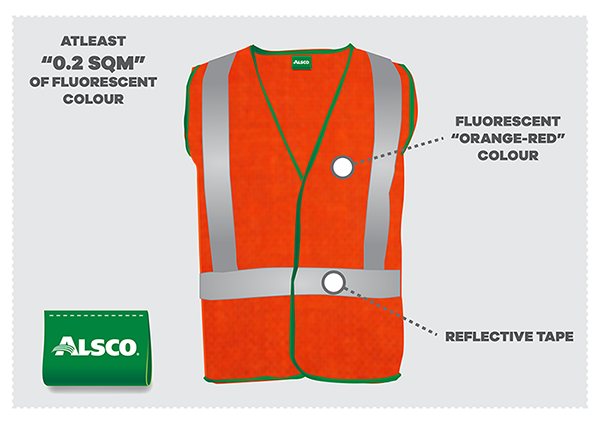
- All hi-vis clothing in NZ is required to have at least 0.2 square metres of fluorescent material on the front of any hi-vis vest or another type of garment and the same size patch on the back. This fluorescent area should not be interrupted.
- The reflective hi-vis tape for clothing needs to be at least 5 cm wide. Hi-vis clothing regulations in NZ require for the tape to be in one of the five allowed positions.
- Logos can be used on reflective parts of clothing, as long as it still leaves enough reflective clothing visible. On the other hand, logos cannot be placed over the reflective tape and should be less than 10cm x 10 cm in size.
- It is permitted to add underarm venting squares that are up to 10cm x 10 cm of size.
- Reflective tape, logos, venting square and all other additions do not add up to the required size of fluorescent material.
How Many Classes of Hi-Vis Clothing Are There in NZ?
There are three classes of hi-vis clothing in NZ. They are Class D, Class D/N and Class N. Hi-visibility clothing regulations in NZ classify the garments in accordance with their use.
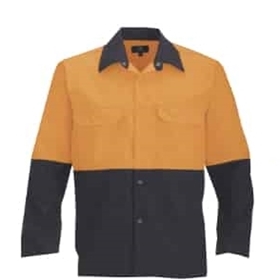
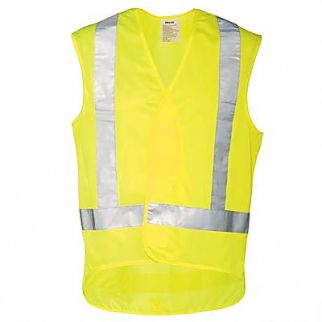
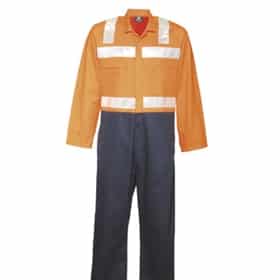
| Class | Class D | Class N | Class D/N |
| Time of day | Day | Night | Day and Night |
 |
 |
 |
|
| Features | Fluorescent fabric on both front and back of the hi-vis clothing. EAch side needs to have at least 0.2 sqm of fluorescent fabric, excluding logos, reflective tape and other items. | High visibility is achieved with reflective tape that is at least 50 mm wide and positioned in a certain manner on the garments. | This type of hi-visibility clothing is a combination of fluorescent fabric and reflective tape. In that way, one type of reflective features will work either during day or night. |
So, Class D is intended for daytime use, D/N for both day and night and N for nighttime.
Since these three classes have different uses, they also have to meet different hi-vis clothing regulations in NZ.
Class D – This type of hi vis clothing is intended for daytime use. It is not compliant with the hi-vis standards in NZ if it is used outside daylight hours. It needs to have at least 0.2 sq m of fluorescent yellow or orange-red colour on both front and back side. However, fluorescent colour should not be on the sleeves or collars.
Class D/N – For those that need to wear safety hi-vis clothing during both daytime and nighttime, Class D/N is the best option. It has similar requirements for the amount of fluorescent material on them, but there is also the requirement for strips of reflective tape. While fluorescent material is not suitable for nighttime, reflective tape is.
Class N – This type of hi-vis clothing is suitable for nighttime. Since the fluorescent colours are not visible without daylight, the colours of this clothing is not that important as long as it has enough reflecting tape on it. That tape has to be at least 5 cm wide and it has to meet certain configuration.
Who Invented Hi-Vis Clothing?
An American Bob Switzer is the person who invented hi-vis clothing. However, that was not his first intention. Namely, Switzer wanted to be a doctor. At the time, he was a manual worker in Heinz Ketchup factory in California.
One day, during work, sustained injuries to his head as a result of falling and hitting his head. Those injuries were so severe he ended up in a coma. As a result of this comatose state, his vision was in jeopardy of being permanently damaged. Doctors advised for him to remain in dark.
Since the recovery was long, Bob Switzer’s brother Joe wanted to help him by keeping him entertained, performing magic tricks. Joe Switzer found a way to utilise fluorescent chemicals to make his magic tricks more appealing for his recovering brother.
Bob Switzer enjoyed those tricks so much he continued experimenting after his recovery and ended up developing the ‘Day-Glo’ paint. Bob even used it to colour his wife’s wedding dress, making it the first hi-vis clothing in the world.
Later on, the safety and commercial applications of this colour became apparent and today, the safety hi-visibility clothing is used all over the world and in a wide range of industries.
If your business is one of those industries, it is important that you keep your employees safe by offering them safety hi-vis clothing. This can include overalls for NZ workplaces, or even just a hi-vis vest for every employee who needs to be visible in their workplace. Just take care that every employee gets the workwear that fits them perfectly to ensure safety.
You don’t have to worry about meeting all the hi-vis clothing regulations of NZ authorities or how you’ll pay for all that safety hi vis clothing. You simply rent all the necessary hi-vis clothing for a flat annual fee.
Alsco New Zealand always offers hi vis garments that are up to hi-vis standards in NZ. Regular cleaning is included in your price. Call us to learn more.
Which Is Better? Hand Soap Or Hand Sanitizer
There is no better way to reduce the spreading of germs and potentially deadly diseases than hand washing.
Nowadays, it is very fortunate that there are many ways to clean one’s hands. We owe that thanks to the inventors of hand sanitisers.
It is recommended to use these bottled gels as a substitute for the outdated handwashing with soap and water.
It is also said that it’s efficient in killing germs and keeping the hands clean.
However, is it all completely true? How good are hand sanitisers compared to hand soaps? Do they actually remove almost 100% of the germs on your hands? Let’s find out!
Hand Washing With Soap
It has been proven that handwashing with soap and water rids you from bacteria such as c.difficile. It’s a very dangerous bacteria and it can lead to debilitating diseases. Hand washing has to be done properly in order to prevent bacteria from contamination. The question is, what is proper?
Proper handwashing means pouring 1-3 ml of soap into your hands. It needs to be turned into a lather by scrubbing for at least 20 seconds. You also need to mind your fingers, fingernails, wrists and if possible, forearms. Afterwards, rinse your hands well and don’t forget to dry them!
Studies have shown that crucial thing to effective hand hygiene is drying. There is a correlation between the hand dampness and the bacteria amount that can be transferred to the surface. Meaning, if you leave your hands wet, your skin will most likely become an even better place for bacteria to breed.
A Must (Not)
There is one more thing you should know! Refrain from rubbing your hands while you’re drying them. An interesting study was conducted at the University of Bradford. It says that it brings bacteria back to the surface if you rub your hands together.
A lot of people rub their hands together in order to dry them faster. That’s why hand dryers are not the best option, but they are still good. On the other hand, paper towels are much better for drying because they prevent your hands from touching each other. That’s why towels are the best!
Anti-Bacterial Soaps
Antibacterial soaps have proven themselves to be as efficient as regular soaps. However, be cautious when using antibacterial soap! It’s possible for consumer antibacterial soap (unlike the soap used in hospitals) to increase bacterial resistance to antibiotics. If you happen to use antibacterial soap, it would be best to use brands trusted by industrial workplaces and clinics.
What About Hand Sanitisers?
Are hand sanitisers really 99% effective as people claim? Yes. However, not actually on the hands. The thing is, products like these are most of the times tested on inanimate surfaces. The results are different if tests are performed on hands.
It may seem as if hand sanitisers are useless, but it’s not so. What’s really efficient at killing bacteria are alcohol-based hand sanitisers. Many doctors recommend using them. That’s because they’ve proven them efficient in preventing viral and bacterial contamination, with some exceptions.
Hand sanitisers are useful when hygiene facilities are not available. However, they cannot replace traditional handwashing with soap and water. That’s because of the presence of more dangerous bacteria types that cannot be eliminated.
Also, hand sanitisers are less effective than soap and water in reducing dirt and grime. The traditional routine is the best solution if your hands are visibly dirty. If not, you can be forgiven for using a hand sanitiser, until you get to use soap and running water again.
The Right Choice
Alcohol is an antiseptic, which is the essential component of a hand sanitiser. However, it doesn’t have to mean that any hand sanitizer with alcohol in it is a good one. Always aim for one that has at least 60% of alcohol. Anything less than that is not effective.
Additionally, it is of great importance to know how to use hand sanitisers in a proper way. Firstly, don’t be afraid to spend too much sanitiser.
Freely squirt more than one dose on your hand. Afterwards, spread it all over the surface of your hands, including the space between your fingers and your nails. Stop only when the sanitiser has dried out.
Implementation Of Hand Sanitisers
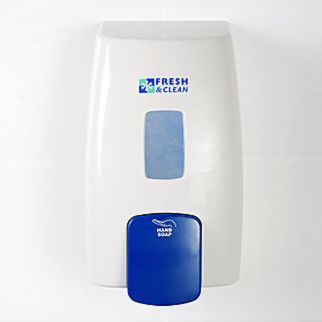 If you are wondering whether to invest in soap dispensers or in hand sanitisers, there should be no uncertainties. Invest in both if you’re willing to provide your workers with a fresh and healthy work environment.
By implementing proper hygiene measurements you will keep diseases away. You will also bolster your worker’s productivity even during the flu months. Every washroom has to be equipped with a hand soap dispenser. It’s helping us promote the routine of handwashing.
There is a very significant place in your office for the hand sanitisers. They have to be placed in a particular and strategic order.
For example, next to elevators, doorways, and floors that have no direct access to a restroom. Have this system installed! Even in the middle of a hectic day, your workers will remember to wash their hands.
The best hand hygiene products for your workplace can be found at Alsco. Hand soap dispensers, hand drying solutions, hand sanitisers and more can be found in their arsenal. If you visit Alsco’s Hand Care page, you will see the full spectrum of their equipment and products for your office. You can also speak with Alsco’s friendly sales representatives.
Photo courtesy of Freepik Images by shayne_ch13
Hosting Made Easy: How to Pick the Best Towels for Your Airbnb
Running an Airbnb is the gift that keeps on giving. From earning extra money to making friends from all over the world and joining a global movement of hosts.
The sharing economy has encouraged everyone to imagine new ways of making a living while connecting with people from all over the globe.
Becoming a super host on Airbnb is a coveted title.
Your home will be booked all year round and you get to make good money while helping your guests have an excellent visit.
Airbnb super hosts Gabriela Domicelj and Derek Young from New South Whales have authored the Home Stay Guide that shares the secrets and joys of super hosts. After running their Airbnb for seven years, Gabriela and Derek have a wealth of knowledge to share.
Their biggest emphasis is the importance of the hygiene factor. This is the bare minimum expectation that the guest will find a clean home. Therefore, it is crucial to create processes and transition lists to help manage the cleaning.
Importance of Choosing Good Towels for Your Guests
Fresh towels provide a cosy feeling to your home and improve the hygiene factor. You should pay attention to how you choose towels because of the following reasons:
Amazing Towels Add an Element of Surprise to Your Airbnb
The devil is in the details. Guests will notice when you pay attention to their needs. Learn about your guest and the reason for their visit in order to customize their experience.
Adding a little unexpected surprise will make your guests smile and increase your chances of getting that lucrative 5-star rating.
Guests like to freshen up when they arrive at their Airbnb. Therefore, the quality of towels you provide will be critical in forming their first impression. Cosy towels create a feeling of being at home, so choose good quality and comfortable towels.
Consider Your Airbnb Maintenance Routine
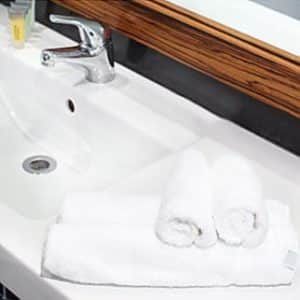
Regularly replace your linen with clean, crisp, and luxurious white linens.
Do you have a defined cleaning process for your Airbnb? For a seamless transition between each guest, it is important to have a process in place for your Airbnb. You need it whether you choose to do the cleaning personally or by hiring cleaners.
When deciding whether to outsource the cleaning service, consider how much time and effort you will preserve in between your guests. Instead of stocking up and caring for linen, you can choose to outsource your linen service.
Alsco New Zealand delivers clean and hygienic linen to your doorstep regularly.
We also provide emergency linen requests at no extra cost.
Factor in the Cost of Wear and Tear
Since most hosts start an Airbnb as a source of income, you need to treat it like a business. Therefore, you should always have running and utility costs in mind. Is your linen good quality and long-lasting?
The beauty of Alsco’s Fresh & Clean service is that for a great price, you can order crisp, clean linen that ranges from bath mats, plush towels, robes, sheets and industry-specific linen.
When designing your home to become an Airbnb, consider the quality of items in your home. Cheap is expensive in the long-term.
- Is your furniture sturdy and of good quality?
- Is your washroom well-maintained and built to last?
- Does your kitchen have great quality towels and cookware?
- Is the linen cosy and long-lasting?
Factors to Consider When Choosing Your Airbnb Towels1. How They Feel to the Touch
A towel’s feel is influenced by two things:
a. Fabric Quality
There are two common types of fabrics. Pure cotton towels and blended towels. Blended towels are lighter and are commonly used for contemporary functions. Pure cotton towels have a soft and luxurious feel. Blended towels are usually cotton mixed with microfiber materials to create a different look and feel.
Another key factor for quality is the style of the towel edges. Choose the double turned edge over the woven edge for two distinct advantages. The double turned edge is attractive and durable since it is less likely to fray.
b. The Type of Cotton
While pure cotton towels are preferable for business use, different varieties of cotton have their own merits and demerits. Everyday towels are made with standard cotton.
However, for business use, the common types of cotton are Egyptian cotton, Turkish cotton and Supima Cotton. Egyptian and Supima Cotton are soft and luxurious to the touch. They are also durable and great for business. Turkish cotton towels are popular in hotels and spas and have a thick, luxurious feel. They take longer to dry but also get softer and fluffier with every wash.
2. The Weight of the Towel
 Impress your customers with good ambiance and impeccably luxurious linens
Two main reasons affect the weight of a towel:
a. Density
Towel density is measured by grams per square meter (GSM), also called the pile. The pile ranges from 200-900 and a good quality towel has a high density. On the other hand, 200-400 gram towels are light and great for the gym or kitchen due to their quick drying quality. Next, 400-600 gram towels are great for the beach and everyday showering due to their medium weight quality. Finally, 600-900 gram towels are extra luxurious and absorbent but take longer to dry.
It’s important to strike the correct balance for your Airbnb. If you run a luxury establishment, go for a higher density towel. If you run a laid back home, you should use lower density towels. You can find good quality Egyptian cotton towels with a pile of 250.
The platinum accommodation service from Alsco Fresh & Clean was created to help luxury establishments get premium linen without the hustle.
b. Absorbency
Absorbency is simply the ability of a towel to dry you off fast. A towel with good absorbency is soft and thick. Like those commonly used in hotels. Egyptian cotton is a common choice for its long and thick threads.
Another factor that affects absorbency is the technology used to make the towel. Towels made with zero-twist technology are extraordinarily soft and fluffy while also lightweight, fast-drying, easily packable and durable.
3. The Towel Size
Towels sizes are as vast as their uses. Here are the common variations:
a. BathroomSize
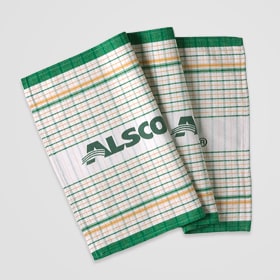
Every good shower deserves a cosy towel. The standard bath towel used after a shower or a bath is 27 by 52 inches. You will find these in most homes, and they are handy to have around for family and guests.
A larger option is called a bath sheet since it offers more coverage and allows one to fully cover themselves after a bath. The size of a bath sheet is 35 by 60 inches. These are common in hotels and spas to offer the option of lounging in a comfortable towel.
The Alsco Fresh & Clean service delivers linen to your doorstep according to your specifications anywhere in New Zealand.
[
b. Kitchen & Utility Towel
For kitchen and utility use, you also need the smaller towels. Hand towels are 16 by 30 inches while washcloths are 13 by 13 inches. These towels are also important to stock up since the kitchen and washroom are high usage areas. Consider a service like Alsco’s Fresh & Clean for cleaning, replacing and restocking your linen. Get it out of your mind for good and let us take care of it for you.
4. The Towel Colour and Style
A towel can elevate the ambience and finish of a bathroom or house. Therefore, it is important to consider the colour and style of the towel as you stock your washroom racks.
The colour can be influenced by the seasons or house theme. Bright, happy colours for spring and summer and cooler colours for fall and winter. You can also use fun colours and patterns as accents to add warmth to a washroom. Stacked towels can serve both aesthetic and functional purposes. The classic choice is fluffy white towels. You can never go wrong with this timeless option.
Running an Airbnb is demanding and you could use all the help you can get.
Let us take a load off your back. Alsco’s Fresh & Clean rental service will regularly clean, replace and supply fresh, crisp linen to your doorstep. For both your accommodation linen and kitchen linen needs. There’s even a platinum service for premium properties.
Whatever your style, we’ve got you covered.
Photo: lifeforstoc
What You Need to Know About CPR Before It’s Too Late
Do you know in which cases you should start CPR? Do you know when to stop? Do you know what it actually does?
These questions seem like their answers are a part of everybody’s general knowledge, but you should not rely on that in the case of an emergency.
As a business owner, you need to do everything in your power so that your employees are safe and secure. One of the first steps is to step up your First aid game.
This includes renting a law compliant First Aid Kit. For more severe cases, it is best to ask Alsco representatives to send an AED, as well.
These steps are precious, but they are not enough. You need to have trained first aiders among your employees because you need people that know how to perform CPR.
It will take at least two minutes to get and set up your AED. During that time, CPR is the only thing that keeps a victim of a cardiac arrest from suffering brain damage.
Basic Facts About CPR
There are several questions about CPR that need proper answers. Even if you know them, it is never a bad idea to refresh your knowledge on such an important topic as this one.
- What Does CPR Stand for?
CPR is short for Cardiopulmonary Resuscitation. In simple words, it is a life-saving technique that is used to help restore functions of heart and lungs. - When to Perform CPR?
CPR should be performed when a person stops breathing or their heart stops working properly. This is usually a consequence of a heart attack. - How Long Should CPR Last?
You cannot start CPR too soon and it can hardly last for too long. You should perform CPR until a medical expert arrives. If that is impossible, try to get in touch with a medical expert and ask them for advice. - What Does it Do?
Contrary to the common belief, CPR does not restore the heart function. When the heart stops beating or it is beating ineffectively, it is essential that the brain keeps getting oxygenated blood. Therefore, CPR is doing the heart’s job.
There are two types of CPR. One is the famous “kiss of life” during which a person is breathing air into the victim’s mouth and presses the chest rhythmically. The other is the compression-only CPR that does not involve mouth-to-mouth.
Facts and Figures About CPR
According to the American Heart Association, almost 90% of people who suffer cardiac arrest outside of a hospital die. However, if a bystander performs CPR, the chances of survival double up.
AHA also states that chances of survival after a heart attack drop by 7%-10% with each minute of delay before performing CPR. Brain death starts to occur 4-6 minutes after blood stops feeding it oxygen.
The University of Arizona conducted a five-year study about the survival rates and the types of CPR. They published their results in 2010 and they showed that the lowest rate of survival was with people that did not receive CPR. Around 8% of patients survived after receiving ‘hands-only’ CPR and over 13% survived thanks to the conventional CPR.
Importance of the Trained Staff
The New Zealand Medical Journal published the results of a study that analysed the outcomes of out-of-hospital cardiac arrest in Wellington area from 2007 to 2009. One of the factors that were analysed was the CPR provided by a bystander.
According to their study, CPR was provided in 55% of cases. However, it did not help the outcome because it was not performed properly.
The conclusion is obvious – it is necessary to train employees to perform proper CPR. Training is not only important for their skills. It is also important for their willingness to help.
Getting proper CPR training boosts confidence to help somebody in need. It also greatly increases the chances of a positive outcome.
Step-by-Step CPR
It cannot be emphasised enough that proper training is necessary for proper CPR. However, there are 7 simple steps that a bystander should take to help a person who collapsed.
- Check for a response from the patient
- Call for help or send somebody for help
- Open the airway and check for breathing
- Place both hands-on patient’s chest and push hard and fast
- Pinch the patient’s nose and blow air into their mouth so that their chest rises
- Repeat pushes and air blows
- Use the nearest AED
New Zealand Doctor Newsroom published an article in 2015, stating that 1600 people died in New Zealand every year because bystanders did not know how to perform CPR or did not have a defibrillator.
Prevent your company from becoming a part of this worrying statistics. You need to:
- Get managed First Aid Kit
- Equip your workplace with portable AED
- Train your staff
Alsco will make sure that your First Aid Kits and your AED are up to standards, fully stocked and in perfect condition. Fill out our form and get a more than the fair quote on Alsco’s rental services.
Remember, we take responsibility for regular maintenance, stocking and restocking. You just need to learn your CPR and get your staff trained. Join Alsco in making your workplace safe.
How to Effortlessly Ensure Safety in an Automotive Workshop
Working in the automotive industry is really demanding, whether you work in a marketing department or a workshop. However, working in an office is at least a safer option.
People who work in an automotive workshop work in a pretty tough environment. They are surrounded by hazardous chemicals, many machines, high temperatures and they usually spend all their time in very tight spaces.
This does not sound like fun, right? It is even less fun when you think of the legal regulations that come after someone gets injured.
So, in order to make sure your employees are safe and take care of their safety, there are many issues you have to consider. And yes, some of them will include the fundamental ones, like ensuring first aid solutions for their workplace or providing them with high-performance industrial workwear.
Keeping in mind that automotive workshop owners usually do not have much spare time, here are some straightforward tips and activities that will do the job.
Make Sure Your Employees Are Well-Trained
When hiring people, everyone will hire someone who knows how to do the job, right? However, your care about your employees’ education and training does not stop after the first trial month of their work.
Working in any type of workshop, and especially an automotive workshop, can be extremely dangerous. This means that workers could get injured at any moment. Nobody wants this of course. So, the first thing you can do in order to prevent your employees’ injuries is to provide proper safety training. This is one of the best ways to avoid accidents in your workshop.
Get Your Automotive Workshop Cleaned Regularly
Keeping your workplace spotless and sanitised is a highly important step in providing safe working conditions. Cleaning and wiping the floors, machines and machine parts, tools, and keeping all the chemicals in the appropriate containers in a proper space will significantly reduce the level of injuries.
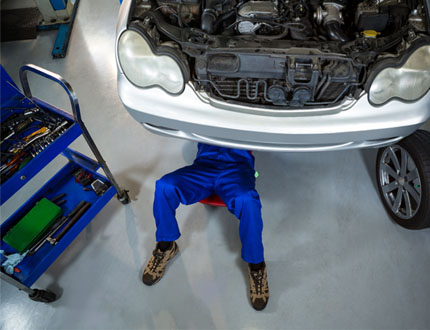
If the floors are clean and dry, nobody can slip, right? Furthermore, if all hazardous chemicals are put in containers and marked appropriately, nobody could get confused and take the wrong one and get poisoned, for example. So simple, but very effective.
Maintain the Machines Properly
Machine maintenance basically means keeping the machines and all their parts in good condition, operating safely and efficiently. This includes activities such as servicing, replacing, repairing, testing, and inspecting the machine and all the necessary equipment.
By doing this, you do two things. Firstly, the chances of someone getting injured because of the inadequate condition of the machines are really low. Secondly, taking care of the machines and equipment means they will last longer. Aren’t these great benefits from one step?
Provide Adequate Uniforms for the Employees
Now, when working in an automotive workshop, uniforms are everything but just a piece of clothing! They have a much bigger purpose here than looking good. In this case, they are protection for your employees.

So, you should definitely invest in good quality uniforms that will keep your employees protected from the heat, hazardous chemicals, and other dangerous situations that may occur.
Make sure every employee gets the right size of their protective workwear and always keep in mind that you are not investing in some fashionable clothing here. You invest in your employees’ health and nothing is more important than that.
Create Reminders
Giving clear instructions is crucial in maintaining a high safety level in your workshop. Make sure you always give clear instructions to your employees. Otherwise, they may cause danger to all the people in the workshop just because they failed to understand their task. One more great thing to do in order to prevent disasters from happening is to make a reminder board in your workshop. Or a poster if you like that more! The important thing is that your employees always have in mind all the dangerous situations that may occur and what to do if they happen and how to prevent them. When they have a visual reminder in front of them, or they pass by it many times during the day, it will stay in their mind much longer, and they will be more cautious.
If you find this a bit funny, maybe you should know that people were doing this ‘reminder trick’ many, many years ago. Some things are so good that they do not need a change, just a small update, wouldn’t you agree?
Having in mind that many automotive workshop owners really have to think about a significant number of details when running a business and that they do not have much spare time to think about all these things, here is great news – Alsco can help you, as you might have noticed so far.
For instance, cleaning all the dirty and greasy parts is a piece of cake with Alsco’s Ecosafe Washer. Not only that it save time, but it is environmentally-friendly as well, and it is always an awesome thing when you can do your job in a bit greener way!
Do not hesitate, contact Alsco now, and our friendly representatives will help you to get the best possible offer!
Photo courtesy from Freepik Images by peoplecreations
Recycling Copy Paper – Choose the “Greener” Pastures
A world without paper would be a world of hardship. We’ve all become dependant on it, regardless of its use: printing, copying, note-taking, even scribbling reminders every day.
What’s worse, we all take it for granted – a never-ending source of the material.
A typical office has a large amount of paperwork going on at any moment in time. Turning to recycled paper has become almost obligatory for any self-respecting ‘Green’ Office.
The almighty law of need-and-demand has sadly, but truly put the balance of forest annihilation into our hands. It makes the use of recycled paper more desirable than ever.
Numbers Speak More Than Words: Problems
Statistics from 2008 show that there’s been a drastic rise in the demand for non-recycled paper. We are talking straight from the trees. The popularity of the so-called “virgin pulp” lit a fuse. In 1999, the use was just over 12 million cubic metres. By 2008 it went up by one third, to around 19 million.
Next on the list is the increased, but steady consumption of all sorts of paper products, for writing, packaging and other purposes.
In 1999, 2.5 million tonnes of paper and paper products were consumed. Only a decade later, the figure rose to a total of 3.25 million tonnes.
A Glimpse Of Possible Solutions
There are countless ways to minimise the impacts of our paper consumption.
According to one of Australia’s best-known environmental groups, The Wilderness Society, buying 100% recycled post-consumer waste paper will minimise the effect of paper consumption.
Another good idea is to set up a recycling point in your office. A good starting point is to recycle writing and printing paper. There is no shortage of options when these materials are in question! The only real issue here is which brands are the best and where is the supply point.
Thanks to ‘The Wilderness Society’, the chart below has the most relevant information regarding the suppliers and the branded paper. We included all the comparison cross-references, so all you need to do is to locate and identify local suppliers.
| Brand | Sizes | White | Coloured | PCF* | 100% Recycled Post-Consumer | Printing | Suppliers |
| Evolve |
A4, A3 |
✓ |
✓ |
✓ |
Hi-Vol |
ecocern, SCRAP, CPI, Going Solar |
|
| Vision |
A4, A3 |
✓ |
✓ |
✓ |
✓ |
Gen |
OfficeMax, Special Equipment |
| Fuji Xerox Recycled + |
A4, A3 |
✓ |
✓ |
✓ |
✓ |
Gen |
Fuji Xerox |
| OfficeMax** |
A5, A4, A3, |
✓ |
✓ |
Gen |
OfficeMax |
||
| ecocern |
A4, A3, A1 |
✓ |
✓ |
Gen |
ecocern |
* PCF – Process Chlorine Free-Bleaching
**OfficeMax is accredited by Greenpeace (Germany), Blue-Angel, Nordic Swan.
The figures have shown that Australians are reasonably efficient at recycling households and office waste. Estimates provided on annual basis are the best proof – 1.6 million tonnes of waste paper is collected and used for making recycled paper products and less than 10% of the paper products rubbish end up in Australian landfills.
In 2005 just a meagre 11% of waste office paper was recycled, but it proved that every little effort helps. If you keep 100% recycled post-consumer copy paper in office cabinets, the world’s forests are less affected.

Leading Recycled Paper Brands & Suppliers
Vision – Pure White
100% recycled post-consumer waste. PCF (process chlorine-free bleaching). White A4 and A3: for black and white double or single-sided photocopiers and printers. Vision Magic Colours – available in 10 tints. Made in Germany.
Suppliers:
- OfficeMax Australia (03 9518 5600)
- Special Equipment (02 9609 2300 [NSW]; 07 3348 2266 [QLD])
Evolve
100% recycled post-consumer waste. PCF (process chlorine-free bleaching). Photocopy: white & coloured A4, A3. For high volume printing and copying contact Evolve Office, and for use in colour, copiers contact Evolve Business. Made in France.
Suppliers:
- ecocern (02 9337 2737)
- SCRAP (Australia wide) 02 9825 1062
- CPI (03 9239 3600)
- Going Solar (03 9348 1000)
OfficeMax
100% Recycled Copy Paper and 100% recycled post-consumer waste. Photocopy white, A4, A3, A5. Accredited by: Greenpeace (Germany), Blue-Angel, Nordic Swan.
Suppliers:
- OfficeMax 1300 MYDESK (1300 693 375)
Fuji Xerox Recycled Pure+
100% recycled post-consumer waste. Photocopy white, A4, A3. Other colours are also available. PCF.
Suppliers:
- Fuji Xerox 13 14 11
Ecocern
100% post-consumer recycled paper scrap. Available in A1, A3 and A4. Envelopes and paper bags also. Made in Australia.
Supplier:
- Ecocern (02 9337 2737)
Sources:
- Recycled Copy Paper’, The Wilderness Society
- Ten Years of Recycling: The Good the Bad and the Ugly’, Plant Ark (2005)
Photo: Stux
Is There a Threat of Falling Objects at Your Workplace? Ask Your PCBU
Let us say that an empty box falls on your head at your workplace. You are not hurt and people have a laugh.
Tomorrow, a heavy book falls down and really hurts your head. There is nothing funny about that. You are hurt and that could have been prevented. All that is left to do is to reach for your Alsco First Aid Kit and take care of your injury.
Who is responsible for your injury? The person who put it there? You – for not being careful? Somebody else? The responsibility is shared.
Every business needs to comply with Health and Safety at Work Act from 2015. It lists step by step guides on how to prevent injuries from taking place. Falling objects are one of those threats that need to be prevented.
People Responsible for Your Safety
Of course, you need to take care of your safety. However, if you are at your workplace, there are others that share that responsibility with you. Health and Safety at Work Act recognises following people as duty holders:
- PCBU
- Officer
- Worker
- Other persons at the workplace
PCBU is the ‘person conducting business or undertaking’. It can be an organisation or an individual and they have the primary duty of care.
This means that they need to make sure the health and safety of the employees are not put at risk at their workplace. Of course, it is their responsibility to ensure this as long as it is reasonably practicable.
The Officer is usually a company director. It is a person who has control or significant influence over the management. Their duty is to make sure that PCBU enforces all the safety measures.
Workers and other persons at a workplace are not without their responsibilities when it comes to health and safety. They need to do take care of themselves and everyone around them when performing their work.
Prevention Steps a PCBU Needs to Take
The main responsibility for the safety of the employees falls upon the PCBU. There are several steps that he needs to take to prevent accidents, including the injuries by falling objects. The first is to eliminate the risk and if that is not possible, then to minimise it.
For example, let us say that you work in a warehouse and there are many heavy boxes stored. Eliminating the risk from one of those boxes falling on you would be – storing them on the ground.
Minimising the risk, on the other hand, can be done in several ways.
- Substitution – replacing the hazard with something of lesser risk. In the case of warehouse boxes, it could mean packing stuff in smaller boxes or placing them on lower shelves.
- Isolation – preventing people from getting in touch with the hazard. In this example, this would mean limiting the access to the areas below the boxes.
- Engineering control measures – coming up with physical control measures, including processes or mechanical devices. For example, placing strong bars that keep the boxes from falling.
- Administrative control measures – these are all work processes and procedures that are not managed by engineering or wearing PPE. In this example, it could be introducing all warehouse workers with a guide about how to store and handle boxes safely.
- Using Personal Protective Equipment (PPE) – the name says it all. In the case of warehouse boxes, it would mean wearing a protective helmet.
When it comes to threat of falling objects, HSW Act requires from your PCBU to try and do the following:
- Prevent objects from falling
- If that is impossible, arrest the freefall
- If even that is impossible, introduce a ‘no-go’ zone
How To Prevent the Objects from Falling?
Nobody can have full control over every little thing that happens at the workplace. Accidents always happen. Gravity will do its thing and some of those tools will fall down from the scaffolds.
Your PCBU should do everything that is reasonably practicable to keep those falling objects from hurting you.
- All the objects and tools at heights need to be secured, tied down or put away from the edges.
- Ensuring safe ways of raising and lowering the objects
- Arresting the fall by providing safety nets, covering pedestrian walks and providing overhead protection
How to Protect People Around You
Some people work at heights and they need to be trained on safety measures. In that way, they will know how to protect their coworkers and themselves. Safety measures include:
- Keeping everything away from edges
- Securing tools and materials and fixating them
- Keeping the work area clean and tidy
- Using chutes to place debris into the skip area which needs to be below
If you are moving a load from one place to another, make sure that you take care of the following:
- Secure and balance load before lifting it
- Take into account the weight and the external factors like wind
- Make sure that the equipment that you use is fully operational
- Establish a ‘no-go’ zone while you move the objects
Worst Case Scenario: Someone Got Hurt
Even if everybody is being very careful, somebody might get hurt. In that case, you need to have your First Aid Kit ready. Moreover, it needs to be compliant to all the legal requirements.
Your First Aid Kit needs to be positioned near the places where is more likely for accidents to occur. If your workplace includes some potential risks, there should be a trained first aider among your employees.
Having a proper First Aid Kit that is always up to date and fully stocked is somewhat challenging. Replacing the items from it can slip your mind. However, if a falling object hurts somebody, you need to know that your Kit contains all you need for dressing that wound.
Don’t allow yourself to be caught unprepared. Contact Alsco and they will take care of your First Aid needs. They will rent you a Kit that matches your needs. They will check up on it, restock it and replace it when it reaches its expiry date.
It is much better to rent your First Aid Kit for a very low price than to risk being fined up to $3,000,000 for not being First Aid compliant. Moreover, you cannot put a price on the safety of your employees.
Photo Courtesy: Flickr Image by Orsorama
Common Questions About Urinal Cakes
Most men will see a urinal cake on a daily basis. This is the small tablet placed in urinal bowls that serves as a deodoriser in public restrooms.
Public restrooms without urinal cakes use waterless urinals. Waterless systems rely on biological treatments to stay odourless.
In the urinal, it plays an important role. However, if ingested, it can lead to devastating consequences.
Urinal cakes help in maintaining high standards in washroom hygiene.
What Are Urinal Cakes?
Urinal cakes resemble moth-balls. You will find them at the bottom of public urinals.
The urinal cakes reduce the pee smell in urinals and control bacteria.
The name ‘urinal cake’ comes from the shape of the cakes. It also borrows from the role they play in keeping public restrooms smelling good.
Before the 1880s, going to the bathroom was a private affair. There were no public restrooms.
As more people started visiting towns and trade centres for business, using the restroom became a public problem.
This led to an increase in demand for better plumbing and sanitation. Gradually, people started building and using public restrooms.
This then created a big odour problem.
As towns, markets and urban centres became more popular, there was an increase in the use and demand of public toilets.
This led to the innovation of urinal cakes as commercial products.
Urinal cakes are made of para-dichlorobenzene, which acts as a deodoriser and disinfectant.
The name ‘cake’ comes from the round and colourful shape of the chemical block you will see in urinals.
Where and Why Do People Use Urinal Cakes?
You will most likely see ‘urinal cakes’ at the bottom of public urinals. They help disinfect the urinals and mask or reduce odours.
The chemical composition of most cakes may vary. But, almost all urinal cakes contain para-dichlorobenzene, which acts as the main deodoriser.
The para-dichlorobenzene in the cake helps it sublime when it comes into contact with urine. This means that it converts into a gas without going through the liquid state.
What Do Urinal Cakes Smell Like?
Most urinal cakes have a neutral or pleasant smell. It all depends on their function.
Disinfectant cakes tend to have a more neutral smell.
Urinal cakes meant to deodorise the urinal have a pleasant scent. This helps keep the urinal smelling fresh throughout.
Health Concerns Associated with Urinal Cakes
Once the cakes come into contact with urine, they turn into a gas, which you can inhale.
While there is no extensive study on the effect of the gas on humans, it has shown some negative effects on animals.
This unknown risk has led to a ban on para-dichlorobenzene in some countries around the world.
Many public restrooms today prefer para-dichlorobenzene free cakes as an alternative.
They are water-soluble and work well to deodorise urinals. They also improve the cleaning of the pipes to remove some of the odour-causing buildup.
Recent formulations and innovations have created biological bacterial spores. When combined with surfactant cleaners, they eradicate odour in the pipes. They also get rid of any buildup likely to cause a blockage.
The only way around the smell and risks of using urinal cakes is waterless urinals. These require little maintenance. They also rely on biological treatments to stay fresh and odourless. This is a good alternative even for the environment.
Can You Eat a Urinal Cake?
Eating a urinal cake can kill you.
Anyone crazy enough to bite into a urinal cake is putting their health at risk. Ingesting the chemicals found in urinal cakes can lead to symptoms such as:
- Dizziness
- Nausea
- Diarrhoea
Over time, these symptoms can worsen, leading to hospitalisation.
Naphthalene, a common compound found in urinal cakes can also lead to the death of red blood cells.
Without proper care, your body may be overwhelmed by all the chemicals. This can lead to organ failure and other complications.
Alternatives to Using Urinal Cakes
The best alternative to urinal cakes so far is waterless urinals. Since you will not be relying on para-dichlorobenzene, you must keep them clean.
You can keep waterness urinals odour free by:
Investing in the Right Cleaning Agents
You should use biological treatments for everyday cleaning.
With these treatments, you introduce harmless ‘bugs’ into the urinals. The bugs eat away bacteria responsible for toilet smells.
These bacteria play a role in breaking down urea and uric acid, found in urine. Once the two chemicals are broken down, they produce the pungent smell found in toilets.
Over time, these treatments form a protective barrier on the surface of the urinal and pipes. This helps keep the urinal odour-free between cleans.
When using biological treatments, make sure you find a reputable supplier. Alsco NZ offers some of the best biological alternatives in the market. We offer year-long contracts to ensure your team never runs out of treatments.
Keeping the Urinals Water-free
Water will affect the integrity and basic functioning of a waterless urinal.
It reacts with the sealant to create limestone deposits on the urinal sink and pipes. These deposits can block urine from flowing down the drain.
You can use water to clean the pipes occasionally but never in the waterless urinal cylinder.
In a public restroom, make sure you have warning signs. Every cylinder should have a sign warning people against pouring water into it.
An Odourless Washroom
One of the biggest cleaning challenges is keeping the toilets smelling fresh.
A clean and odourless toilet can influence the morale of employees. In a public-facing business, it can make or break your reputation.
Make sure to contact the washroom hygiene experts to help you with the installation and maintenance of waterless urinals.
After installation, get the right supplies to keep your washrooms fresh.
Alsco will:
- Help you identify the right supplies for your urinals.
- Supply you with the chemicals you need.
- Refill your chemicals on a regular basis.
You can stop using urinal cakes and start running an odourless washroom today with Alsco NZ.
Alsco Nz provides your workplace with top-of-the-line safety equipment to keep your workplace running smoothly.
Speak to a customer care agent today to learn more.
15 Crucial Factors for Managing Your Restaurant Front-of-House
First impressions count, especially when it comes to the restaurant business. It’s important for your front-of-house to be inviting and spacious for your customers. The restaurant front of house is usually made up of the dining area, the bar area, the waiting area and the reception.
When planning your front-of-house, you should keep in mind the staff members who you want to handle the customers.
Depending on the size of your business, these can include a shift manager, a host (sometimes called a maître d′), the waiters (also called servers) and even bartenders.
There are many ways that you can make your restaurant front-of-house inviting for customers and a great space for your staff to work in.
The Staff are The Stars of The Show
The staff members who serve your customers need to be well-trained, patient and have great customer service skills. There are a number of roles you can fill to adequately handle the front-of-house.
The General or Shift Manager: The front-of-house team needs a competent leader who will ensure that everything is running smoothly. The general manager hires and fires staff, oversees shift rosters and meetings, and ensures that he or she handles customer or team member queries.
The Host: Aside from the general manager, another crucial team member is often the host or hostess. This is the person who receives guests at the reception or reservation desk. They are impeccably presented and welcoming to the guests. Aside from receiving guests, they handle the waiting guests and also seat those whose tables are ready.
The Servers or Waiters: The servers or waiters are a vital element of your restaurant front-of-house team. They are responsible for taking food and drink orders at the tables, serving the guests and also making menu suggestions. They must have customer service skills to handle different types of customers, and their patience will sometimes be tested.
The Bartenders: If your restaurant front-of-house has a bar, then a qualified bartender or two can be a great addition to the team. Good bartenders create cocktails and any other beverages available at the bar. In some restaurants, the bar also serves as the waiting zone, so it’s often up to the bartenders to interact with the waiting customers.
The Restaurant Runners: In larger restaurants, the waiters usually get help from restaurant runners (or food runners). They keep drinks full, bring out the meals to the guests, clear the tables once the customers are done and even set up tables for the next group of guests.
How Do You Successfully Manage Your Restaurant Front-of-House?Ensure the Front-of-House Design is Practical
]
Alsco Restaurant/Hospitality Linens
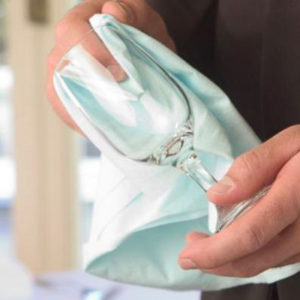
When planning for your restaurant, it’s important to design the front-of-house to suit your guests and staff members. It’s all about the details. Just as the spaces between dining tables need to be compliant with the regulatory codes, the table linen needs to be clean and appealing to the eye.
The walkways need to allow for ease of movement and the lighting should be just right – not too bright, but bright enough for guests to read the menus.
While planning the front-of-house design, make adequate plans for your reservation desk, the bar, waiting area and payment station.
All these areas need to be well spaced as well as easily accessible to guests and staff.
Run a Tight Ship
Hold Pre and Post Shift Meetings: The staff are the stars of your restaurant show. They need to have a conducive working environment and should be well-trained. Run a session between key meal times in the restaurant where the team, led by the general manager or shift manager, divide roles among themselves while sharing any concerns they may have while on duty.

Alsco Wrap Waist Apron
Keep Staff Looking Good in Uniform: Your staff need to look professional to create a great impression with customers. The easiest way to keep your staff uniforms looking crisp and clean is by using a Managed Uniform Rental Service.
They pick up all your dirty laundry and deliver clean uniforms for your staff.
For an obligation-free quote or more information about their uniform rental service, contact Alsco today.
Provide Regular Training for Staff: To have a competent front-of-house team, you should invest in regular training for the staff. The most crucial training they need is customer service. Training should be continuous to ensure that new team members are also aware of best customer relations practices.
Monitor Team Activities: To run a successful restaurant, managers should be able to keep track of their staff members. One way to do this is to have an hourly staff labour report. You will be able to keep track of staff hours on duty as well as each task they have undertaken.
Motivate Your Team: From time to time, staff should be motivated and appreciated at the restaurant. A great example of staff motivation is to have a cocktail and menu tasting session for them to experience the restaurant menu in a relaxed setting.
You can also give them adequate time off and breaks so they are not overworked. You should also have an open communication policy at the restaurant. This will allow the management and the rest of the team to share any issues they may have outside of the shift meetings. A happy team will make your restaurant successful.
Use the Right Tools for Smooth Front-of-House Operation
Some issues customers can face at a restaurant include reservations and payment. As a restaurant owner, be on the lookout for the right tools that will ensure that all processes are running smoothly at your restaurant.
Reservation Tools: When it comes to reservations, make sure that all booking channels are monitored. Some restaurants receive phone reservations, the restaurant website or even an app (if available). The host and restaurant manager should work together to ensure all reservations are properly recorded.
When setting reservations, be honest with your customers. If the restaurant is closed for some reason or if reservations are full, be transparent and your customers will appreciate your honesty even if they feel disappointed.
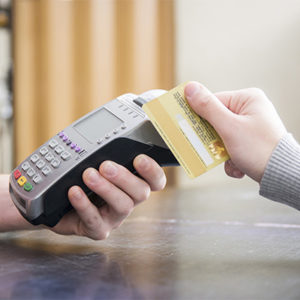 Image from: Freepik
Payment Tools: Find out which payment methods most of your customers use and give your customers what they want. For example, you can use multiple payment stations or opt for a pay-at-the-table technology.
An integrated Point of Sale System allows you to track payments, sales, staff performance and overall restaurant performance. When looking for a POS System, request a demo session to see it in action and find out which features the best suit your business.
Data and Statistics Tools: Make use of data and statistics to determine what is working for your restaurant. The integrated POS system will help you determine which hours are busiest at the restaurant.
You can also keep track of which menu items are less popular based on orders. In addition, you can monitor staff performance to make any required team changes.
Photo: StockSnap


